Feed is one of the key factors influencing poultry performance. It provides the nutrients required for maintenance and production. Therefore, it is crucial to use high-quality raw materials and precise formulations to support optimal performance. However, these two factors will not be fully effective without maintaining good intestinal health (Ducatelle, et al., 2023). When the digestive tract is compromised, nutrient absorption becomes suboptimal, which may negatively impact the overall health of the birds.
The use of antibiotics as a feed additive was initially common among poultry farmers to maintain intestinal health. However, continuous use of antibiotics is not without risks. Antibiotic resistance and residue in animal products can pose serious health hazards to humans. Consequently, the use of antibiotics as feed additives has been prohibited in Indonesia since 2018. The inclusion of organic acids as feed additives offers a safe and effective alternative solution to improve intestinal health, working comprehensively throughout the digestive tract.
Definition of Organic Acids
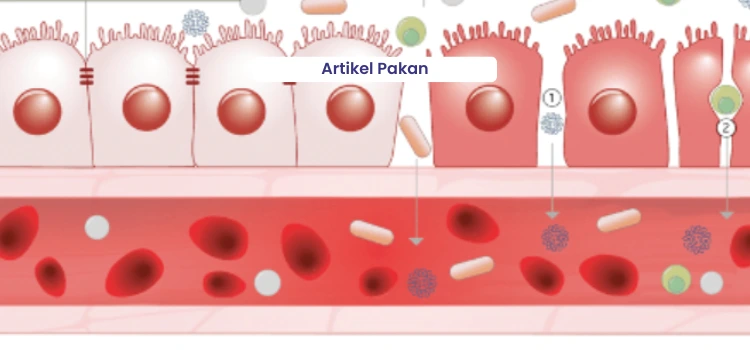
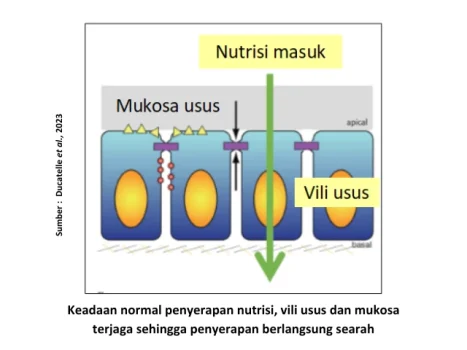
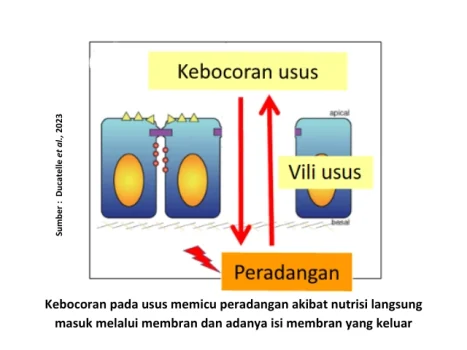
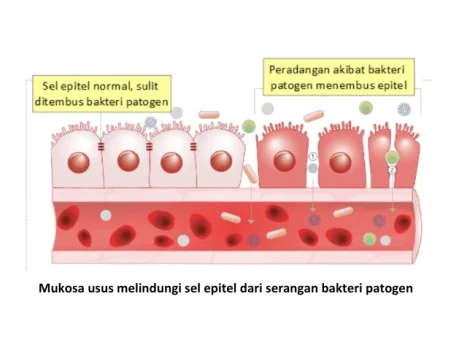
The process of nutrient absorption begins when feed enters the digestive system and is “broken down” through both mechanical and enzymatic processes before being absorbed in the small intestine, specifically in the intestinal villi. The villi are small, finger-like projections that function to increase the surface area for nutrient absorption. They are protected by a mucosal layer to ensure that nutrient absorption occurs in one direction.However, when the mucosa and villi are damaged, nutrient absorption becomes uncontrolled, leading to inflammation. One of the main causes of mucosal and villi damage is an imbalance between beneficial and pathogenic bacteria in the digestive tract. A healthy balance is achieved when the ratio of beneficial bacteria to pathogenic bacteria is approximately 80:20 (Fathia et al., 2022).
The use of organic acids as an acidifier in feed additives serves as an alternative to antibiotics in poultry feed. An acidifier is a type of feed additive that functions to control the balance of microflora in the digestive tract. Its mode of action involves maintaining an optimal intestinal pH, thereby inhibiting the growth of pathogenic bacteria such as E. coli, Salmonella, and Clostridium perfringens. As a result, competition among microflora for nutrients is reduced, allowing better nutrient absorption and improved poultry performance. In general, pathogenic bacteria cannot survive at pH levels below 5.
Organic acids are the most commonly used acidifiers and are naturally produced in the body through fermentation processes. However, to achieve optimal benefits, acidifiers are added to poultry feed. The use of acidifiers is not limited to inhibiting the growth of pathogenic bacteria in the intestine but also acts as a mold inhibitor to prevent fungal growth.The variation in effects depends on the spectrum and type of organic acids that make up the acidifier. For example, sorbic acid is more effective as a mold inhibitor, while formic acid is particularly effective in suppressing bacterial growth. The dosage used also influences the specific type of microorganisms being targeted (Hajati, 2018).
Organic Acids vs. Inorganic Acids
Based on their origin, acidifiers are classified into two groups: organic acids and inorganic acids. Each type has distinct properties and characteristics.
Organic Acids
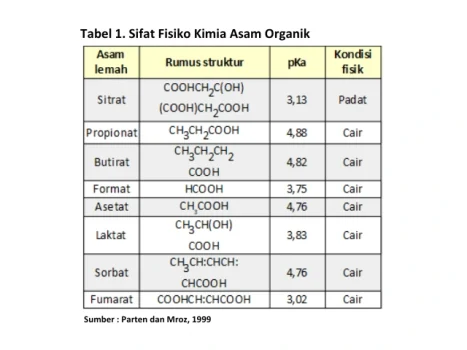
Organic acids are the most commonly used group of acidifiers. They belong to the carboxylic acid family, with the general chemical structure R-COOH. Organic acids are classified as weak acids, typically having a pKa value between 3 and 5, making them safer for poultry consumption. The pKa value represents the degree of acidity on a scale from 0 to 7—the smaller the pKa value, the stronger the acid.Several organic acids commonly used as acidifiers include formic acid, acetic acid, butyric acid, and propionic acid (Table 1). In addition to these free acids, organic acids can also exist in the form of their salts, such as sodium, calcium, or potassium salts.
Some of the most commonly used organic acids include:
- Citric Acid
Citric acid is a weak organic acid commonly found in the leaves and fruits of plants belonging to the Citrus genus. It lowers the pH level in the small intestine from approximately 6.13 to between 5.58 and 5.95 (Imam et al., 2015). This condition promotes the growth of beneficial bacteria such as lactic acid bacteria (LAB) over E. coli. The fewer E. coli bacteria adhering to the intestinal mucosa, the healthier the gut environment becomes, resulting in more efficient nutrient absorption. - Propionic Acid
Propionic acid is an oily liquid with a rancid odor. It has strong antifungal and antibacterial properties. Propionic acid releases hydrogen ions, thereby lowering the pH of the digestive tract, which inhibits the growth of or kills pathogenic microorganisms (Palupi et al., 2020). - Butyric Acid
Butyric acid is a liquid at room temperature and is highly volatile. Due to its unpleasant odor and tendency to evaporate easily, it is commonly formulated in its salt form, such as tributyrin.
Inorganic Acids
The use of inorganic acids is less common than that of organic acids because inorganic acids are more corrosive and classified as strong acids. Another challenge is their more complex application in feed, even though they are generally cheaper. Examples of inorganic acids include hydrochloric acid, sulfuric acid, and phosphoric acid.
Application and Benefits of Organic Acids in Poultry Feed
There are two alternatives for administering organic acids to poultry: through drinking water, such as Asortin, and through feed, such as Asiges. The following are several benefits of adding acidifiers to poultry feed.
Eliminates Pathogenic Bacteria
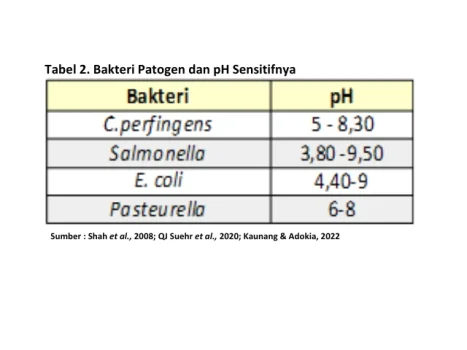
An imbalance in the digestive tract’s pH can lead to an increase in pathogenic bacteria such as E. coli (the causative agent of colibacillosis), Clostridium perfringens (which causes necrotic enteritis), and Salmonella. Organic acids are recognized as a safe alternative to antibiotic growth promoters (AGPs) for suppressing the population of pathogenic bacteria in the gastrointestinal tract.Organic acids work by lowering the pH of the digestive system. Under these conditions, organic acids exist predominantly in their undissociated form (R-COOH), allowing them to easily penetrate bacterial cells. Once inside, they acidify the bacterial cytoplasm. The bacteria then attempt to expel hydrogen ions (H⁺) to restore internal balance, but this process consumes a significant amount of energy. Over time, the bacteria deplete their energy reserves and die (Khan et al., 2022).Below are some pathogenic bacteria that are sensitive to pH changes.
Maintains Intestinal Health
Acetic, propionic, and butyric acids are short-chain organic acids. This group of organic acids has been proven to stimulate crypt cell growth and maintain the integrity of intestinal tissues, thereby keeping the digestive tract healthy. Lesson et al. (2005) and Panda et al. (2009) reported that supplementing broiler diets with 0.2–0.6% butyric acid increased villus height and crypt depth in the small intestine—an effect particularly beneficial for young chickens.The inclusion of short-chain fatty acids such as butyrate stimulates the formation of intestinal mucosal cells, which function to protect the intestines from pathogenic bacteria (Astutik et al., 2023).
Improves Feed Digestibility
One of the positive effects of adding organic acids to the digestive tract is the stimulation of beneficial bacterial growth. The higher the population of beneficial bacteria, the more efficient nutrient absorption becomes. Organic acids also promote increased production of the digestive enzyme pepsin, thereby improving protein digestibility.Supplementation with 0.25% butyric acid in broiler feed has been shown to increase protein digestibility from 63.68% to 69.22% (Ndelekwute et al., 2019). In addition, the acidic environment created by organic acids stimulates the pancreas to produce more digestive enzymes, further enhancing nutrient utilization.
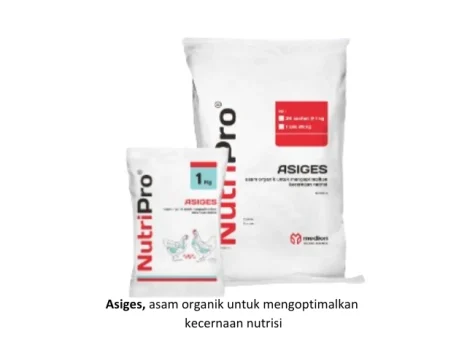
Asiges contains a combination of organic acids that help eliminate pathogenic bacteria, maintain intestinal health, and improve feed digestibility. It is administered by mixing Asiges into feed at a dosage of 1 kg per ton of feed.
Inhibits Mold Growth
One of the challenges during the rainy season is the increased risk of fungal contamination in feed ingredients or finished feed. Corn, in particular, is highly susceptible to mold growth, especially when its moisture content exceeds 14%. Organic acids such as propionic acid are known to effectively inhibit fungal growth.The antifungal mechanism is similar to how organic acids suppress pathogenic bacteria—by acidifying the environment around fungal cells, causing the cell membrane to become acidic. As a result, the acidic condition within the fungal cells disrupts their normal functions and inhibits their growth (Hanan et al., 2015)
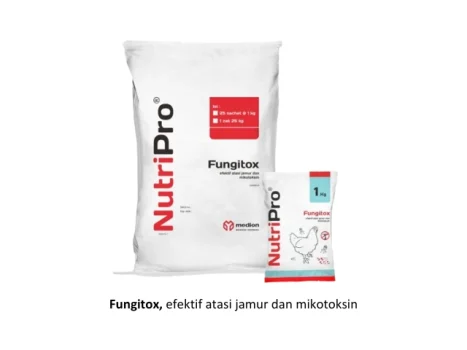
When feed ingredients are of poor quality—particularly when moisture levels are high—mold growth in feed becomes highly likely. Therefore, it is recommended to add Fungitox, which contains organic acids and a silicate mineral complex, providing dual protection against mold and mycotoxins. The recommended dosage is 0.15–2.50 kg per ton of feed.
That concludes the brief information on the use of organic acids as feed additives in poultry feed. Hopefully, this information is useful and brings continued success.