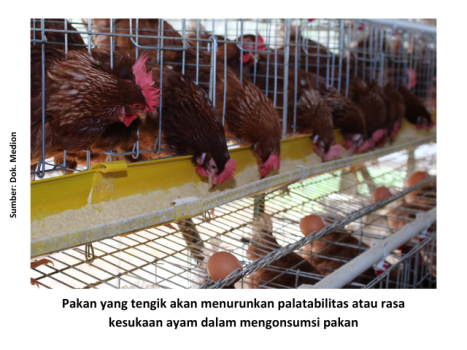
Good feed is very important for the achievement of chicken performance. Nutrient content in the feed in accordance with the needs and achievement of targets feed intake (feed consumption) into two things that must be considered by farmers. Palatability or taste preferences in consuming chicken feed is important in achieving the target feed intake. Fresh feed will increase the appetite of chickens, and vice versa. Feed that smells rancid will cause chickens to be reluctant to eat feed.
Occurrence Of Rancidity
Rancidity is a natural process caused by the oxidation reaction of fats or oils exposed to oxygen. Unsaturated fatty acids contained in fats or oils will react with oxygen to form peroxide radicals. The peroxide radical then reacts with other triglycerides to form highly unstable hyperperoxides and breaks down into a number of secondary products, such as aldehydes and alcohols. And eventually will appear rancidity in raw materials and feed.
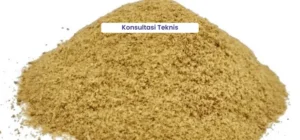
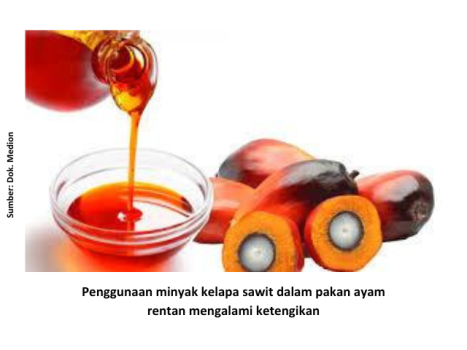
Raw materials that need to be considered for quality control related to rancidity include Bran, fish meal, coconut cake, shrimp head flour and the addition of oil (palm oil, coconut oil, soybean oil, fish oil, etc.). The percentage of use in feed also needs to be considered, so that it can suppress the occurrence of rancidity.
Parameters used to determine the degree of rancidity can use peroxide values. The limit value of peroxide in feed is 100 m.eq / kg. If the value of peroxide exceeds 100 m.eg/kg will lead to a decrease in livestock performance. In addition to the peroxide value, tests that can be performed to describe the rancidity value include analysis anisidine, malonaldehyde and thiobarbituric acid (TBA). Factors that affect the occurrence of oxidative reactions in fats or oils include :
- Humidity or water level. High humidity or water content (>14%) will accelerate the hydrolysis of triglycerides that produce free fatty acids that are easily oxidized.
- Temperature. Increasing the temperature in the storage of raw materials and feed also increases the rate of oxidation so that raw materials and feed become rancid more easily.
- Light. Light provides an energy source that can promote fat oxidation, even more so ultraviolet light.
- Metal content. Contamination of metals or inorganic minerals, especially iron and copper in excess will trigger oxidative reactions.
Rancidity Effect
Rancidity in raw materials and feed will lead to a decrease in feed consumption. This decreased feed consumption will result in weight loss and egg production, swelling of feed efficiency can even increase mortality. In addition, some of the effects of rancidity are :
- Lowering energy levels
The occurrence of oxidation reactions in fats or oils that cause reactions in fatty acids and triglycerides will cause a decrease in energy levels in raw materials and feed. - Destroys fat-soluble vitamins
Vitamins are divided into two groups, namely fat-soluble and fat-insoluble. Vitamin A, D, E dan K merupakan vitamin yang larut dalam lemak. The presence of oxidation reactions in fat, will cause the vitamin to be damaged so that its availability is reduced. - Damage to fat-soluble vitamins, especially vitamin E will affect the level of fertility (fertility) and hatchability. In addition, it can provoke the appearance of cases encephalomalacia. This condition can also cause a decrease in the immune response (immunity) and proliferation of lymphocytes.
- Lowering amino acid levels
Fat oxidation that occurs in grain raw materials, such as wheat, barley and oats can reduce levels of amino acids, especially methionine and tryptophan by 26%. - Affects the availability of xanthophylls (yellow color of the yolk)
Oertel and Hartfiel convey that there is a relationship between the peroxide value (rancidity number) and the number of xanthophylls. The higher the peroxide value, the less xanthophyll deposition. And this can cause the color of the yolk to fade.
Handling Rancidity
Oxidative reactions are natural processes, that is, reactions between unsaturated fatty acids and free oxygen. Some steps that can be taken to reduce the occurrence of oxidative reactions include :
Improve storage management
Pay attention to the management of storage of raw materials and feed, especially when in cages. Remember, oxidative reactions are natural processes. When this oxidative reaction is autocatalytic, that is, once started, oxidized fatty acids will continue to form and so there will be an accumulation of rancidity.
Good storage management will suppress the occurrence of this oxidative reaction. Pay attention to temperature conditions, humidity, moisture content, light and excessive contamination of iron and copper minerals. Usage pallet also known as FIFO (first in first out) and FEFOfirst expired first out) will be very helpful in suppressing the occurrence of oxidative reactions.
Raw materials and feed should be stored in sacks with closed conditions. Stored with sufficient lighting. And the amount of feeding should be adjusted to the needs, avoid the accumulation of feed in the feed because it will accelerate the occurrence of rancidity.
Quality control
Quality control needs to be done more strictly, especially when receiving raw materials that are easily rancid. If necessary do peroxide test, malonaldehyde analysis and thiobarbituric acid (TBA). The combination of these three Tests will give a more complete picture related to the oxidation state.
Ration formulation
Pay attention to the restrictions on the use of feed raw materials that are prone to rancidity. Limit the use of such raw materials. In addition, the crude fat content in the feed formulation also needs to be considered. In general, the maximum limit of crude fat content in the feed is 7%.
Oxidized fatty acids can react with certain amino acids, such as methionine and tryptophan. Therefore, when the use of oils or fats that exceed the limit or have indicated an oxidative reaction, it should be added or increased supplementation of both amino acids. Moreover, methionine and tryptophan are essential amino acids, which cannot be produced by the chicken's body so that their adequacy depends on the content in the feed given. Usage Mix Plus or Top Mix will help optimize the fulfillment of amino acids as well as fat-soluble vitamins (A, D, E and K).
Use of antioxidants
Antioxidants are often added to raw materials or feed with a relatively high fat or oil content. Antioxidants can delay oxidative processes by stabilizing reactive fatty acids.
A good antioxidant should have the following criteria :
- Should effectively inhibit the occurrence of oxidative reactions, although in low concentrations
- Non-toxic
- Relatively cheap price
Chart 1. indicates antioxidant compounds that are often used in feed. Currently, many natural antioxidants are also being found, namely from herbs that are rich in polyphenols. Examples of herbs that have an antioxidant effect are cloves, cinnamon, oregano, garlic, thyme and peppermint. In addition, some pigments such as carotene, beta carotene, astaxanthin, zeaxanthin, lutein and canthaxantin also have antioxidant activity.
Antioxidants should be given as early as possible to produce optimal effects. In addition to the addition to feed, antioxidants can also be mixed when processing feed raw materials. For example, antioxidants are mixed in fats or oils, fishmeal or in premixes. Mix Plus and Top Mix also already contains antioxidants.
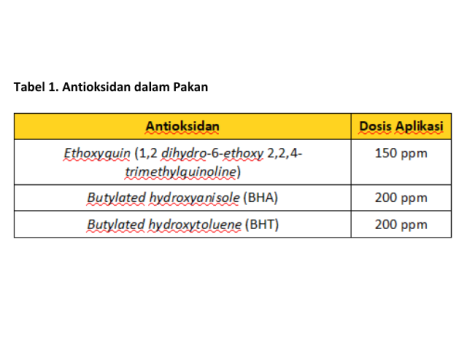
The addition of a single antioxidant is usually already able to suppress oxidative reactions. It's just that in certain cases it is necessary to combine the administration of antioxidants. This depends on the condition of the raw material (moisture, moisture content, metal contamination or inorganic minerals), long storage, temperature and level or content of oil or fat.
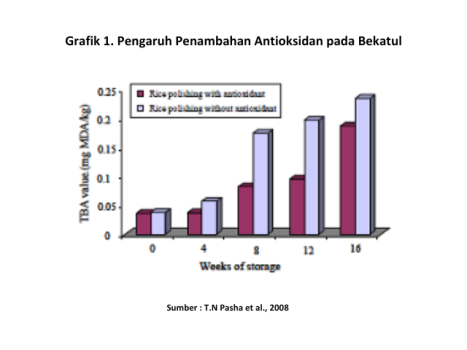
The effect of adding antioxidants in decreasing or suppressing oxidative reactions is shown in Graph 1. The addition of antioxidants in Bran is able to suppress the formation thiobarbituric acid (TBA) so that the level of rancidity can be suppressed.
Rancidity not only lowers the appetite of chickens. The effects caused are so many. Therefore, we need to pay more attention to this case of rancidity. May it be useful and successful Always.