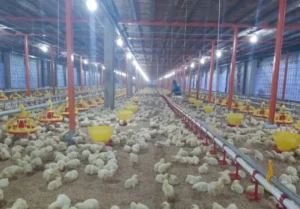
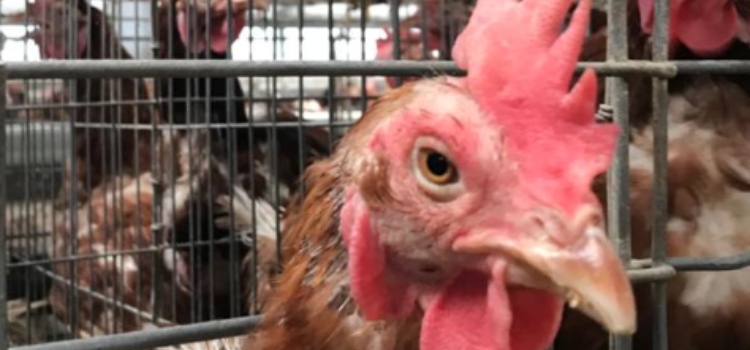
Respiratory, digestive and reproductive diseases caused by bacteria or viruses can cause a decrease in egg production in chickens layer and drastic weight loss in chickens broiler.
Diseases cause various organ dysfunctions, be it digestive organs, breathing, nerves to reproductive organs that are directly related to egg production. Coupled with the influence of weather changes and environmental problems, this disease disorder becomes difficult to minimize.
Starting in 2023, health evaluation is mandatory so that we as farmers can increase awareness of the risk of chicken diseases that can threaten the farm.
Poultry Disease Problems Throughout 2022
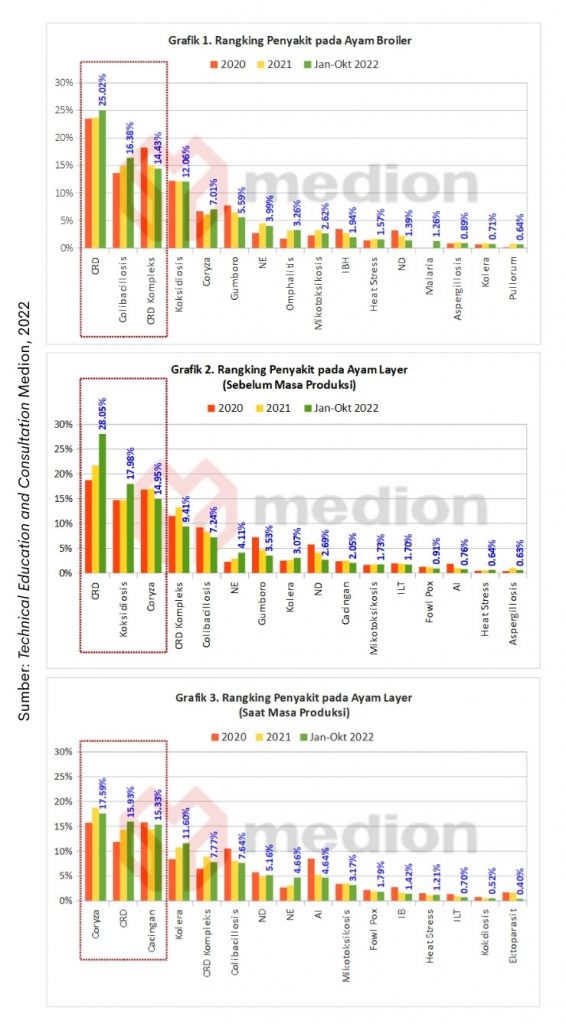
The trend of diseases affecting poultry, especially chickens throughout 2022 is likely to be the same from previous years. Based on data collected by the team Technical Education and Consultation (Graphs 1-3), diseases that are many and often occur in chickens broiler and layer is a bacterial disease.
Respiratory diseases due to bacterial infections always rank in the top 5 such as CRD, complex CRD, Colibacillosis and Coryza. Diseases that attack the respiratory system has not been able to suppress the incidence rate and some have increased from the previous year due to predisposing factors that are often encountered.
As for viral diseases, some of the diseases that occur are Gumboro, ND, ILT, IB, IBH and AI. Although vaccination has been carried out, it is still necessary to pay attention to important factors that affect the success of vaccination and the implementation of strict biosecurity.
Moreover, there is often an imbalance between the seeds of the disease, the environment and the host (chicken) that causes chickens to get sick easily. This can happen due to the increasing number of disease seeds in the environment or the decrease in the immune system of chickens due to environmental changes such as extreme weather changes. So we also have to develop a defense system outside the chicken's body.
On chicken broiler
- Bacterial diseases still dominate the overall disease even many occur in the respiratory system (CRD, CRD complex, Colibacillosis and Coryza).
- From the data collected until October, viral diseases that are often found are Gumboro, IBH, and ND.
- The incidence rate of IBH disease is still the second highest after Gumboro among other viral diseases in chickens broiler.
- The parasitic disease, coccidiosis, is still likely to be the same as the previous year and is likely to increase during the rainy season from late 2022 to February this year.
- Other diseases such as fungal infections Aspergillus and Genesis heat stress still found.
- There were also several cases of malaria in the field with supporting factors such as seasonal changes (transition of rain to dry season). Mosquitoes as vectors spread disease seeds to healthy chickens through bites. Standing water is an ideal medium for breeding mosquitoes and other insects.
On chicken layer before production period
- Bacterial diseases remain as dominant as in previous years. Of the top 5, bacterial diseases that occur are diseases that attack the respiratory system such as CRD, Coryza, and complex CRD. Especially CRD continues to increase from the previous year.
- Diseases that attack the digestive system, namely coccidiosis and necrotic enteritis still continues to increase. Moreover, the case of coccidiosis ranks 2nd among all diseases that attack the pre-production period.
- The most common types of gum disease are gingivitis, gingivitis, and gingivitis (Fowl pox) and AI.
- The presence of growth disorders during childhood pullet, can not be compensated in subsequent periods. Any organ and skeletal growth must be achieved in a timely manner so that the readiness of the egg production period is more optimal. Auto sickness disorder resulting in a major impact on performance pullet when starting to enter the production period and can interfere with the smooth running of the livestock business.
On chicken layer during the production period
- In contrast to before the production period, when during the production period of frequent cases of the disease is Coryza. In addition, it was also found that cholera cases ranked 4 of the overall cases of the disease.
- The most common cause of death in children is stroke, stroke, and stroke (Fowl pox), IB and ILT. Nd disease has increased from the previous year. By the end of 2023, the virus will have spread to other parts of the world (Fowl pox) or ILT can increase.
- Cases of worms are rife again, especially in chickens layer and ranked in the top 3. The disease has also increased from the previous year.
- Some of these diseases attack the reproductive organs of chickens and can cause a decrease in egg production by up to 80%. While the quality has decreased, such as the condition of the eggs are asymmetrical, small in size, and egg shells are thin, rough with a pale color.
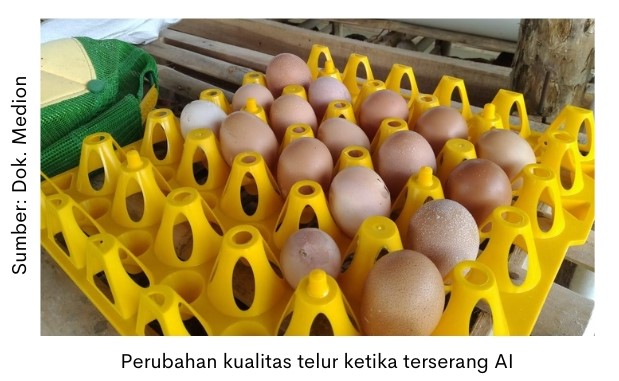
- High cases of Coryza during production can cause a decrease feed intake which has an impact on egg production. However, this recovery in egg production can be faster when compared to diseases that directly attack other reproductive organs.
Easy causes of disease lurking on farms
The balance between chickens and seedlings in the environment plays an important role in the occurrence of a disease. Some factors that can cause chickens to be easily infected with the disease are:
1. Environmental factors
Damp conditions in transition and wet drought trigger the seeds of the disease to multiply rapidly. It is also possible that the increase in the incidence of the disease in a number of cases follows the erratic change of seasons, resulting in stress chickens and decreased immune system (immunosuppression).
In addition, the condition farm where sanitation and disinfection are not paid attention to also support the incidence of disease will continue to recur. If the cleaning process and empty cage is not optimal, the seeds of the disease will survive in the cage and have the opportunity to infect again.
2. Management factors maintenance and fulfillment of nutrition
Starting from a lack of quality time brooding period, can bring a very big influence on the performance of chickens. On time brooding period,, chickens will experience very rapid growth. Almost all vital organs in the chicken's body undergo development in this phase including the immune organs.
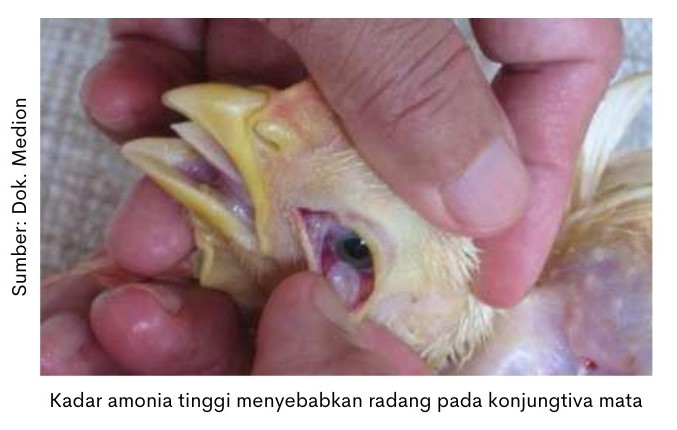
Whether or not the performance of chickens in the next phase is determined from how maintenance in the future brooding period,. In addition, there is still the emergence of stress-provoking factors, such as high chicken density, poor air ventilation, litter wet and damp, high ammonia content, sudden change of ration etc.
Some of the needs of chickens such as feed nutrition to drinking water that is less fulfilled make chickens more susceptible to disease.
3. Application of biosecurity
Application of biosecurity that is not optimal will greatly affect the spread of disease in a farm. Some obstacles are still often found such as the absence of isolation, less than the maximum in the application of biosecurity 3 zones, systems multi age, there is no routine sanitation and disinfection of the cage, and including the empty period of the cage that is not optimal.
4. Implementation of health programs is not optimal
Improper vaccination programs and procedures can cause vaccination failure so that the immunity that is formed is not optimal. And also antibody titer monitoring is still not routinely performed as baseline titer (standard titer) for the farm.
So it does not have an early warning when it is found that there is a different titer picture than usual. This may be an early warning sign (early warning system) will be the condition of chickens that are being attacked by disease.
Chicken Breathing Problems
Ammonia levels with levels >20 ppm can result in ciliostasis (cessation of ciliary movement) and desiliosis (ciliary damage) in the mucous membranes of the respiratory tract. When the cilia are not functioning, the mucus on the mucosal surface cannot be cleaned, so bacteria or viruses inhaled by the respiratory tract can even reach the lungs or air sacs (Harmful Effects Of Ammonia On Birds, Poultry World, 2010).
As a result, chickens are susceptible to cases of respiratory tract infections such as CRD, Colibacillosis, AI, ND and Coryza.
The increase in cases of AI both H5N1 (HPAI) and H9N2 (LPAI) usually occurs in the rainy season such as October-March. It should be noted that the character of the AI virus is easy to mutate and from monitoring Medion such significant changes occur periodically in 2-3 years.
Until now the case of AI that Medion found in Indonesia is caused by AI subtype H5N1 clade 2.3.2.1c (HPAI) dan subtipe H9N2 lineage Y280 clade H9. 4.2.5 (LPAI).
CRD disease can appear in any season, both dry season, rainy season, and transition season (change of dry season to rain and vice versa). While the case of Coryza need to watch out not only the rainy season as well but in the wet seasons or transition that causes chickens to experience stress and chicken conditions decreased.
Linkage of coccidiosis and NE
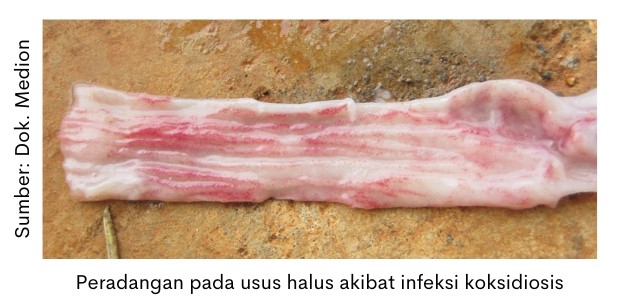
Diseases of the gastrointestinal tract such as coccidiosis and Necrotic enteritic (NE) there has been an upward trend since the policy of banning AGP. NE cases are generally accompanied by infection with coccidiosis pathogenesis changes are almost similar.
Coccidiosis or often called bloody stools is a disease caused by protozoa and attacks the digestive tract of the small intestine and cecum. This coccidiosis infection causes irritation of the chicken's intestinal surface and results in the secretion of mucus from the glands Liberkuhn and excess goblet cells.
In a small amount of bacteria C.perferingens including normal bacteria that can be found in the intestine, especially the cecum (large intestine). However, if the condition of the digestive tract is impaired, it results in an increase in the bacterial population C.perferingens so that it can produce toxins / toxins.
C.perferingens can use the mucus protein (mucin) as a source of energy nutrients in the breeding process.
The challenge of coccidia plus NE disease can damage and affect the length of the intestinal villi during infection resulting in impaired absorption of chicken nutrients. What's more, generally NE cases are more often found on farms layer with a long period that can affect up to the peak of egg production.
Looking At The Case Of Worms
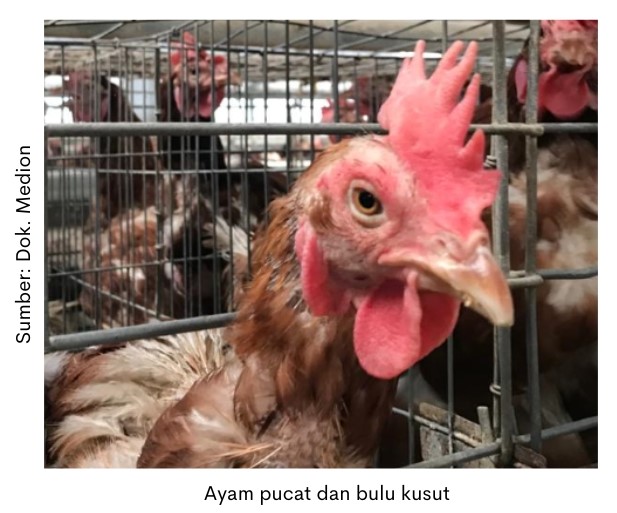
Worms can cause damage to the intestinal villi so that the absorption of feed nutrients will be disrupted. This is related to the management of cage sanitation, feed quality and incomplete deworming programs. Chicken layer those commonly affected by worms show symptoms of decreased egg production, decreased weight performance, pale anemia, matted feathers and decreased egg quality such as thin and pale shells.
It's good to do a stool examination early on MediLab (Medion laboratory) so that if the presence of worm eggs in the stool can be detected early. The type of worm that is quite often found this year is Acanthocephala.
This worm has a probosis in the anterior part that serves as a hook to attach itself to the intestinal wall of the definitive host. Acanthocephala will absorb nutrients from the host's small intestine through their body wall.
Mycotoxins and immunosuppression
Humid weather conditions affect the quality of feed raw materials. It is likely that the fungus grows and will produce mycotoxins. Mycotoxins are secondary metabolites of fungal metabolism that are toxic. In addition to being able to reduce the productivity of chickens, mycotoxins can also cause immunosuppressive conditions.
Stressful conditions also result in a weakened immune system (immunosuppressive). In stressful conditions, in the body of chickens there will be an increase in the production of corticosteroid hormones that can inhibit the immune organs in producing antibodies so that chickens are susceptible to disease.
Rates Adenocorticotropic Hormone (ACTH)is an indicator of stress. Excessive ACTH levels will have an effect lazy leucocytes syndrome, which is a condition in which white blood cells do not give an optimal response to foreign bodies or pathogens that will enter the chicken's body.
The further impact of this immunosuppressive effect is to make the response to vaccination and titer of vaccination results become not optimal, it is easy for chickens to develop other diseases, increase the colonization of pathogenic bacteria in the digestive tract of chickens to increase chicken mortality.
Challenges in 2023
- Bacterial diseases need to watch out for the peak increase in cases of CRD disease, complex CRD, Colibacillosis, Coryza, and necrotic enteritis (NE). Moreover, Coryza disease which ranks 3 large in chickens layer and on broiler also increased.
- Beware of cases of worms spreading back on farms, especially chicken layer which has an impact on productivity.
- When the transition season or conditions heat stress, breeders need to be more careful about attacks of immunosuppressed diseases such as Gumboro.
- Until the end of 2022, the case of AI still seems to be turbulent and the impact is very large on chicken performance and death, so it needs to be aware of including the possibility of mutations or the existence of new types.
- Stress due to the transition period between phases grower towards the production phase needs to be anticipated. Some critical points that need to be considered such as feed changes each phase, transfer time pullet to the production Cage, the process of catching up to the accompaniment of supplements before and after moving the cage. Failure of this transition period will have an impact on the non-optimal production phase.
Efforts To Face Challenges
In an effort to face the challenges of the disease need to pay attention to important things as a measure of anticipation. Such as the application of good management practices on all aspects of chicken rearing. Keeping chickens healthy is done from the inside and outside of the chicken's body.
From the inside with the administration of vaccinations to bully the formation of immunity in chickens. The health of the gastrointestinal tract can be maintained by the provision of feed additives and supportive herbs. Giving multivitamins is also to increase the endurance of chickens. Accompanied by defense from outside the chicken body with strict biosecurity application.
The importance of proper vaccination and Biosecurity
Carry out vaccination programs against diseases that increase especially during the rainy season such as ND, AI, Coryza and IB. Do the right vaccination (accuracy of determining the vaccination schedule, vaccine quality, appropriate vaccination management and the condition of the chicken when vaccinated).
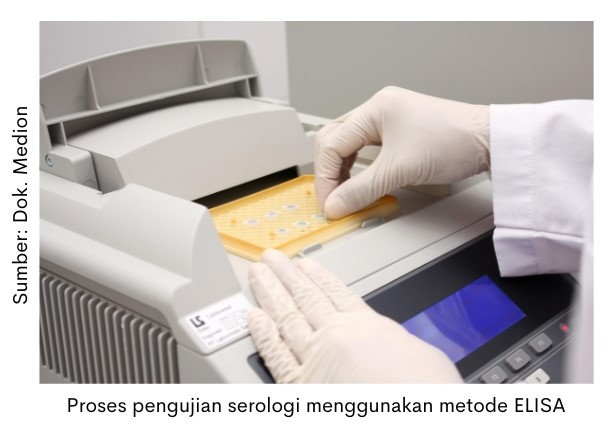
After that, monitor antibody titer needs to be done regularly, especially for chickens layer and breeder to determine the success of vaccination and monitor the antibody titer during the production period. Not infrequently to help confirm the diagnosis, followed by PCR test and sequencing so it will be known the possibility of changes in virus strains. This test can be done in MediLab.
Some important biosecurity applications include :
- Strict implementation of biosecurity model 3 zones (clean, transition, dirty)
- The importance of isolation or separation of livestock in preventing the spread of disease. Sick/dead chickens are immediately removed and separated so as not to become a source of disease transmission for other healthy chickens.
- Limit contact between commercial poultry and free-range chickens, waterfowl or wild animals.
- Cleaning and sanitizing the inside and outside of the room (Neo Antisep/Antisep)
- The rest period of the cage should not be less than 14 days.
- We should also conduct regular Control (2 weeks or 1 month) to conduct a biosecurity audit by filling form checklist.
Reevaluate Health Management and programs
Need adjustments and modifications to the management and health programs include the following:
- Re-evaluate the smoothness of ventilation and setting the density of the cage. Remove the remaining stool mixed with blood (oocyst contamination) and add litter only if the husk is already very damp. If necessary, add lime to the newly added husk. Give ammonia control materials to chickens, namely Ammotrol.
- Strive to clean feces more often during the rainy season so that no wet or damp feces accumulate in litter cage. To prevent the presence of mosquitoes, open puddles can be prevented by closing water reservoirs, buckets and so on. Eradicate flies, mosquitoes, and other insects can use the product Larvatox, Flytox and Delatrin.
- Some to note on the quality of the future brooding period, such as heating, air, water, first feed, density and lighting.
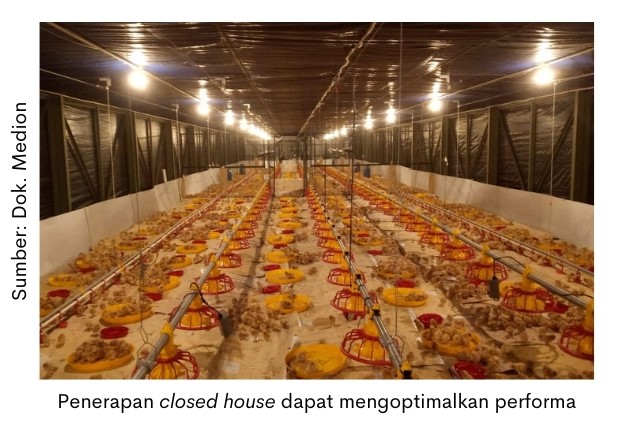
- Could consider for the application of enclosure system closed house. Thus minimizing the influence of environmental and weather conditions that can trigger the onset of the disease.
- Improvement of quality and feed quality in terms of selection of raw materials to the quality of mixing. The feed given must be according to the needs of the livestock to get good chicken performance.
- Check the quality of farm drinking water periodically, at least during the change of season, in laboratories such as MediLab to determine the presence or absence of bacterial contamination in drinking water. Sanitize drinking water with Desinsep if the water quality is not good. Do not forget also to always maintain the cleanliness of drinking places.
- To increase the number of calories in the diet (Vita Stress/Fortevit) regularly so that chickens are not susceptible to disease.
- Assign herbal hepatoprotectors to improve liver function using Heprofit.
- Give Entrozyme which is supportive containing lysozyme which acts as growth promoter to improve the condition of the gastrointestinal tract and improve the performance of poultry.
- Provide appropriate and complete anthelmintic with a broad spectrum of action such as Levamid. The repetition can be adjusted according to the life cycle of the worm and the conditions of the cage. Gilik worms have a life cycle of 1-2 months, while tapeworms are about 1 month. So that deworming can be repeated 1-2 months later.
- Recording (recording) on farms it is important to be able to monitor health status of poultry.
From some history and evaluation of the occurrence of the disease, we can take remedial action in terms of cage management, feeding to chicken health. It is hoped that throughout this New Year, cases of disease can be avoided and productivity can be achieved optimally.