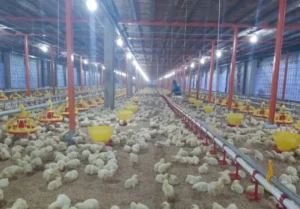
Livestock health is something that must be considered in running a farm, not least for chicken farmers. Healthy chickens are an important factor to support good production. Vigilance against various disease infections becomes quite important for farmers, one of which is to be vigilant against infection Gallibacterium anatis.
Cases of infection Gallibacterium anatis began to occur in the field and reported mostly found in Central Java and East Java (source: poultryindonesia.com, May 2021). El-Ghany et al (2023), infection G. anatis is generally often found in chickens layer and lead to a decrease in production.
But these bacteria can also cause respiratory problems, diarrhea and emaciation in chickens broiler, can also cause production disruption and mortality rate of 0.06-4.9% in chickens breeder. Therefore, it is important for farmers to know G. anatis as a step in controlling the disease.
Causes Of Disease
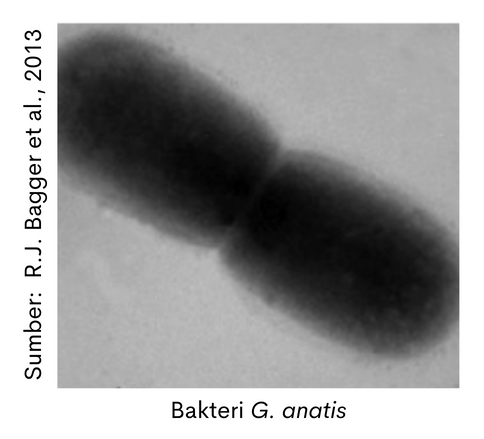
Gallibacterium anatis is a Gram-negative bacterium ( - ), from the family Pasteurellaceae, non-motile, do not form spores and are normally found in the upper respiratory tract in healthy chickens. These bacteria are opportunistic pathogenic bacteria or can turn into pathogens (malignant) when the health condition or endurance of chickens decreases (Daranesha N.K et al., 2020).
G. anatis divided into 2 biovar, namely G. anatis biovar hemolytica which can mememolisis (destroy cell walls) red blood so that it is pathogenic (malignant), and G. anatis biovar anatis which are non-pathogenic (benign) (R. J Bager et al., 2013).
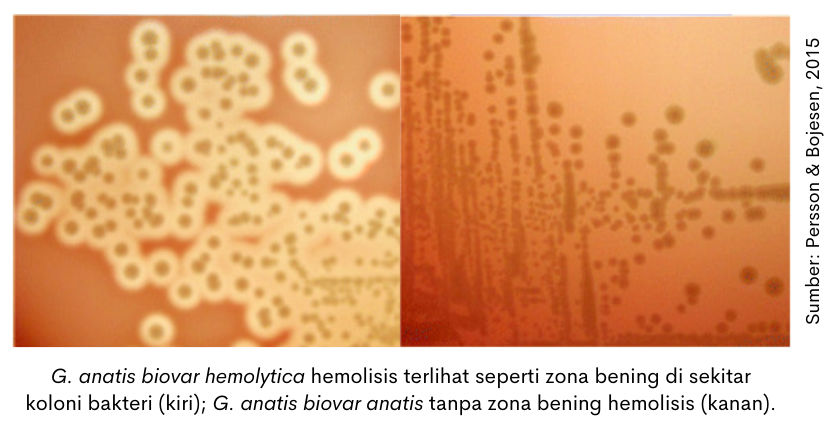
G. anatis also has virulence factors that favor the appearance of infection in chickens. Some of them are hemolysin toxin that can mememolisis blood, fimbrae for attachment to host epithelial cells, capsule that one of its functions can avoid the immune system, metalloprotease enzyme for colonization and nutrient uptake, and other virulence factors (R. J Bager et al., 2013).
Vulnerable species and ways of transmission
G. anatis it is a normal microflora that is present in the upper respiratory tract and the rear digestive tract in poultry. In addition to attacking poultry, G. anatis once reported to be able to attack mammals such as cattle, sheep, rabbits, horses, etc. (Singh et al, 2016).
Transmission of G. anatis the most common is through the air from sick chickens to healthy chickens. In addition, this bacterium can also be transmitted from mother to Chick and can also be transmitted through marriage. Factors that may favor the occurrence of infection G. anatis among others, the infection of other diseases, hormonal influences, age, climate change, stress and decreased endurance chicken (Singh et al., 2016).
Clinical Symptoms
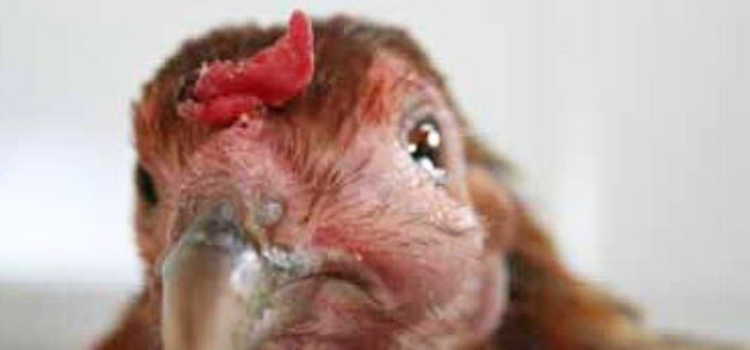
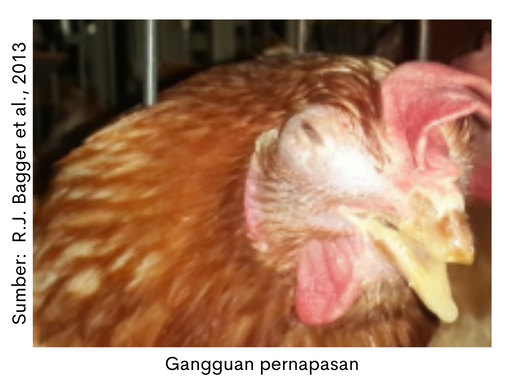
In general, the symptoms caused are not specific, such as difficulty breathing, cough, mucus discharge from the nose, trembling head, mild swelling of the head, anorexia (decreased appetite), diarrhea, thinness and production disorders.
Symptoms are sometimes not visible or only mild (Bojesen et al. 2008; El-Adawy et al. 2018; Elbestawy et al. 2018). On chicken layer, can cause a decrease in egg production up to 3-18% and in chickens breeder there can be an increase in mortality by 0.06 - 4.9% (El-Ghany et al., 2023).
Pathological Changes Of Organs
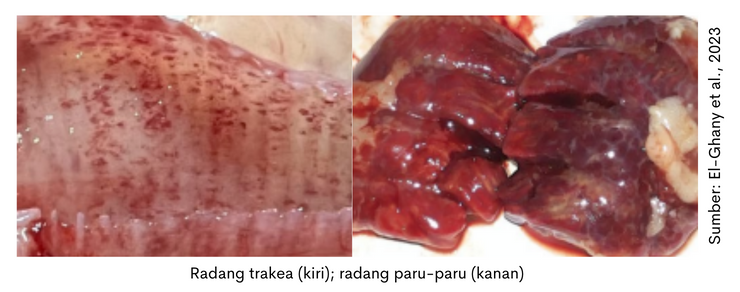
Pathological changes in organs found in infections G. anatis are changes in the respiratory tract such as, tracheitis (inflammation of the trachea) and pneumonia (inflammation of the lungs). In the reproductive tract, changes are found in the form of oophoritis (inflammation of the ovaries) with inflammation of the ovarian follicles, fertilized ovaries and salphingitis (inflammation of the oviduct). In some cases reported also atrophy (shrinkage) of the ovaries and oviducts (El-Ghany et al, 2023).
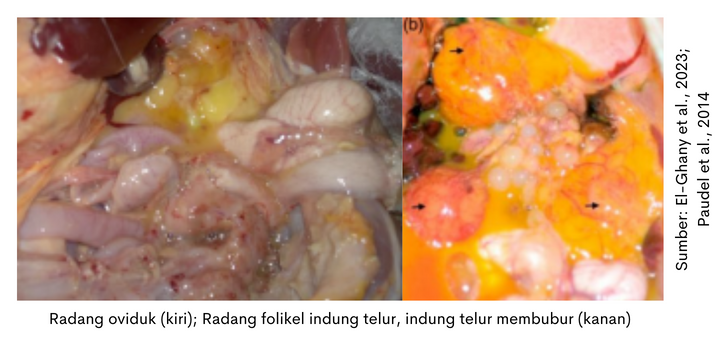
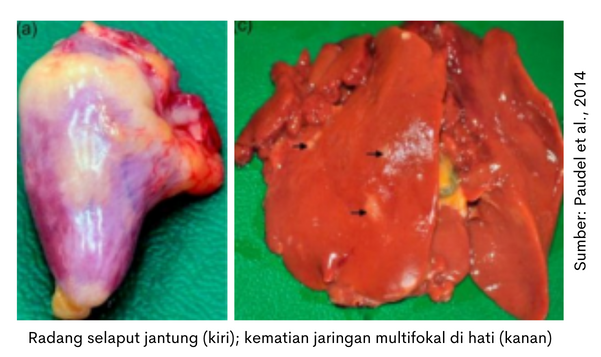
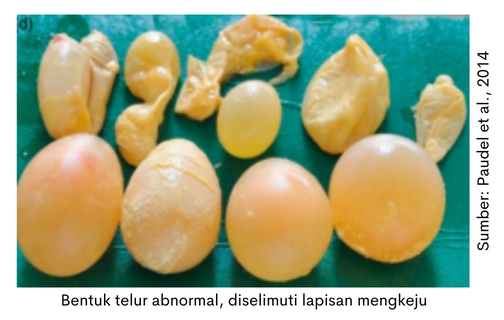
According To Paudel et al., 2014, infection G. anatis it can also cause pathological changes such as the presence of peritonitis (inflammation of the lining of the stomach), pericarditis (inflammation of the enveloping membrane of the heart) and the presence of multifocal tissue death in chicken hearts has also been found. In addition, in infections G. anatis it was also found that changes in The Shape of the egg became abnormal and covered with a layer of cheese.
Prevention
Prevention can be done with a combination of biosecurity, management, and supportive for optimal protection. Steps that can be taken include:
- Application of biosecurity model 3 zones (clean, transition, dirty).
- It is necessary to clean the stool regularly and avoid stool build up and damp. Use ammonia binders such as Ammotrol to reduce the concentration of ammonia gas in the cage.
- A close-up of the roof (Neo Antisep/Antisep)
- Feed and drinking places should be washed and disinfected regularly with Medisep. Do it anyway flushing for cleaning biofilm which is attached to the water pipe.
- Limit contact between commercial poultry and free-range chickens, waterfowl or wild animals.
- Water in a pot of boiling water (Desinsep). Ensure that the quality of drinking water in accordance with the standards of chicken, chicken drinking water quality test if necessary periodically in MediLab especially during the rainy season or the change of seasons.
- Improvement of the quality and quantity of feed (feed given must be in accordance with the amount and content of nutrients) according to the needs of livestock. If possible, test the quality of feed in the laboratory (MediLab) to ensure that feed nutrients have met the needs of chickens.
- Supportive administration with multivitamins such as Vita Stress/Fortevit or immunostimulants such as Imustim to increase the immune system of chickens.
- In addition, in order to maintain optimal liver function can be given Heprofit/Kumavit. To help increase egg production can be given Eggstima.
Severe
Treatment of infectious diseases G. anatis can be through the administration of broad-spectrum antibiotics such as antibiotic products Tinolin at a dose of 0.2 ml/kg body weight, given a maximum of 3 days or antibiotics Rofotyl at a dose of 0.1 g per kg of body weight or 1 g per 2 liters of drinking water is administered for 3-5 consecutive days.
Cases of disease due to G. anatis considered quite detrimental to farmers and can interfere with the effectiveness of livestock production. Hopefully by recognizing the presence of G infection. anatis, farmers can increase awareness of diseases that interfere with the health of livestock and know the control steps. Thank you and healthy greetings always.