Along with the development of the livestock industry, genetic improvements continue to be made in an effort to optimize the achievement of livestock rearing. This certainly has a positive impact on better productivity. But the challenges in raising livestock are becoming higher due to increased susceptibility to disease and stress factors. One bacterial disease that is often found infecting chickens is Colibacillosis. If chickens are already attacked by Colibacillosis can cause impacts in the form of growth disorders, low harvest weight, decreased egg production, an increase in the number of rejected chickens, as well as a decrease in egg hatchability and quality of chicks (DOC), causing considerable business losses. In addition, secondary Colibacillosis causes complications in the respiratory, digestive, and reproductive tract that are difficult to overcome, so that the cost of treating chickens increases.
Causes Of Colibacillosis
Colibacillosis is a disease caused by the bacterium Escherichia coli (E. Col.) belonging to the genus Escherichia and the family Enterobacteriaceae. This bacterium belongs to Gram ( - ) bacteria, is not acid-resistant, rod-shaped, and does not form spores. E Bacteria. coli is a normal bacterium that lives in the digestive tract of chickens (normal flora). however, it can cause disease if the population increases. The amount is about 10 ° E. gram of chicken intestines. Kasus Colibacillosis pada ayam umumnya disebabkan oleh strain avian pathogenic E. coli (APEC) or pathogenic strains. So far, APEC is dominated by three serotypes, namely serotypes O₁, O₂, and O₇₈. About 10-15% of all E. coli found in the intestines of healthy chickens is classified as this type of APEC.
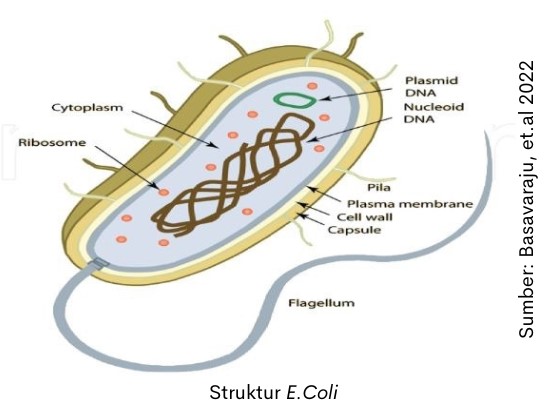
APEC bacteria are often found in cases of Colibacillosis infection in both broilers and layers. The bacteria is able to spread through the blood circulation so that it can cause damage to various organs of the chicken. Examples of frequent cases caused by APEC bacteria are embryo death and the occurrence of omphalitis in chicks. APEC bacteria are also easily mutated into entero pathogenic E. coli (EPEC), which become pathogenic bacteria in the gastrointestinal tract. It also mutates into enterotoxigenic E. coli (ETEC), which produces toxins and then damages the intestinal mucosa.
E Bacteria. coli can grow in aerobic and anaerobic conditions in temperatures of 18-44°C. In other words, these bacteria easily grow at normal ambient temperatures, either with the presence or absence of oxygen. However, these bacteria are not resistant to dry conditions and are easily killed with disinfectants.
The incidence of Colibacillosis on farms
Colibacillosis can be transmitted through contamination of chicken drinking water, litter, air, and feces. E Bacteria. Coli has a high concentration in feces, which is about 10⁶ per gram of feces, these bacteria have the potential to spread and contaminate dust, litter, and drinking water. The Spread Of E. coli through drinking water is more dominant and in the spotlight because drinking water is a medium that is easy to carry E. the bra goes inside the chicken's body. In addition, Colibacillosis can also be transmitted vertically from mother to Chick. Vertical transmission occurs through the reproductive tract of the hen, that is, through infected ovaries or oviducts. The hatched eggs will then produce DOC contaminated with E bacteria. Colossians in his bowels.
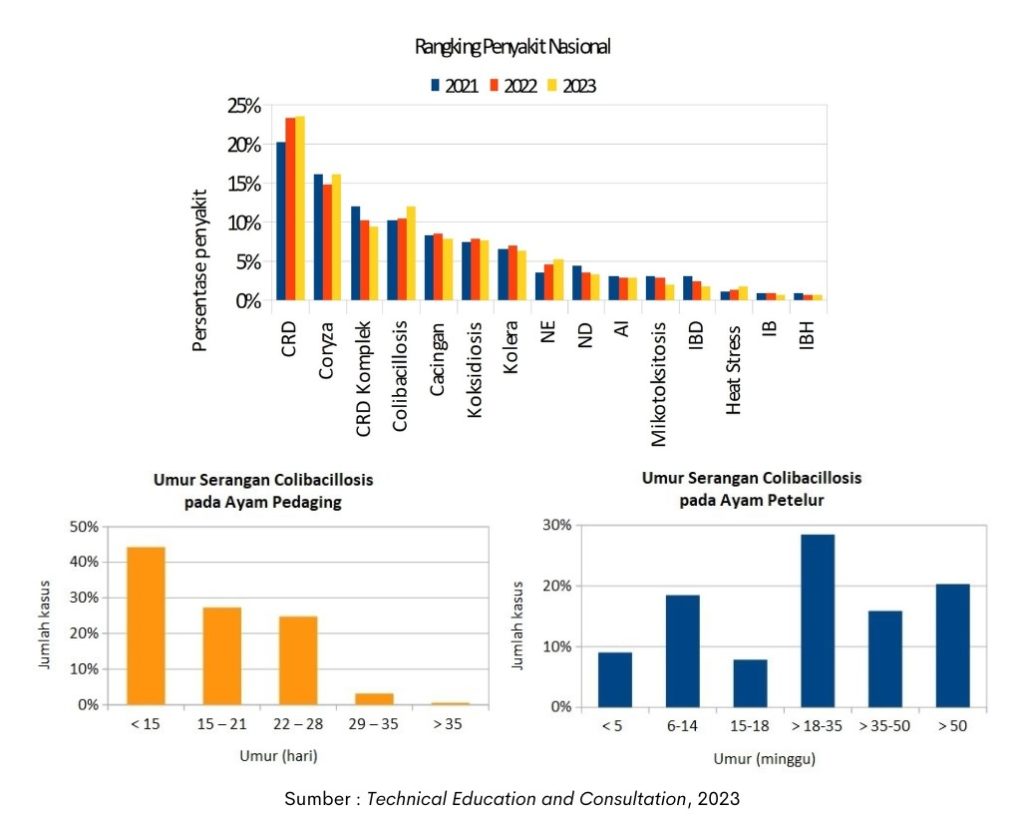
Berdasarkan data rangking penyakit nasional yang dihimpun oleh tim Technical Education and Consultation Medion, kejadianColibacillosis pada ayam pedaging dan petelur masih menduduki 5 besar, sehingga sampai saat ini menjadi penyakit yang perlu diwaspadai. Infeksi Colibacillosis memang bisa menyerang di semua umur pemeliharaan ayam. Jika dilihat dari umur serangan, maka pada ayam pedaging, colibacillosis lebih sering menyerang di umur <15 hari, yang berarti sejak awal pemeliharaan sudah mulai menyerang. Sedangkan pada ayam petelur di umur >18-35 minggu. Hal ini tentu menjadi perhatian karena perlunya kewaspadaan terhadap penyakit ini sejak awal masa pemeliharaan pada ayam pedaging dan di masa produksi pada ayam petelur. Keduanya merupakan masa kritis dalam pemeliharaan ayam.
Impact E. Bra as a secondary infection
The occurrence of Colibacillosis in farms can appear as a single infection, but it is not uncommon to find combined infections with other diseases. When viewed from the disease ranking chart above, infection E. coli most often appears in conjunction with CRD disease which is more commonly known as complex CRD.CRD cases that have collaborated with E. coli can trigger mortality up to 10-15%, or even up to 20%.
Based on the data summarized by the Medion team, in addition to the complex e CRD.coli has also been found to appear in some cases of viral infections such as AI, ND, IB and Gumboro, or in other bacterial infections such as Coryza, cholera, and NE. The appearance of cases of such a combination can aggravate the incidence of the disease and slow down the healing process. One example of the impact of coinfection E.coli and H9N2 cause an increase in the severity of both clinical symptoms, mortality rate and anatomical pathology (Taha, et al, 2019). The clinical picture of H9N2 infection in the field is aggravated by the presence of co-infection by e bacteria. Col. Indicated by the presence of the score of the most severe clinical symptoms, the highest microscopic lesions, the highest mortality, as well as weight loss from e-infected chickens.coli bersamaan dengan AI H9N2 (Jaleel, et al, 2017).
Factors Predisposing To Colibacillosis
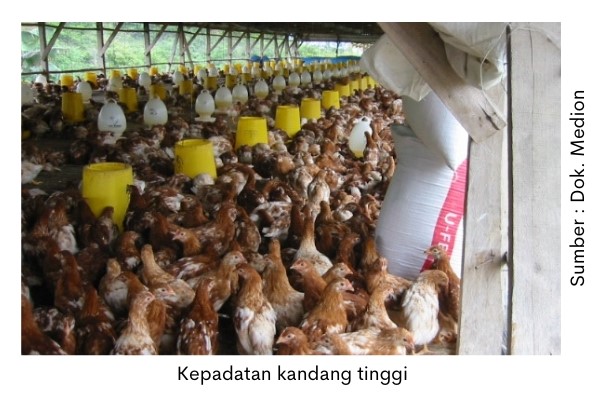
If we examine more deeply, the triggering factors for Colibacillosis are closely related to suboptimal maintenance management. The higher the density of the chicken, the feces accumulate, and the absorption of the litter becomes limited. As a result, ammonia levels become higher and can be a predisposing factor for Colibacillosis (respiratory infection). Many Colibacillosis outbreaks occur due to poor sanitation and hygiene in cages, and are directly related to the quality of air and drinking water on farms. In addition, e bacteria. coli is very easy to live and its concentration is a lot in surface water, so water sources that are too shallow, close to the source of piles of feces, near rice fields, rivers/swamps, or septic tanks, have a great risk of being contaminated with E. coli, both in rainy and dry seasons. Contamination with E bacteria. coli in drinking water given to chickens can cause the risk of chickens being easily infected with Colibacillosis.
Diagnosa Colibacillosis
One of the clinical symptoms of E infection. coli in chickens that can be observed is the presence of yellow diarrhea. These clinical symptoms are also followed by changes in anatomical pathology, which vary depending on the form of infection. Colibacillosis can be local and systemic.
Local Infectious Form Of Colibacillosis
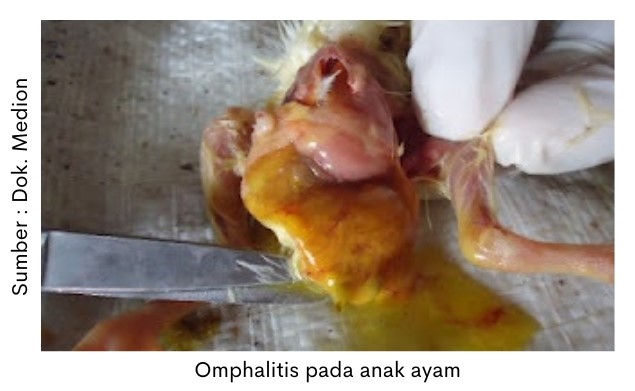
1. Omphalitis and infection of the yolk sac (yolk sac absorption)
Omphalitis or inflammation of the navel is a condition where the DOC's navel cannot close completely, so bacteria easily enter and eventually cause inflammation in that part. Normally, a DOC's navel will close a few hours after hatching followed by the process of absorbing the remaining yolk. If the navel closes too late and it turns out that there is an e bacterial infection. coli in hatching machines or in commercial cages, then there is omphalitis. Because the yolk is located close to the navel, the occurrence of omphalitis during this time is also almost always accompanied by a yolk sac infection (yolk sac infection) which is both caused by bacteria. When there is an infection of the yolk sac, the remaining yolk brought by the DOC will harden, so that the food reserves and the source of immunity (maternal antibodies) in it cannot be completely absorbed.
2. Cellulitis
Collibacillosis infection of this form, is an attack of E. coli that occurs in the subcutaneous tissue under the skin (subcutaneous tissue), such as the skin of the abdomen, thighs, legs, head area, etc. Symptoms are indicated by yellow-brown skin. If it is dissected, a thick exudate of a kind of pus will be found under the skin. The occurrence of cellulitis has been found more often in broilers and is detected when the chicken is already in the slaughterhouse (RPA).
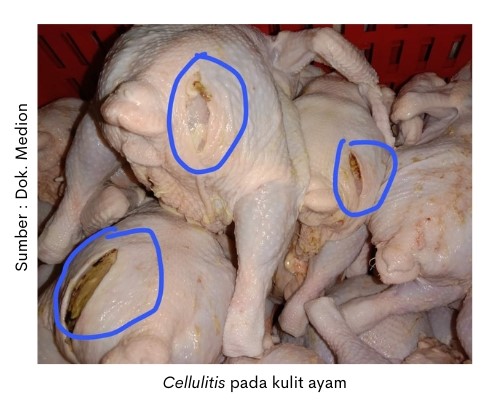
3. Diarrhea
Diarrhea is a common clinical symptom in cases of Colibacillosis, whether caused by E. coli patogen jenis entero pathogenic E. coli (EPEC) maupun enterotoxigenic E. coli (ETEC). Inflammation in the intestine occurs due to E bacteria. coli produces toxins that can damage the mucosal surface and fluid accumulation occurs in the intestine so that visible symptoms appear, namely diarrhea. Infection E. coli in the intestine can generally act as a primary or secondary infection. Secondary infection occurs due to E bacteria. coli also attacks the intestines that have previously been damaged by other diseases, for example, coccidiosis or worms. In secondary infections, e attacks. this coli will exacerbate the effects of the primary disease.
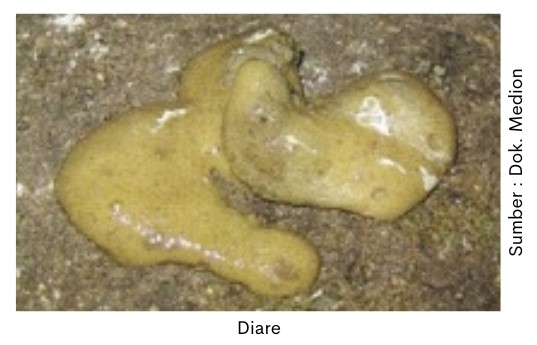
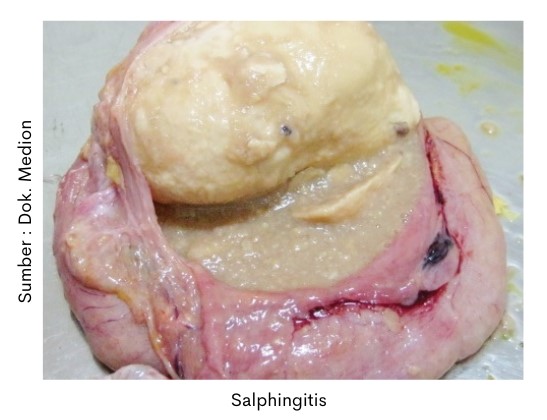
4. Salpingitis
Colibacillosis of this form is mainly found in laying hens. Salpingitis is an inflammation of the oviduct/oviduct. Salpingitis occurs due to the displacement of a large number of e bacteria. coli from the cloaca to the oviduct or displacement E. coli through air sac infection (air sacculitis). Mild infection of the oviduct leads to a decrease in egg production in chickens. However, if the inflammatory process in the oviduct runs continuously for a long time (chronic), then the wall of the oviduct layer will also thin out and a blockage forms inside. The blockage can be a thick liquid such as pus or a hard solid such as foul-smelling cheese. Sometimes, the occurrence of salpingitis is accompanied by inflammation of the lining of the stomach (peritonitis). Chickens with this condition will usually stop laying eggs and will die within 6 months of infection. Whereas in chickens that can survive, it is rare to be able to reproduce normally.
Systemic Infectious Form Of Colibacillosis (Colisepticemia)
Systemic form of Colibacillosis infection due to E bacteria. coli getting into the blood circulation causes colicepticemia. There are two forms of colicepticemia: the respiratory form and the neonatal form.
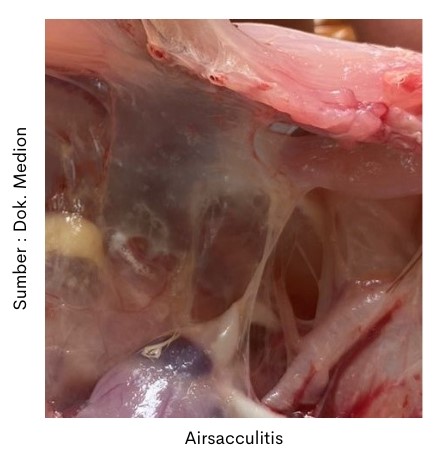
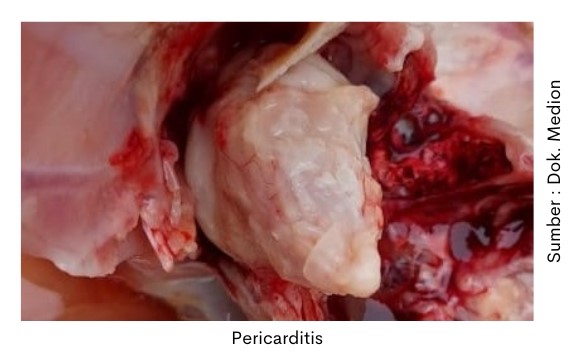
In the respiratory form of colicepticemia, bacteria enter the blood circulation due to damage to the respiratory tract mucosa, so inflammation of the laryng, trachea, lungs, as well as turbid air sacs can be observed. It can be more severe if it coincides with other diseases such as Newcastle Disease (ND), Infectious Bronchitis (IB), mycoplasmosis, or other factors such as high levels of ammonia in the cage. Another characteristic is the presence of fibrin membranes in the heart (pericarditis) and liver (perihepatitis), and peritonitis (inflammation of the peritoneum/abdominal cavity wall).
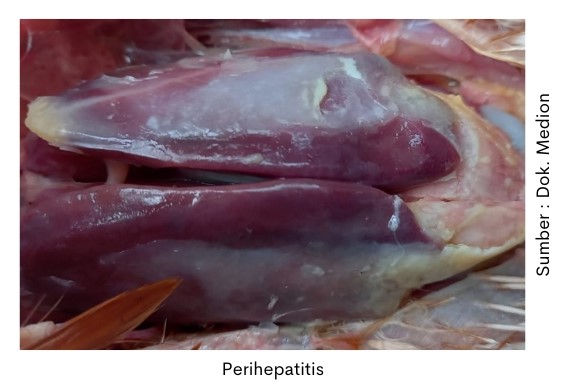
Neonatal Colicepticemia form attacks on Chicks aged 1-2 days which is characterized by impaired growth and death that can last up to 10-20%. The changes found include the remaining yolk not being absorbed and an enlarged spleen. After a few days of infection, there will be typical lesions of serofibrinous polyserositis found on the peritoneum, pericardium, air sacs, and liver membranes.
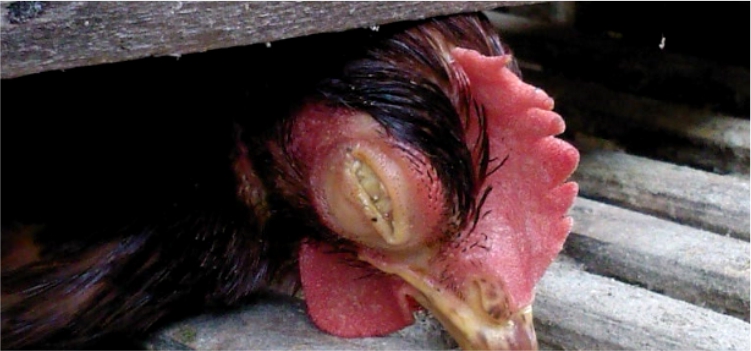
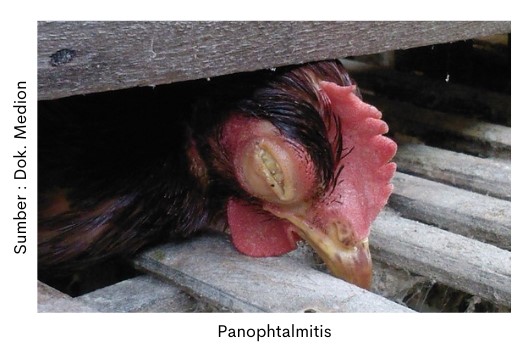
Advanced forms, namely colicepticemia that continues to cause meningitis (inflammation in the lining of the brain), panopthalmitis (redness of the eyes, swelling, blurred eyeballs, perkejuan in the eyes, up to blindness). Panophtalmitis sering mengikuti infeksi coryza yang biasanya dikelirukan dengan penyakit SHS (Swollen Head Syndrome). Coligranuloma (the presence of bunches of the liver, intestines, and their hangers), the mortality rate that occurs in this form can reach 75%. bursitis sternalis (sternum or sternum covered with thick purulent mucous fluid), arthritis (joint inflamed, swollen, there is a clear liquid cheesy).
Colibacillosis Prevention
- Colibacillosis can be transmitted from mother to Chick vertically. Therefore it is important to do DOC selection before entering the cage, especially those who show symptoms of Colibacillosis, namely wet navel, because if it continues to be maintained its productivity will not be optimal and potentially transmit to other chickens
- Application of good biosecurity such as routine cage sanitation, either when the cage is empty or when it contains chickens. Application of biosecurity 3 zones, limiting guests, other animals into the enclosure environment. Disinfection of equipment (ration places, drinking places, etc.) using Medisep.
- Prevent litter before it becomes very dry and dusty by not installing too thick litter (litter thickness is enough 8-12 cm).
- Regulate air circulation in the cage well and clean the dust around the cage because it is potentially contaminated with E. Col. Try to keep the air circulation good, it is easy to change and the chickens feel comfortable.
Treatment of Colibacillosis if already attacked
- Culling (selection) chickens with severe disease symptoms because the cure rate is relatively small.
- Treatment with antibiotics that are effective for Gram-negative bacteria. In severe cases, antibiotics can be given through drinking water, for example Neo Meditril or Tinolin. However, if the condition of the chicken is severe so that the consumption of chicken drinking water decreases, treatment can be considered using antibiotics via injection such as Neo Meditrile-I or Tinolin Injection. In the treatment of Colibacillosis there are several things to consider, in addition to the dose, as well as the length of administration that must be appropriate, it is necessary to roll antibiotics from different groups to avoid antibiotic resistance.
- Routinely checking water quality with laboratory tests at the time of the change of season or water source.
- Administration of organic acids such as Asortin, to maintain the balance of intestinal microflora by maintaining the optimum pH of the gastrointestinal tract, thereby improving the performance of chickens.
- Administration of vitamins to increase appetite and endurance, for example Vita Stress, Imustim, or Fortevit.
- Disinfection of the cage and the environment with Medisep or Neo Antisep every day to reduce the seeds of disease in the environment.
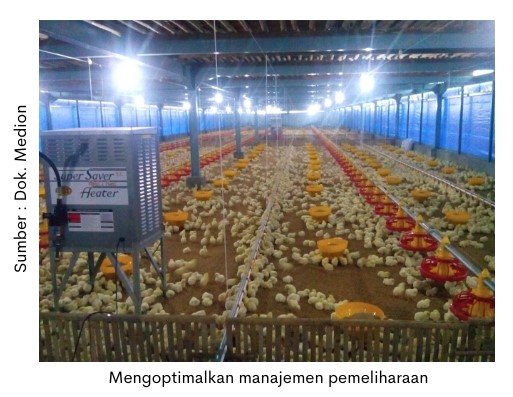
- Improvement of maintenance management such as density regulation, ensuring good air circulation, litter management so as not to get wet and damp, adequate nutrition in feed, and control of ammonia levels.
The occurrence of Colibacillosis disease in the barn still needs to be a cause for concern. Its attack at all ages of maintenance and in all seasons makes maintenance and biosecurity factors as our first barrier in tackling it so that collibacillosis does not return to our farms.