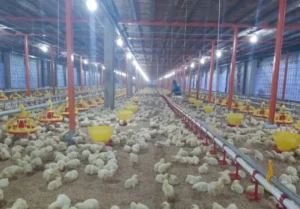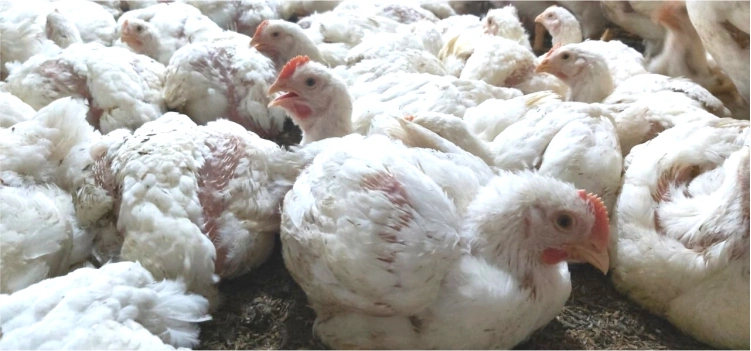
Heat stress or stress heat is a symptom that arises due to the inability of the chicken body broiler / layer to adjust to the heat. Heat stress due to the temperature and humidity of the air in the cage exceeds the comfort zone. Stress this will appear when the chicken cannot remove heat from its body due to the air temperature in the cage is too high.
Poultry classified as animals homoiterm (warm-blooded) with specific characteristics do not have sweat glands and almost all parts of the body covered with fur. Biological conditions like this will cause poultry to have difficulty dissipating body heat into the cage environment during the day or hot conditions. Chickens raised in the tropics are vulnerable to danger stress hot. If stress, then the zone homeostasis the chicken will be disturbed and the body will try to restore to a comfortable state. Emergence stress heat in poultry can be a trigger for the emergence of various disorders such as disease, growth rate and egg production decreases and ends with a decrease in the level of profit or income of farmers. The decrease in production (growth and egg production) is due, among other things, to reduced nitrogen retention and goes on to a decrease in the digestibility of proteins and some amino acids.
Heat stress can occur in 2 forms, namely:
A. Heat stress acute
Form heat stress this happens when the temperature and humidity in the cage increase dramatically suddenly. The clinical symptoms of the acute form are that the chicken has difficulty breathing (dyspnea), the neck is extended upwards, the frequency of breaths increases and the appetite decreases. This results in the growth of chickens will be hampered. If the temperature and humidity conditions are high then :
- Chickens are not able to pass heat through panting and heat expenditure through the skin (inefficient)
- The heart will pump additional blood to the skin
- Increased body temperature
- Chickens die of heart failure and o₂ deficiency
B. Heat stress chronic
Form heat stress chronic is provoked by conditions of elevated temperature and humidity for a relatively long time. Clinical symptoms in the chronic form, which are commonly found in adult chickens, the above symptoms can continue to blueness, emaciation and lead to death. Heat stress chronic will cause a greater effect on old chickens compared to young chickens. Adult chickens have feathers that have been perfect and this condition will make it difficult to dissipate body heat. In addition, adult chickens have a larger body size so that more body heat is produced. If the temperature and humidity conditions of the cage are high then :
- Chickens breathe 240 times / min
- Body temperature rises slowly
- Metabolism increases 20-30% so it will produce more heat
- Appetite drops
- Weight loss
Chickens will expand the surface area of the body by spreading or hanging wings and panting where the chicken will breathe through the throat as a result of chicken will decrease the consumption of rations (feed intake) and water consumption increases when experiencing heat stress. If the air circulation in the cage is not smooth then in the cage oxygen levels decrease and body fluid needs increase.
When the uncomfortable condition continues, the chicken will respond through hormonal mechanisms, where hormone levels Adrenocorticotropic hormone (ACTH) will increase sharply in blood circulation. Aftermath feed intake decreases and drinking water consumption increases. These conditions result in impaired growth, poor uniformity of chickens, swelling of the ration conversion value (FCR), as well as the appearance of nutritional deficiency symptoms will occur in the field. The worst result is death. Small loss due to heat stress this is influenced by the age, breed and weight of chickens as well as the period and level heat stress experienced by chickens (the maximum temperature received by chickens, the duration of the stress and the speed of change in air temperature).
Chicken Cooling Process
a. Conduction
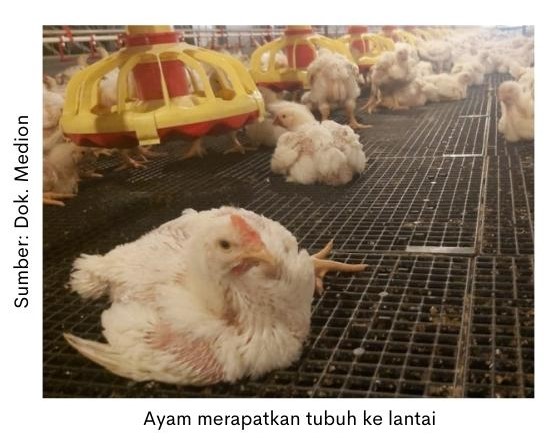
This condition is characterized by chickens close their bodies to objects that have a lower temperature than them, such as walls or litter. This process aims to make the chicken's body heat transfer to the object.
b. Radiation
This behavior is characterized by chickens developing / flapping wings and feathers. This process aims to transfer the heat of the chicken's body to the environment.
c. Evaporation
Chickens do not have sweat glands so the evaporation process is done through the breathing process (lungs). This behavior is characterized by the symptoms of chickens do panting and gasping.
d. Convection
This process can be seen from a significant increase in the frequency of water consumption in chickens. This behavior is done because the chicken is trying to lower its body temperature. Increased water consumption causes the process of absorption of nutrients in the digestive tract of chicken ration is not optimal. Decreased absorption of nutrients ration impact on the non-fulfillment of nutrient needs in chickens, this condition triggers a decrease in ADG, swelling of the FCR, and decreased production. Increased water consumption also causes the stool to become wet. Wet and high-nutrient feces can cause other problems such as increasing ammonia levels in the cage and causing litter be a good environment for the growth of pathogenic microbes. This condition can lead to the emergence of respiratory diseases in chickens such as snoring or” nyekrek " and chickens will be more easily infected with CRD. In hot conditions the development of pathogenic bacteria in pipes or toren drains will increase so that chickens will be more easily infected with the disease coccidiosis or colibacillosis.
Heat Stress on chicken Broiler Management
Heat stress on chicken broiler usually occurs in the period finisher. At the time of occurrence heat stress then the chicken will need more energy to anticipate it. Estimates of the amount of energy use is as follows :
- 25% of the energy is used to move, grow, breathe and maintain body temperature at 41°C.
- 75% of the energy is converted into thermal energy and excreted through the respiratory tract.
- When the humidity in the cage is high, the chicken's respiratory system has to work extra to give off its body heat.
Chickens naturally release 46% of their body heat through the skin when in direct contact with the floor or litter while the remaining 54% heat is removed from breathing. These two mechanisms are the most important mechanisms in the heat release process in chickens, so it must be ensured that the two heat release mechanisms work properly.
If litter too thick then the chicken can not give off his body heat through the floor it will be issued through panting. Do not give rations at the time of occurrence heat stress, because it will severely increase the level of heat in the body of the chicken broiler. Chicken broiler only able to adapt to ambient temperatures up to a temperature difference of 8°C. Give Vita Stress to overcome the impact of heat stress.
Heat Stress on chicken Layer
Heat stress on chicken layer will impact on performance production as decline feed intake, a decrease in egg production and a decrease in the quality of egg shells, which will reduce profits for farmers. Heat stress also causes a decrease in ovarian weight and the number of follicles. Heat stress will result in damage to the electrolyte balance of cells accompanied by effects on almost all body systems including digestive tract disorders syndrome that will have a negative impact that is not specific diarrhea or feces produced thinner because the chicken will drink a lot so that the consistency of the stool is wetter. Chicken layer will have performance good production at a neutral temperature of about 18°C to 28°C.
Causes Heat Stress
The main causes of heat stress is the temperature condition of the cage that exceeds the tolerance limit of chickens, which is greater than 28°C. The trigger factor attacked chickens heat stress are as follows :
1.Cage density
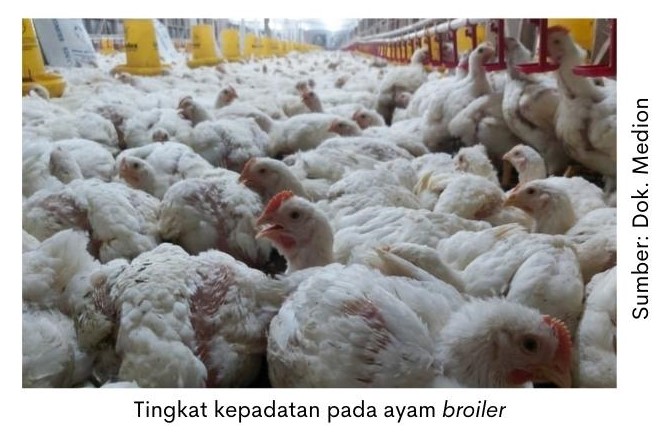
Density/density too dense chicken will produce greater heat. If these conditions are not balanced by proper circulation and temperature of the cage, it will have an impact on heat stress.
2. Cage management and construction
Cage construction factors with improper design will result in a bad circulation process. Cages with a good design will certainly provide ventilation gaps that aim to regulate the oxygen cycle and air circulation to be more evenly distributed, especially for cages open house. If in the cage closed house air circulation is regulated by control climate.
3. Nutritional content of the ration
The nutrient content of the ration that is not observed can also be the cause heat stress. The condition of the chicken ration containing crude protein exceeds the threshold will cause a large body heat. Crude Protein that is wasted with feces will be broken down by bacteria in the feces into ammonia and heat.
4. Genetic potential
5. Chicken body temperature regulation
6. Climate in Indonesia
Mechanism Heat Stress
When the chicken faces heat conditions from various sources, the chicken will respond by lowering its body temperature through the expenditure of excess heat energy from the body. The body heat expenditure mechanism will function normally (optimal), when chickens are kept in the comfort zone (comfort zone), with a cage ambient temperature of 25-28°C and humidity of 60-70%. Outside of these conditions, with temperatures exceeding the comfort zone, the response of chickens to give off body heat will change.
Heat Stress Index
Heat stress index is a number obtained by combining room temperature with air humidity, or better known as effective temperature.
The effective temperature is the temperature actually felt by the chicken. Heat stress index it is a combination of two quantities, namely temperature (°F) and percentage (%) of humidity. Formula Heat stress index = RH ( % ) + temperature (°F).
Chicken body temperature has a wider range and variation when compared with the temperature of mammals. The normal body temperature range of an adult chicken is 105°F-107°F (40.6°C-41.7°C). To produce and develop properly and optimally, chickens must be kept in a comfortable temperature range or comfort zone from the environment. Comfort zone also depends on strains and age, where chickens with a young age are more sensitive to changes in temperature, humidity and air circulation.
Effective temperature when connected with heat stress then it will produce a index which is a measure of the level, whether the chicken can still adapt or not to weather conditions. Heat stress index which can still be tolerated by chickens is 160, heat stress index the standard at DOC is 155 while at 35 days old it is 140. Chickens will begin to experience panting if heat stress index more than 155.
For example, the enclosure environment at a temperature of 30°C (86°F) with a relative humidity of 85%, then heat stress index is 171, far above 160 it can be ascertained when the chicken experienced panting. Whereas at a temperature of 30°C (86°F) with a relative humidity of 65% then heat stress index by 151 then at an early age chickens will develop optimally.
Impact Heat Stress
Some of the negative impacts caused by stress heat in chickens, among others, affects the physiological response, metabolism and immune system. These three things are very vital and have bad implications for chicken production broiler/layer if not treated immediately. The influence is explained as follows:
1. Physiological response
When chickens are exposed stress heat then the body will respond to unusual things in order to reduce discomfort due to stress heat generated. Some of the responses shown are avoiding contact with other chickens, reducing ration consumption, increasing water consumption and doing panting (breathing rapidly / panting).
The purpose of limiting chicken contact with other chickens is to reduce body heat so as to find a wider space, as well as limiting the consumption of rations. Consumption of rations will produce increased body heat, this is due to metabolic processes in the body to produce energy from rations consumed, so that chickens tend to stop to eat with the aim of preventing the addition of heat.
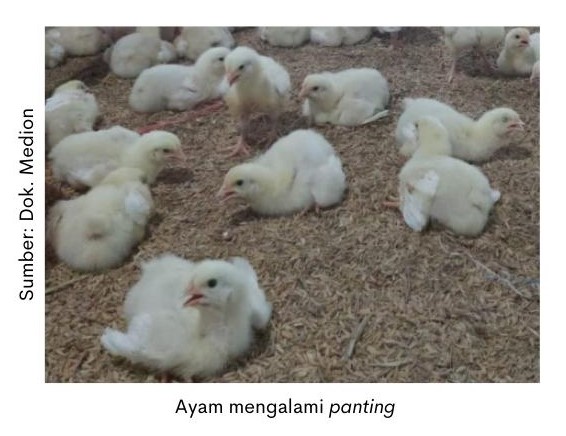
Panting it is a natural response of the chicken when its body tries to reduce the heat from the high temperature of the environment. To reduce the heat, chickens also increase the drinking water consumed.
2. Metabolic response
The metabolic processes in the chicken's body continue even if the chicken stops consuming the ration. Chickens need energy to survive. This energy can be obtained by breaking down the energy reserves stored in the form of glycogen found in the liver and muscles resulting in weight loss. In addition, in the metabolic process there are some nutrients that are not optimally absorbed by the body such as protein. This is related to the disturbed condition of the acid-base balance of the body. When chickens do panting then the process of exchanging oxygen and carbon dioxide in the lungs is so fast that the concentration of CO₂ in the blood decreases. This causes the pH of the blood to become alkaline. Alkalotic blood pH levels have an impact on the absorption of nutrients by the body that is not optimal. Absorption that is not optimal will affect performance good cock layer or broiler.
3. Immune response
When chickens are exposed stress some immune organs and processes in them are impaired in warding off various pathogens or radicals contained in the body. Production of free radicals in affected chickens stress tends to increase and exceed the capacity of the immune system to ward it off. This excess free radicals will cause some negative effects in the body and lead to disfunction system against some metabolic and immune processes of chickens. This is related to hormones glucocorticoid when it comes to chicken stress. This hormone has one negative role, which is to inhibit the production of immunoglobulins in the body, so immunity becomes weak.
How to reduce the impact of Heat Stress
Several things that can be done to reduce the negative impact caused by heat stress:
- Add water space, with the aim of giving the chicken the opportunity to reduce heat by dipping the beak deeper.
- Give Vita Stress which contains antioxidants that suppress the influence of free radicals in the body when stress.
- Give Vitesel C it is a combination of powerful antioxidants that work synergistically to ward off free radicals, increase the resistance of the chicken's body and prevent stress.
- Avoid feeding during the daytime or when the weather is hot.
- Optimizing ventilation, because ventilation is the main key in regulating temperature and humidity, of course, adapted to the type of Cage owned (open house or closed house).
- If the cage manifold closed house then the proper arrangement of the ventilation system is decisive in order to reduce the impact heat stress. Heat stress can be reduced by the implementation of air circulation management.
Application Of Air Circulation Management
- On the cage open house cage construction should be built with attention to a good air circulation system. The monitor type roof system is the right roof system to use, especially in hot or low-lying areas. Cages with a roof type of monitor have air circulation and reflection power (reflection) to sunlight is quite good. We recommend using roofing materials that are able to reduce the heat of sunlight. It could also be by adding an artificial rain system on the roof when the ambient temperature conditions are very hot (installation sprinkle).
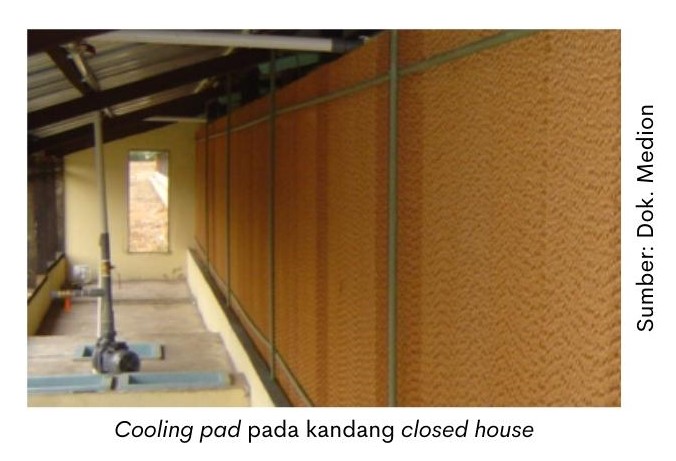
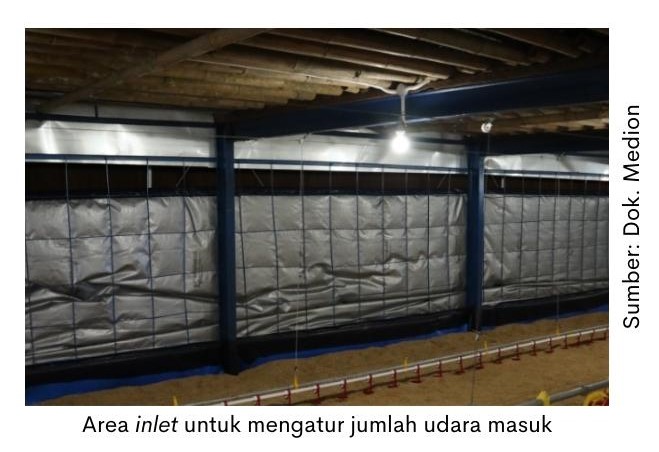
- On the cage closed house the cooling process of the cage can be accelerated by installation cooling pad in the air inlet area or area inlet. The working principle of cooling by cooling pad this is utilizing the evaporation of air entering through cell pad. Cooling pad it is able to take advantage of the evaporation of water and is able to filter the air that enters the cage. Cooling pad it very effectively lowers the temperature which is about 70-75% in the system tunnel, but every 1°C drop in humidity will add 4.5%. Settings cooling pad must be precise so that the expectation can lower the temperature according to the target by not adding too high humidity.
3. System usage slat (stage) with a height of 2 m can help facilitate air circulation. This system can reduce ammonia levels in the cage because the feces go directly to the bottom and the ammonia in the feces will be carried by the wind.
4. The distance between the cages is not recommended to be too narrow, at least 1 time of the width of the cage.
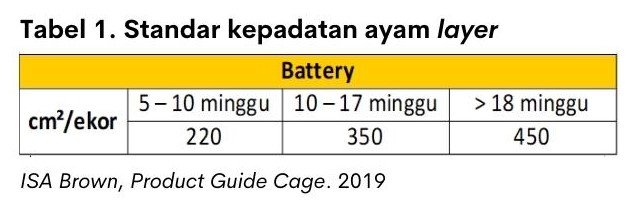
5. The density of the cage must be regulated, so that the oxygen needs of each chicken are met, for example, 18-20 kg/m2 for broiler chickens in hot areas and 8 heads/m2 for laying hens at the age of 6-16 weeks. High density will cause competition in oxygen uptake from the air and can increase cannibalism in a chicken population. If the cage is solid then it can be done reduction density with thinning. On the cage closed house, density or the density will be higher because of the environmental conditions in the cage, namely temperature, humidity and wind speed that can be controlled. The density of chickens can reach 20-28 kg / m2 (Cobb Vantress, Management Guide, 2022). In laying hens, determination density must be adjusted for maintenance life.
6. The curtain setting is adapted to the environmental conditions. Open all the curtains when the ambient temperature rises, so that the circulation of hot air becomes quickly replaced by cold air. Ventilation settings can also be done by providing additional fans or sprayer. The addition of a fan further improves the air quality in the cage, it's just to note that the wind speed should be no more than 2.5 m/S and the direction of the fan wind flow is adjusted to the wind direction around the cage. On the cage closed house ventilation settings will be easier for us to calculate the air speed because all the air coming in and out we can control by adjusting the number of fans on and how many m2 of air will enter by adjusting the inlet curtain opening.
7. Notice litter. In addition to air circulation, we must also pay attention to the condition litter. Litter which is not feasible that is wet and clumping it can add heat conditions in the cage because of the fermentation system in litter such. Treatment of litter these include We can reverse, added, or replaced litter- his.
8. The addition of extra bicarbonate (HCO₂) to reduce the level of acid content in the body. Here is some information about the cause heat stress on chicken broiler and layer, as well as their effects and handling. Hopefully it can add insight and useful. Greetings.