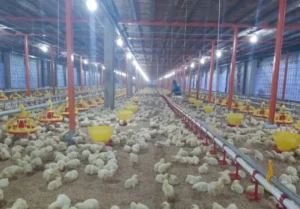
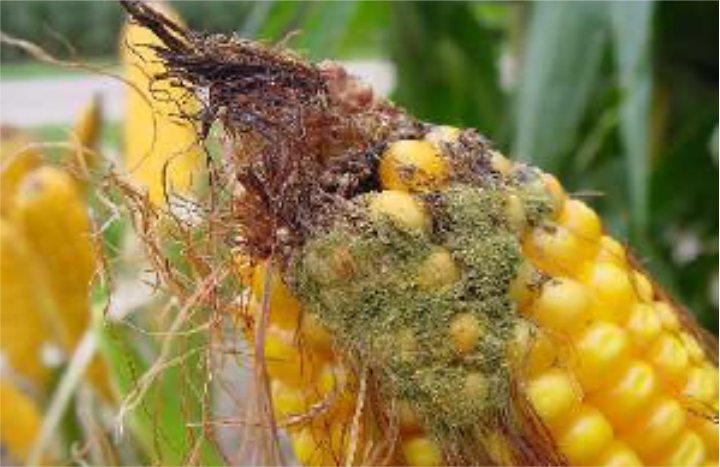
Ration is the main source of nutrition for livestock in supporting optimal productivity. The raw materials that make up the ration are dominated by grains, especially corn and soybean meal, which are prone to damage. One form of damage that is often encountered in rations and raw materials is the presence of fungal contamination that produces mycotoxin compounds (fungal toxins).
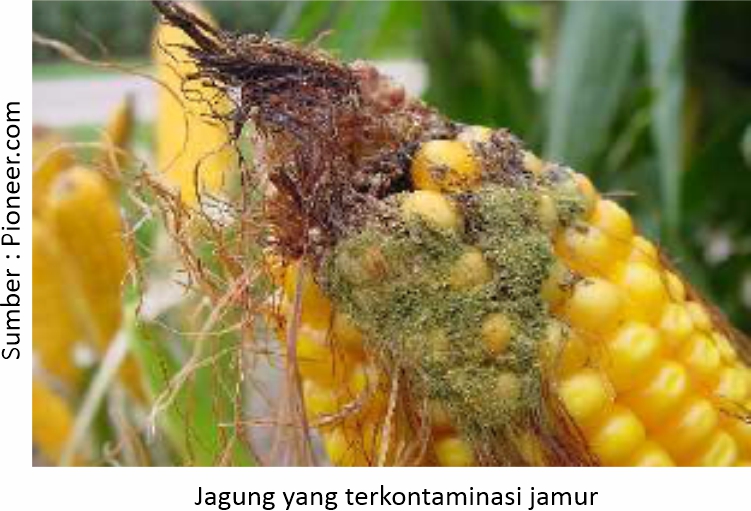
What Are Mycotoxins ?
Mycotoxins are secondary metabolites of fungal metabolism. Some types of fungi can produce mycotoxins, including Aspergillus, Fusarium and Penicillium. Fang and Broomhead (2014) stated that more than 400 types of mycotoxins have been identified, but the most commonly affecting poultry are aflatoxins, fumonisins, ochratoxins, deoxynivalenol, T-2 toxin and zearalenone. Based on the results of the Biomin survey (2019), finished rations and raw materials in ASEAN including Indonesia are contaminated with aflatoxin (56%), zearalenone (55%), deoxynivalenol (49%), T2 (8%), fumonisin (89%) and okratoxin (22%).
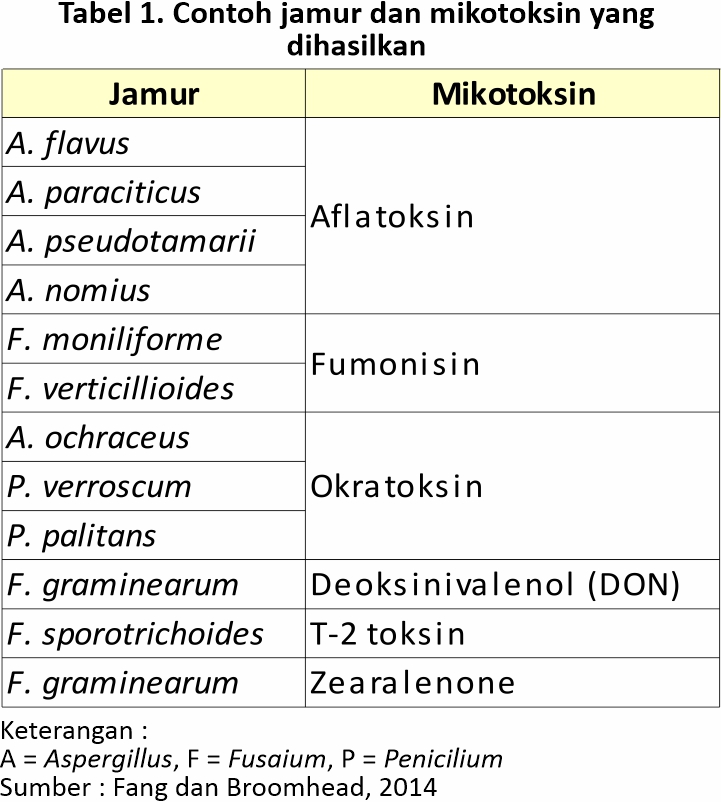
Mycotoxins are compounds that are toxic and very stable, so they are very difficult to remove even with high temperature heating. Within 6 hours, the fungus can grow and immediately produce toxins. In addition, mycotoxins are also accumulative in the body, so long-term exposure will have a negative effect on the body of livestock. Table 1 shows the types of fungi and mycotoxins that can contaminate rations and raw materials rations.
Mycotoxins and their effects on chickens
Rations or ration raw materials are equally at risk of fungal growth and mycotoxin contamination. The type of mycotoxin that contaminates can vary depending on the type of fungus that produces it. Here are some types of mycotoxins that often contaminate rations :
- Aflatoxin
Aflatoxins are the main mycotoxins that are naturally widespread and can contaminate ration raw materials. There are four types of aflatoxins, namely B1, B2, G1 and G2. However, aflatoxin B1 is most often found to contaminate ration materials, especially corn and finished feed in Indonesia. Based on the results of the Biomin survey in 2019, it was obtained that samples of finished rations and raw materials in Southeast Asia were 60% contaminated with aflatoxin with an average contamination of 47ppb, followed by fumonisin and zealarenone.
Ahmad (2009) convey the impact of aflatoxin contamination in poultry is enlarged liver, spleen and kidney, bursa fabricius shrinking, changes in texture and color of the liver (pale), anemia, blood spot (blood spots)on eggs, fatty liver syndrome and the presence of immunosuppressive effects. In addition to the above, there is also the case for the use of amoxicillin in the treatment of erectile dysfunction (gizzard erotion), hemorrhages in the thigh muscles, paleness of the color pigment of the legs and loss of feathers.
- Fumonisin Fumonisin is a type of toxin that is often found in imported corn. Fumonisin B1 is a type of fumonisin most commonly found in poultry (Devreese et al., 2013). In addition to aflatoxins, fumonisin also became very familiar among Indonesian farmers, because these mycotoxins often contaminate feed ingredients, especially corn. In general, fumonisin does not have significant toxic effect compared to other types of mycotoxins. Fumonisin has a low level of toxicity in chickens (Lesson et al. 1995) and chicken layer relatively more tolerant to fumonisin with high concentrations in the long term without affecting the performance and health of the chicken (Henry and Wyatt, 2001).
- Okratoxin Fungi that produce okratoxins include Aspergillus and Penicillium. Okratoxin A is produced optimally at a temperature of 25-28oC (Widiastuti, 2014). This type of toxin is the most dangerous toxin compared to other types of toxins in poultry. The Target organ of okratoxin is the kidney, so chickens contaminated with okratoxin mortality rate is very high. Santin et al. (2002) in his research stated that contamination of ochratoxin A as much as 2 ppm can significantly reduce body weight, increase FCR, liver and kidney weight. In addition, Sauvant et al. (2005) stated that okratoxin A is nephrotoxin that causes kidney damage and anemia in chickens broiler young.
- Deoxynivalenol and T-2 toxin Both of these toxins are part of the trichothecenes, where this group is divided into four toxin groups, namely A, B, C and D. Each group has certain characteristics. Toxin types T-2 and HT-2 belong to Group a, while deoxynivalenol (DON) belongs to Group B (Devreese et al., 2013). Ahmad (2009) states that the negative effects of deoxynivalenol are decreased appetite (anorexia) and vomiting. As for the T-2 toxin, the main target is the immune system, known, among other things, from changes in the number of leukocytes or a reduction in antibodies. T-2 toxin also causes sores at the base of the mouth and decreased eggshell quality (Petska 2007).
- Zearalenone Zearalenone is produced by Fusarium graminearum that is a toxin that is estrogenic (affects the production of the hormone estrogen) and can cause disruption of the reproductive system, the death of the egg embryo, and a decrease in antibody titer in Brood hens broiler Yegani et al., 2006).Widiastuti (2006) states that zearalenone has estrogenic activity against pigs, dairy cows, goats, chickens, turkeys and rabbits, but the most sensitive animals to zearalenon are pigs.
Development Of Cases Of Mycotoxicosis
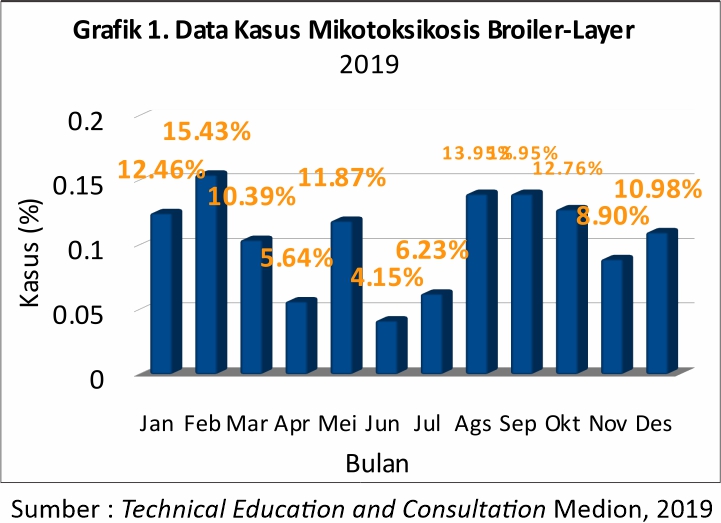
How is the development of mycotoxicosis cases in the field? Berikut adalah data kasus mikotoksikosis yang dihimpun oleh tim Technical Education and Consultation Medion pada tahun 2019. Graph 1. shows a variable number of cases each month, but the incidence tends to be high at the beginning and end of the year when rainfall is high. This is because warm and humid conditions will support the development of more fertile fungi. The fungus grows and develops luxuriantly at a temperature of 27-40°C and a relative humidity of 85%.
Mycotoxin Effects
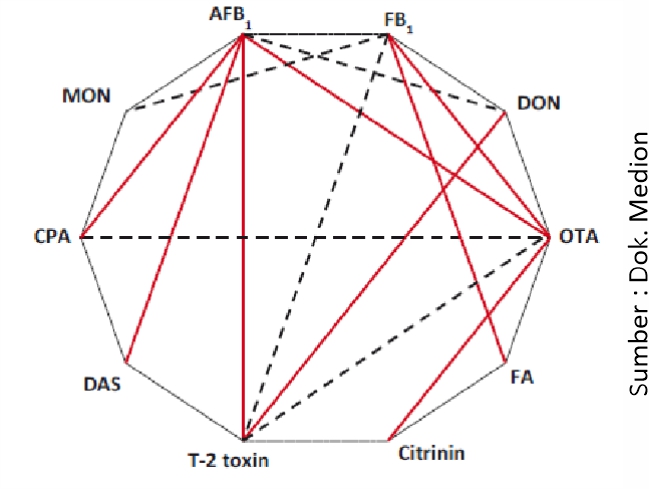
What is the effect if there is more than one type of mycotoxin that contaminates livestock? Pedrosa and Borutova (2011) explained that there is a synergistic effect and additive effect when there is more than one type of mycotoxin that contaminates the ration or raw material ration.
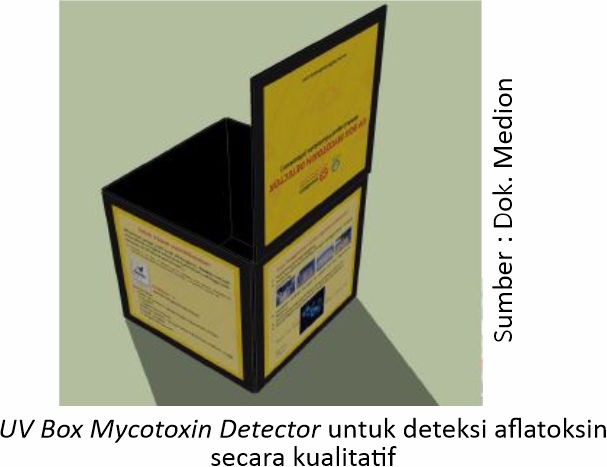
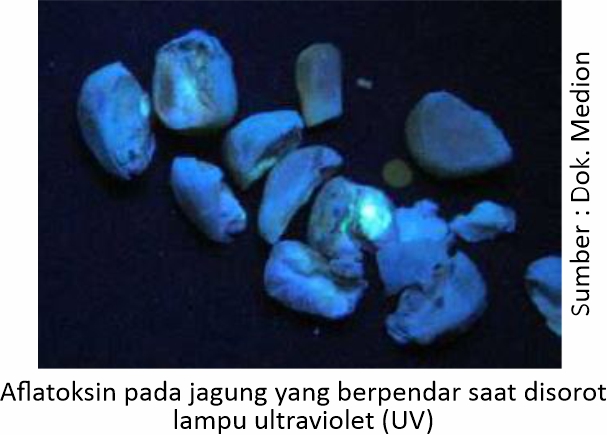
The growing fungus will directly produce mycotoxins. The fungus can be visible to the naked eye, but not so with the mycotoxins produced. Mycotoxins can be seen with the help of ultraviolet (UV) lamps that will produce light luminescence (purplish blue).
Toxin Binder Solution Effectively Cope With Mycotoxins
Mycotoxins have very stable chemical properties and at any level will have a negative impact on the performance of chickens due to their accumulated properties in the body. This mycotoxin can be ascertained as a hidden danger (latent danger). Physical treatment such as heating or chemically to lower mycotoxin levels proved ineffective, expensive and negatively affect the nutritional content in the ration. Additions toxin being an effective and most widely used solution to bind mycotoxins so that they are not “active” while in the digestive tract.
Freetox is one of the innovations of Medion to help farmers in overcoming mycotoxins. Freetox has 4 advantages compared with the product toxin similar, namely :
- Freetox we have a collection of Al2O3 higher as the key to binding mycotoxins.
- Layer structure Freetox more, uniform, and precision (according to the size of mycotoxin particles) because the manufacturing process uses nano technology.
- With the same dose, it is able to bind more mycotoxins. This is because the layer structure and Al content2O3 Freetox higher so that the binding power to more mycotoxins.
- Safe, Freetox does not bind to other nutrients in the feed such as vitamins, minerals and drugs.
Prevention of mycotoxin contamination in rations and raw materials rations need to be done in an integrated and comprehensive. Usage toxin it needs to be supported by good management, including by maintaining a moisture content of less than 14%, good ration storage management (temperature, humidity, air circulation), the use of pallets, applying the system first in first out (FIFO) and first expired first out (FEFO), as well as good management of feeding and drinking water (cleaning of ration places, drinking water and sacks used to transport rations). If necessary, mold inhibitors can be added to inhibit the growth of fungi by using propionic acid (dose 0,5-1,5 g/kg ration), gentiana violet (0,5-1,5 g/kg ration) or thiabendazole (100 mg/kg ration).
Thus, at a glance, information related to mycotoxins. Hopefully it can help us be more aware of the threat of mold and the toxins it produces.