Bapak Mulyawan
Indramayu-West Java
My chicken egg production has decreased since being attacked by korisa. After treatment with antibiotics, the chickens recovered. But then a problem arose in which for 2 weeks some chickens stopped producing eggs. Even in chickens that remain in production, egg production drops by 40% and chickens become susceptible to colds. What should I do to overcome it?
Answer:
Thank you Mr. Mulyawan, for the question. Infection with korisa in laying hens can indeed cause a decrease in egg production by up to 40%. Seeing the condition then the possibility for healing is small. Therefore, for a while, some actions that you can do include:
- Isolation / selectionimmediately do the separation / isolation of chickens that have seen severe to minimize transmission, especially from mucus released by sick chickens.
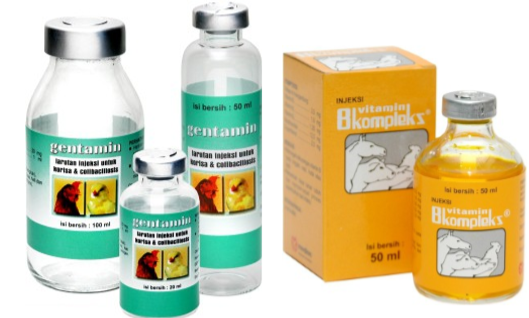
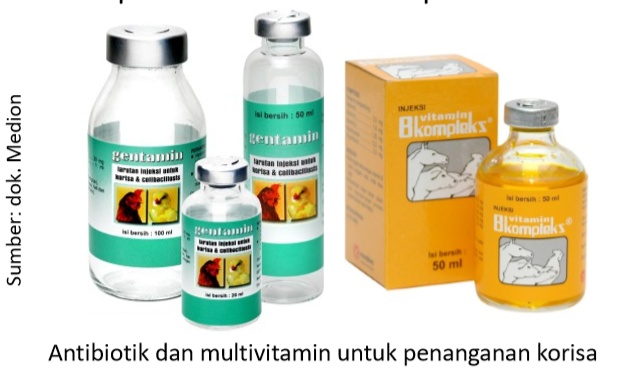
- Prinsip pengobatan tepatTetap berikan antibotik pada ayam. Jika serangan korisa sudah menyebabkan ayam mengalami kebengkakan muka yang parah dan nafsu makan turun, berikan antibiotik injeksi seperti Gentamin, Medoxy-LA, or Vet Strep. Hal ini karena ayam dengan muka bengkak, konsumsi air minumnya menurun drastis sehingga pemberian obat melalui air minum menjadi kurang optimal. Sedangkan jika kasus korisa sudah berkomplikasi dengan Colibacillosis (dyspnea, heart and liver covered by fibrin) (marked with swollen eyes containing perkejuan), then preferably chicken diafkir only.Chickens with mild to moderate severity (chickens can still eat and drink), need to be treated with antibiotics that have a higher absorption into tissues, such as Amoxitin, Doctril, or Neo Meditril.
- Provide multivitamins such as Injection Vitamin B Complex or Fortevit to improve the membrane of the nasal sinuses that have inflammation, helps to improve the condition of the body and stimulates the appetite of chickens. When chickens are attacked by korisa, their appetite decreases so that egg production is disrupted due to nutritional needs for egg production are not met.
4. Disinfection and sanitation
To prevent more widespread transmission, sanitize drinking water and spray the cage daily with QUATS class disinfectants (Medisep/Zaldes) so that the population of the causative agent of korisa is reduced. Keep in mind that contamination of water, feed, cages, and equipment by dilution of nasal fluids of chickens with korisa is a potential source of disease transmission.
5. Maintenance management improvements
Re-check the smooth circulation of air and setting open and close the curtains more routinely done. Add blower or a fan when the cage feels stuffy. Reduce ammonia levels in the cage using Ammotrol which can be given with 2 applications, which are sprayed directly on feces and given through drinking water or a combination of both at once if ammonia levels are very high.
As we know that the location of bacterial predilection Avibacterium paragallinarum (the cause of korisa) is in the infraorbital sinus, which is poor in blood vessels, so it cannot be completely eradicated only by administering drugs. And one day, if the treatment is stopped and the stamina of the chicken's body is declining, then outbreak korisa can be repeated (chicken is carrier).
For this reason, the implementation of korisa vaccination will be able to minimize this, where by vaccination, korisa antibodies will be formed in the chicken's body. In addition, the attack of korisa will be easier to cure if the chickens have been vaccinated before. Get vaccinated with Medivac Coryza B/Medivac Coryza T Suspension in laying hens age 6-8 weeks and repeated at the age of 16-18 weeks. If the farm is very prone to korisa, then repeat vaccination can be carried out 5-6 weeks after the first vaccination. The determination of the vaccination schedule can also be determined based on the case history of attacks on previous maintenance, which is no later than 3-4 weeks before the age of the attack.
In addition to vaccination, korisa prevention programs must also be supported by maintenance management and strict biosecurity implementation including the following:
- System maintenance all in all out to avoid transmission from old chickens to young chickens and break the life cycle of bacteria on the farm site.
- Administration of broad-spectrum antibiotics such as Amoxitin or Neo Meditril 1 week prior to the onset of chorizo cleaning program (prevention) especially when the weather changes.
- For cages previously affected by korisa, implement a prevention program by tightening biosecurity. Bury and burn the carcass of a chicken that died from korisa not far from the location of the cage. Take a cage break of at least 2 weeks after cleaning and disinfecting the cage. Spraying the cage every day, washing and sanitizing the feed and drinking place every 3-4 days and dipping the feet in the disinfectant tub before entering the cage with QUATS class disinfectants such as Medisep or Zaldes. In addition, disinfection of drinking water with Desinsep to prevent the transmission of bacteria through drinking water.
- To create clean air, do the arrangement open and close the cage curtain. Sufficient clean air can be created also by adjusting the density of the cage.
- Taking multivitamins regularly, for example Fortevit or Vita Stress it is necessary to maintain the optimal condition of the chickens.