When we hear about Avian Influenza (AI) or what is often called Bird flu, of course we will remember the outbreak of AI cases a dozen years ago. At the end of 2003, avian influenza disease was identified as the AI virus subtype H5N1, the same as in other countries in Asia (Damayanti et al. 2004). The official declaration of the Indonesian government was issued a few months later (SK Mentan No. 96 / Kpts / PD.620/2. 2004), and by the time it was declared the disease had spread across 9 provinces. In just about 2 months since its existence, the disease has spread in 23 provinces, 151 districts or cities and caused the death of about 10.45 million chickens (Basuno, 2008).
AI viruses can attack several types of animals such as birds and mammals, and have the potential to threaten human safety (zoonotic). Concern about this disease is heightened when there are humans suspected of being infected with the AI virus. From year to year all efforts are made by both the government and private poultry companies.
If you trace from the history of AI disease, this disease is not a disease that has just appeared, but has been discovered in Italy in 1878 with the designation Fowl Plaque. Until now AI is still a serious threat to the poultry world. The harm caused varies depending on the strain of the virus, the type of poultry attacked, preventive measures and handling when cases occur in the field. The number of deaths caused by the disease is high, the number of deaths caused by the disease is high, the number of deaths caused by the disease is high, and the number of deaths caused by the disease is low, and the number of deaths caused by the disease is high (stamping out) and increased costs for sanitation and disinfection of enclosure areas, water and farm equipment.
Causes of AI
Bird Flu or AI is caused by Influenza viruses. Virus ini sendiri digolongkan menjadi virus Influenza tipe A, B dan C. Type A influenza virus affects birds and has been found in humans, pigs, horses and other mammals. While Influenza viruses Type B and C attack humans with mild clinical manifestations. The avian influenza Virus (AI) belongs to the family Orthomyxoviridae it is an RNA virus.
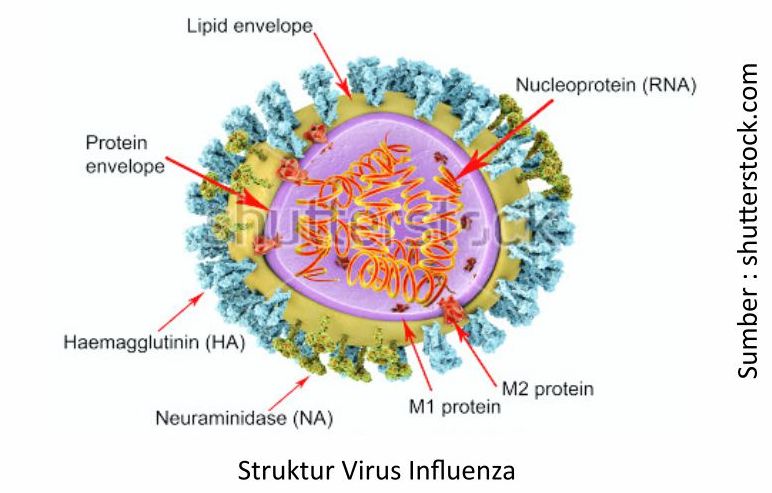
The AI type A Virus is then still subdivided into several subtypes based on the antigenic ability of two surface proteins, namely ha (hemagglutinin) and NA (Neuraminidase) proteins. HA is a viral envelope glycoprotein molecule that serves to bind the virus to target cell receptors and initiate infection. While NA is a protein needed by the virus to release the virus offspring from infected cells. Both surface proteins (HA and NA) can stimulate the formation of immunity. Hasil identifikasi terdapat 16 subtipe HA (H1-H16) dan 9 subtipe NA (N1-N9). Classification based on subtypes is what we are more familiar with since AI first appeared in Indonesia. Contohnya, virus AI subtipe H5N1, H5N2, H5N7, H5N9 dan lain sebagainya. The subtype that is now widely attacked in Indonesia is the H5N1 subtype.
In general, AI viruses have a specific host. This indicates that the virus that infects birds will not infect humans, and vice versa. However, it should be noted that the AI virus is easy to mutate, that is, it changes the structure of the body so that it is possible to form a new subtype of AI virus.
Characteristics of AI viruses include relatively stable tidal in the environment. The Virus is sensitive to environmental factors such as heat, pH 8, and dry environmental conditions. AI Virus can die on heating with a temperature of 60°C for 30 minutes and a temperature of 56°C for 3 hours. But on the contrary, the AI virus can survive in water for up to 4 days at a temperature of 22°C and for 30 days at a temperature of 0°C. The AI Virus is also resistant to living in chicken droppings (feces) and organic materials. The AI Virus has an envelope made of lipid/fat material. That is why this virus is very sensitive to fat solvents (such as detergents) and disinfectants made from formalin,-propiolactone, iodine, ether, acid solutions, ammonium ions and chloride. Almost all types of disinfectants are capable of eradicating the AI virus.
In addition, environmental factors such as high rainfall, temperature and humidity also play an indirect role in the increase in the number of AI cases in the field. Extreme weather changes give rise to stressful events in chickens and can result in a decrease in endurance. The decrease in the immune system of chickens can directly have an impact on the ease of chickens attacked by infectious diseases, one of which is AI. AI attacks in Indonesia, generally will increase during the rainy season where environmental humidity increases.
AI Virus in Indonesia
Until now, the AI virus has been circulating in Indonesia for about 15 years since its appearance in 2003. For 10 years (from 2003 to 2013), AI disease in poultry was caused by AI H5N1 clade 2.1. The last AI virus mutation was identified only in 2008. Furthermore, in 2009 a new virus appeared, but not a derivative of the virus circulating in 2008, and the condition of this virus is relatively stable (no mutations). In 2010 to early 2012, the circulating AI virus was still the same as the 2009 virus. However, at the end of 2012, the AI H5N1 clade 2.3 virus was isolated from chicken and duck samples, and was not a mutation of the AI H5N1 clade 2.1 virus.
The results of a study conducted by Medion showed that most poultry deaths since the end of 2012 have been caused by AI H5N1 clade 2.3. This is in line with research conducted by the Wates Veterinary Center which said that a new group of AI viruses appeared in Indonesia, because the AI H5N1 clade 2.1 virus only attacks chickens. After comparing the genetic distance, the two viruses are not homologous with a significant % difference in amino acid structure, reaching 10.4% (Standard
Since the beginning of 2017, there have been many complaints regarding cases of decreased egg production. Then what is the cause? Don't all diseases decrease egg production? About the main cause, of course, must be based on field conditions and laboratory tests to confirm the diagnosis. As we all know that the cause of decreased egg production can come from infectious and non-infectious causes. Infectious causes can be caused by AI, ND, IB or EDS viruses.
Reports from the field, cases of decreased egg production occurred drastically up to 50%. Clinical manifestations that occur vary, such as chickens looking weak and sleepy, feed intake decreased, and the discovery of eggs with poor quality that is thin, pale and flabby. Of the few cases reported, the incidence of death in the chicken population is still in normal numbers. To make sure this type of disease is caused by AI or not, of course, a laboriatorum test is needed to confirm the diagnosis.
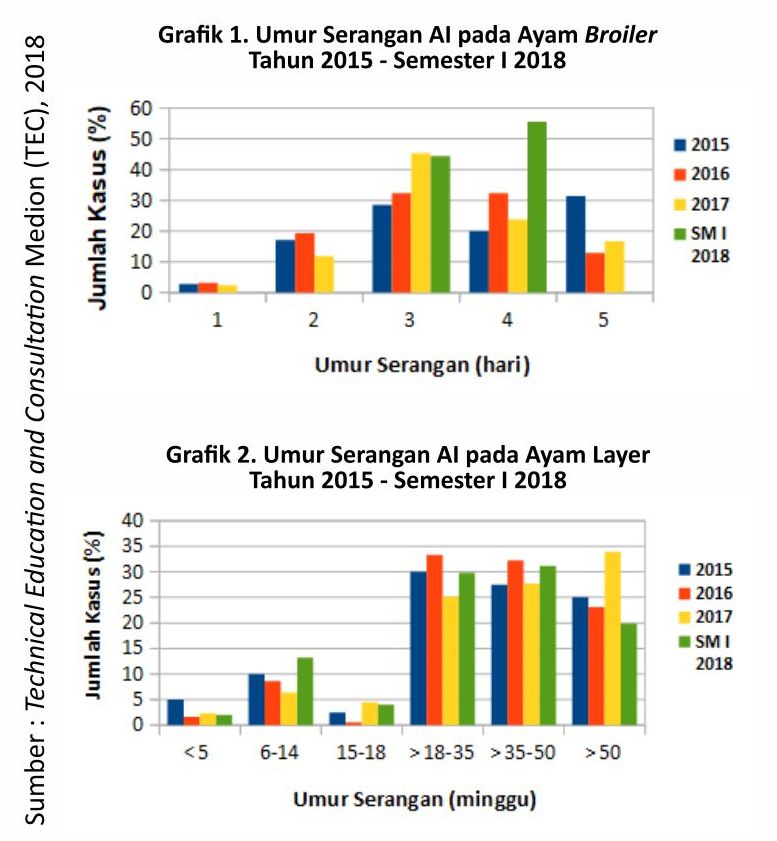
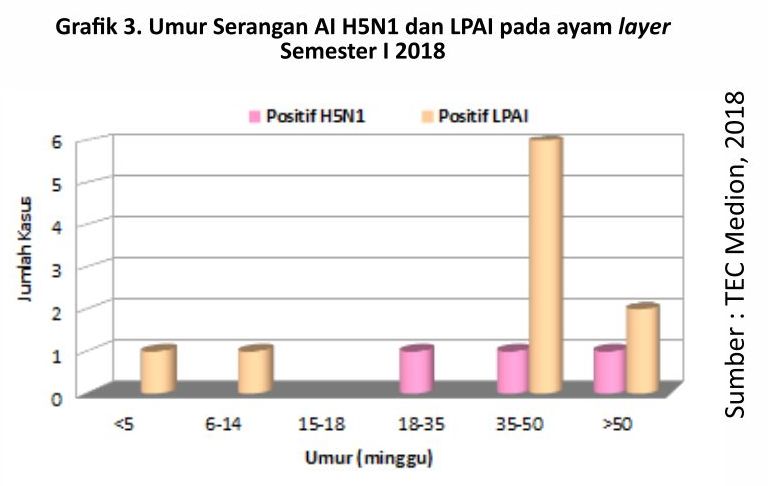
Based on data from the Medion laboratory (Medilab), samples collected from the field showed that in laying hens found cases of AI H5N1 and LPAI positive with the test Polymerase Chain Reaction (PCR). The age of attack varied from 5-14 weeks and was dominated by the production age of > 35 weeks (graph 3).
Ministry of Agriculture and FAO Emergency Center for Transboundary Animal Diseases (ECTAD) Indonesia reminded farmers of the threat of a pandemic in the national poultry sector. One of them is the finding of a new type of bird flu in Indonesia AI H9N2 which is low pathogenic avian influenza (LPAI). This Virus can reduce production especially in laying hen farms by up to 70% (Republika, July 2018 edition).
Transmission of AI Virus and clinical symptoms of AI in the field
Transmission of AI occurs horizontally, which means that it can be transmitted either directly or indirectly from sick chickens to healthy chickens. The AI Virus is excreted from the nose, mouth, conjunctiva and cloaca of infected birds. Then the virus is transmitted to healthy chickens through the process of direct contact from infected birds to sensitized healthy birds through the respiratory, digestive and urinary systems. Transmission that occurs indirectly can be through dust, feed, drinking water, cage equipment and personnel contaminated with the virus.
With a relatively fast incubation period, about a few hours to 3 days clinical symptoms caused in cases of AI also vary. Symptoms that appear are influenced by the type of bird attacked, the level of malignancy of the AI virus that attacks and management practices as well as biosecurity applied in animal husbandry.
Jika dikelompokkan berdasarkan keganasannya, virus AI dibagi menjadi 2 yaitu low pathogenic avian influenza (LPAI) dan high pathogenic avian influenza (HPAI). Both groupings will affect the symptoms and changes in anatomical pathology that arise.
1. LPAI
LPAI Virus low virulent (low malignancy) so that it will be reflected in mild clinical symptoms also in chickens in the field. But usually the impact caused by LPAI is an immunosuppressive effect (lowered immunity) so that it will facilitate the entry of other secondary infections.
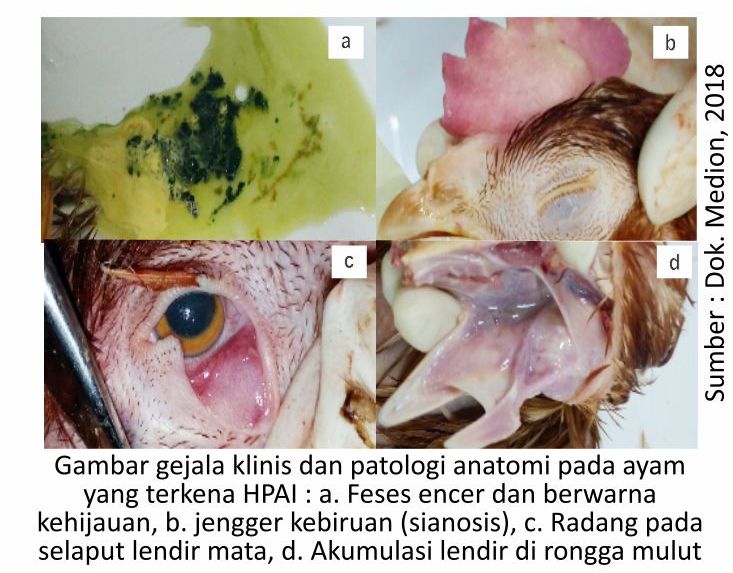
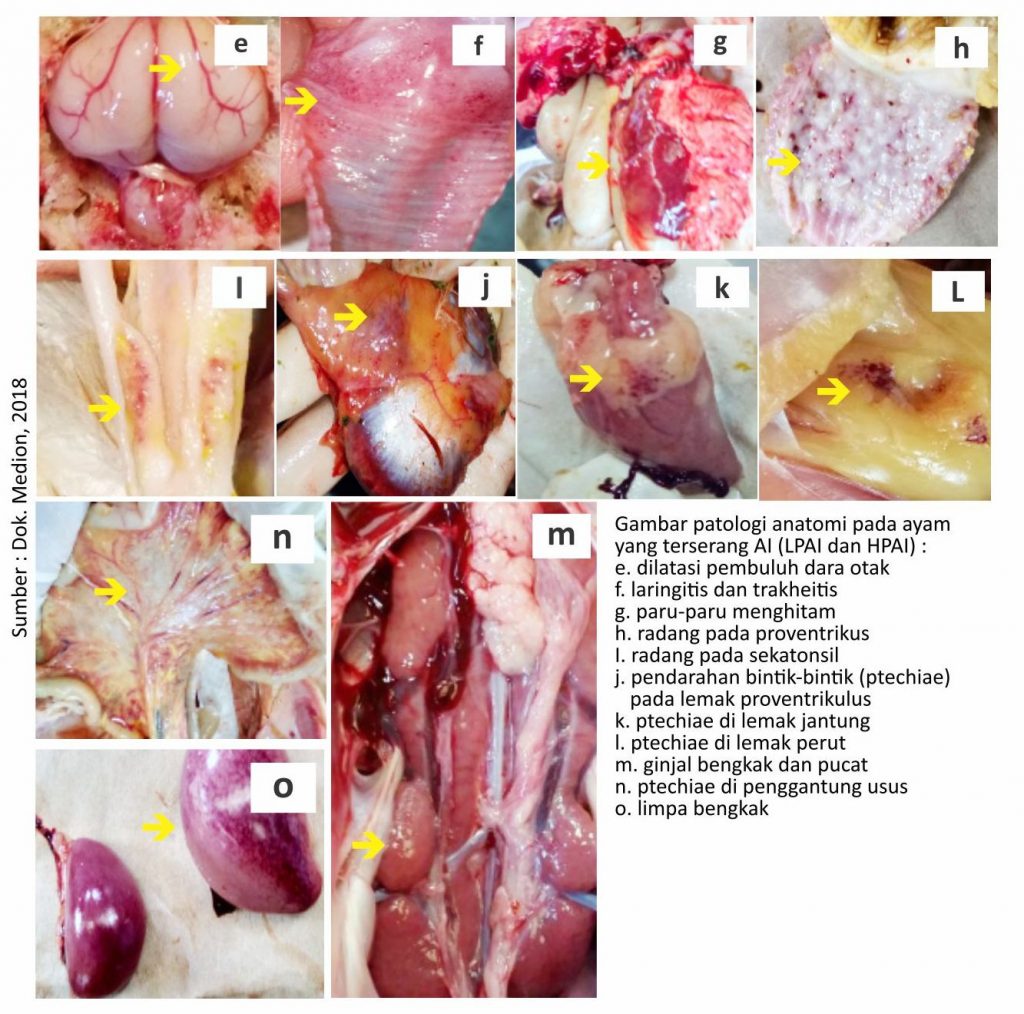
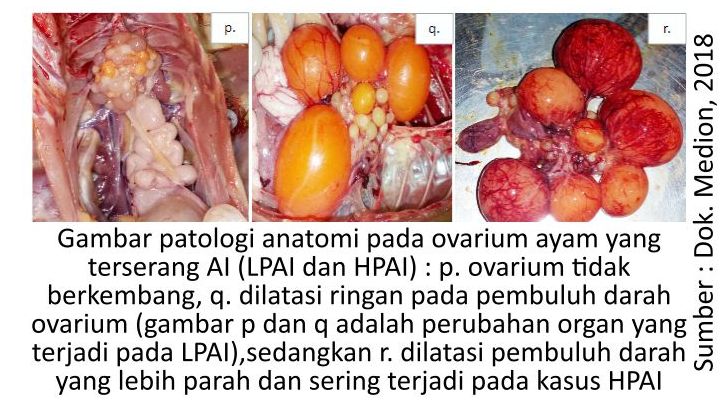
Clinical symptoms that appear in chickens attacked by LPAI are in the form of respiratory disorders (such as difficulty breathing and snoring), conjunctivitis, decreased feed intake and a very drastic decrease in egg production. In addition, chickens will appear depressed, but the mortality rate tends to be low and even can still be said to be normal. If surgery is performed, organ changes such as inflammation of the nasal sinuses, larynx and trachea will appear. Accumulations of mucus in the respiratory tract can also be found. Changes in the digestive organs include inflammation of the proventriculus, reddish pancreas, ovaries shrink and bleeding occurs in the yolk candidate, swollen kidneys, swollen spleen and often found dilation in the blood vessels of the brain and reproductive organs. In other organs such as the heart and fatty body, point-shaped hemorrhages (ptechiae) are often found.
2. HPAI
HPAI is acute and is characterized by a rapidly progressing disease process. Clinical symptoms and changes in organ anatomical pathology are more severe when compared with LPAI. Typical symptoms that often appear when chickens are attacked by HPAI include high mortality, cessation of egg production or decreased production, depression, bluish Combs and wattles (cyanosis), conjunctivitis, green diarrhea, accumulation of mucus in the oral cavity, bleeding in the legs (shank), snoring and sometimes nerve disorders (torticollis).
Organ changes that appear after surgery include inflammation in the upper respiratory tract including nasal sinuses, larynx and trachea, blackish lungs and turbid air sacs. Changes found in the digestive tract include inflammation in the proventriculus, intestines, wipe tonsils and pancreas.
Other organs that often undergo changes are the heart and body fat that has bleeding in the form of dots (ptechiae). In the nervous system, dilatation of the blood vessels of the brain is found. In addition to these changes, bleeding is often found in the muscles of the chest and chest.
Disease Control
A. AI prevention
AI infection prevention measures that can be done, among others, by fortifying the chicken's body with immune substances (antibodies) that can protect against AI field virus attacks. In addition, maintenance management factors such as maintenance and biosecurity it is also important to prevent the entry of AI.
1. Vaccination
AI vaccination aims to trigger the emergence of humoral immunity (immunity that is in the blood circulation) against infection or malignancy of the AI field virus. Birds that are sensitive or susceptible to AI infection from the field may not have received immunity from previous vaccinations. Conversely, birds that get AI vaccinations and revaccination programs will be more immune to AI virus attacks.
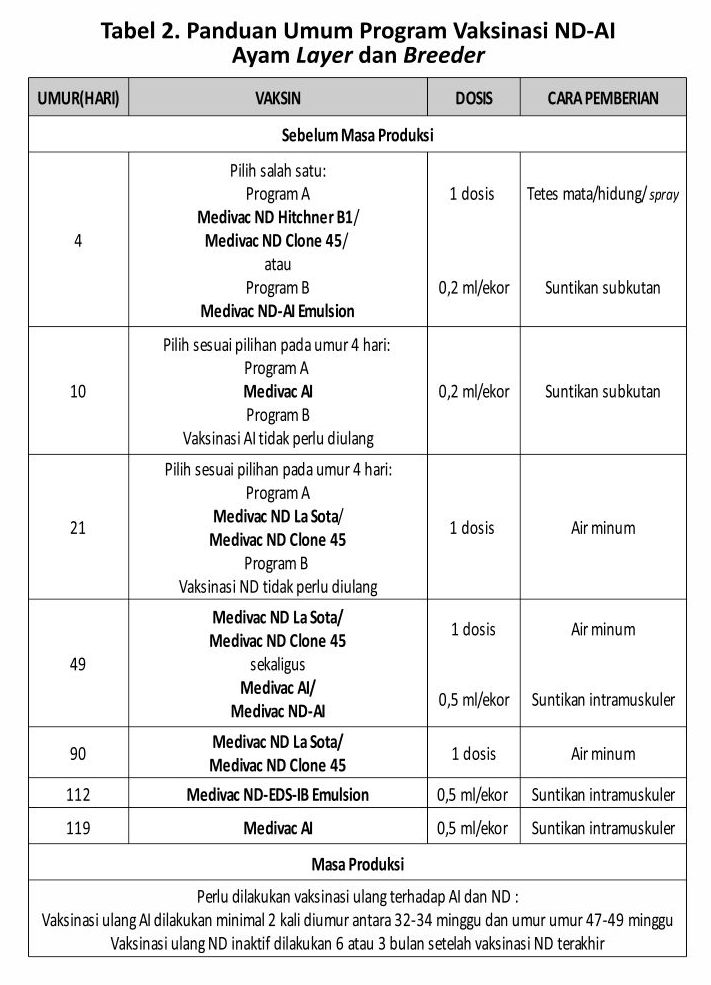
Laying hens are obliged to vaccinate AI 3 times before production and 2 times after the peak of production with a homologous AI vaccine. The first vaccination can be done around the age of 2 weeks, repeated at the age of 7-8 weeks, and then done when 3 weeks before entering the production period. If for areas that are particularly prone to AI a second AI vaccination before production can be carried out 4-5 weeks after the first vaccination.
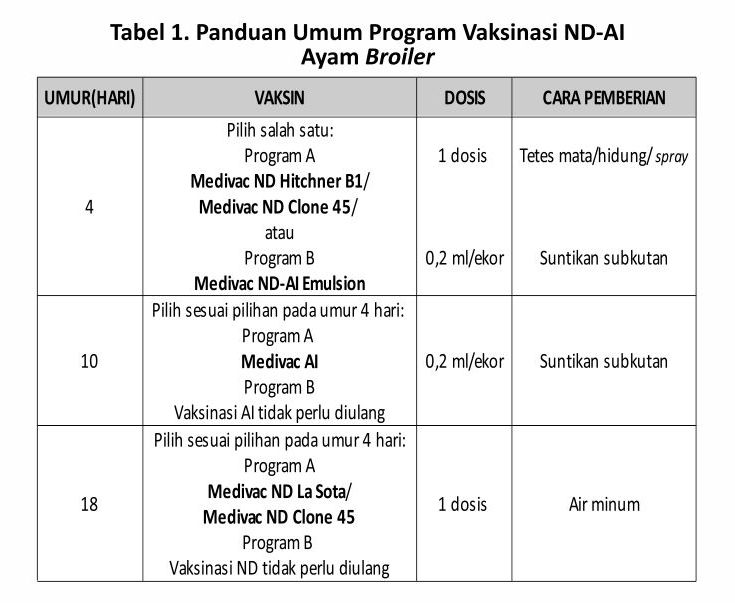
As for broilers, AI vaccination is mandatory. The case of AI in broilers is actually inseparable from the decline in maternal AI antibodies. At the age of 3 weeks maternal antibody titer AI is no longer protective so that age is the most vulnerable time for chickens attacked by AI. In addition, data from the field indicate that AI infects broilers at the age of > 3 weeks. Therefore, the first AI vaccination should be done at the age of 4 or 10 days.
Do Ducks need to be vaccinated against AI? The answer is, necessary. According to agricultural R & D research, it was reported that the highest duck mortality occurred in young Ducks ( biosecurity strict and regular vaccination of AI, reared Ducks can avoid cases of AI that start to re-infect
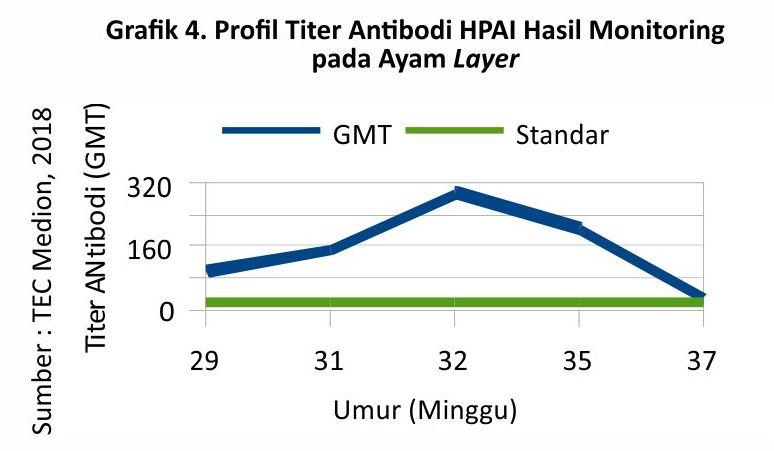
In addition to vaccination, it is also necessary to monitor the antibody titer. Its purpose is to monitor the development of immunity in the body of chickens. Usually titer monitoring is carried out in laying hens and breeders. To determine the success of vaccination titer examination is carried out 3-4 weeks after AI vaccination. While the examination to monitor the antibody titer of AI during production is done routinely every 1 month. From the routine inspection will be obtained picture baseline titer on the farm. So that if one day found a different picture of titer baseline then it can be an early warning of the condition of the chicken.
- BiosecurityStages biosecurity what can be done to prevent AI infection includes sanitation, disinfection and isolation. When disinfecting, choose and use disinfectants whose action is less affected by organic matter such as Formades to spray the environment outside the cage or vehicle. Spray well Antisep or Neo Antisep routinely every day. Limit the traffic of people or vehicles leaving or entering the cage. Footwear should be brushed with detergent or disinfectant because if only done dipping (immersion) alone is less effective.
B. Treatment In The Event Of Illness
AI is a viral disease, so there is no cure. If a farm has been infected with AI, then the things that need to be done include:
- Handling on other cages that have not been attacked by AI
- To suppress disease transmission, immediately revaccinate healthy chickens using Medivac AI. The results of revaccination depend on the degree of malignancy of the invading virus, morbidity and mortality
- Do Cage spray to reduce the number of viruses in the field
- Disinfection of drinking water to prevent disease transmission through drinking Water2. Handling on cages that have been attacked by AI
- Immediately remove dead birds in the cage. Destroy by the method of burial or burning in a location far from the cage.
- Spray the cage that still contains chickens with a disinfectant such as Antisep or Neo Antisep, and on an empty cage can use Sporades or Formades
- Assign immunostimulants such as Imustim to increase the stamina of the chicken. Imustim will help increase the body's resistance optimally so that the healing process will be faster
- Emergency vaccination can be done to reduce mortality. This can be done on laying hens or breeders who are still healthy using Medivac AI.
- Do enough cage rest, which is at least 14 days counting from the cage being cleaned. Then disinfect the cage again before starting more