Management problems are still one of the causes of many cases of viral and bacterial diseases faced by Indonesian farmers. Coupled with the reality of having to face the AGP-free era starting in 2018. Since January 1, 2018, the Indonesian livestock industry has entered an era of change with the momentum of Permentan No. 14/2017 on the Prohibition of AGP in feed. This is likely to be one of the new challenges for poultry industry players.
Evaluation of disease cases in 2018
The year 2018 is coming to an end. Evaluation of poultry health concerns over the past year which became the ups and downs of livestock business will soon be recorded. The condition of the incidence of diseases that attack broilers and laying hens in Indonesia each year has been summarized by the team Technical Education & Consultation (TEC) Medion on graphs 1 and 2. From both graphs it can be seen that the development of the disease over the past year has experienced ups and downs with almost the same pattern as last year's prediction coupled with changes in maintenance strategies that become new challenges. Erratic seasonal changes, lack of predictability, changes in maintenance strategies due to government regulations, and the development of seedlings in the transition season may be some of the factors that cause diseases that attack in 2018.
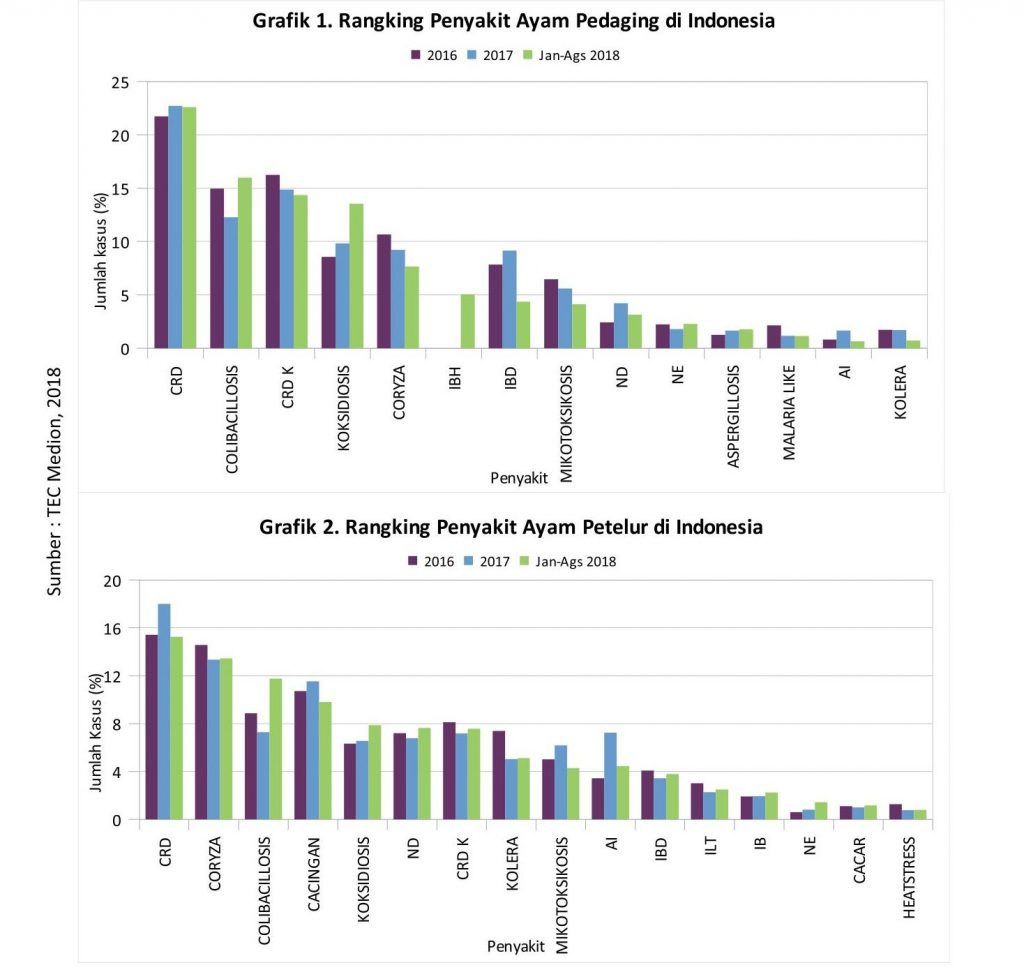
In broilers, bacterial diseases are still dominated by CRD, complex CRD, and Colibacillosis. While the disease Fowl Adenovirus (FAdV) is quite the prima donna of viral diseases this year. Slightly different from broilers, bacterial diseases that are often found in laying hens, namely korisa, CRD, and Colibacillosis and ND and AI are ranked as viral diseases.
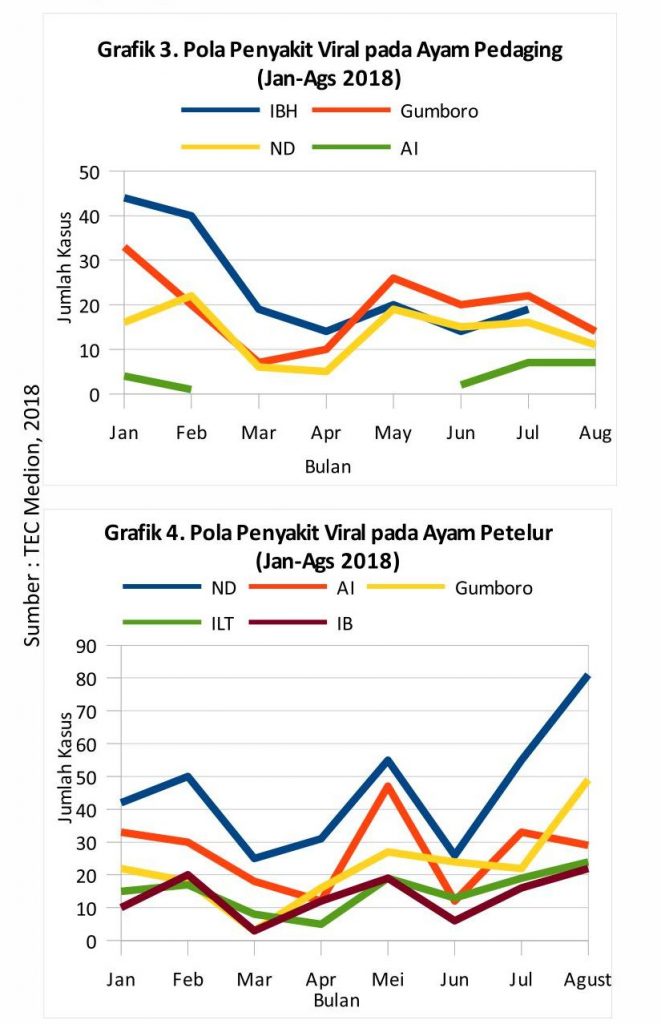
Gumboro cases in broilers, which in 2017 were quite high, decreased in 2018. But the disease Fowl Adenovirus (FAdV) which in the last two years has rarely been found on farms, in 2018 it was found to be quite widespread in broilers.
As seen from Graph 1. in broilers, cases of Colibacillosis, coccidiosis, Fowl Adenovirus (FAdV), Necrotic Enteritis (NE), and Aspergillosis until August 2018 had an increase in cases. Even cases of Colibacillosis and coccidiosis rose very significantly in incidence compared to 2017. While the cases of disease in laying hens have an upward trend including coral disease, worms, Colibacillosis, coccidiosis, ND, IB, and NE (graph 2).
FAdV Disease Is Lurking
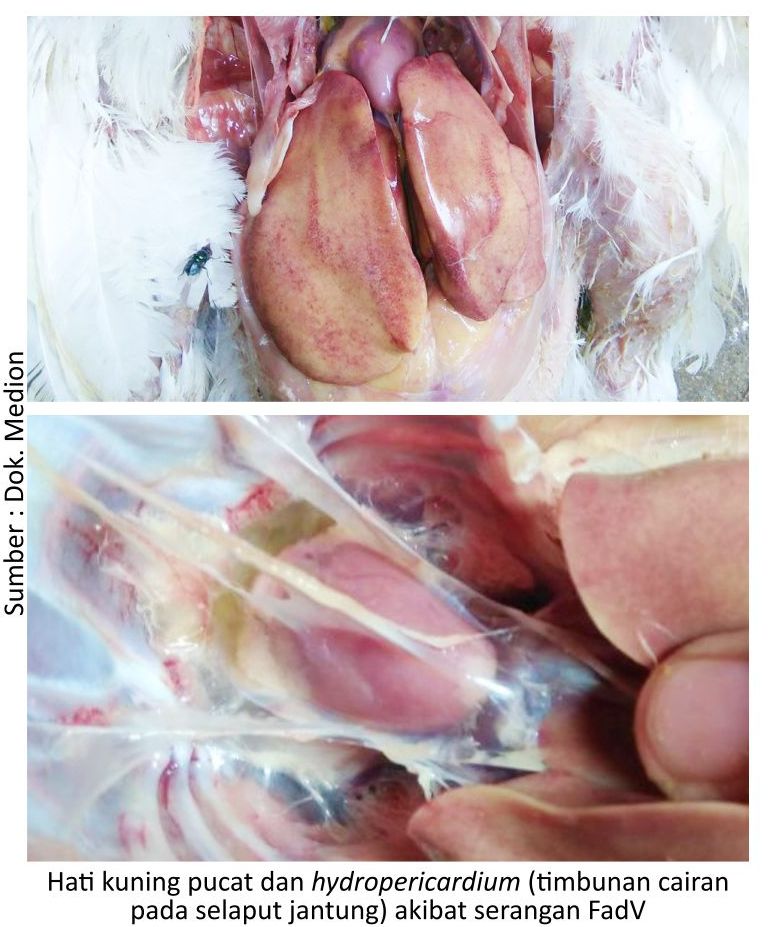
Starting in early 2018, poultry farmers have been shocked by cases of diseases that lead to Inclusion Body Hepatitis diseases caused by infection Fowl Adenovirus (FadV). Among some farmers are known to experience many losses such as an average mortality of 10% sometimes found to reach 40%, the weight standard is not reached until the swelling of the FCR. In laying hens, it can also inhibit growth and egg production.
FAdV was first discovered in America in 1950, while in Indonesia it is suspected to have existed since 2015. This disease is caused by a virus known as Adenovirus. This disease often appears at the age of 2-13 weeks, especially more dominant in broilers aged 3-6 weeks. The FadV disease is not a disease with a repetitive pattern but its occurrence can be triggered from immunosuppression factors such as infection Chicken Anemia Virus, Infectious Bursal Disease, or increased mycotoxins in the feed, thereby reducing the immunity of chickens. Supported also by the conditions of the cage environment that is less comfortable and clean as well as extreme weather conditions.
Coccidiosis and NE spread in AGP-free Era
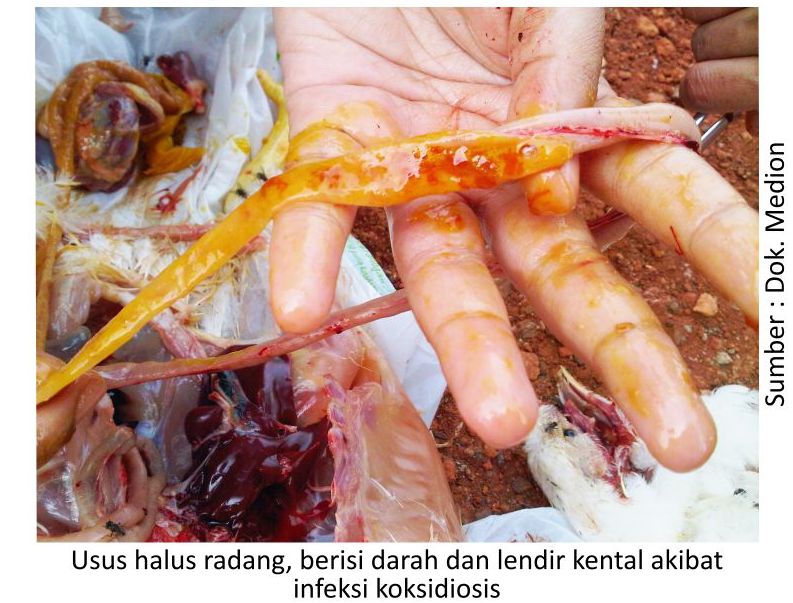
Looking at the flashback of the incidence of the disease until almost the end of 2018, we will see that the percentage of incidence of coccidiosis and Necrotic Enteritis (NE) significantly increased compared to 2016 and 2017. These two diseases have become a hot topic of discussion, especially since the emergence of government policies related to the Prohibition of the use of AGP in feed, which resulted in these two gastrointestinal diseases increasing their incidence.
Coccidiosis is indeed a case of a disease that almost always appears in any period of keeping chickens. Short life cycle and reproductive potential Eimeria high in an environment containing chicken cages will trigger a greater incidence of disease. Basically Eimeria sp. and C. perfringens it is a normal flora that lives in the digestive tract of chickens. Bacteria that normally reside in the digestive tract of chickens can also infect such bacteria C. perfringens (causes of NE disease) when chickens are in poor condition and supported by uncomfortable environmental conditions, then outbreak NE may occur. This is triggered by the declining condition of the chicken's body, while the bacteria continue to increase in concentration. High concentrations of bacteria in the intestine can be excreted through feces and can also infect other chickens.
AGP is generally used to suppress the growth of pathogenic bacteria in the gut and is usually specific towards gram-positive bacteria such as C. Perfringens. With the Prohibition of the use of AGP, it is likely that the emergence of digestive diseases is increasingly common.
Dry season and Gumboro
Judging from graphs 3 and 4, Gumboro cases occurred quite a lot in broiler farms and layers at the beginning of the year. The number of cases then decreased until March and then increased again in the dry month of May. As it is known that Gumboro usually attacks during the transition season or transition conditions. The transition of the rainy season to heat or from heat to rainy season will cause chickens to be susceptible to Gumboro.
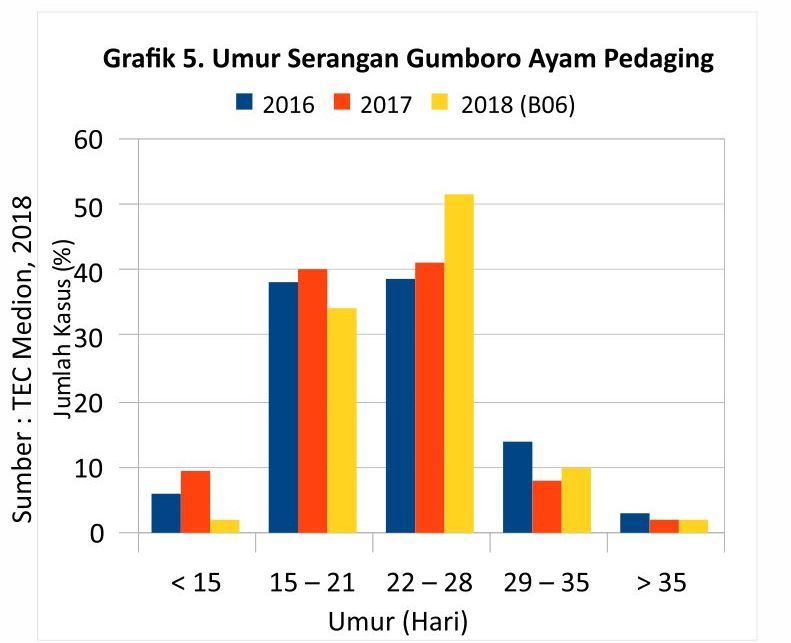
Several factors that cause the incidence of Gumboro cases are still fluctuating, depending on the cleanliness and sanitation of the cage, empty cage rest, weather conditions around the cage and health programs that are carried out, especially vaccinations. From the data that has been collected, it is also reported that Gumboro attacks on broilers in 2018 are quite common at the age of 22-28 days (Chart 5).
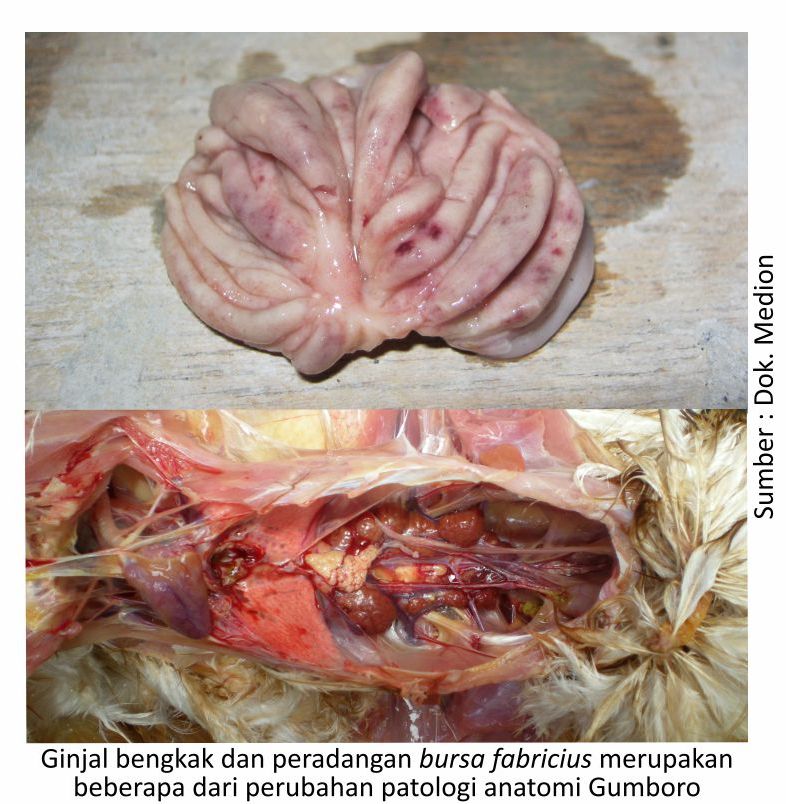
The Gumboro Virus found in the field is very virulent Gumboro (vvIBD) virus/virus Gumboro yang sangat ganas. The level of malignancy seen in the ability of the virus that can cause high mortality. Mortality ranges from 20-30% in broilers and 30-70% in laying hens. Clinical symptoms and pathological changes in Gumboro disease caused by the vvIBD virus are similar to the classic Gumboro virus strains virulent. However, the symptoms and changes caused by the vvibd virus attack will be more severe with hemorrhoids bursa Fabricius and muscle tissue and takes place acutely.
Colibacillosis Increases Significantly
Colibacillosis is caused by bacteria Escherichia coli. These bacteria are resistant in the environment for 20-30 days. Colibacillosis can be transmitted vertically through the reproductive tract of the hen, that is, through the ovaries or oviducts that are infected and transmit to the DOC. Meanwhile, horizontal transmission, one of which can be through contact with contaminated cage materials/equipment. Please note that many outbreak Colibacillosis occurs due to poor sanitation and cleanliness of the cage due to bacteria E.bra it is very easy to pollute the environment of the cage.
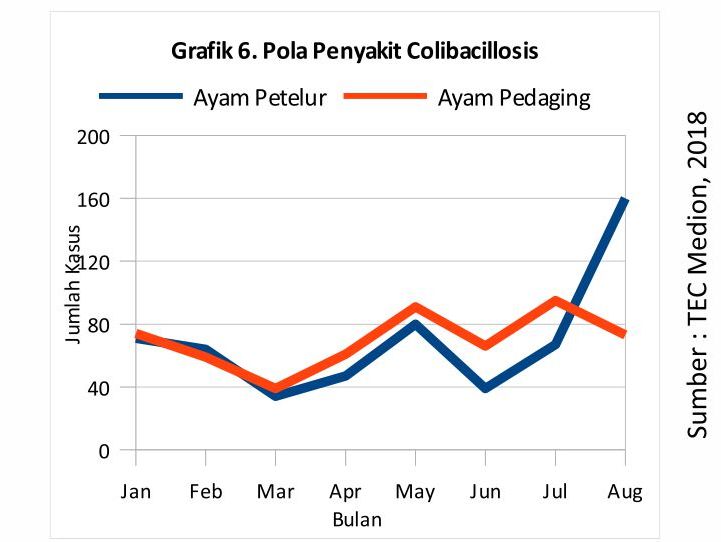
As can be seen from graphs 1 and 2, The number of cases of Colibacillosis, especially in broiler farms, increased very significantly compared to 2016 and 2017. The highest cases occurred in July 2018 in broilers while in laying hens increased in August 2018 (graph 6).
Stay Aware Of Diseases Decreased Egg Production
Some viral diseases cause various organ dysfunctions, be it digestive, respiratory, nervous organs including reproductive organs that are directly related to egg production. Among the types of diseases that are often the byword of laying hen breeders are ND, AI and IB. When viewed from January to August 2018, the trend of ND and AI cases in laying hens was quite high in May and June. Especially nd diseases in August increased again. While the trend of IB attacks has an even pattern even though the number of cases has increased compared to 2017.
In early 2018, ND cases also had an increase. This is thought to be due to the humid conditions of the cage environment so that the ND virus is quite stable and growing. The number of ND events can also be triggered by stress and immunosuppression effects on chickens due to uncomfortable cage conditions and high density, reducing the resistance of the chicken's body and making it easier for Disease seeds to attack.
In addition to the rainy season, when the transition was some of the viral diseases must be aware of. The change of weather in the transition season can have a stressful impact on chickens. As a result, the chicken's immune system decreases so that disease seeds can easily attack, including AI, ND viruses and so on.
Damage or disruption of the reproductive system due to infection of one of the egg production-lowering diseases will result in decreased egg production. The decrease in egg production due to the attack of the IB virus ranges from 10-50%, and AI can reach 80%, while in the case of ND it varies depending on the immune status.
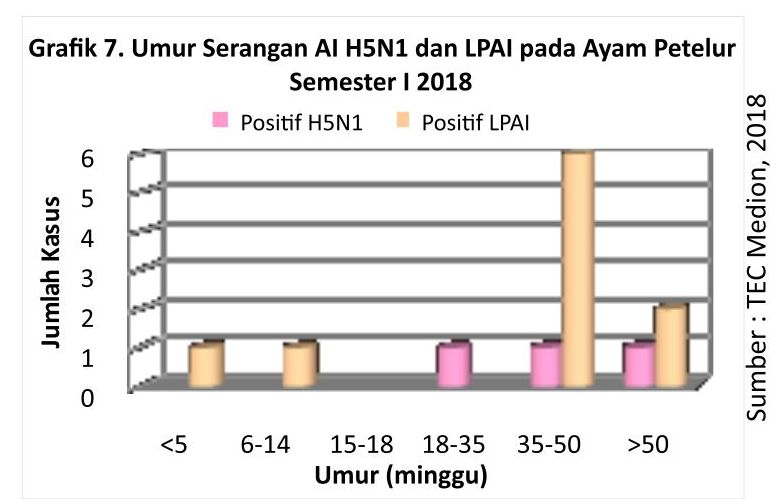
Moreover, not only the presence of AI H5N1 virus that spread, but quite a lot of AI virus new variations of the type H9N2 are grouped into LPAI (Low Pathogenically Avian Influenza) that attack poultry. Based on the data of Medion laboratory (MediLab), samples collected from the field showed that in laying hens found cases of AI H5N1 and LPAI positive with the test Polymerase Chain Reaction (PCR). The age of attack varied from 5-14 weeks and was dominated by the production age of > 35 weeks (graph 7).
In 2018, AI cases were particularly H5N1 outbreaks with sudden death occurrences reported from several countries such as the Netherlands, China, Nepal and Bhutan. The latest information is also from Malaysia which is being hit by the H9N2 outbreak (antaranews.com, 2018).
Notes for 2019
It is never too late to keep improving and rearranging the chicken rearing system better. The thing that is a consideration to always be evaluated so that later the chicken is able to produce optimally is the implementation of the concept of biosecurity Strictly and do not forget to carry out appropriate vaccinations. During this time, some farms seem still less important to consider the meaning of biosecurity. Moreover, if the chicken disease has been handled properly, it will seem to ignore the biosecurity program.
From all the data that has been summarized, it is estimated that chicken diseases in 2019 will not be much different from 2018. During the rainy season and transition, farmers need to be more careful against immunosuppressed diseases such as Gumboro, ND, and AI. Diseases of coccidiosis and colibacillosis are likely to continue to threaten. In addition to the emergence of disease Fowl Adenovirus which attacks the liver organ that little by little shows its existence.
Respiratory and digestive diseases, both caused by bacteria and viruses in laying hens and broilers will continue to increase. This is related to the weather conditions and the environment of the farm where the air quality decreases. Moreover, the lack of attention to the sanitation of the cage environment can facilitate the spread of disease seeds, especially when the weather conditions are uncertain.
Looking at the development of the disease from the beginning to the middle of 2018, and after comparing with the cases of the disease in 2016 and 2017, it can be concluded that:
- Diseases related to maintenance management such as CRD, complex CRD, coccidiosis and colibacillosis are still classic problems. It needs to be re-evaluated regarding landscape management and maintenance procedures that we apply. Uncertain weather conditions, sometimes even changing extremes, coupled with changes in feed and health strategies demand better management. What's more, today's commercial chickens have the characteristics of being susceptible to disease. Application of closed enclosures (closed house) began to be in great demand because it has various advantages, including being able to minimize the effects of weather changes so that the temperature and humidity are more comfortable for chickens, being able to optimize land use (higher density, reaching 12-15 heads/m2). To control coccidiosis is to reduce the number of oocysts and prevent oocysts from sporulating. The trick is to give special treatment to the floor of the postal cage. Optimizing the cage preparation period can help minimize cases of Colibacillosis. Disinfect the cage well and correctly starting from the drop litter and the removal of feces from the farm. Strive too litter do not get wet and dirty immediately replace with litter dry or wet ones are sorted out and removed from the cage.
- The best way to prevent Gumboro is a combination of optimal management and vaccination. Gumboro is a disease that causes the impact of immunosuppression and the virus has long-lasting properties in the environment. To prevent this, in addition to strengthening the immune status of chickens through appropriate vaccination programs, it is also important to always optimize the preparation period for the coop.
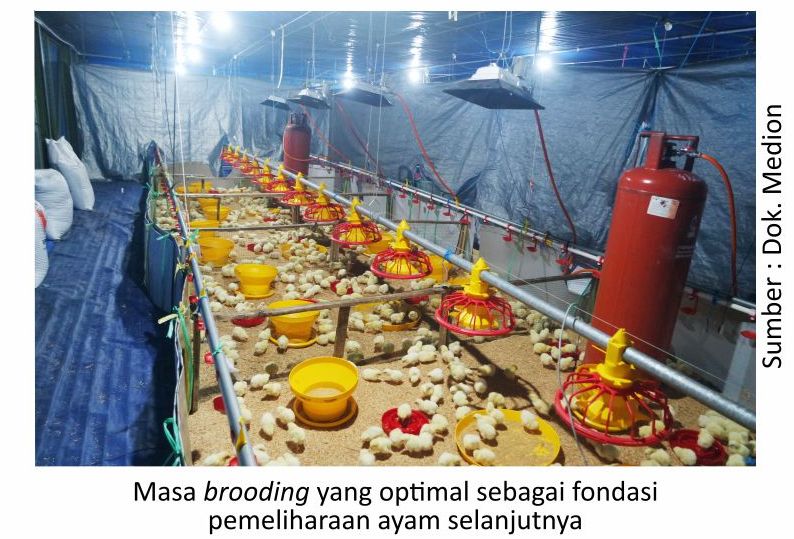
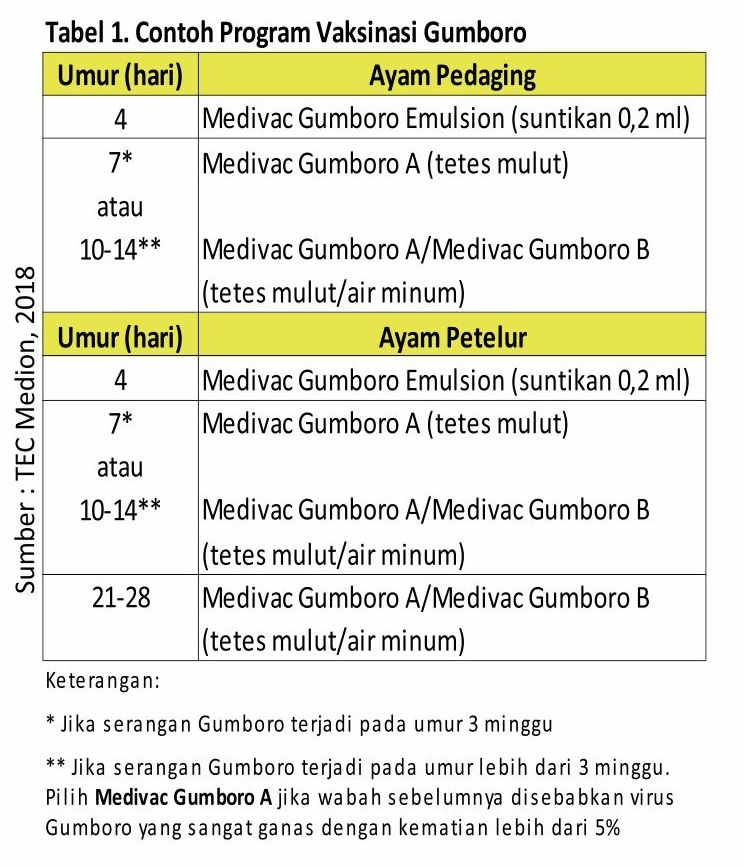
With the lack of disease seeds in the cage environment coupled with the immunity of poultry, it is hoped that Gumboro will not attack repeatedly and poultry performance can be achieved optimally. Also optimize chicken rearing management, especially time management brooding period, because it is a period of optimal growth and development of internal organs (digestion, respiration, etc.) as well as immune organs. The Gumboro vaccination can be done as Table 1. However, in order to determine the age of the first Gumboro vaccination more precisely, farmers can test maternal antibody levels in the laboratory by taking blood samples (serum, red) from a group of unvaccinated chicks between the ages of 1-4 days. Increase chicken stamina by giving antistress multivitamins such as Vita Stress/Fortevit. Give anyway Imustim 3 days before and 3 days after vaccination as an immunostimulant to help the work of the immune organs that have been formed.
- Farmers still need to be aware of viral diseases, especially for AI and ND. In this regard, Medion will continue to focus on monitoring the development of AI and ND viruses. In addition, considering that in December some regions have entered the rainy season, it is not impossible that the incidence of ND and AI will increase in number. The selection of the right vaccine and the application of appropriate vaccination conditions in each farm are the key points for successful protection from ND and AI attacks. The use of vaccines that are homologous to the field virus will provide more optimal protection and are able to suppress viral shedding (preventing the spread of ND and AI viruses in the field). Don't forget about strict biosecurity measures.
- In 2019, FadV needs to be aware of its emergence. Although the incidence is only slight, but when attacking, the consequences are very fatal and more often end in death. Give high doses of multivitamins, to increase the stamina of the chicken's body. Improve biosecurity one of them is by spraying the cage using disinfectants Antisep or Neo Antisep. Administration of herbal hepatoprotectors such as Heprofit can be given when the chicken has experienced a condition of liver damage disease attack.
Evaluation of livestock business needs to be done in order to determine the strategy that needs to be taken in the future. Let us improve the right maintenance, health and biosecurity program strategies as an effort to face a better future. Success for Indonesian farmers.