Question from Mr./Ms. Cakksudro — via Email
Mohon penjelasannya apabila telur mulai pucat. Bolehkah penggunaan konsentrat dinaikkan? Terima kasih.
Answer:
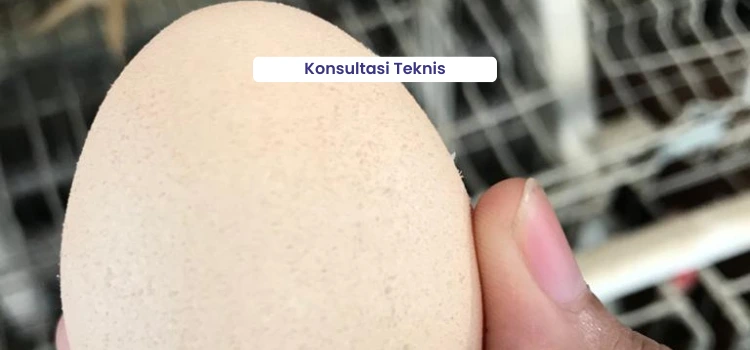
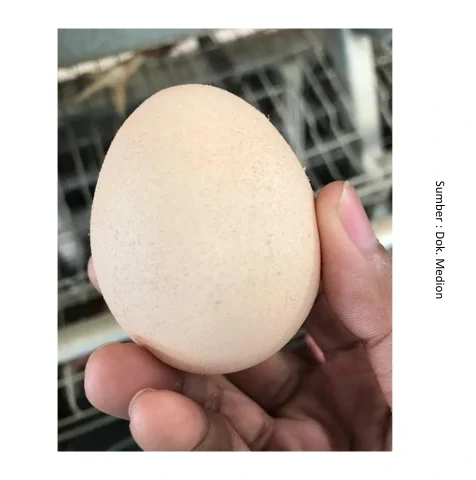
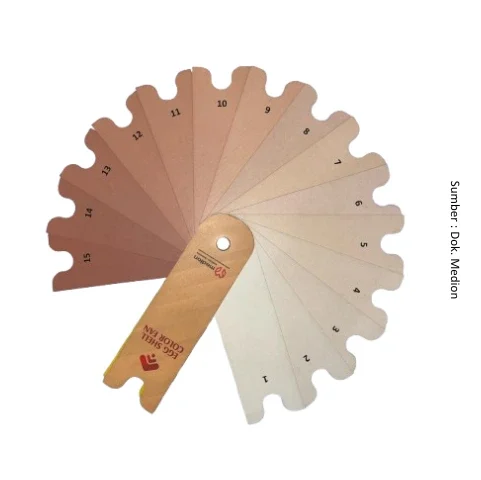
Thank you, Mr./Ms. Cakksudro, for your question. Eggshell quality is a key parameter consistently monitored by layer farmers. High hen-day production without equally optimal shell quality will reduce the overall success of layer flock management. Good eggshell quality is reflected in shell strength and color—shells that resist cracking and display a glossy brown hue. Shell color can be measured with an Eggshell Color Fan (scale 1–15); higher values indicate a darker brown shell. Shell color is primarily influenced by the bird’s genetics (strain) through the availability of the pigment Protoporphyrin IX in the reproductive tract. Beyond genetics, shell quality can also be affected by hen age, environmental stress, mineral availability, and health status (including disease).
Causes of Pale Eggshells
Before optimizing eggshell color, it’s important to understand the causes of pale shells. The following factors can contribute to paler eggshell coloration:
1. Chicken Age
As hens age, egg size naturally increases. This growth in egg size is one of the key factors contributing to paler eggshells. The condition occurs due to an imbalance between the expanding shell surface area and the limited amount of pigment available for deposition onto the shell (Odabasi et al., 2007; Samiullah et al., 2015).
2. Environmental Stress Conditions
Stress-triggering factors such as high stocking density, improper handling of hens, and elevated temperature or humidity can induce the release of stress hormones, particularly epinephrine. This hormone disrupts the formation of the cuticle and interferes with red blood cell activity, leading to suboptimal pigment deposition during shell formation. As a result, the eggshells appear paler and less vibrant (hendrix-genetics.com).
3. Mineral Availability
Both macro minerals (calcium and phosphorus) and micro minerals (Fe, Zn, Mn, Cu) play vital roles in the eggshell formation process. Calcium and phosphorus are essential for calcification, contributing to the development of thick, crack-resistant shells. Meanwhile, micro or trace minerals function as chelating agents that carry the pigment structure Protoporphyrin IX and serve as components in red blood cell pigments (Solomon, 1987).
4. Health Factors (Diseases)
One of the diseases that can cause pale eggshells is infection by the Infectious Bronchitis (IB) virus. This virus can attack the reproductive organs, leading to anatomical changes such as dilation of the oviduct filled with clear fluid (cystic oviduct). When a cystic oviduct develops in the left reproductive tract—the functional side responsible for egg formation—it disrupts the normal process of shell formation and pigmentation, resulting in paler eggshells.
Actions to Optimize Eggshell Color
To optimize eggshell color, the following actions can be taken:
1. Minimize the Risk of Heat Stress
Housing Management
Adjust cage density to provide hens with ample space for movement, preventing overcrowding and promoting comfort. Allocate around 490–750 cm² of floor space per bird during the production phase (Hy-Line Management Guide, 2023). It is also essential to maintain temperature and humidity at optimal levels—ideally between 25–28°C with relative humidity below 70%. When both temperature and humidity are high, install fans to help remove excess heat and moisture from the house. Regular manure removal and the use of shade nets (paranet) on the sides of the house can also help reduce heat stress by blocking direct sunlight.
Vitamin and Electrolyte Supplementation
Supplementing hens with vitamins such as vitamin C and E during periods of heat stress serves as an antioxidant strategy to reduce the negative impacts of thermal stress. Vitamin C protects against oxidative stress by neutralizing free radicals and shielding proteins from alkylation (Traber et al., 2011). It also enhances immune defense by promoting the differentiation and proliferation of T and B cells (Carr et al., 2017). Supplementation with 250 mg/kg of vitamin C in feed has been shown to improve growth rate, immune response, and antioxidant status in poultry (Khan et al., 2012).Meanwhile, vitamin E acts as an antioxidant by preventing inflammation, minimizing cytotoxic cell damage caused by free radicals, and boosting macrophage activity in chickens (Dalolio et al., 2015). Supplementation with high-concentration multivitamins such as Top Mix HC can help meet vitamin requirements during heat stress conditions.
During periods of heat stress, hens often experience an acid-base imbalance in blood plasma, leading to respiratory alkalosis. This condition can be corrected through electrolyte supplementation such as NH₄Cl, NaHCO₃, NaCl, or KCl. Electrolytes help restore the physiological balance and support normal metabolic functions. Supplementation can be administered through drinking water or feed. One example of an electrolyte supplement is Vita Stres
Drinking Water Management
Hens will increase their water intake during high temperatures. The ratio of water intake to feed consumption is 2:1 at 21°C but will increase to 8:1 at 38°C (Hyline, 2016). Therefore, several things need to be considered in drinking water management:
a. Ensure that the drinking water provided has a comfortable temperature for the hens, which is 20–24°C. An increase in water temperature above 30°C will reduce water intake.
b. Provide drinking water ad libitum in the house and arrange the distribution of drinkers so that they are easy to reach.
c. Drinking water must be of good quality and not contaminated.
Feed Management
Several aspects must be considered in feed management to reduce the effects of heat stress:
a. Feeding time
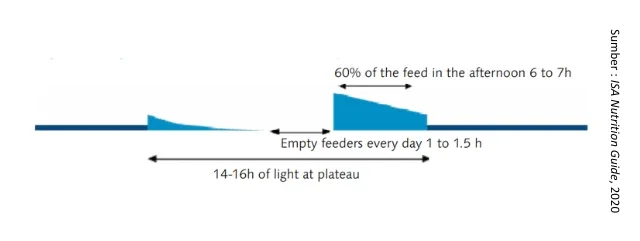
Under heat stress conditions, hens generally decrease their feed intake as a physiological response to reduce heat production from metabolism. Therefore, it is important to monitor feed intake to ensure nutrient consumption meets the target. During heat stress, feed intake decreases by 1.2% for every 1°C increase in temperature between 22–32°C, and by 5% for every 1°C increase between 32–38°C (Ranjan et al., 2019). To minimize the risk of heat stress, feed should not be provided during midday when temperatures are high, as this increases digestive metabolism and body heat production. A practical feeding strategy is to provide one-third of the feed in the morning and two-thirds in the late afternoon, while supplementing calcium or other minerals at night. This approach aligns with hens’ feeding behavior—they tend to eat more (about 60%) before dark and resume feeding when light returns (ISA Nutrition Guide, 2020).
b. Add oil to the feed
The use of high-energy oils is an effective strategy to prevent heat stress in hens. During metabolism, oils produce the lowest metabolic heat (heat increment) compared to proteins and carbohydrates. Adding 5% oil to the feed during heat stress conditions can increase feed intake by up to 17% (Daghir et al., 2008; Wasti et al., 2020).
2. Complete Mineral Balance
As we know, the eggshell is formed through a mineralization process, with calcium making up the majority (40–60%) of its composition. During egg production, hens require approximately 2–2.5 g of calcium (Ca) to produce one egg, with about 60–80% obtained from feed and the remainder mobilized from bone reserves (Lohman Information, 2024). If the calcium supply in the hen’s body is insufficient, the eggshell becomes weaker, softer, and more prone to cracking.To address calcium deficiency, grit can be added to the feed, as it serves as an excellent calcium source. It is also important to ensure adequate nutrient intake, particularly calcium and vitamin D3. Calcium absorption in the intestine is directly regulated by vitamin D3, making it a crucial element in maintaining strong and properly pigmented eggshells.
Mineral Feed Supplement A contains essential minerals such as calcium (Ca), phosphorus (P), iron (Fe), manganese (Mn), iodine (I), copper (Cu), and zinc (Zn). In addition to minerals, Mineral Feed Supplement A is also enriched with vitamins D3 and B12. The availability of these minerals and vitamins in Mineral Feed Supplement A helps improve hen productivity, producing optimal egg quality with thick, strong, and bright brown eggshells.
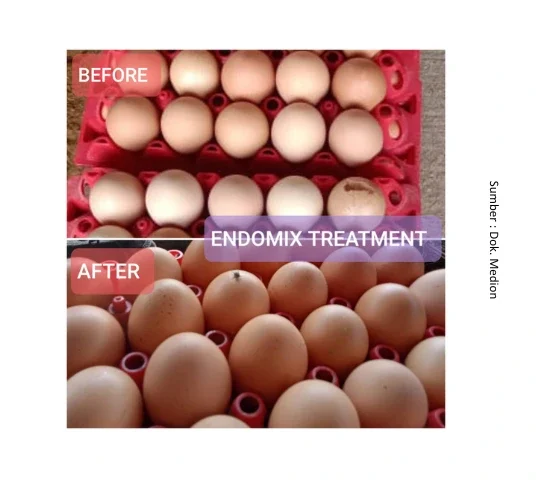
In addition, the combination of trace minerals contained in Endomix (dosage: 250–500 g/ton of feed) also plays a role in optimizing eggshell quality, including shell color. This supplement is beneficial in field cases where there is a decline in eggshell color uniformity or when shells appear pale. Moreover, supplementing Endomix is an excellent choice for older hens to help maintain eggshell color quality. This is because the micronutrient iron (Fe) in Endomix contributes to the formation of shell pigment within the circulatory system. Meanwhile, other minerals such as copper (Cu), manganese (Mn), and zinc (Zn) act as carriers that transport the pigment to the reproductive tract. When the supply of these trace minerals is adequate, the eggshell pigmentation process becomes more efficient and results in optimal shell coloration.Humanize 174 words
3. Hen Health Control
The most effective control for viral diseases is through proper vaccination and biosecurity measures. In addition, provide supportive care and supplements to enhance the animal’s immune resistance.