By Wahbi Ya’lubi – via email
High environmental temperatures cause some hens to stop producing eggs, resulting in decreased egg quantity and quality. One common solution is to add vitamin C through drinking water. My question is: are there any side effects from giving vitamin C continuously? Can it disturb the digestive system?
Answer:
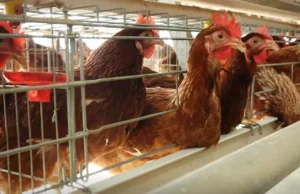
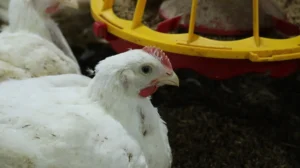
Thank you, Mr. Wahbi, for your question. The issue of global warming today indeed affects poultry farming, both for layers layer or broiler. Normally, chickens can balance their body temperature when the environmental temperature rises, thanks to their thermoregulation ability. However, when the temperature increases by 1.5°C, chickens can no longer maintain their internal temperature, which can lead to heat stress. Chickens are more sensitive to high temperatures than other species because they lack sweat glands and have a high metabolic rate, which indirectly affects their health and performance. High temperature is one of the main stress factors in poultry that can cause endocrine disruption and reduced performance.
Heat Stress
Heat stress or heat stress occurs when chickens fail to adapt to excessive heat. Heat stress caused by the temperature and humidity in the cage exceeding the comfort zone. Heat stress divided into two types based on the duration of heat exposure. Heat stress Acute occurs when the temperature and humidity in the cage increase suddenly and drastically. Meanwhile, heat stress Chronic heat stress occurs when temperature and humidity increase over a relatively long period of time.
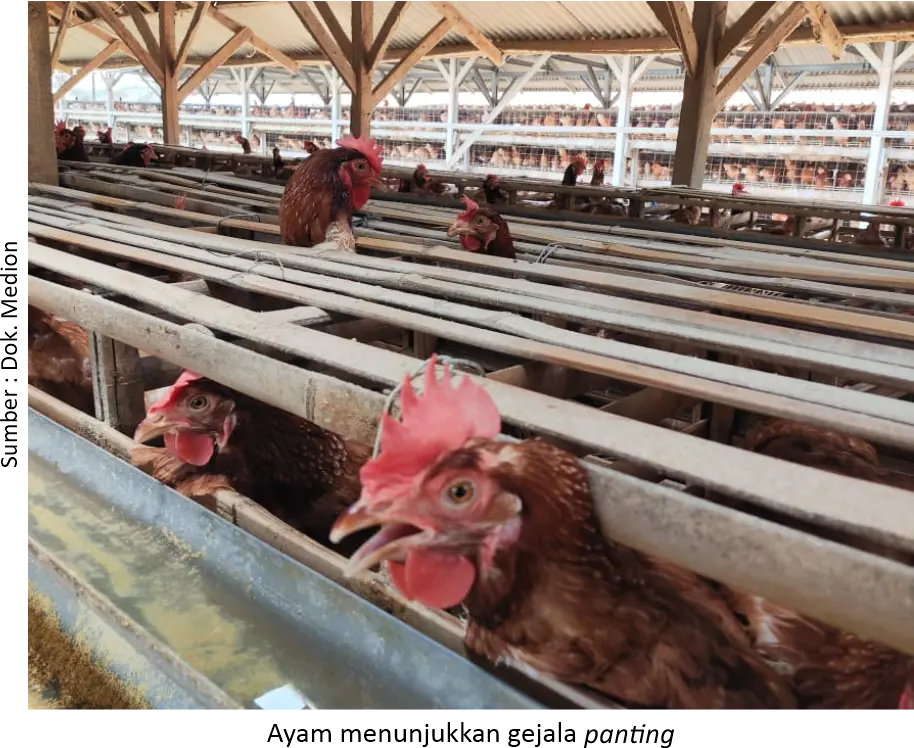
When it happens heat stress, Chickens will show symptoms of difficulty breathing, panting, reduced feed intake, and increased water consumption. Panting is a natural response when chickens try to reduce heat in their bodies. Panting causes oxygen and carbon dioxide exchange to occur very quickly, thereby reducing CO₂ concentration in the blood. This causes blood pH to rise, or respiratory alkalosis (Du et al., 2022). Respiratory alkalosis will inhibit supply bicarbonate needed for mineralization in eggshell formation. In addition to reduced feed consumption, the disruption of nutrient absorption due to this increase in blood pH is also a factor in the occurrence of emaciation and decreased production performance due to heat stress.
At the same time, when the chicken is hit heat stress, several immune organs are impaired, causing immunosuppression. Antioxidant enzyme activity is also impaired in warding off various pathogens or radicals in the body. In addition, the body's antioxidant capacity is reduced, causing oxidative stress. Excessive free radicals cause disruption to several cellular metabolic processes, ultimately resulting in inflammation.
Treatment Heat Stress
Several things that can be done to reduce the negative impact caused by heat stress is by adding water space, Do not feed during the day when the weather is hot, adjust density, optimize ventilation by adjusting temperature and humidity, and manage air circulation in the cage. In addition, as a supportive measure, supplements containing antioxidants can be given to suppress the effects of free radicals in the body when heat stress.
Vitamin C (ascorbic acid) is one of the water-soluble vitamins that can act as an antioxidant. Most animals have the ability to synthesize ascorbic acid. However, this vitamin is quickly depleted during times of stress and illness. This occurs because the body needs it faster than it can synthesize it, causing oxidative damage to the organism (Attia et al., 2010). In poultry and birds, ascorbic acid synthesized in the kidneys, while in some mammals it is synthesized in the liver.
Vitamin C Supplementation
Vitamin C supplementation is safe and effective in relieving stress. Vitamin C is water-soluble, so excess supplementation will not be absorbed. Vitamin C supplementation at concentrations at the threshold of renal reabsorption will be freely excreted. Excess vitamin C in the blood will be rapidly excreted, resulting in low toxicity (Ahmadu et al., 2016). In addition, vitamin C is inexpensive and easily available, easily absorbed, non-toxic to the body, and has no drug withdrawal period (withdrawal time) and has no side effects from overdose (Seifi et al., 2010).
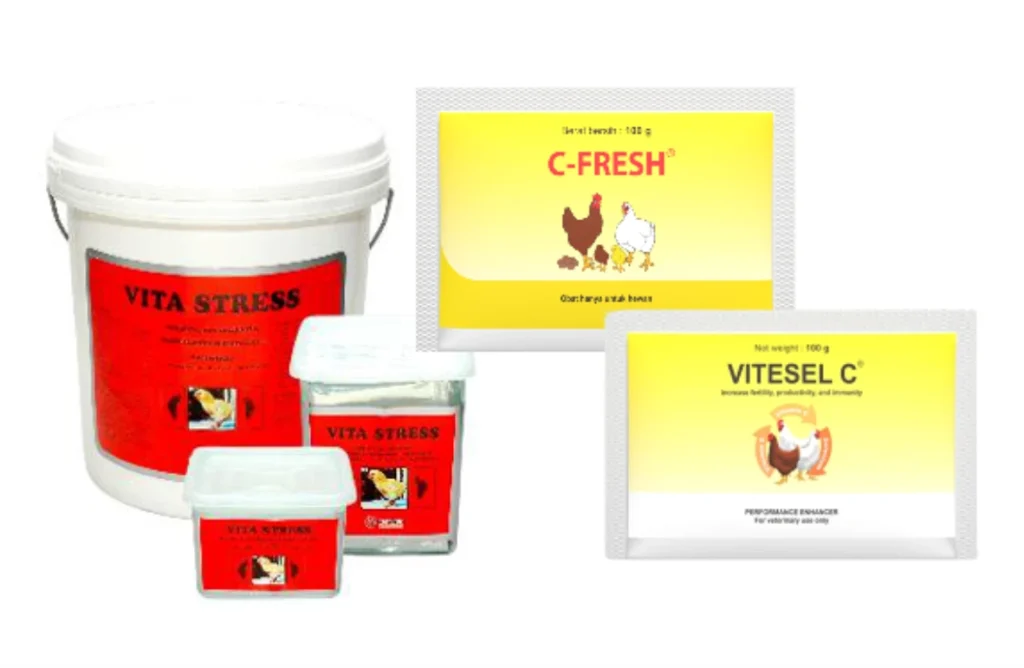
Several vitamin C products from Medion that can be used as options for relieving heat stress include Vita Stress, C-Fresh and Vitasel-C. All three products contain vitamin C, which acts as an antioxidant to reduce the negative effects of heat stress. With the drinking water app, Vita Stress can be administered at a dose of 1 g/2 L, C-Fresh dosage of 0.5-1 g/10 L of drinking water and Vitasel-C can be administered at a dose of 1 g/10 L of drinking water.
Ahmadu et al., (2016) states that consuming relatively large doses of vitamin C can cause digestive problems, especially if consumed on an empty stomach. gizzard empty. However, when consumed in the form of calcium ascorbate and sodium ascorbate can reduce this effect. Vitamin C can increase Fe absorption, but when Fe is excessive, it becomes a problem and causes a decrease in enzyme levels. glukosa-6-fosfat dehidrogenase which causes sufferers to experience hemolytic anemia after consuming certain oxidizing substances. Several studies have also reported that high-dose ascorbic acid supplementation can increase the risk of oxalate kidney stones in urine. However, this is very rare.