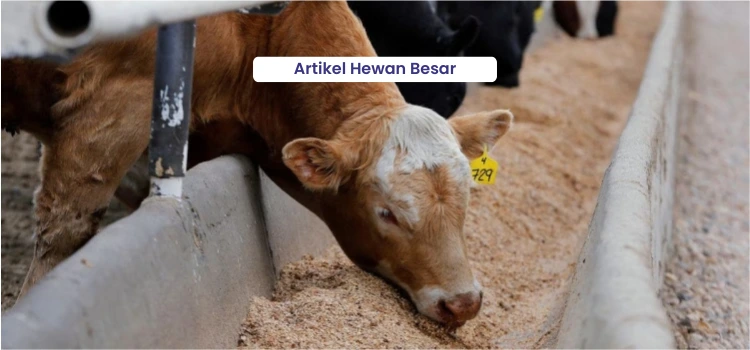
The beef cattle fattening business is an effort to intensively increase the body weight of thin cattle within 3-5 months. The key to success is selecting stock (male, healthy, with a large frame) and managing high-quality feed (concentrates and greens) to maximize daily weight gain. average daily gain (ADG).
Managing maintenance is very influential from the implementation of animal welfare, cage management to the selection of good feed, if overall management runs well then the production of the livestock will increase and support economic growth.
Beef Cattle Fattening Management
Selection of Prospective
Choose a healthy bull, you can choose a thin cow but not because of disease, has a large bone frame.
Enclosure System
Using intensive housing where cattle are not grazed to reduce movement and accelerate weight gain.
Feed Management
Nutritional requirements for fattening cattle can vary depending on breed and age. The environment also determines feed requirements, depending on whether the weather is hot or cold. Generally, beef cattle are known to thrive on a variety of feeds, as long as they are nutritious and administered appropriately. The feed provided is not spoiled or free from dirt and mold. The goal is to produce meat products of high quality and quantity. The total feed provided is generally 3% of total body weight in dry matter.
Concentrates: Supplemental feed, or concentrates, are mixed feeds designed to supplement animal nutrition. They are given at 1-2% of body weight or 50-75% of the total daily feed to accelerate fattening, such as rice bran, peanut meal, tofu dregs, or coconut meal.
Greens: Provided as a source of fiber (10-12% of body weight) or quality grass such as elephant grass. The greens need to be chopped up first.
Care and Health: Provision of vitamins, deworming medication, implementation of vaccination and disinfection programs can be programmed from the start.
Feed Supplement for Beef Cattle
One of the crucial factors determining the success of fattening beef cattle is feed. The feed provided must be of high quality and meet the livestock's needs. Quality feed must contain essential nutrients such as carbohydrates, protein, fat, vitamins, and complex minerals. Meeting the required quantity and quality of feed will positively impact daily weight gain.
One way to improve feed quality to meet livestock's nutritional needs is by adding supplements. Feed supplements are additional ingredients that help increase nutrient levels and absorption in feed. Supplements contain nutrients, particularly micronutrients such as vitamins, minerals, and amino acids. Although minerals and vitamins are present in small amounts in feed, these nutrients play a vital role in the body's metabolism.
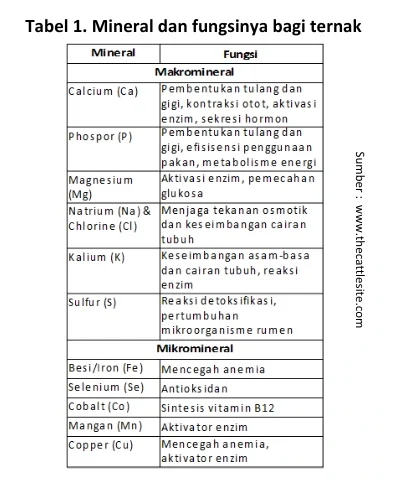
Beef cattle require minerals in their feed to optimize growth, reproduction, and health. Minerals the body requires in large amounts are called macrominerals, while minerals needed in smaller amounts are called microminerals. Each mineral has a different function. The following are the functions of each mineral (Table 1).
Mineral requirements for beef cattle depend on several factors, such as age, weight, sex, and production phase. These needs must be met in balance, as either a deficiency or an excess can lead to health problems. For example, deficiencies in various minerals can lead to decreased appetite and weight gain, thus reducing performance. Conversely, excess phosphorus can lead to urinary tract stones and water belly (accumulation of fluid/urine in the abdominal cavity) in bulls.
Other supplements contain vitamins, which are needed by the body for growth, metabolism, reproduction, and livestock health. Vitamins are divided into two groups: water-soluble vitamins (vitamins B and C) and fat-soluble vitamins (vitamins A, D, E, and K). In addition to minerals and vitamins, there are also amino acids, molecules that act as building blocks for protein formation in the body. Amino acids are divided into two categories: essential, which cannot be produced by the body and therefore must be obtained from the diet, and non-essential, which can be produced by the body. Examples of essential amino acids required from feed are lysine and methionine.
One example of supplements that can be given to fattening beef cattle is Mix Plus Cattle Pro. Mix Plus Cattle Pro is a premix preparation containing multivitamins, minerals, and amino acids essential for livestock health and growth. The combination of minerals, vitamins, and amino acids functions as an antioxidant, supports metabolic processes (carbohydrates, proteins, and fats), plays a vital role in the body's biochemical system functioning optimally and promoting growth. This supplement can be administered daily by mixing it with concentrate feed. The recommended dose for cattle is 1-2 g/kg of feed.