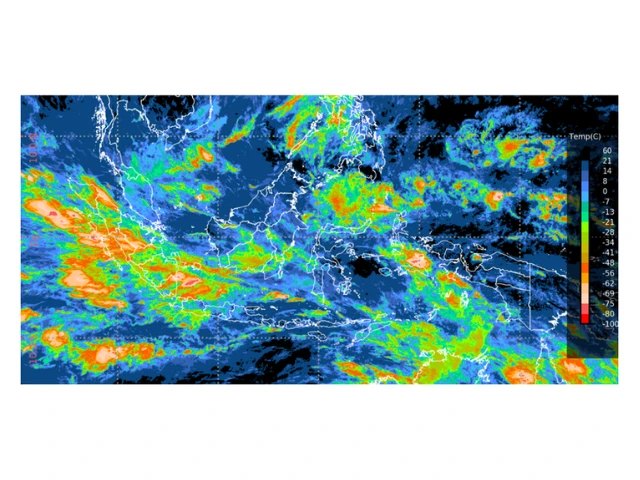
The beginning of 2026 was marked by heavy rainfall in many parts of Indonesia. According to the Meteorology, Climatology, and Geophysics Agency (BMKG) report at the end of February, the strengthening of the Asian Monsoon increased the supply of moist air, triggering moderate to heavy rainfall. Some areas experienced almost daily rain, high humidity, and fluctuating temperatures. With the strengthening Asian Monsoon, humidity could reach >90%, which could impact chickens. layer especially the production phase.
The current conditions are a big challenge for chicken farmers. layer to unstable changes in temperature and humidity. The impacts that can arise include:
• Decreased feed consumption
• Decreased egg production
• Shell quality decreases
• Increased stress and illness
• Moist stools and high ammonia
Poultry layer production is a warm-blooded animal (homeothermic) are highly sensitive to environmental changes. When temperature and humidity are outside their comfort zone, chickens experience environmental stress. Environmental stress can affect the egg production process. The following is a breakdown of how environmental stress can affect egg production quality.
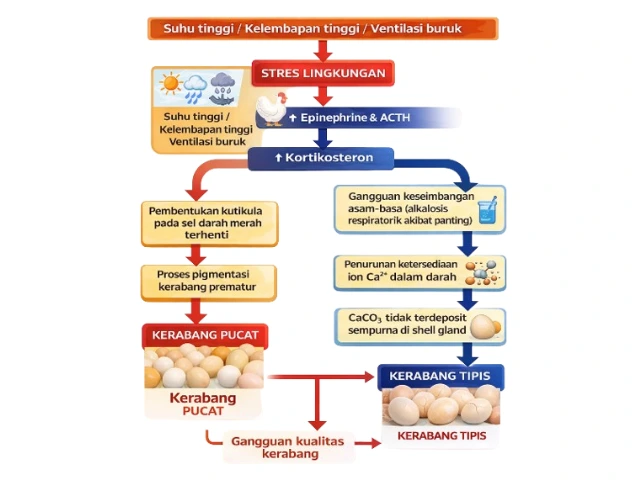
Not only quality but also quantity can be affected by rising or falling temperatures. When temperatures drop, feed intake increases, but it's used not for egg production but for heating the body. Conversely, when temperatures rise, feed consumption decreases, thus depriving the hens of the nutrients they need for egg production. Therefore, optimizing ventilation and implementing proper cage management is essential to mitigate the impacts of extreme climates.
How to Create a System Open House Which is Ideal?
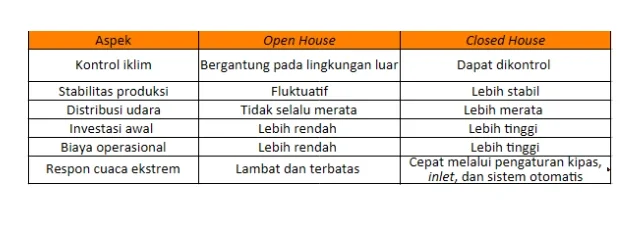
Enclosure system open house This system has long been the choice of many farmers in Indonesia due to its relatively low initial investment and simpler operational system. Under normal weather conditions, this system can still support production performance quite well. However, when climate patterns become increasingly erratic, as has been the case recently, it will impact conditions inside the barn. Unlike open house, cage with system closed house can manipulate the microclimate inside the coop to suit the chickens' comfort. Here's a comparison open house and closed house.
Peternak harus menjaga lingkungan mikro di dalam kandang dengan kelembapan 60 – 70%, suhu 21 – 25°C, kecepatan udara 2 – 2,5 m/s, kadar amonia <5 PPM. Sirkulasi udara juga sangat penting untuk menghilangkan kelembapan dalam kandang, panas yang berlebihan, menyediakan oksigen yang cukup, menghilangkan karbondioksida, dan partikel debu. Untuk menciptakan sirkulasi udara yang bagus dapat dengan berbagai cara yaitu :
1. Cage design
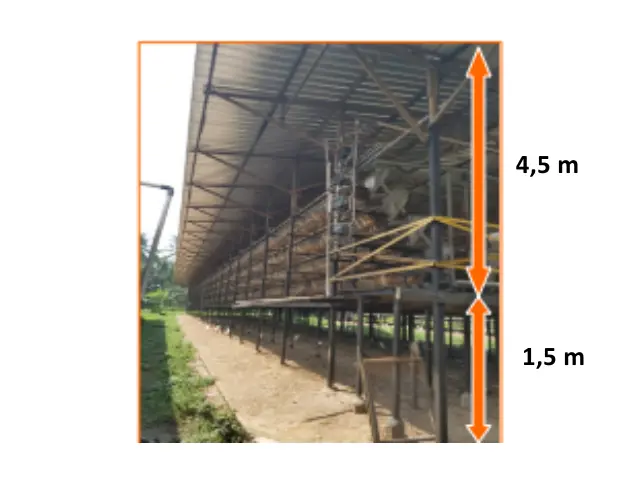
Before constructing a pen, farmers must consider aspects of proper pen design to ensure circulation, biosecurity, and prevent future problems. One important consideration is the height of the pen. Ideally, the height from the ground to the floor should be 1.5–2 m, and from the floor to the ceiling should be approximately 4.5 m. Without adequate height, hot air and water vapor will be trapped inside, increasing relative humidity and rapidly becoming soggy.
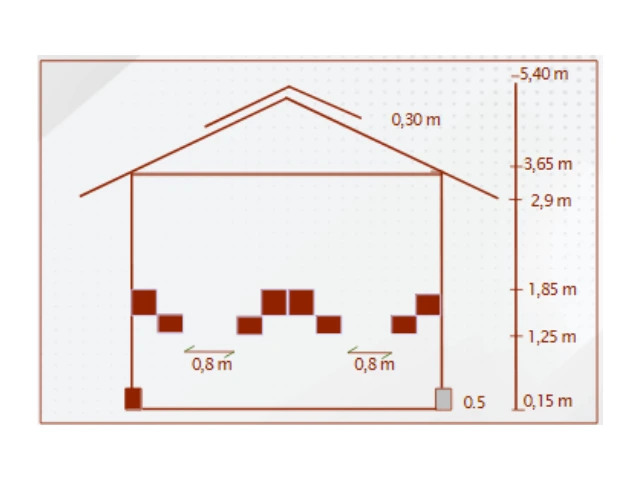
The distance between cages must also be considered. If cages are too close together, they can obstruct circulation for neighboring cages. Especially during the rainy season with high humidity, air circulation is a crucial component for chickens. layer production period. Ideally, the distance between one cage and another is one time the cage width. The cage's orientation to the wind direction is also important. Ideally, the cage should be built lengthwise parallel to the predominant wind direction (east to west). Ideally, the cage's roof should be a monitored roof to ensure smooth circulation within the cage. The monitor opening is generally 30–60 cm wide, but longer and wider cages require a larger monitor opening.
2. Drainage flow and wastewater treatment plant system
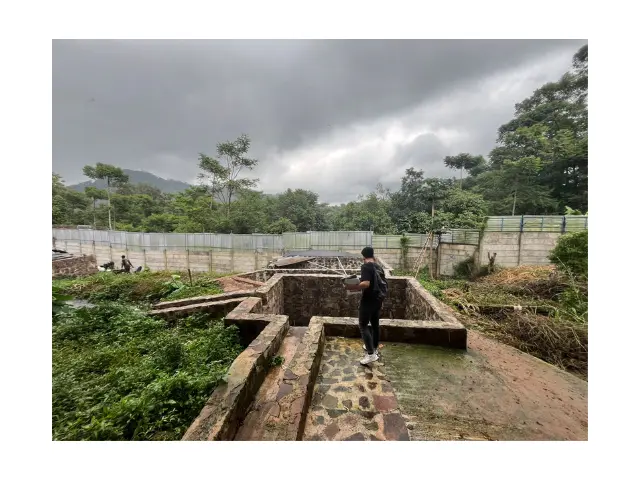
High rainfall during extreme seasons often causes puddles around the pen. Water that seeps into the pen will increase the humidity of the feces and soil which triggers wet feces, increased ammonia, disease contamination, and even social disturbances. The basic principles that must be applied regarding drainage are: • The pen floor is higher than the surrounding ground level • The land slope is 2-5% away from the pen • There is a ditch around the pen to drain rainwater • A closed channel to the WWTP, which can be a sedimentation tank, filtration tank, stabilization pond.
3. Addition of a thrust fan
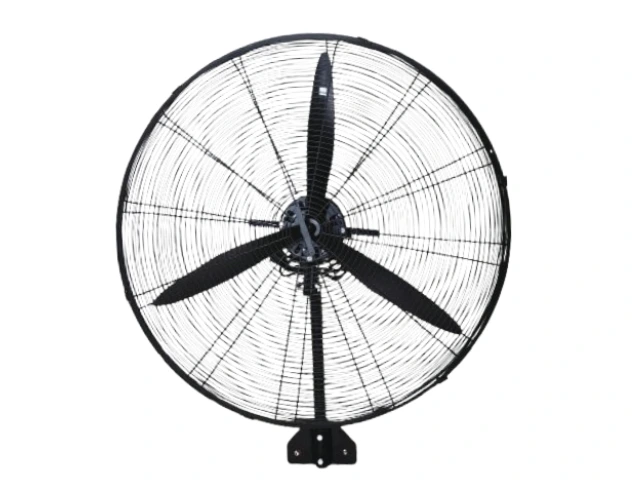
In high humidity conditions, air movement is key to removing moisture from the enclosure. Adding a fan inside the enclosure open house It can help distribute air evenly, reduce dead areas, accelerate the drying of feces, and reduce ammonia concentrations in the cage. Consider the position and number of exhaust fans. The number of exhaust fans should be adjusted to the dimensions of the existing cage. KCOOLVENT capable of pushing wind up to a distance of 20-25 m. Position KCOOLVENT installed in each lane with a height above the chickens of around 2 - 2.5 m, the blowing direction is parallel to the length of the cage.
4. Adding paranet
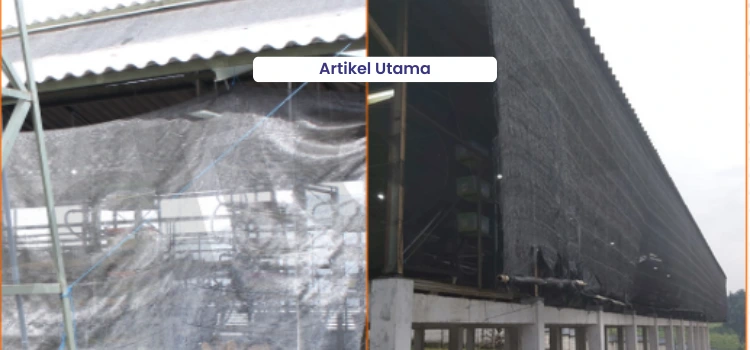
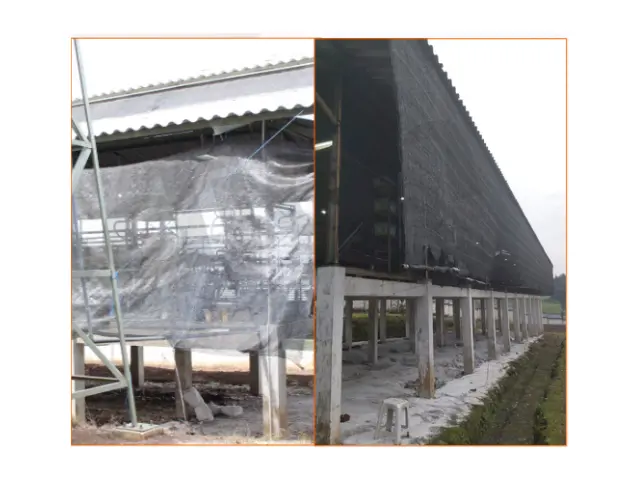
Shade nets are often used as a simple solution to reduce solar radiation, rain splashback, and trap moisture. The recommended density of shade nets is around 40–50% to avoid impeding natural air circulation. Ideally, shade nets should be installed flexibly (can be opened and closed depending on weather conditions).
Implementation of Cage Ventilation Closed House Right
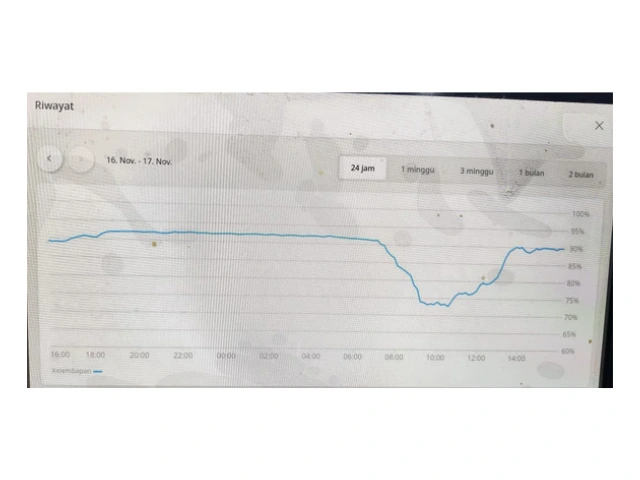
As climate uncertainty increases and housing constraints increase open house, many farmers are starting to consider the system closed house layer Due to a more controlled environment and proper management, the biggest challenge during the rainy season is not only fluctuating temperatures but also the very high humidity inside the enclosure. If not addressed by implementing ventilation management, closed house The right temperature will impact the performance of the chickens in the coop. Here's an example of a temperature and humidity history/graph during the rainy season:
1. Appropriate fan settings
The fan provides a mechanical cooling effect by using standard wind speeds. layer Production speed is around 2–2.5 m/s. If the air speed is lower than the target, the chickens could potentially overheat and this could impact their productivity. Therefore, a fan capacity that matches the desired air speed must be selected, for example, a fan with a fan capacity of 2.5 m/s. Multifan V-PLUS 64 inch with a fan capacity of 58,700 m3/h and the fan speed can be adjusted (variable of)
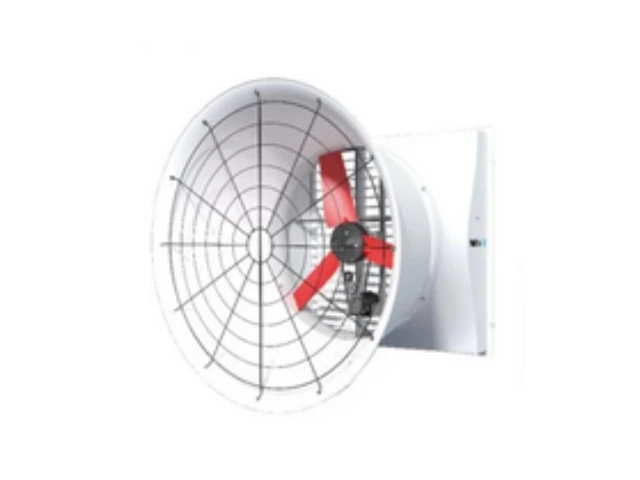
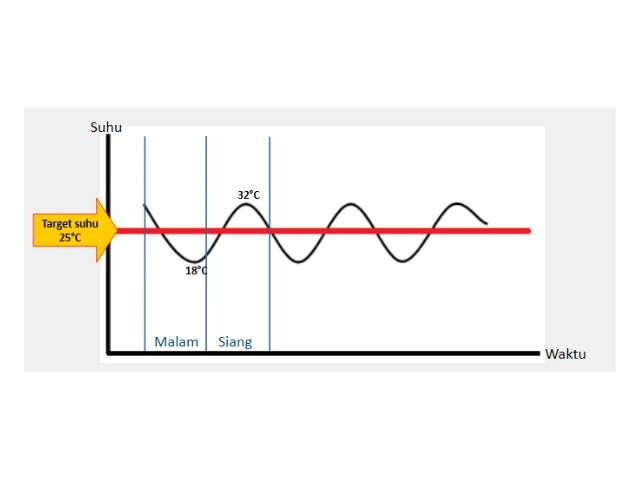
The need for fans is based on the population, minimum air requirements, body weight, and fan capacity. In low temperature conditions, we should not lower the minimum ventilation setting to increase the temperature, as air circulation is more important than temperature. In hot/high humidity conditions, we maximize mechanical cooling to cool the birds and remove moisture from the coop. The following graph shows the target temperature inside the coop and the outside ambient temperature.
2. Area balance inlet and outlet
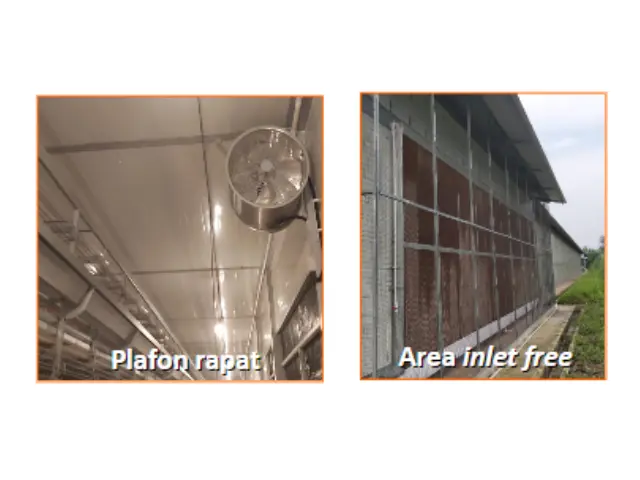
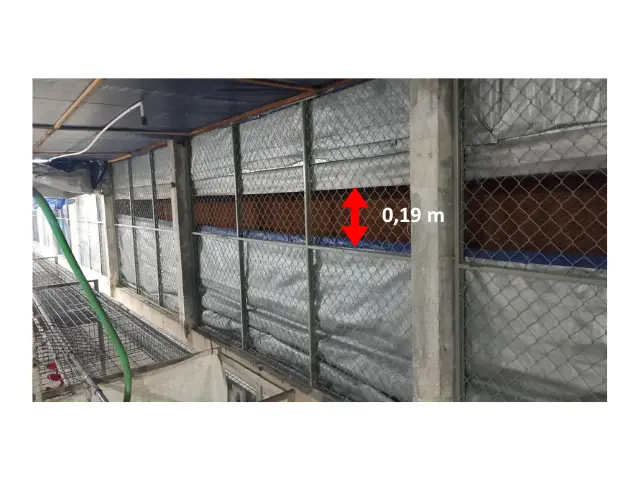
Area inlet made in the area cooling pad and is used in setting the area where air enters based on the number of fans that are ON. The size of the opening inlet will affect the amount of air entering due to the opening inlet This is the entrance for air to enter the area inside the cage. If the area inlet open too wide then the incoming air flow from cooling pad will fall down/area litter causes litter It quickly becomes damp and clumps. If it's too narrow/small, it will result in higher air speeds in certain areas only and increase negative pressure inside the enclosure. Determining the opening of the inlet area is based on the number of fans used. on and the desired airspeed target. The area inlet must be guided by the number of fans that on, and the desired target air speed. The inlet area should be based on the number of fans required. on. This is important because if it is not right in the opening inlet with the outlet will result in the air temperature inside being uneven or even occurring dead spot (low or no wind speed).
- Example of area opening calculation inlet :
Fan capacity: 42,000 m³/hour
In seconds: 11.66 m³/second
Target air speed at cell pad (type 45°/45°): 2.0 m/sec.
Total area length cooling pad (right and left side) is 30 m.
Then the area inlet include:
= Fan capacity/target air speed
= 42.000 (m³/jam)/2.0 (m/dtk) /3.600 (dtk)
= 11.66 m³/sec / 2.0 m/sec
= 5.83 m2
Opening area inlet include:
= Area inlet /total length cooling pad
= 5,83 m²/30 m
= 0.19 m or 19 cm
3. Settings cooling pad
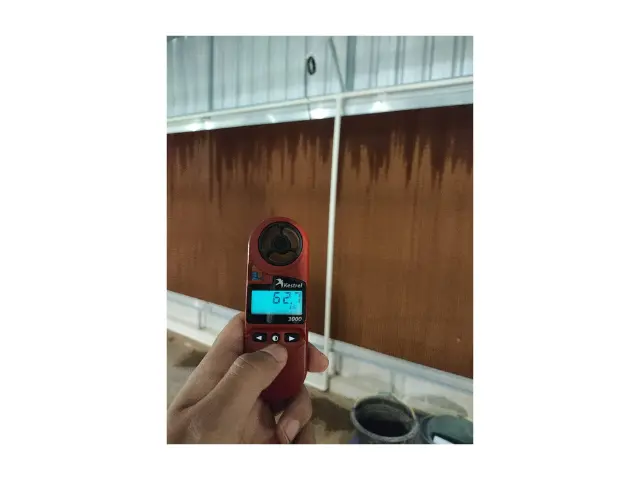
Cooling pad is a cooling system that utilizes the evaporative effect. This evaporative cooling is carried out after a mechanical cooling process (wind speed). Use cooling pad in the rainy season you have to be careful. Use cooling pad limited by humidity, air speed, time on-off cooling pad. Cooling pad It should not be turned on if the humidity is >80% because every 1oC decrease in temperature will increase the humidity by around 4-5% and the cooling function will not work optimally. Cleanliness cooling pad It also needs to be cleaned regularly daily, weekly, or even periodically. When the outside temperature is cold, use cooling pad does not function for cooling but as an air filter and stabilizes negative pressure in the enclosure.
4. Air pressure
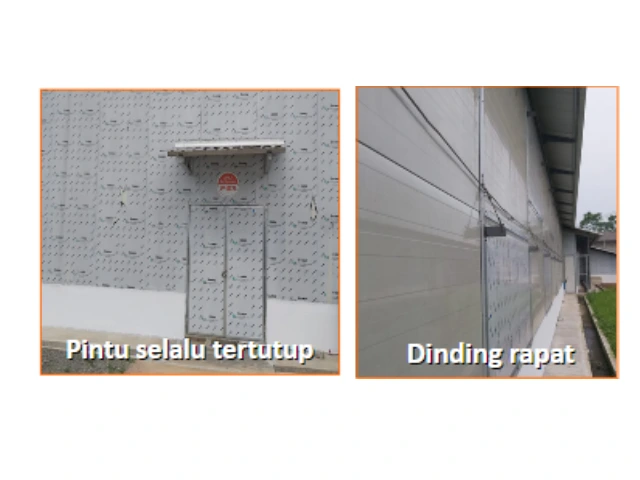
On the system closed house layer with the cages, air pressure settings (static pressure) is the key to ensuring even air circulation from the inlet to the outlet. Obstacles inside layer closed house cages quite high. The greater the resistance, the higher the air pressure. For the cage layer cages, air pressure is generally in the range of 25 – 40 Pa. Air brought from inlet Air pressure must be distributed from front to back and through each tier. If the pressure is too low, the air will immediately fall. The impact of this direct downward air flow is increased humidity and rapid ammonia formation. If the pressure is too high, the incoming air is too low, causing stress to the chickens and can affect fan capacity. The higher the air pressure, the lower the fan's capacity. We must maintain the air pressure inside the coop to meet standards by ensuring the coop is free from leaks and obstructions both inside and outside. Always check the door, ceiling, walls/curtains, ensuring there are no gaps or openings. Furthermore, ensure the outside of the coop is sterile and free from obstructions such as trees, long grass, etc. This way, air pressure inside the coop can be maintained and air distribution is even throughout the coop.