Agriculture is a very important sector for Indonesia, especially in providing food needs. The increasing population needs to be balanced with the increasing production of agricultural products to meet its needs. Increased production of agricultural products in addition to meeting domestic needs, also for export purposes in order to improve the economy. Agricultural production can be increased by increasing the area of agricultural land and increasing productivity.
Indonesia is an agricultural country and has the potential for fertile land for agriculture. The opening of new potential agricultural lands needs government and private support. In increasing production, a good cultivation process is needed, one of the important aspects is fertilization.
Fertilizer is an ingredient that is added to the plant to provide the nutrients needed so that the plant can produce well. Fertilizer becomes an inseparable element in agriculture. Fertilization is carried out both in chemical and organic form.
Fertilization aims to optimize plant growth and productivity. Plants that lack nutrients will show symptoms such as yellowing leaves, flowers do not appear, slow growth, stunted plants, and decreased crop yields. N, P, K elements are the most important macro nutrients in the process of plant growth and development and affect production.
Functions of fertilizers in plants :
- Urea or ZA fertilizer
Urea or ZA as a source of nitrogen (N) serves to increase vegetative growth, leaf chlorophyll, making plants greener, and others.
- TSP or SP-36 fertilizer
TSP or SP-36 as a source of phosphorus (P) serves to stimulate root division, strengthen stems, the formation of flowers, fruits and seeds.
- KCL Fertilizer
Serves to help plants more tea and sturdy, increase plant resistance from pests, diseases and drought, improve the quality of seeds and flowers
- NPK fertilizer
Compound fertilizer in which contained nutrients nitrogen (N), phosphorus (P), and potassium (K).
Nutrients other than derived from chemical fertilizers can also be obtained from organic fertilizers. Examples of organic fertilizers are manure and compost. While chemical fertilizers are urea, TSP, KCl and NPK.
Fertilizer is a material that is needed by farmers. The availability of cheap subsidized fertilizers given by the government is not much and is difficult to obtain. Thus farmers must use non-subsidized fertilizers, in order to still be able to produce maximum production. However, the rise in non-subsidized fertilizer prices led to rising production costs, while the price of agricultural commodities that are uncertain cause farmers increasingly difficult.
According to the Indonesian Farmers Union (SPI), the increase in fertilizer prices has occurred since October 2021. The increase in fertilizer prices is up to 100 percent from the end of 2020 to January 2022. The price of urea fertilizer per bag (50 kg) from Rp280, 000, - can currently reach Rp560, 000, - NPK pearls from Rp400, 000, - to Rp600, 000-900, 000. In addition to urea and NPK other types of fertilizers also increased.
Indonesia still imports most fertilizer raw materials, such as phosphate and potash. Therefore, domestic fertilizer prices can not be separated from the influence of international fertilizer prices. The increase in fertilizer prices was caused by the soaring prices of various world commodities such as ammonia, phosphate, potassium, gas and oil due to the pandemic, the energy crisis in Europe, and the policies of several countries that stopped exports. Ammonia prices began to increase in price since the beginning of 2021 until the highest price in April 2022 (Chart 1).

China and Russia are the largest fertilizer exporters in the world, especially phosphorus (P) and potassium (K) raw materials. China imposed restrictions on fertilizer exports until June 2022. This restriction on the export of fertilizer raw materials causes scarcity and rising fertilizer prices.
The increasingly expensive price of chemical fertilizers leads to increased production costs. In addition to the ever-increasing price, chemical fertilizers can also cause environmental pollution. Chemical fertilizers that are not absorbed by plants are eventually washed out with the flow of water. In the long run, residual chemicals will accumulate and become a problem for the soil and the environment. Sick soil that has a low content of organic matter and a minimum of beneficial soil microorganisms. Over time the soil is easy to harden, the ability to store water decreases, the more sour and contains harmful chemicals for plants, so that production that initially increased rapidly can decline drastically later.
Use Of Organic Fertilizers
The use and increasing doses of chemical fertilizers can no longer increase production, but can increase soil damage and environmental pollution. One solution is to reduce the amount of chemical fertilizers and increase the use of organic fertilizers.
Organic fertilizers have properties to improve the physical, chemical and biological properties of the soil. Soil that was initially unhealthy can be restored to a healthy condition. The use of organic fertilizers also increases the availability of nutrients in the soil. Soil that has enough organic matter, has many microorganisms such as fungi, bacteria, and microfauna that are beneficial to plants in the absorption of nutrients.
Organic fertilizers also continue to be applied in combination with chemical fertilizers, the goal is to reduce dependence on chemical fertilizers and increase soil fertility from cultivated land, as well as increase the content of organic matter as a feed for bacteria, fungi and worms that live in the soil.
Plant nutrient needs such as nitrogen (N), phosphorus (P), and potassium K can be met also using organic fertilizers such as manure, straw, and other organic materials.
1. Manure
Manure is livestock manure that is used either not yet composted or already composted. Manure can serve as a source of nutrients and can improve the chemical, physical, and biological properties of the soil.
Cow, goat, and chicken manure is a widely used manure. Manure has been used. Manure has a nutrient content of N, P, K, Ca, Mg, and organic matter that is very beneficial for plant growth and soil health. The highest nutrient content is found in chicken manure (Table 1).

To achieve high yields, it is prudent to use organic materials and fertilizers in combination with chemical fertilizers. In this case, the use of organic materials and fertilizers is recommended to the maximum extent, and the lack of haranya is added from chemical fertilizers. To get more benefits, materials and organic fertilizers used must be mature or have been decomposed with a relatively high nutrient content.

2. Straw
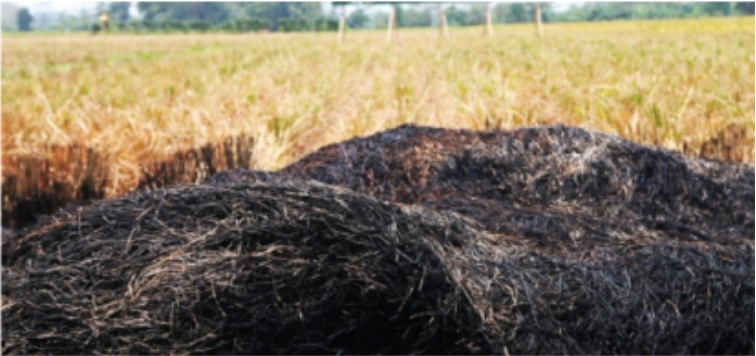
The return of straw to Paddy soil can provide some potassium (K) nutrients, thus reducing KCL fertilizer. Rice straw contains nutrient K of 1.75-1.92%. In addition to K nutrients, Hay also contains N, P, S, and micronutrients. Utilization of straw for paddy fields is still less than the maximum. Because to use straw, composting needs to be done first. To catch up on planting time, straw is usually mostly burned or transported out for animal feed and others. Burning straw before it is given to the soil causes some of the nutrients in the straw to be lost, such as C, N, P, K, S, Ca, Mg and micronutrients. In addition to causing the loss of some nutrients, burning straw also causes air pollution.

3. Balanced Fertilization
Balanced fertilization is the addition of fertilizer to the soil in accordance with the amount and type of nutrients in accordance with the level of soil fertility and nutrient needs by plants. Each type of soil has a different level of nutrient content, so it is necessary to recommend balanced fertilization according to the needs in a particular location.
Appropriate and balanced fertilization makes fertilizer use more efficient and production increases without damaging the environment due to excessive fertilization. Unbalanced fertilization can cause ineffective fertilization, waste occurs, and can reduce production.
Determination of fertilization recommendations can be done in several ways. Among them is to conduct experiments to determine the need for appropriate fertilizers. Next is to perform a soil test. The results of soil analysis are necessary to establish how much nutrient content is contained in the soil and what amount of fertilizer needs to be added to meet the needs of the plant. In rice cultivation the use of leaf color chart (BWD) can also be used to determine the needs of fertilizer needed for plants. The need for nitrogen (N) is seen through the leaf color as measured by BWD. Leaf color is a useful indicator for fertilizer needs n rice plants. Pale or yellowish-green leaves indicate that the plant lacks N.