Mr. Handika
Malang-East Java
I want to ask you about the beef cattle feed going. What kind of feed is good to use for cattle going? Please also explain about silage, what materials are needed in the manufacture of silage and after what proportion of the provision?
Answer:
Thank you Mr. Handika for the question. Feeding for feeder cows intended for fattening is as follows:
- Fresh forage feed is given at least 10% BB (body weight) mixed with concentrated feed of about 1-2% BB and additional feed/supplement (can be probiotics, mineral block/UMB)
- The forage can consist of grasses (elephant grass, field grass, King grass, or straw) and legumes (gamal leaves, legume leaves, turi leaves, or kaliandra leaves. If you are going to use a mixture of grass and legumes, the ratio is grass: legumes = 60 : 40 or 75: 25
- Concentrated feed can be purchased directly in the form of finished concentrates in beef cattle business unit cooperatives or in feed mills.
Here's an explanation of silage :
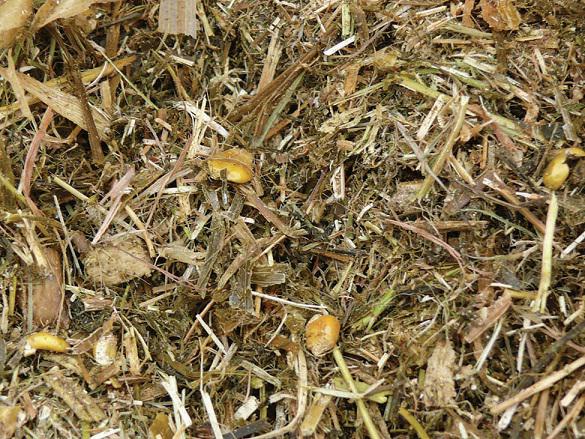
Silage is fresh forage feed after undergoing the process of insilase (fermentation) by lactic acid bacteria in an acidic and anaerobic atmosphere (process without air/oxygen). The quality and nutritional value of silage is influenced by a number of factors such as plant species, growth phase and moisture content at Harvest, microorganisms involved in the process and the use of additives (additives).
Provision of preservatives in the manufacture of silage there are those who use directly or indirectly. Directly by using sodium bisulfate, sulfur oxide, hydrochloric acid, sulfuric acid or propionic acid. Provision of preservatives or additives (additives) indirectly is to provide additional materials containing charcoal hydrate (carbohydrate) ready to be absorbed by microbes. This is done in order to provoke the formation of an acidic atmosphere. Examples of these additives are drops / molasses, Bran, onggok, corn and others.
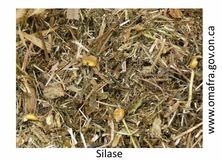
The purpose of making silage is to:
- The forage that will be given is still of high quality and durable, and can be given to livestock during a long dry season or famine
- To accommodate the excess production of forage fodder or utilize forage at the time of best growth, but has not been used.
- Utilizing the rest of agricultural products or agricultural follow-up results.
Benefits Of Making Silage :
- Livestock food supplies in the dry season.
- Accommodate excess HMT in the rainy season and make optimal use
- Utilizing the follow-up results from agriculture and plantation.
Silage Product Advantages :
- The nutritional value of silage equivalent to fresh forage can be even higher
- Favored by cattle
- Available all year round both rainy and dry season
Ingredients in the manufacture of silage:
- All kinds of forage and other plant materials, for example, elephant grass, field grass, cane tops, legumes
- Additional ingredients: drops / molasses, Bran, Bran, ongkok, corn
- Scales (for weighing grass and additives)
- 1 (one) plastic sheet (90 x 200 cm) for mixing base
- forage chopper (machete or lawn mower)
Here's an example of a simple calculation of feeding cows going per day:
- 1 cow going, weight (BB) initial = 200 kg
- Feed concentrate = 1% of BB = 1% x 200 kg = 2 kg
- Pakan hijauan = 10% dari BB = 10% x 200 kg = 20 kg
- This forage feed, there are 2 alternatives, namely grasses + silageor grass + legumes + silage:
- Grass + silage:Silase maksimal pemberiannya 40% = 40% x 20 kg = 8 kgRumput = 20 kg – 8 kg = 2 kg
- Grass + legumes + silage:Silase maks 40% = 40% x 20 kg = 8 kg.Rumput + legum = 12 kg –> rumput 75% = 75% x 12 kg = 9 kg danlegum 25% = 25% x 12 kg = 3 kg
- Conclusion –> Jumlah pakan untuk sapi bakalan BB 200 kg = konsentrat 2 kg, rumput 12 kg, silase 8 kg