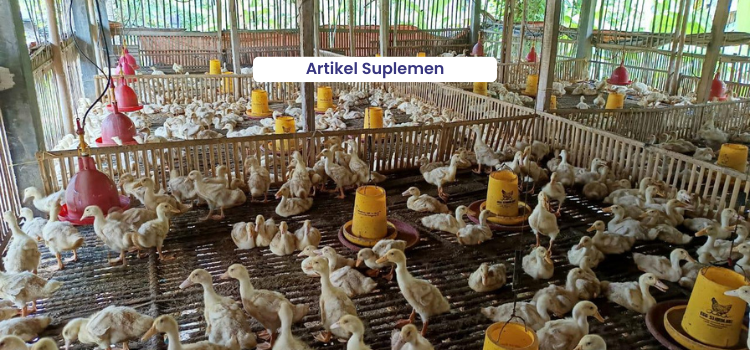
Ducks are a type of waterfowl (waterfowls) that have long been recognized and utilized by communities as a source of animal protein in the form of meat and eggs. To this day, the demand for duck meat and eggs continues to rise, providing opportunities for farmers to expand their duck farming operations. According to the Livestock and Animal Health Statistics Data 2024, the national poultry population in 2024 increased compared to 2023, particularly for ducks, which reached 36.7 million heads — an increase of 33.48%. Based on the same data, the contribution of duck meat production in 2024 was recorded at 33.82 thousand tons, up by 2.41% compared to the previous year. Meanwhile, duck egg production in 2024 reached 236.48 thousand tons, marking an 18.11% increase from the previous year.
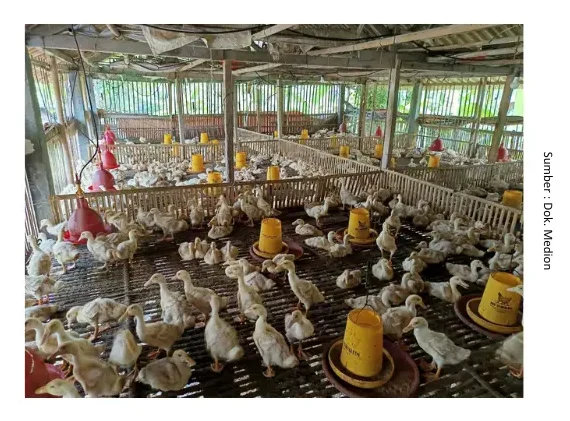
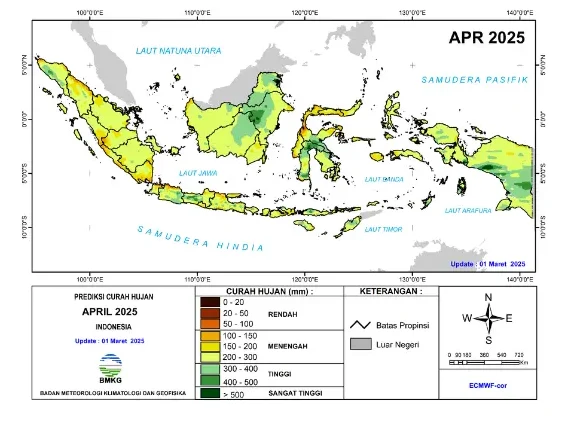
Although duck farming is quite promising, various challenges in duck production still need to be carefully anticipated by farmers. Examples include the presence of disease agents and changing environmental conditions. Setioko et al. (2004) stated that the growth and development of ducks are strongly influenced by management, genetic, nutritional, and environmental factors. If these factors are not adequately met, they can negatively affect duck performance and increase susceptibility to diseases.According to the Meteorology, Climatology, and Geophysics Agency (BMKG), rainfall levels in April 2025 are predicted to remain relatively high. The rainy season is considered the main challenge in duck farming, as such environmental conditions can naturally cause stress and weaken the ducks’ immune system. Some of the most common diseases found in ducks are Avian Influenza (AI) and Newcastle Disease (ND).
ND and AI Disease Cases in Ducks
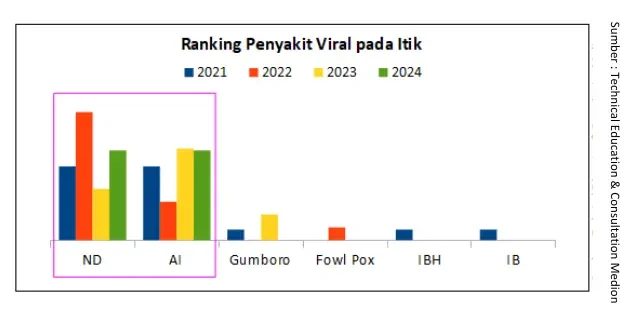
In Indonesia, duck farming has begun to develop more intensively. However, disease cases are still frequently found in duck farms. Based on clinical and pathological diagnoses collected by the Technical Education & Consultation team of Medion, about 15% of reported duck disease cases are caused by infectious agents in the form of viruses. Examples include ND and AI, which are commonly found in duck farms. ND and AI rank first and second among viral diseases in ducks during the 2021–2024 period (Figure 1).Select 15 more words to run Humanizer.
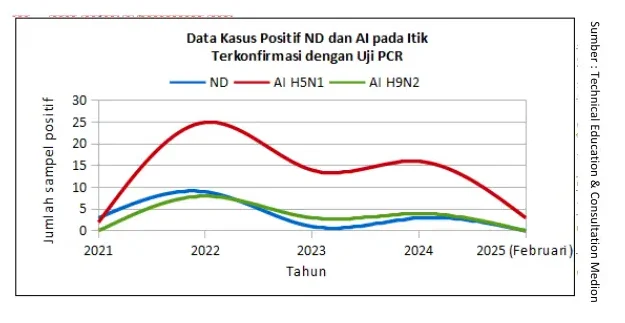
Confirmation of diagnosis through laboratory testing was also carried out to verify ND or AI cases in the field. Several samples were identified as positive through PCR (Polymerase Chain Reaction) testing from 2021 to February 2025, as shown in Figure 2. Based on PCR-confirmed data of positive ND and AI cases in ducks, the number of samples that tested positive for AI H5N1, H9N2, and ND increased in 2024 compared to the previous year. Even as of February 2025, several duck samples were still found positive for AI H5N1. This situation calls for heightened awareness and preparedness to ensure that ND and AI cases do not occur in our farms.
Causes of ND and AI Diseases
Newcastle Disease (ND), also known as Tetelo, is caused by the Avian paramyxovirus-1, an enveloped, single-stranded RNA virus. ND is an acute viral disease that is highly contagious among ducks of all age groups, with a short incubation period of about 4–6 days. The disease primarily spreads through the air or aerosols, but it can also be transmitted via contaminated feed, drinking water, or equipment. ND can affect multiple organ systems, including the respiratory, nervous, digestive, and reproductive systems.This virus often causes severe and widespread losses in duck farms. Based on its virulence, ND viruses are classified into four groups, ranging from the most to the least virulent: Velogenic ND, Mesogenic ND, Lentogenic ND, and Apathogenic enterotrophic ND. In Indonesia, most ND outbreaks are caused by the highly virulent Velogenic strain, particularly ND Genotype 7 (ND G7).
Avian Influenza (AI), or bird flu, is caused by the Orthomyxovirus, which belongs to the genus Influenzavirus A. The AI virus is an enveloped, single-stranded RNA virus with a very short incubation period ranging from a few hours to three days. This virus contains two key proteins used to determine its subtype: Hemagglutinin (HA) and Neuraminidase (NA).In Indonesia, two types of Avian Influenza are known: HPAI (High Pathogenic Avian Influenza), which has a high level of virulence, and LPAI (Low Pathogenic Avian Influenza), which has a lower level of virulence. However, both types cause significant economic losses for farmers. The HPAI subtype, such as H5N1, can cause high mortality rates in ducks if disease control programs are not properly implemented. Meanwhile, the LPAI subtype, such as H9N2, generally does not cause high mortality when acting alone but leads to decreased production, respiratory disorders, and immunosuppressive effects in ducks.This immunosuppressive effect makes ducks more susceptible to secondary infections, which can worsen their condition. As a result, increased mortality in H9N2 AI cases often occurs due to co-infection with other diseases.
Clinical Symptoms and Anatomical Pathology in Ducks
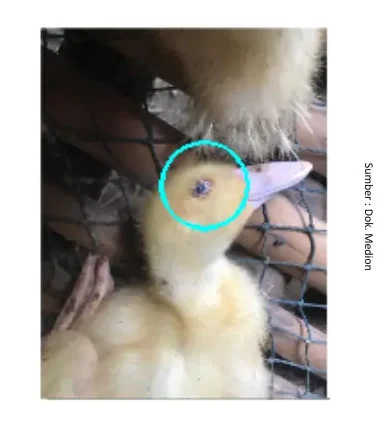
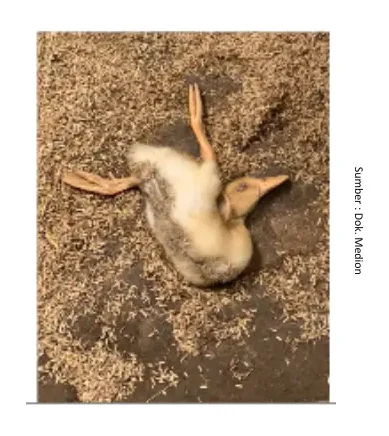
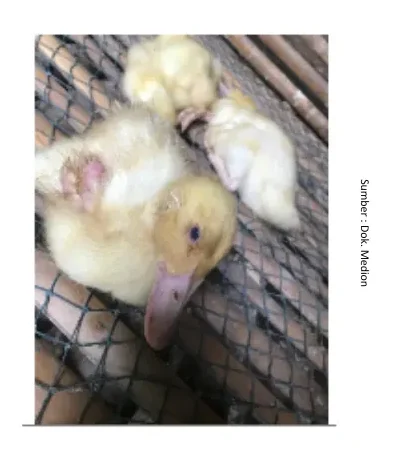
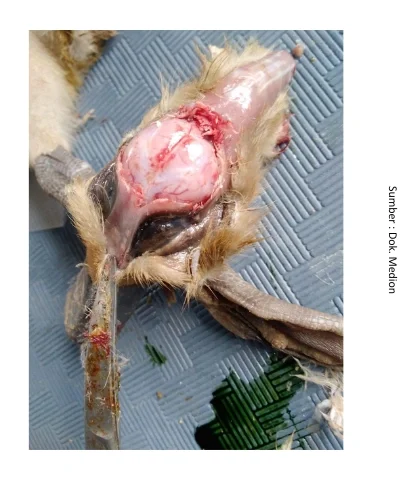
Clinical symptoms caused by ND and AI infections are generally characterized by ducks appearing lethargic, having greenish-white diarrhea, showing torticollis (twisted neck), and experiencing high mortality rates. In AI cases, ducks often exhibit grayish discoloration of the eyes.Anatomical pathological changes observed through necropsy or dissection include lesions such as dilation of the brain’s blood vessels, inflammation of the proventriculus, respiratory tract inflammation, swollen kidneys, and other organ abnormalities. ND and AI are often referred to as “twin diseases” because their symptoms are so similar that they are difficult to distinguish. Therefore, diagnostic confirmation should be performed using PCR testing, which can then be followed by sequencing to identify the characteristics of the causative agent and support further control measures.
Control of ND and AI Diseases
Disease control efforts in ducks generally include the implementation of good management practices, strict biosecurity measures, and proper as well as routine supportive vaccination programs. To this day, awareness among duck farmers regarding the importance of vaccination—especially for ND and AI—remains relatively low.Vaccination aims to enhance immunity and protect ducks from disease attacks. Moreover, to achieve optimal protection, vaccination must be supported by good management, biosecurity, and supportive treatments. The following is an example of a general ND and AI vaccination guideline for ducks, which can be adjusted according to each farm’s specific conditions.
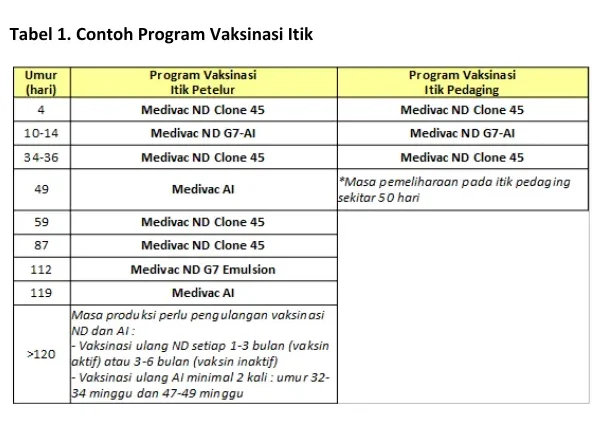
In addition to implementing an appropriate vaccination program, controlling ND and AI cases requires the application of strict biosecurity measures, good management practices, and supportive treatments, including:
- Maximize the implementation of the three biosecurity zones by restricting the movement of people and vehicles in and out of the farm.
- Regularly sanitize the coop and equipment using disinfectants such as Medisep or Neo Antisep
- During downtime, the coop must be thoroughly cleaned in every area. Gaps, corners, and the underside of elevated cages must not be overlooked. After all equipment has been removed, clean the coop using detergent and scrubbing, then rinse with high-pressure water. Apply lime to all interior parts of the coop—such as floors and poles—as well as the exterior areas.
- Create a comfortable environment for the ducks by ensuring the coop is not overcrowded, providing adequate ventilation, and, if possible, implementing an all-in all-out system. Allow a minimum rest period of two weeks after the coop has been thoroughly cleaned and disinfected before introducing new ducks.
- Sanitize drinking water using Desinsep to reduce the spread of disease through the water supply. Also, perform flushing to clean moss or biofilm buildup (using Bioflush) that adheres to the water pipeline.
- Provide vitamins such as Fortevit or immunostimulants such as Imustim to strengthen the ducks’ immune system and enhance their resistance to diseases.Select 50 more words to run Humanizer.
Handling ND and AI Outbreaks
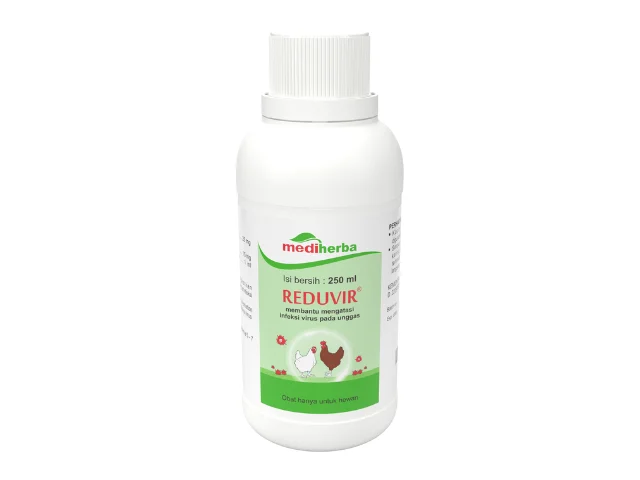
In handling ND and AI cases in ducks, it is important to tighten biosecurity measures by regularly disinfecting the coop and drinking water, as well as limiting the movement of people and vehicles. It is also necessary to conduct selection and culling of ducks showing severe symptoms. Provide supportive treatments using Imustim or Fortevit.Treat secondary infections that may arise — if bacterial infections occur simultaneously, administer antibiotics such as Neo Meditril or Rofotyl. Herbal products with antiviral properties such as Reduvir can also be given to help improve the health of virus-infected ducks and reduce mortality rates.Reduvir is a liquid suspension containing extracts of Rhizoma coptidis and Andrographis paniculata, both of which possess natural antiviral activity that helps combat viral infections in poultry.
Based on data from the Medion Surveillance Team, ND and AI diseases are still present in Indonesia, particularly in duck farms. This should raise awareness among duck farmers about the importance of ND and AI vaccination using Medivac ND G7-AI to prevent these diseases. Furthermore, to achieve optimal protection, vaccination must be combined with strict biosecurity measures, good farm management practices, and regular supportive treatments.