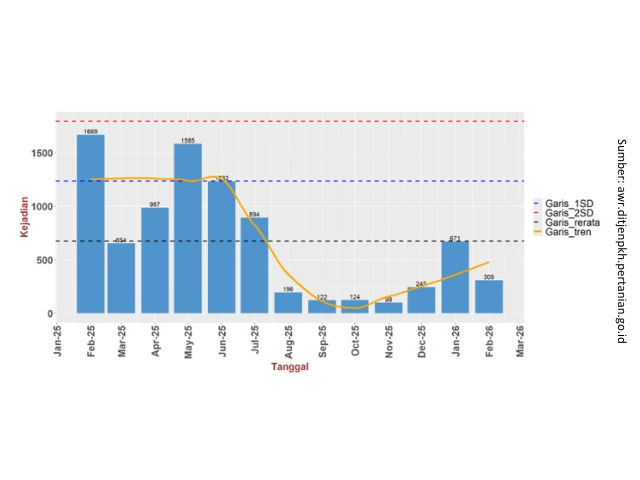
Foot and Mouth Disease (FMD) in livestock is still reported in several regions in Indonesia until 2026. Although cases are still being found, the government urges farmers not to panic and to immediately report any symptoms to seek immediate treatment and vaccination for further prevention. Several regions where FMD cases were found between January and February 2026 include Aceh, Bangka Belitung, Yogyakarta, West Java, Central Java, East Java, Lampung, Riau, and West Sumatra (Ditjenpkh.pertanian.go.id, 2026). The following is information on FMD incidents over the past year.
Based on the nature and characteristics of FMD, several strategic anticipatory measures taken by the government include limiting livestock movement and increasing the implementation of FMD vaccinations in livestock. The Ministry of Agriculture (Kementan) is encouraging the distribution of the Foot and Mouth Disease (FMK) vaccine in 2026 to protect cattle and buffalo farmers from the risk of strategic infectious animal diseases. FMD control is not only carried out through livestock management in affected areas, but also through anticipatory measures such as mass vaccination and the implementation of FMD eradication zones. This strategy is implemented in an integrated manner according to the national FMD control and management roadmap. In addition to control efforts to prevent the spread of FMD by accelerating vaccination, efforts are also being made to improve communication, information, and education for livestock farmers.
FMD Prevention
Farmers' trauma from FMD is triggered by economic losses due to mortality, forced slaughter of livestock, falling selling prices, and decreased reproductive performance. As farmers, we can take preventative measures to protect our livestock from FMD. FMD can be effectively prevented through a combination of biosecurity measures with isolation, sanitation, disinfection, vaccination, and supplementation. Some examples of these measures include:
Biosecurity as a defense against disease agents
- Livestock traffic monitoring
- Restrictions on guests entering the livestock area
- Maintaining cleanliness of the cage environment
- Controlling pests or disease vectors such as flies and rats
- Separate sick livestock from healthy livestock
- Newly arrived livestock are quarantined for a minimum of 14 days.
- Buy and sell healthy, vaccinated livestock
- Maintain cleanliness of the cage environment, sanitation & disinfection of cages and equipment using disinfectants (Sporades, Desinsep)
Supplementation to increase livestock immunity
- Multivitamins help metabolism and increase body resistance, for example by Vita B Plex Bolus Extra Flavor, Injekvit B-Plex, ADE Plex Inj
- Supplementing nutrition by adding premixes (vitamins, minerals, amino acids) for healthy livestock growth, for example by... Mix Plus Cattle Pro.
- Electrolytes to cope with stress (weather, vaccination, transportation) increase endurance by Transolite
Optimizing Vaccination Success Through the Implementation of Appropriate and Standardized Procedures
The success of vaccination depends heavily on the health of the livestock at the time of application. Ensure that vaccinations are always carried out according to the recommended use in the instructions. leaflet products or follow government program guidelines to ensure maximum herd immunity is achieved.
Can Cow Reproductive Performance Recover After FMD?
Another trauma experienced by farmers is reproductive performance, which can lead to difficulty conceiving cows. A reproductive system examination by an animal health team is necessary to determine the cause of the reproductive disorder and promptly address the underlying cause. Once reproductive disorders are addressed, along with proper care and health management, they will gradually recover and become pregnant again. The cows' nutritional needs must also be met to ensure their body condition score (BSC) is maintained.Body Condision Score/BCS) returns to normal (2.5-3.5). When conditions improve, hormonal mechanisms will return to normal, resulting in a normal estrus cycle (21 days). Here are some strategies you can implement to optimize reproduction:
- Check the condition of the cow's reproductive system individually and immediately treat the disorder.
- Fulfill your cattle's nutritional needs with quality feed (greens and concentrates) and improve their BCS. Providing nutritious feed will increase their immune system for the healing process and improve their BCS.
- Provide mineral and multivitamin supplements. Provide multivitamin supplements to boost immunity and appetite (ADE-plex Inj, Vitesel-InjVitamin E and selenium act as antioxidants in several biological functions, including improving the reproductive system (fertility) and the immune system. Mineral supplements can be added to feed.
- Maximize nutrient absorption by treating worms and maintaining digestive health. Treat cases of worms (Wormzol-B/ Wormzol Suspension/ Wormectin Liquid) and the need to maintain digestive tract health and rumen microbial balance.
- Considerations for administering hormones (GnRH, PGF, LH) according to the conditions of livestock reproductive examinations as recommended by the animal health team.
Foot and Mouth Disease (FMD) can be prevented effectively through a combination of routine vaccination, implementation of biosecurity Strict hygiene (cage sanitation and disinfection) and supplementation are also required. Reproductive performance disorders can also be treated for rapid recovery. FMD can be prevented and recovery can occur.