Question from Usman Ismail
Email : usmanismail275@gmail.com
My chicken has a bloated Gizzard full of water and after it is released it smells bad, what is it caused by? Please explain.
Answer
The cause of the symptoms of enlarged cache is not yet known for certain. If when touched the cache feels hard, there is a possibility of cache disturbance or hoarding of rations in the cache so that there is a blockage in the section.
In severe cases, the cache can look very enlarged and full of feed, and particles are found litter/ husks and liquids that often smell a bit rotten. Usually the mucosa of the cache can also be injured. Chickens will usually continue to eat even though their digestive activity will be disrupted. Often occurs in chickens that are fed after fasting.
If it still persists for a long time, the chicken will become thin because the nutrients absorbed and metabolized are not optimal until it ends in death. Gizzard disease usually occurs due to irregular or uncontrolled feeding, for example, hungry chickens, or it could be because of extreme thirst. Common symptoms of this disease include a full cache, foul-smelling mouth and nose discharge, and difficulty swallowing.
From several sources it is mentioned that the enlargement of the cache can also be caused by several things, namely:
- There are foreign objects that are eaten by chickens such as ropes, eating a lot of husks or feed sizes that are too large (especially the size of corn) so that they cannot be digested by chickens.
- There are several other causative factors such as protozoan infections, fungi or worms that enter the cache, or rupture/rupture of some elastic tissue in chicken gizzards, causing excessive bubbling of the cache.
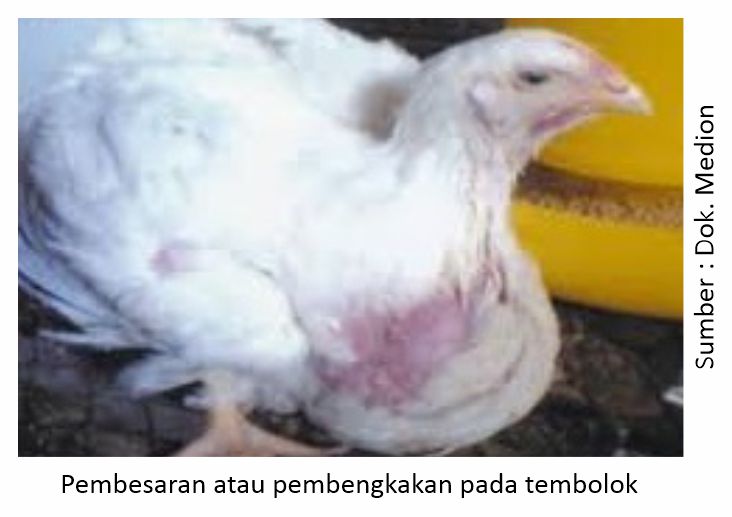
We strongly recommend that you continue to explore as much information as possible about other symptoms of the disease and changes in the carcass surgery. This is because the above diagnosis is temporary and needs to be confirmed with more complete clinical symptoms, changes in anatomical pathology, and if necessary laboratory tests.
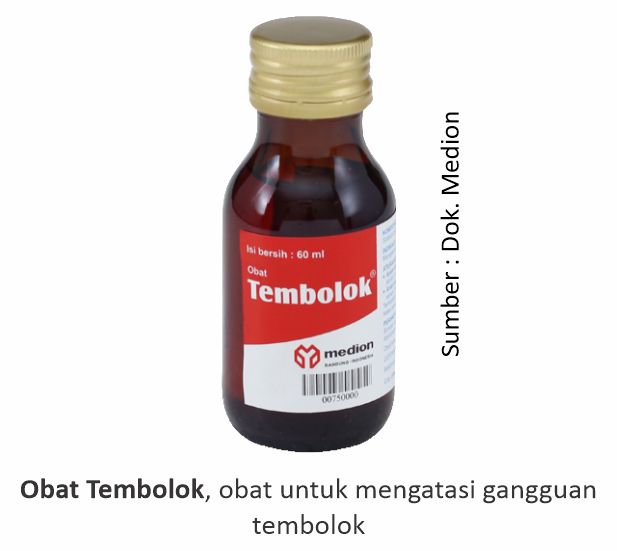
If the condition of the cache is enlarged, then there is no effective medicine to cure it. It is better for chickens to be diafkir immediately so as not to increase the cost of feed. While chickens that are not too severe can be given Crop Medicine (Medion products to overcome cache disorders) with rules of use 30 ml for adult chickens and 10 ml for chicks 3 times a day, fed directly into the mouth. Then massage the cache until soft and work until the contents of the cache are vomited, if necessary, the head of the chicken is directed down.
If the case is identified due to fungi such as Candida albicans, then it can be given oral Nystatin 300,000 units / kg bw every 8 hours or Flucytosine administered orally at a dose of 60 mg / kg bw every 12 hours.
Prevention can be done in various ways, including :
- Improvement of cage management includes regular checks of the condition of the cage / feed place so that there are no scattered ropes, nails, wires or other foreign objects that trigger chickens to eat.
- Condition the cage that is always safe and comfortable with easy access to drinking water and feed.
- Feed management improvements start when the feed comes, storage and when given to chickens. Moldy feed should not be given. If the feed contains a lot of hard materials such as corn, then add grit to help in the digestion process. Also note that feeding is not too late and the size of the feed particles is appropriate. Always provide clean and fresh drinking water.
- Reducing immunosuppressant-causing factors include stress.
- Disinfection of feed/drinking equipment by using Medisep/Neo Antisep. Disinfection of drinking water also needs to be carried out using Desinsep.
- Maintain chicken stamina to always be in top condition by giving multivitamins such as Vita Stress/Fortevit