Bapak Tommy Kennedy – by email
How to prevent and treat cases fatty liver hemoragic syndrome at the layer production?
Answer:
Thank you for the submitted question. Fatty liver hemoragic syndrom (FLHS) is a disease caused by metabolic disorders characterized by excess fat deposits in the liver. Usually chickens experience death and a sudden decrease in production without any specific clinical symptoms. When necropsy can be found enlarged liver, brittle, pale yellowish, and found hemorrhages. In addition, there are blood clots around the liver as well as dominant abdominal fat.
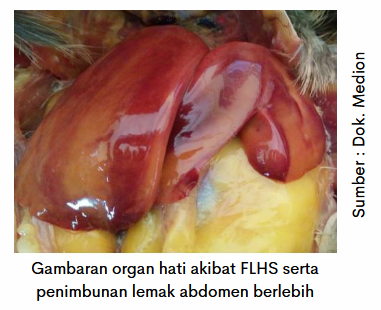
The causes of FLHS include:
- Genetics
Each strains chickens have different sensitivities to FLHS disease. On chicken layer this may be due to high egg production. It stimulates the fatty liver due to the intensive metabolism of estrogen.
- Nutrition
An unbalanced ratio of energy and protein consumption and calcium deficiency are contributing factors to FLHS. Calcium deficiency also causes liver tissue hemorrhage and decreases gonadotropin hormone secretion so that egg production decreases.
- Temperature and enclosure
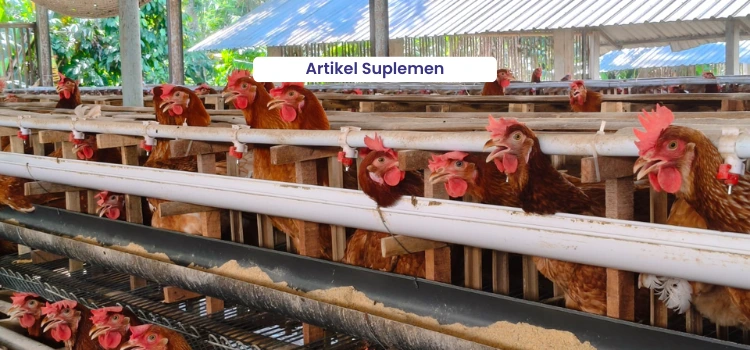
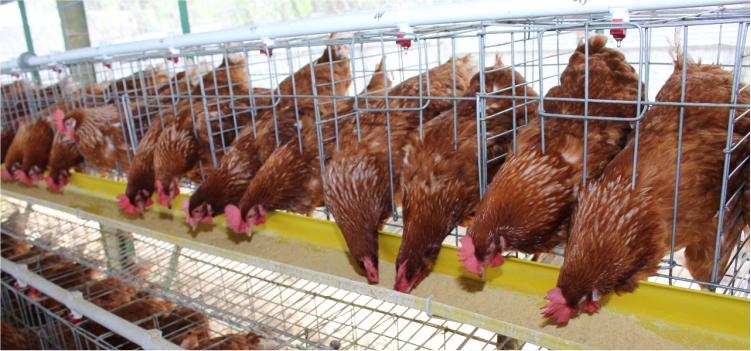
Cases of FLHS tend to be high in hot climates due to increased fatty acid synthesis in the liver. Chicken layer in the battery enclosure has a high liver fat content due to limited space so that the energy needed to move tends to be low.
- Stress
Acute stress will stimulate corticosterone which can increase fat formation (lipogenesis). In stressful conditions, body weight will decrease with excessive deposition of fat in the liver. Thus, stress can increase the case of FLSH.
- Toxin
Occurrence of FLHS in chickens layer may occur by the presence of aflatoxin in the ration at a level of 20 ppb. Toxicity leads to decreased egg production and weight, yellowish liver color and enlarged liver size.
- Hormones
Poultry layer people with FLHS have high levels of estrogen in the plasma. Excessive estrogen production can lead to lipogenesis. Unbalanced thyroid hormones also affect the deposition of fat in the liver.
Treatment and Prevention of FLHS:
- Provide rations as needed and check the quality of rations periodically so that nutrition is standard and not excessive.
- Make a selection of raw materials or rations. When overgrown with fungus with severe conditions, it should not be used. When the light is still on-treatment with heating and addition toxin like Freetox/Freetox G to prevent the accumulation of fungal toxins in the body of chickens.
- Simpan ransum dengan suhu 30-34°C kelembapan <70% agar pakan tidak berjamur, jaga sirkulasi udara dengan memperhatikan jarak antar baris ≥50 cm, gunakan palet kayu sebagai alas dengan ketinggian maksimal 3 palet (masing-masing palet 6 tumpukan), serta terapkan metode First In First Out and First Expired First Out.
- Give high-dose multivitamins such as Fortevit to help recovery and increase endurance.
- Adjust the density of the cage and the battery area so that the chickens are still free to move.
- Administration of hepatoprotectors, such as Heprofit serves to protect and repair damaged liver cells. Heprofit it can be administered for 3 consecutive days at a dose of 0.5 ml/2 liters of drinking water.