Livestock health is one of the important factors in beef cattle or dairy cattle farming business in order to achieve optimal productivity (milk and meat). It is not uncommon for livestock health to be disrupted due to various causes such as disease challenges, improper maintenance management and other factors. One of the health problems that often occurs is diarrhea in both calves and adult cows.
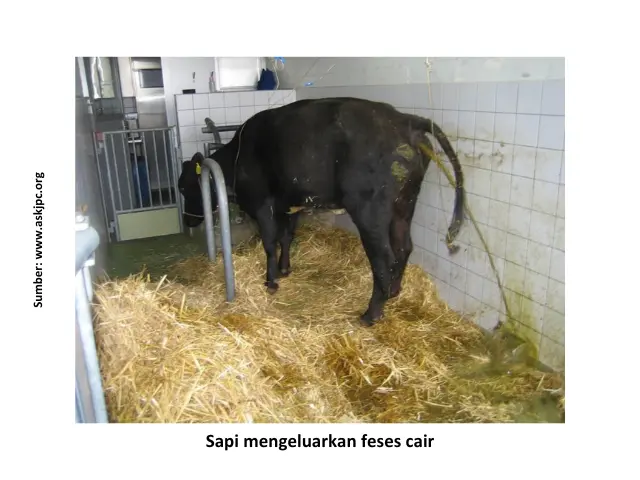
Diarrhea is a symptom of digestive system disorders, especially in the intestine that is not able to absorb fluids properly. This results in an increase in the frequency of defecation (defecation) accompanied by changes in the consistency of feces with a thinner form compared to the normal form of feces.
Diarrhea can be divided into several types according to the conditions that cause impaired absorption of fluid in the intestine, namely:
- Secretory diarrhea, there is an increased secretion of fluid into the intestinal tract caused by toxins and the intestinal mucosa is not able to absorb greater amounts of fluid.
- Malabsorption diarrhea, occurs due to damage to cells and intestinal villi and reduced activity of digestive enzymes so that less fluid can be absorbed.
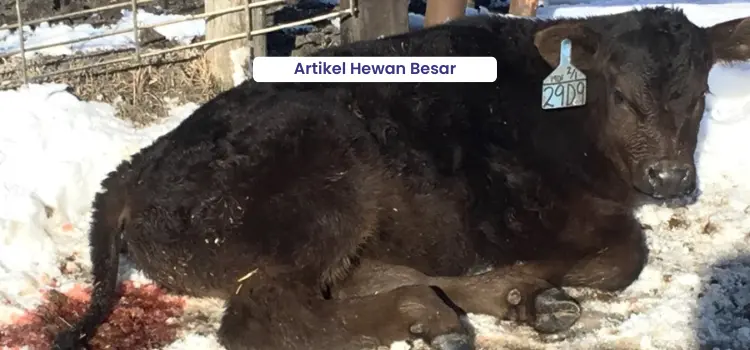
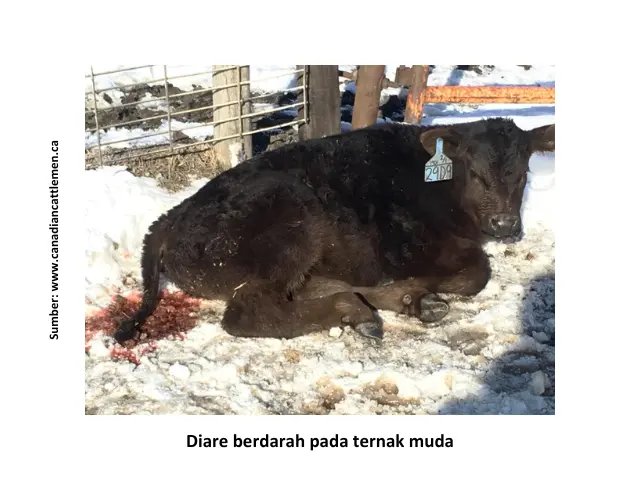
- Inflammatory diarrhea, the presence of inflammation or damage to the intestinal wall due to pathogens so that blood, serum and mucus are released into the intestine. Stool in this diarrhea is often accompanied by the presence of blood.
- Motility diarrhea, occurs due to a disturbance in bowel movements (faster) so that the feed has not been absorbed properly.
Causes Of Diarrhea
It is important to know what is the cause of diarrhea because it will determine the next step whether it is treatment or prevention. Broadly speaking, the causes of diarrhea can be divided into two, namely non-infectious diarrhea and infectious diarrhea.
A. Non-infectious diarrhea can occur due to various factors such as:
- Sudden changes in feed or poor quality feed that disrupts the balance of microbes and digestive tract health. Unbalanced feed ratios such as too much concentrate/easily fermentable carbohydrates can also cause diarrhea.
- Quality calf milk replacer (CMR) or poor cow's milk substitute is one of the causes of diarrhea in calves.
- Toxins from plants or fungi in feed that can damage cells in the lining of the intestine and trigger an inflammatory response, interfere with the absorption of nutrients and increase intestinal permeability resulting in diarrhea.
- Stress due to extreme weather, Post-transportation, or moving cages can be a trigger for diarrhea.
B. Infectious diarrhea occurs due to infection by pathogens (viruses, bacteria, and parasites) and can be transmitted between livestock. Here are some pathogenic agents that often cause cases of diarrhea in cattle:
- Virus Rotavirus, Coronavirus, Pestivirus (Bovine Viral Diarrhea/ BVD)
A Virus that often causes diarrhea in calves under 3 weeks of age. Generally, the peak incidence of rotavirus infection when calves are 6 days old while coronavirus infection occurs when calves are 7-10 days old. Transmission of this virus occurs either directly when in contact with sick cattle or indirectly through media or environments that have been contaminated with disease seeds.
Unlike rotaviruses and coronaviruses that are more common in calves, BVD can occur at any time in either calves or adult cows. Transmission of BVD occurs by direct, indirect and vertical contact from mother to fetus through transplacental. If the calf is born from an infected mother, the calf can become carrier (persistenly infected).
- Bacteria Escherichia coli (E. coli) and Salmonella sp.
These bacteria are often the cause of diarrhea in cows. E. Coli infection it is a bacterium that is naturally found in the digestive tract, but there are certain strains that are pathogenic (enterotoxigenic E. coli, enteropathogenic E.bra) and cause diseases including diarrhea. Cows can be infected E. Coli infection and Salmonella sp. in direct contact with sick animals or indirectly through various media, especially drinking water that has been contaminated with bacteria.
- Protozoa Cryptosporidium sp. and Eimeria sp.
Such Protozoa or endoparasites cause diseases in the gastrointestinal tract. Cryptosporidium sp. more often infect calves aged 1-2 weeks, while infection Eimeria sp. it can be found until adult cows. Cattle can be infected by this protozoan as a result of eating oocysts that have been sporulated through drinking water or other contaminated media.
- Worm Toxocara vitulorum and Fasciola gigantica
Both worms are types of worms that quite often attack the health of cattle. Toxocara vitulorum is a Convex worm that is often found in calves and lives in the small intestine. While Fasciola gigantica flatworms are often referred to as liver worms because adult worms will settle in the liver and bile ducts.
Before reaching the liver, young worms Fasciola gigantica will migrate from the digestive tract and cause liver damage and digestive disorders. Transmission can occur as a result of cattle eating worm larvae that are in the environment. In addition, for worms Toxocara vitulorum it can be transmitted vertically from the mother to the fetus through transplacenta or to the calf through colostrum.
Clinical symptoms and effects of diarrhea
In general, cows with diarrhea will show symptoms such as increased frequency of bowel movements (defecation) and a thinner stool consistency.
This can be accompanied by a decrease in appetite and body weight of livestock. Thinner stools occur due to the secretion of excess fluid into the intestinal tract followed by a reduced ability of the intestine to absorb fluid.
Changes in stool color can also experience changes such as being yellowish white or yellowish green. The presence of blood in the stool can be found in cases of diarrhea caused by BVD, Salmonella sp., or Eimeria sp.
This happens due to damage to the villi and intestinal walls due to infectious agents, resulting in bleeding. When diarrhea has been going on for a long time, it can be accompanied by other symptoms such as dehydration (lack of body fluids) due to too much body fluid released so that livestock lie down more often because of weakness. Severe cases of diarrhea without proper treatment can lead to death.
Diarrhea is a serious problem on cattle farms that can cause various kinds of losses. Directly cows with diarrhea will experience a decrease in productivity (milk, meat). Diarrhea in calves results in stunted growth so it will take longer to reach the target weight.
Severe diarrhea and dehydration can cause death, so it has a very detrimental impact on farmers. The indirect impact of diarrhea can cause livestock's immune system to decline, especially in cases of chronic diarrhea, making it more susceptible to other diseases.
Feces from livestock that have diarrhea due to infectious agents can also be a source of disease transmission in other livestock. In addition, there will certainly be costs that farmers need to spend to treat livestock that are experiencing diarrhea.
Treatment and Prevention of Diarrhea
The occurrence of diarrhea in cattle is a disease that requires rapid treatment. Before treatment is carried out, it is important to find out what is the cause (diagnosis) of diarrhea that occurs.
So that the handling can be done, among others:
- Separate sick livestock from healthy livestock
- Further examination to determine the direction of diagnosis by collecting information both Anamnesis, overall clinical symptoms, and laboratory tests if possible. In carrying out the diagnosis and treatment of the disease, it is necessary to consult with the medical team of animal health.
- To overcome the symptoms of diarrhea give antidiarrheal drugs Diaquit. Diaquit contains a combination of prebiotics, minerals and antidiarrheal. Prebiotics in Diaquit works to reduce diarrhea by modifying the gastrointestinal ecosystem and reducing the colonization of pathogens / bad bacteria in the intestine. Minerals function to maintain and maintain fluid balance in the body, while the antidiarrheal content works by binding toxic materials that cause diarrhea.
- Dissolve Transolite on drinking water to restore body fluids (rehydration)
- If the direction of the diagnosis is known, treatment can be given according to the cause. Diarrhea due to bacterial infection can be given antibiotics (G-Mox 15% LA Inj/ Medoxy LA/Trimezyn Bolus). On protozoal infection Eimeria sp. can be treated with Toltradex. To treat worms can be given broad-spectrum anthelmintic drugs such as Wormzol Suspension.
- If the cause of diarrhea is due to non-infectious factors, there needs to be improvement in maintenance management and feeding along with the provision of supplements such as Digesfit to overcome digestive disorders due to non-infectious factors
- Medipiron Injection it can be given to cattle with fever and inflammation in the digestive tract due to infectious agents. Vitamins (Injekvit B-Plex) performed as a supportive therapy to help the healing process of the disease by improving the immune system of livestock.
- Provide quality and balanced feed according to livestock needs
- Keep the cage clean, the environment around the cage, and avoid dirty and muddy cages.
Prevention efforts are key to reducing cases and losses due to diarrhea in livestock.
Good management programs need to be implemented to reduce the factors that cause diarrhea and improve livestock immunity. Here are some prevention efforts that can be done:
- Quarantine for 14 days and check the health of newly brought livestock to the farm
- Immediate isolation of symptomatic sick cattle
- Give colostrum to calves immediately after birth. The first hour after birth, give 2-4 liters of colostrum or 10% of body weight. Next at 6, 12, and 24 hours after birth give colostrum as much as 5% of the calf's body weight.
- It is recommended to follow a routine routine such as a routine check-up (Wormzol Suspension/Wormzol B) every 3-4 months
- Keep clean and regularly disinfect the cage using Medisep/Sporades
- The density of livestock according to the capacity of the cage
- Apply good personal hygiene during rearing or contact with livestock
- Provide nutritious and quality feed according to the needs of livestock. Give Mix Plus Cattle Pro to meet the needs of vitamins, minerals and amino acids in animal feed.
Diarrhea in cattle is one of the digestive disorders that are still common in Indonesia. Given the high economic losses caused, it is necessary to prevent diarrhea.
The role of animal health teams and farmers is very important to prevent parasitic infections in livestock through farm management and provide effective treatment to accelerate the healing of the disease.