Bapak Roland – by email
My cattle died suddenly, started convulsing within a few seconds and died instantly. Please advise and next steps? I thank you in advance.
Answer:
Thank you for the submitted question. Sudden death that occurs in chickens can be caused by infectious and non-infectious factors. Things that need to be considered in the event of death in livestock is to evaluate the level and pattern of deaths that occur. In addition, examination of emerging clinical symptoms, anatomical changes/pathologies and supporting diagnostics need to be done to determine the cause of death.
Causes of sudden death in chickens
Possible causes that can result in sudden death are as follows :
High Pathogenic Avian Influenza (HPAI)
Typical symptoms found during an attack of HPAI disease are high mortality, a decrease to the cessation of egg production or decreased production, depression, cyanosis (comb, Wattle, foot), conjunctivitis, accumulation of mucus in the oral cavity, respiratory disorders and sometimes nerve disorders (torticollis) but not so significant clearly visible. Organ changes that can be seen after carcass surgery are bleeding in the brain, ptechie heart fat, oviduct cysts and swelling of the spleen and kidneys.
Newcastle Disesase (ND)
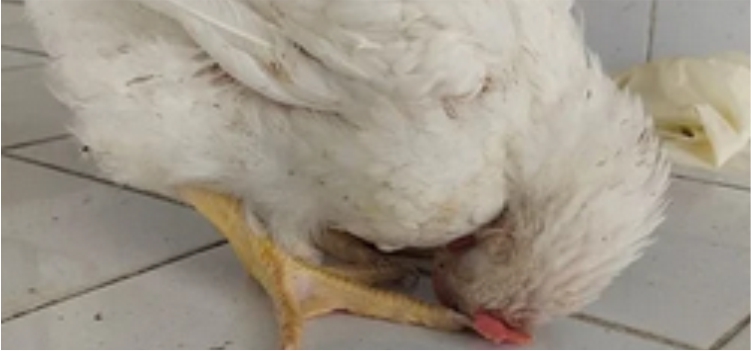
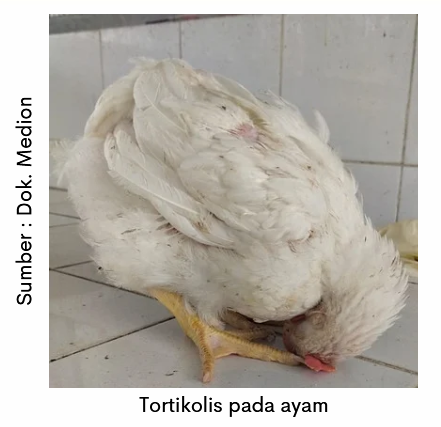
Clinical symptoms that can be seen if the chicken is infected with ND include loss of appetite, feces are moss green and sometimes accompanied by white lumps, the chicken becomes shaky, and abnormalities in the nerves appear (paralysis of the legs and or wings, twisted neck/torticollis and chicken circling). In addition, mortality from ND can reach 100%.
The most common type of cancer that occurs during surgery is inflammation of the respiratory tract (laryng and trachea). In addition to the respiratory system, the pathognomonic change is the presence of inflammation of the papillae proventriculus. In the digestive system there are also organs limphoid which changes due to infection nd namely, inflammation of caeca tonsil dan peyer patches.
Fowl Cholera (Cholera)
Symptoms of chickens infected with cholera are lethargy, fever, anorexia (unwillingness to eat), dull plumage, mucous discharge from the mouth, diarrhea and increased respiratory rate. Cyanosis (bluish-purple discoloration of the skin) sometimes appears shortly before death and is usually seen on hairless areas of the body such as Combs and wattles. The stool is initially whitish and watery but over time it becomes greenish and slimy. In the surgery of chicken carcasses with acute forms of cholera, vascularization disorders are commonly found in the form of bleeding ptechie and ecchymosis of the lungs, intestines, heart and abdominal fat. The liver is enlarged, striped in color, and there are necrotic spots (white spots).
Heat Stress
Chicken in good condition heat stress he tries to lower his body temperature by releasing heat. However, because chickens do not have sweat glands, the response that will be seen is to attach the body to a cooler wall, stretch / spread its wings, do panting and increased water consumption. If the condition heat stress this not treated immediately can lead to death.
Proper handling to overcome chicken seizures or sudden death
The treatment measures taken can be adjusted to the direction of the disease. Here are some treatments that can be done :
If it leads to AI and ND diseases
Provide supportive therapy by giving vitamins such as Vita Stress or Fortevit to improve the stamina of the body condition of chickens and herbal supplements Imustim to increase the immunity of chickens.To reduce mortality, emergency vaccination can be carried out, especially in laying hens and breeders using Medivac ND Clone 45 in the case of ND. But this emergency vaccination is " gambling” and its success depends on several factors such as the type of ND virus that attacks, the severity of the disease, the speed and accuracy of diagnosing the disease and the speed of revaccination.
While in the case of AI, do selective culling and chickens that are still healthy can be given supportive therapy. Revaccination with Medivac AI can be done on other cages that are around the cage case.
Administration of antibiotics such as Tinolin or Neo Meditril it can also be done to treat secondary infections by bacteria.
If it leads to cholera
Give antibiotics such as Tinolin, Therapy or Collimezyn. Give vitamins such as Fortevit, Vita Stress or Vita Strong to help improve the condition of the body of chickens.
If it leads to consequences heat stress
Ways that can be done to overcome heat stress it is recommended to take a cold water bath (20-24°C) and a cold water bath (Vita Stress).
Strengthen the application of biosecurity
To suppress the population of disease seeds in the cage environment, disinfect the cage and the environment around the cage every day when an outbreak occurs, for example by Antisep or Neo Antisep. For iron cages can use Medisep and Zaldes.