Mr Pujiono
Klaten-Central Java
I raise laying hens 5 weeks old. Some feces in the cage are watery and reddish in color. Eating and drinking chicken is still good. Is my dog bleeding and how to treat it?
Answer:
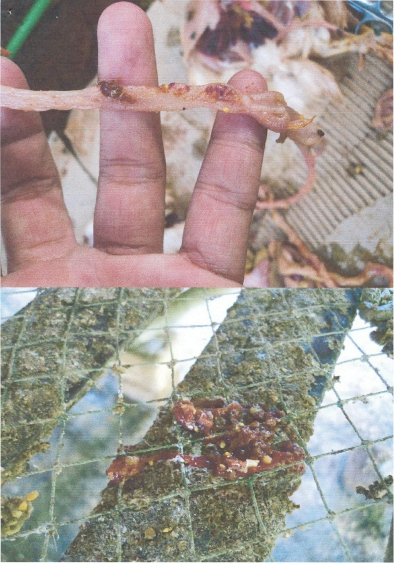
Dear. Mr. Pujiono thanks for the question. Chickens that show clinical symptoms of loose and reddish feces can lead to several diseases such as coccidiosis or what is often called defecation, Necrotic Enteritis (NE) and worms. To determine the direction of the disease that attacks, it is necessary to dig out as much information as possible such as other symptoms that arise and from changes in organs when carcass surgery is performed. To facilitate the direction of the cause of the disease, here is a picture of the changes that arise from the disease.
Coccidiosis
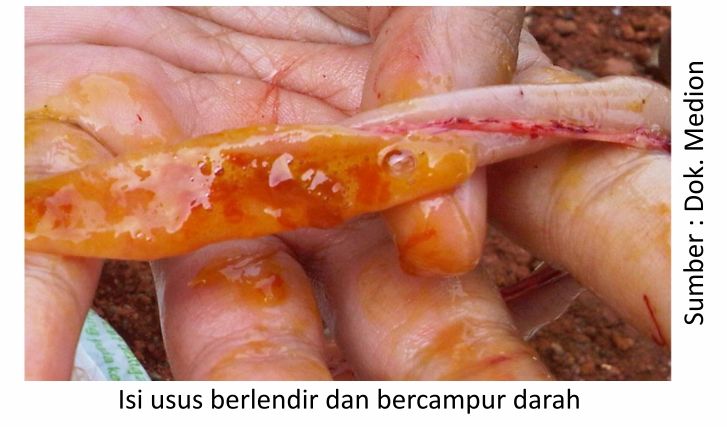
Symptoms are observed such as feces mixed with blood, pale comb, dull fur. If the chicken intestine carcass surgery has thickening of the walls and there are red spots that indicate intestinal inflammation and reddish intestinal contents. Sometimes can also be found enlarged appendix dark red and if opened the contents of the intestine appear thick, slimy with little bleeding, or thick brown mixed with blood.
Necrotic Enteritis (NE)
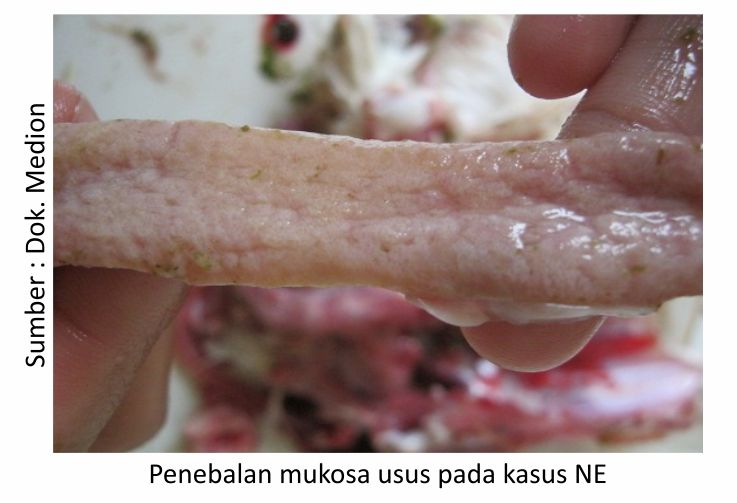
Symptoms are observed bloody diarrhea, chicken lethargy, drowsiness, pallor and dull plumage. When chicken surgery is performed, the intestine looks swollen with gas, the intestinal wall becomes fragile and the intestinal mucosa (inner surface) is covered by a thick yellow or green membrane. In long-lasting diseases the intestinal mucosa looks rough and thickened like a towel.
Worm Infestation
Not all cases of worms show pronounced clinical symptoms. Only severe infections will show symptoms. Symptoms that appear such as decreased appetite, stunted growth, coarse hair, pale, diarrhea to reddish in severe cases. When chicken surgery is done, worms are found in the intestine and in severe infections, red spots or inflammation of the intestine will appear.
Treatment that can be done is targeted treatment (according to the cause). Therefore, it needs as much information as possible for the direction of diagnosis and then do the appropriate treatment of the cause.
- Chickens affected by coccidiosis can be treated with Anticancer/ Coxy with the rules of use 3 days of treatment, 2 days without treatment and 3 days of treatment back. Treatment of coccidiosis can also be with Therapy for 5-7 days or Toltradex for 2 days. Can also with herbal products Fithera for 7 days in a row. Multivitamins can be given, especially those containing vitamins A and K to accelerate the healing of damaged intestinal epithelial cells and reduce bleeding, for example Fortevit and Vita Stress. However, it should be noted that for multivitamins containing B vitamins, especially B1, the administration of these vitamins is carried out after treatment is complete.
- In single NE disease treatment can be done by administering antibiotics such as Amoxitin, Choleridine or Therapy. If there are cases of NE complications along with coccidiosis, Therapy can be given. Also give multivitamins, especially those containing vitamins A and K.
- In diseases with worms, treatment is carried out by administering such anthelmintics as Levamid, Nemasol-K, Vermizyn or Vermixon syrup. Deworming needs to be repeated 1-2 months later.
In addition to treatment, it is also necessary to implement management litter a good diet, dispose of feces mixed with blood, regulate the density of chickens, minimize the population of flies that can act as vectors of worms, and when preparing cages, especially for postal cages, do floor whitewashing to reduce the number of oocysts (the infective stage that causes coccidiosis).