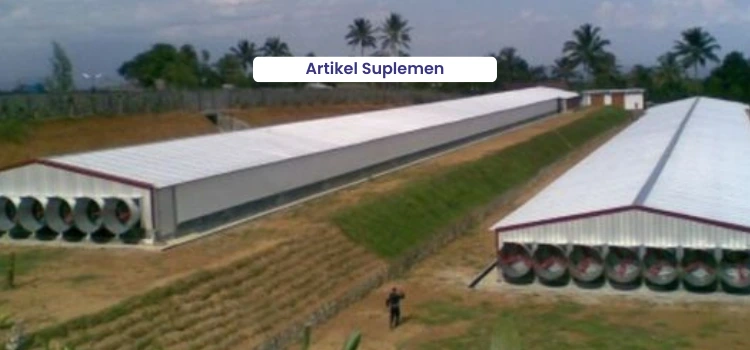
During the rainy season, ventilation systems in closed houses must be properly regulated. The goal of this ventilation arrangement is to minimize the conditions of the rainy season, namely high humidity, cold temperatures, and the risk of disease. The risk of disease during the rainy season is very high because the damp and cold conditions of the cage environment are ideal for pathogens (bacteria, fungi, and others). We must address these challenges during the rainy season by implementing proper ventilation to maintain an ideal microclimate inside the cage. Low temperatures during the rainy season can reach 16-18°C and high humidity (>90%) can make chickens very uncomfortable, especially during the brooding period. brooding period,The rainy season can also cause chickens to become stressed and develop respiratory problems, which can impact their productivity.
Ventilation system in the cage closed house Designed to regulate the microclimate inside the coop, namely temperature, humidity, and air velocity, to meet the chickens' comfort levels. The effective temperature, or the temperature perceived by the chickens, must be adjusted to their comfort level. Chickens not being in their comfort zone will affect their physiological functions. When chickens are cold, they will attempt to warm themselves by huddling together, eating more to warm themselves, and decreasing activity. Ventilation management during the rainy season is crucial and must be quickly adjusted to the coop's environmental conditions.
Proper and optimal ventilation during the rainy season includes:
1. Heater settings during the period brooding period,
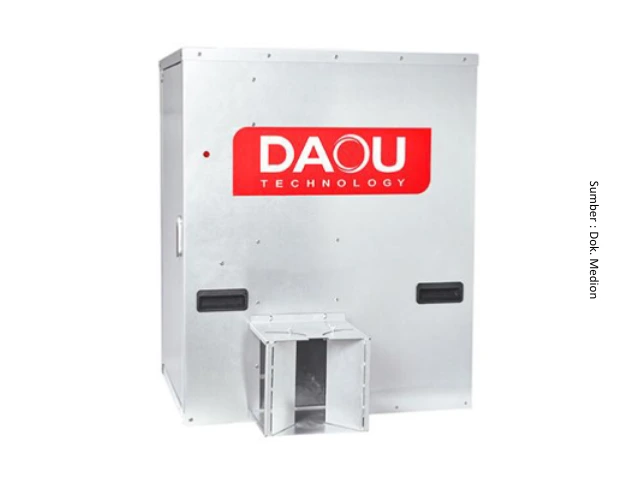
During the brooding period, adjust the heater and curtains. blocking It must be precise so that the chickens will remain comfortable even though the outside of the coop is very cold and damp. During the rainy season, the heater must be set faster to ON and longer percentage. The most appropriate heater for the cage closed house is a room heater or space heater for example is DAOU DO 66A Heater. Under normal conditions the heater setting will ON If there is a temperature drop of 0.5°C below the target temperature, then during the rainy season it can be reduced or shortened to 0.3°C below the target temperature.
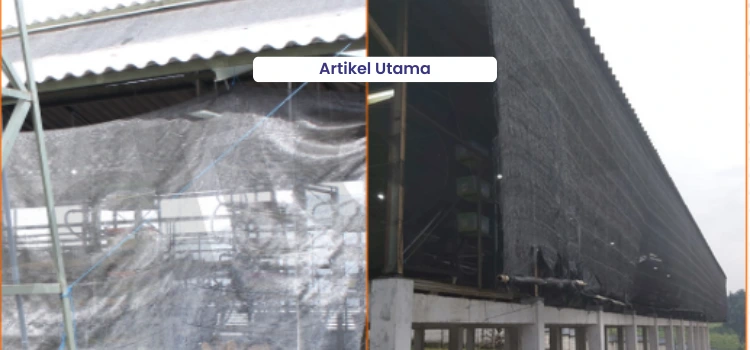
Use of curtains blocking or curtains brooding period, You also have to always adjust the opening and closing settings, for example when it is going to rain with high humidity, open the curtains blocking can be widened to quickly remove moisture. Once the moisture has been removed from the cage, the curtain blocking immediately closed or narrowed again so that not much cold air hits the chicken.
2. Setting the number of fans/exhaust fan that suits the needs of chickens
Setting the number of fans running must be adjusted to the minimum number of chickens needed based on the population and body weight of the chickens. This ventilation application is usually referred to as minimum ventilation. Several types of fans can be used to implement minimum ventilation, for example, the fan intermittent and a fan equipped with an inverter. Fan intermittent is a fan that operates periodically with a system on – off at certain time intervals so that the minimum air supply is obtained according to the chicken's target needs. Meanwhile, the fan inverter is a type of fan that uses technology inverter to control the fan motor's rotational speed. This inverter fan allows the fan to automatically adjust its motor's rotational speed based on the desired capacity, also impacting electricity savings. The goal of implementing minimum ventilation is to maintain the target temperature in the coop, remove humidity, and maintain air quality inside the coop. When the coop's humidity increases, air circulation can be increased by increasing the air speed to the limit that the chickens can handle. Calculating and increasing the number of fans running Of course, this still requires consideration of the chickens' comfort. Too many fans will cause the chickens to become cold and impact their productivity. Meanwhile, too few fans will also impact the availability of fresh air and create stuffy coop conditions.
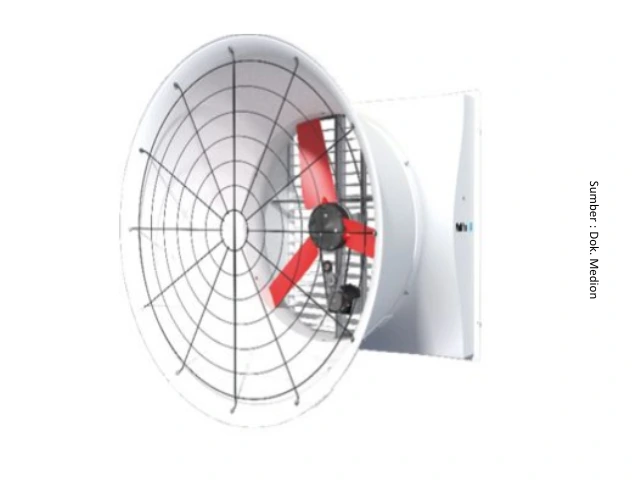
3. Setting the operating position of the fan/running must be proportional
The position of the operating fans will significantly determine the uniformity of air distribution within the coop. When the coop ventilation system is set to minimum ventilation, the number of operating fans will be limited. If the number of fans is disproportionate to the cross-sectional area of the coop, air distribution will also be uneven throughout the coop. The impact of uneven air distribution is that chickens become uncomfortable in certain areas, resulting in unequal eating and drinking. Uneven comfort and unequal eating and drinking will impact overall productivity.
4. Maintain a balance between incoming and outgoing air
The balance between inlet (air intake) and outlet (outlet air) must always be maintained to obtain the desired air speed and uniformity of air distribution. Inlet we can adjust it from the width of the curtain opening in the area cooling pad, while outlet We can adjust the number of fans operating. If there is an imbalance, for example, the area inlet If it is too wide, the incoming air containing high humidity will fall in the front area so that in that area the chickens feel uncomfortable and very often symptoms of disease appear in the front area.
In the rainy season, the front area will often be more humid and wet, which is actually caused by an imbalance in the area. inlet and outletThe most effective way to prevent dampness in the cage is to prevent it from occurring in the first place, by regulating the balance between incoming and outgoing air.
5. Settings cooling pad precisely (duration on and off from the pump cooling pad)
Cooling pad this must be precise in setting how long the pump cooling pad on and off. The setting is based on how long the entire area cooling pad evenly wet (duration on) and how long the area cooling pad starting to dry (duration off). Ensure the cooling process from cooling pad it works after mechanical cooling by a suction fan (exhaust fan) is at the maximum position according to the age of the chicken being raised. Cooling with cooling pad ini efektif jika kondisi tingkat kelembapan udaranya rendah <75%. Efektivitas cooling pad also depends on the performance of all fans exhaust fan Which running/onWith air humidity >80%, the cooling pad must be turned off to prevent worsening humidity levels in the cage.
6. Maintain air pressure in the cage by minimizing cage leaks.
Air pressure inside the cage closed house will remain stable and maintained if the cage does not have any leaks or leaking. A leak in the cage will result in decreased air pressure. During the period brooding period, If there are many leaks in the cage, cold air will enter the cage, forcing the heater to work overtime and making it difficult to reach the desired temperature. For adult chickens, if there are many leaks in the cage, the air velocity will be low, resulting in moisture inside the cage that cannot be expelled.
7. Curtain opening and closing system blocking/curtain brooding period, during the period brooding period,
In the period brooding period, open and close the curtains blocking This becomes very important during the rainy season. If we are late in opening the curtains blocking This will result in a lot of moisture that cannot be expelled and vice versa if it is too late to lower the curtains blocking then it will have an impact on the use of inefficient heaters.
With proper ventilation management in the cage closed house, we can still control the microclimate inside the coop to suit the chickens' comfort and minimize the negative impact of the rainy season on their performance. This is information regarding ventilation management. closed house Things to pay attention to, especially during the rainy season. I hope this is helpful. Greetings.