Mr. Chandra
Email: dchandra0400@gmail.com
I found reddish chicken feces, of the total population there are about 20-30% of chickens that experience it. In addition, there is also a white color on the stool. Appetite is still normal. From the condition, what I ask is:
- Does my chicken have coccidiosis?
- If true, how is the application of the drug Toltradex - right?
- I also read that the treatment of coccidiosis should be by the 3-2-3 method. Is this not necessary if the drugs used are Toltradex. If using the 3-2-3 method, can I use vitamins in a 2-day period without medication?
Answer :
Thank you Mr. Chandra for the question asked, here we will discuss one by one:
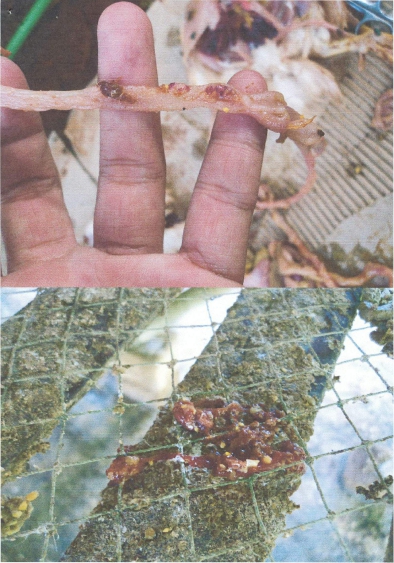
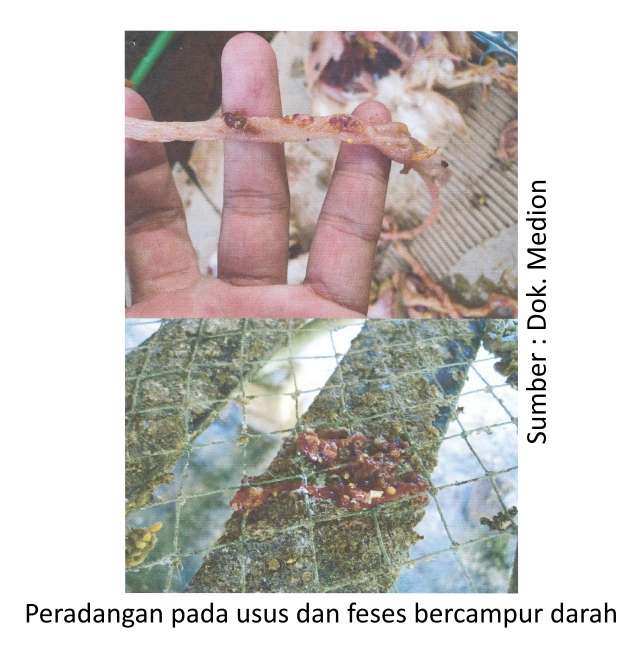
- Symptoms of red feces in chickens are true symptoms of coccidiosis. In addition to these clinical symptoms, anatomical pathology can also be examined through carcass surgery. In the case of coccidiosis, there will be inflammation of the intestine and the lumen (intestinal contents) is orange papaya. Since transmission from coccidiosis can occur horizontally or from healthy chickens to sick chickens through red feces present in the husk, we recommend cleaning the red feces immediately and covering it with a new husk. Because the parasites that cause coccidiosis cannot be killed with disinfectants, we recommend also to give active lime on the floor and cage area when the cage is empty to kill the parasites that cause coccidiosis.
2. Toltradex is an antioxidant that works at all stages of cell development Elmeria sp. (the cause of coccidiosis), so it is more effective and sufficient to be administered for 2 consecutive days. Dosage of administration Toltradex is 0.14 ml per kilogram of body weight. Here's an example calculation Toltradex for 1000 chickens with an average body weight of 1 kilogram (the calculation for the father's cage can be adjusted according to the average body weight and population).
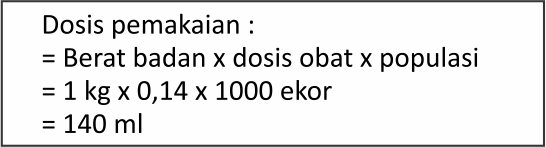
So that the amount Toltradex all that is needed for 1000 chickens with an average body weight of 1 kg is 140 ml dissolved in the drinking water needs of chickens. Awarding Toltradex it should be divided into 2, namely 1/2 dose (70 ml) given in the morning until noon at 06.00 – 12.00 then 1/2 dose (70 ml) again given at noon until evening at 12.00 – 18.00. The amount of water needed to dissolve the drug is adjusted to the needs of the chicken, for example, if the chicken perekor needs 200 ml of drinking water per day (please adjust), then it can be calculated as follows :
= Amount of drinking water = 200 ml / head X 1000 head = 200,000 ml = 200 liters for 24 hours
so the need for water for 6 hours is 50 liters
So that Toltradex a total of 70 ml can be dissolved into 50 liters of water and administered in the morning until noon and in the afternoon until evening.
3. Treatment of coccidiosis by the method of 3-2-3 (3 days of medication, 2 days of plain water and 3 days of medication again) is carried out if the treatment uses sulfonamide group anticoxidia (Koksidex, Coxy) because the treatment of coccidiosis using these products will only kill parasites in 1 growth phase only (asexual phase) so that the administration time is longer when compared to the product Toltradex. Anticoxidia sulfonamide group will mostly be metabolized in the kidneys so that it will aggravate the work of the kidneys. Therefore, the administration of anticoxidia using the sulfonamide group is carried out by the 3-2-3 method. It should be noted that the treatment of coccidiosis should not be carried out simultaneously with the administration of multivitamins containing B vitamins, since B vitamins are a source of nutrients Eimeria sp. so it can aggravate the infection. Vitamin administration can be given after coccidiosis treatment is complete, or it can also be by using supplement products that do not contain B vitamins such as Imustim.