High rainfall, lower temperatures and high humidity are common characteristics of the rainy season. All three will affect several livestock components such as drinking water, feed, cages, and disease seeds. Of the many diseases that attack in the rainy season, still dominated by respiratory diseases. This respiratory disease is triggered by more humid environmental conditions, the ammonia level will increase so that it can irritate the respiratory tract and consequently the disease is easy to enter, for example coryza. It is necessary to anticipate the uncertain weather in Indonesia at this time because it can be a challenge for farmers.
Current Cases of Coryza in the field
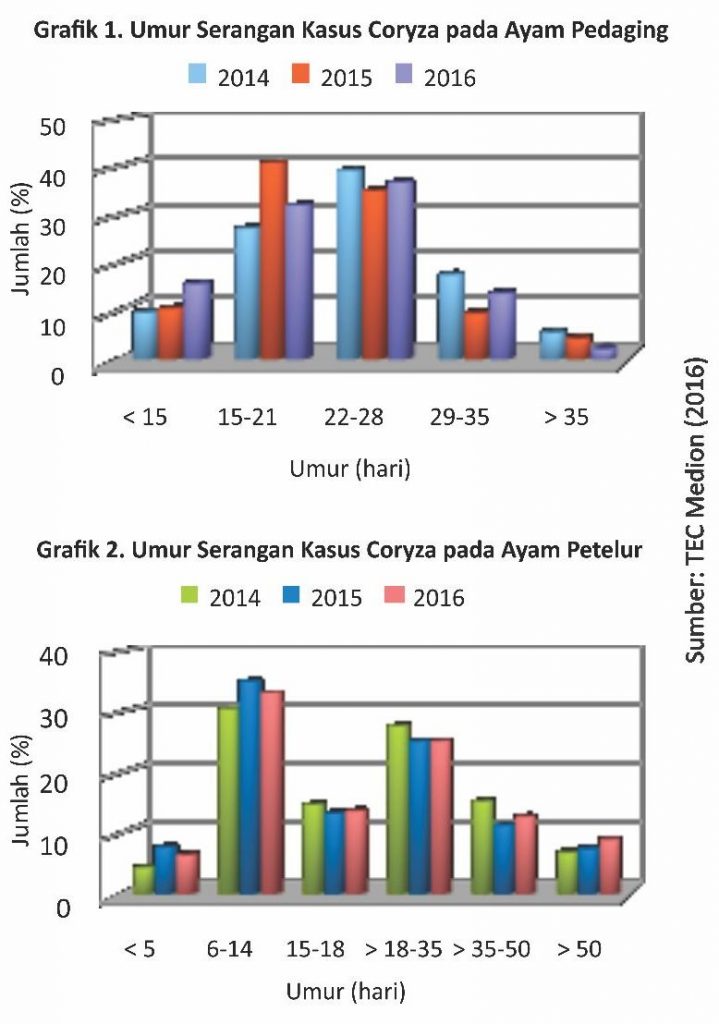
Team Data Technical Education and Consultation (Tec) Medion indicates that coryza in 2016 ranked second in disease findings laying hens even during the previous two years always ranked first. While on broilers, the disease has never been out of the top four rankings. Both are equally susceptible to attack, but in 2016 the number of Case Reports on laying hens higher than broilers. This is because the life span of laying hens is longer so it will get a higher environmental stress. Smoans coryza in broilers, most attacks occur at the age of 15-28 days, while in laying hens the highest occurs at the age of > 5-14 weeks (graphs 1 and 2). Nevertheless coryza remains a threat almost at any age of chickens.
Coryza who always repeats
Recurrence of cases coryza on one farm, the possible consequences of a decrease in the immune status of chickens carrier, so that the causative agent coryza infectingi'm back. There are several other important factors that trigger this, including temperature and humidity that are not suitable so that they have an impact on respiratory disorders. A comfortable temperature for adult chickens is 25-28°C with a humidity of 60-70%. At low temperature conditions in the wet months, the enclosure environment is moist so that bacteria coryza growing quite rapidly. Other conditions, for example when ammonia gas in the cage is difficult to remove so that it irritates the respiratory tract of chickens and opens the opportunity for other disease seeds to infect and reduce the immunity of chickens.
Another factor causing the high number of cases is the contamination of water, feed, cages, and equipment by dilution of the patient's chicken nasal fluid coryza which is very potential to be a source of transmission. So, it's not just bacteria E. Coli infection commonly transmitted by water, but also bacterial causes coryza. In addition to weather, conditions that can heighten the chances of chickens being exposed coryza is because it does not apply the maintenance system all in all out (one-age maintenance system), which is in a stable environment.
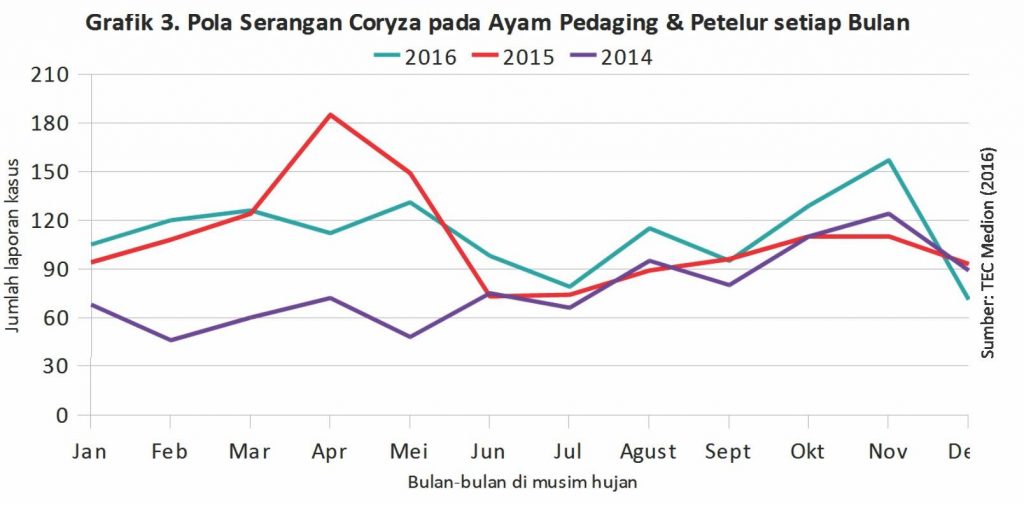
When viewed from the data Tec Medion (2016) in graph 3, the trend of cases coryza increases in wet months or rainy seasons. Uncertain weather conditions, sometimes even extreme, demand better management. Harm caused by infection coryza, among them:
- Reducing consumption of rations, drinking water and productionchicken experiencing severe swelling of the face usually decreased consumption of rations and drinking water. This will have an effect on not achieving uniformity in body weight in broilers and delayed sexual maturity which has an impact on the delay in the egg production cycle. In the production phase of laying hens, the decrease in ration consumption results in a lack of nutrient intake and a decrease in egg production. Decreased production due to infection coryza can reach 10-40% of standard production (Blackall, 2013).
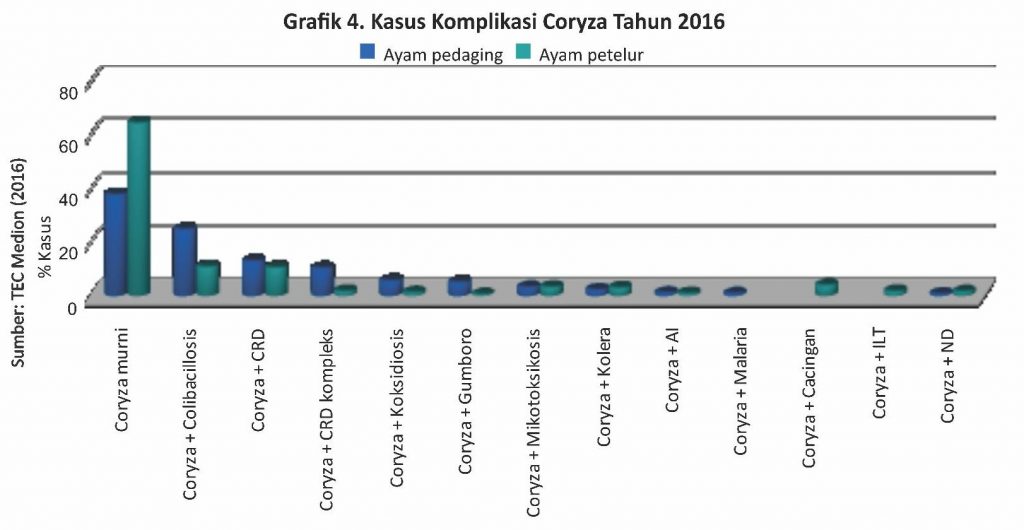
- Mortality and pain ratesdeath rate coryza in broilers, it averages about 1-5%, but mortality can increase to 8-30% when complicating with CRD, colibacillosis, gumboro, coccidiosis, or mycotoxicosis. While in laying hens, the mortality rate is lower, which is about 1-2%. This mortality rate can increase up to 14% when coryza complications with other diseases, especially mycotoxicosis. From the reports of Medion field technical personnel it is known that in broilers more than 50% of cases coryza complications with colibacillosis, CRD, coccidiosis, etc. Similarly, in laying hens, although the percentage of cases of complications is lower than in broilers (see graph 4). The morbidity rate (pain) can reach 20-50% and often occurs in adult chickens.
3. Antibiotic resistance can be caused by antibiotics being used too often farm the dose used is not as recommended (lower,red) so it will increase the cost of treatment. Salah satu penelitian di beberapa negara melaporkan bahwa bakteri Avian paragallinarum resisten terhadap erythromycin, lincomycin dan neomycin (Chukiatsiri et al, 2011 dan Galaz et al, 2016).
Coryza at a glance
Coryza or snot caused by bacteria Avibacterium paragallinarum, with its main predilection location in the infraorbital sinus. Medion has long conducted research and mapping that Av. paragallinarum identified in Indonesia consists of 4 serovar bacteria, namely serovar a, B, C and non ABC.
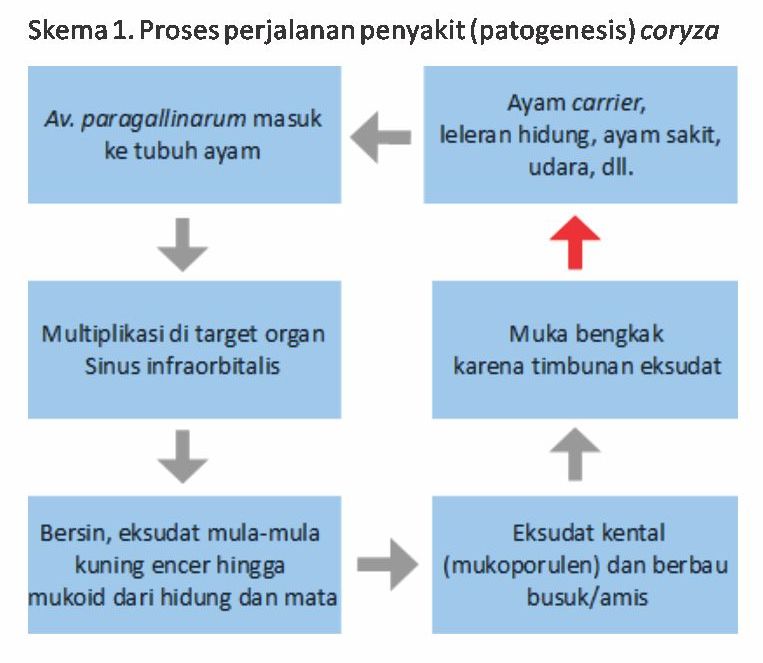
Coryza attacking chickens through feed media, drinking water, and air contaminated with disease agents, or direct contact with chickens that were attacked first coryza. Bacteria Av. paragallinarum which enters through the mouth or nose, will then enter and multiply in the nasal sinuses (sinus infraorbitalis) with an incubation period of 1-3 days followed by the rapid appearance of clinical symptoms. More clearly related to this can be seen in Scheme 1. But when it comes to fighting, long outbreak coryza it can last for 4-12 weeks (in laying hens) or 6-14 days (in broilers) depending on the degree of malignancy of the disease, the number of bacteria in the chicken's body or cage environment, and the presence or absence of secondary infection.
Clinical symptoms and Anatomical Pathology
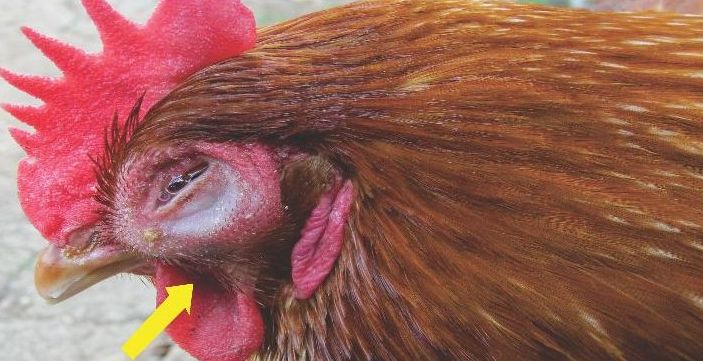
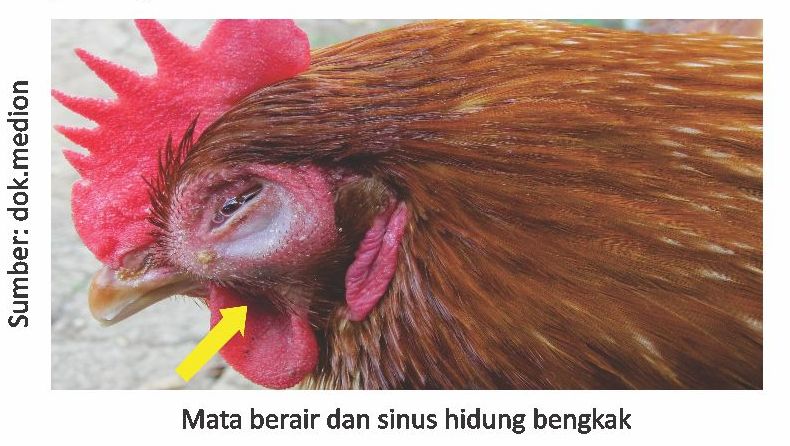
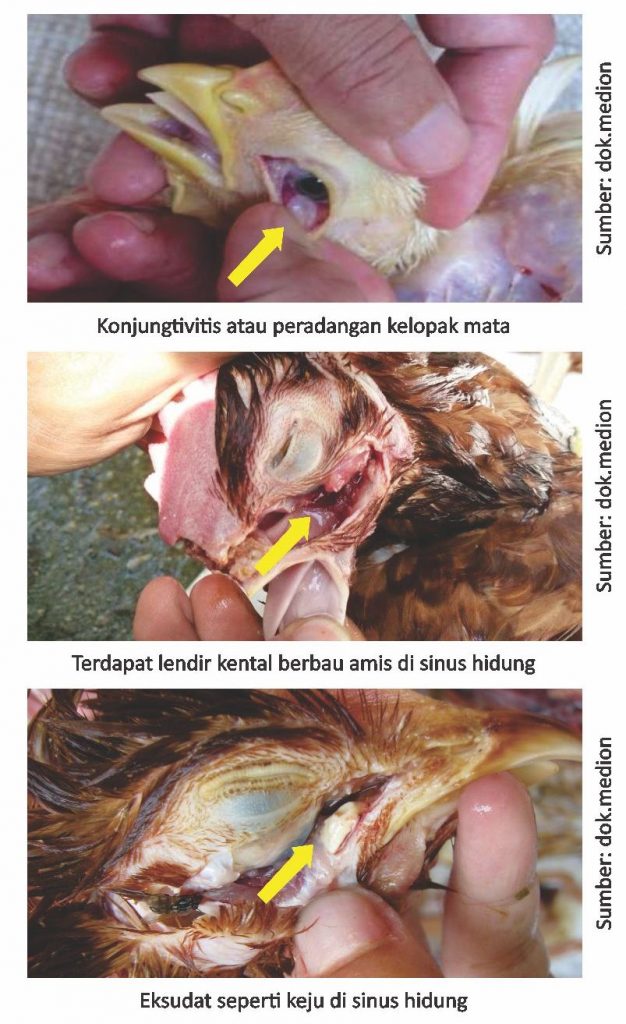
The clinical symptoms of this disease include difficulty breathing in chickens, discharge of mucus or feces from the nose, which at first is yellow and watery, but gradually turns into thick and purulent and smells like rotten eggs and fishy. The infraorbital Sinus swells, the eyelids develop conjunctivitis (inflammation), tears come out until the eyes are closed. For more details can be seen in the picture below.
If chicken surgery is performed, it will be found that the nasal sinuses, larynx and trachea are inflamed and slimy. Sometimes in the sinuses is also found perkejuan. If the disease colibacillosis join the attack together coryza up to the eye, then the eye will swell to contain solid yellowish perkejuan. Some diseases that have similar clinical symptoms coryza namely SHS, colibacillosis (form panopthalmitis), ILT, wet smallpox (wet pox) and ORT (ornithobacterium rhinotracheale).
Prevention Coryza
Prevention coryza with proper vaccination, optimize maintenance management, and implement biosecurity tightly.
- Vaccination
Be aware of the difficulty of treatment coryza, then alternative actions can be taken to control coryza is prevention by vaccination. Get vaccinated with Medivac Coryza B / Medivac Coryza T Suspension in laying hens age 6-8 weeks and repeated at the age of 16-18 weeks. If the farm is very prone to occur coryza, then repeat vaccination can be carried out 5-6 weeks after the first vaccination. While the broiler / stud is done at the age of 4 days with Medivac ND-Coryza or at the age of 1-2 weeks by using Medivac Coryza B / Medivac Coryza T Suspension. The determination of the vaccination schedule can also be determined based on the case history of attacks on previous maintenance, which is no later than 3-4 weeks before the age of the attack.
Vaccination needs to be done because with vaccination, immunity will be formed in the chicken's body, so the frequency of cases can be suppressed. In addition, if outbreak in vaccinated chickens, the attack will not be severe. When treated, chickens will recover faster than unvaccinated chickens.
- Optimal maintenance management
Although vaccination coryza in the field already done, the possibility of the emergence of cases coryza still going to happen. Therefore, combining appropriate vaccination measures, implementation of good maintenance procedures and strict biosecurity applications are the main keys to preventing cases coryza.
During chick in, do DOC selection. DOC quality must match criteria such as body weight 37 g / tail, feathers are not dull, agile, and not deformed. So it is expected to have a high ability to live, more resistant to changes in the surrounding environment, and the number of chickens that diafkir during maintenance is also small. Apply maintenance system all in all out to avoid transmission from old chickens to young chickens and break the life cycle of bacteria coryza at the site of the farm.
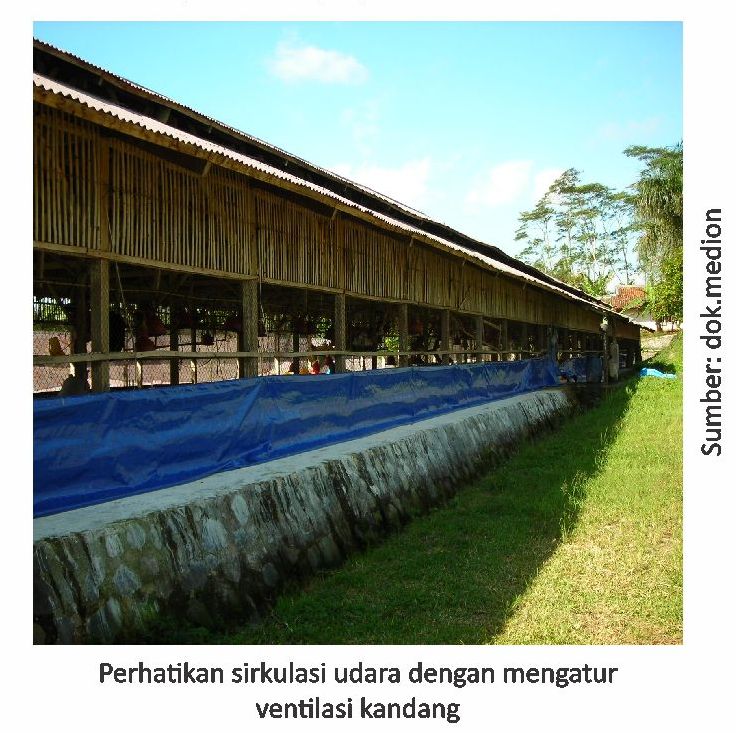
Time management brooding period, and litter should also be good as a place to eat and drink enough, as well as litter it should always be dry and dust-free. Add litter dry when it is damp and wet. Strive to provide clean air in the cage by adjusting the curtain opening and closing well and adjusting the density of the chicken. Prescribe broad-spectrum antibiotics such as Proxan-S, Neo Meditril, or Amoxitin 1 week before the attack coryza as a step cleaning program (prevention) especially when the weather changes. Taking multivitamins regularly, for example Fortevit, Vita Stress, or Kumavit it is necessary to maintain optimal chicken stamina.
- Biosecurity
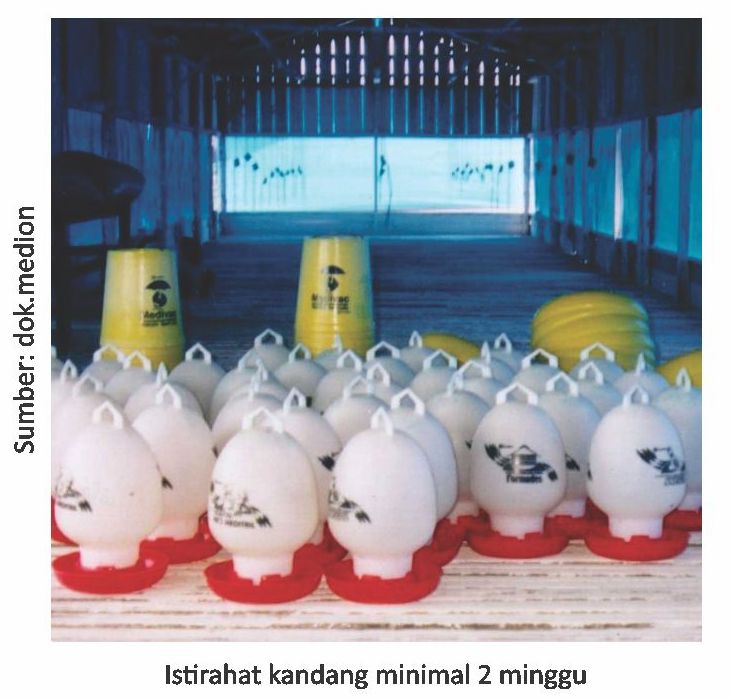
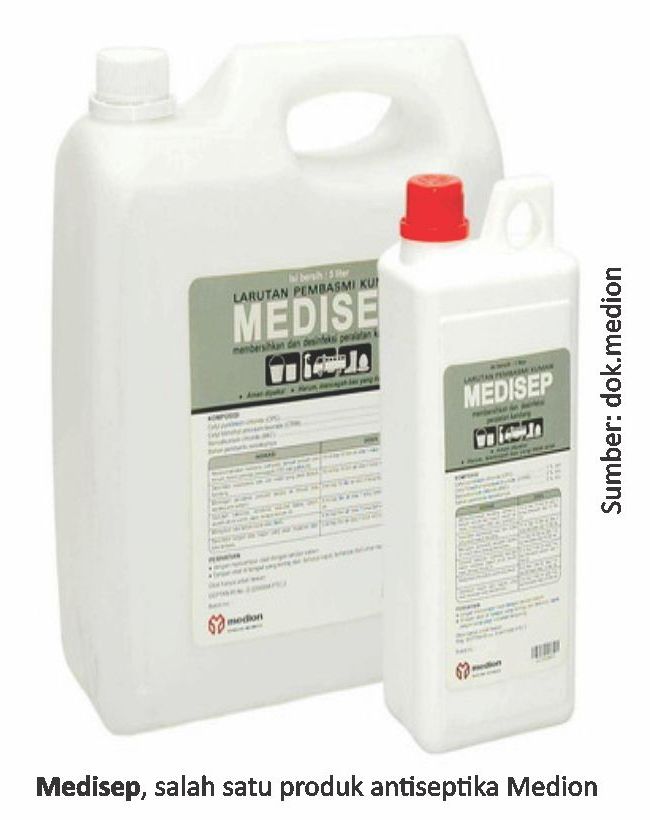
For previously infested cages coryza, implement prevention programs by tightening biosecurity. Bury the dead chicken carcass coryza not far from the location of the cage. Take a cage break of at least 2 weeks after cleaning and disinfecting the cage. Spraying the cage every day, washing and sanitizing the feed and drinking place every 3-4 days and dipping the feet in the disinfectant tub before entering the cage with QUATS class disinfectants such as Medisep or Zaldes. In addition, disinfection of drinking water with Desinsep to prevent transmission of bacteria through drinking water
The application of isolation can be by limiting the access of cage employees or visitors with a red (dirty), yellow (transition), and green (clean) zone system. Cleaning and disinfection of vehicles in and out to prevent contact of disease seeds into the cage by using Formades or Sporades.
Severe Coryza
About successful treatment coryza influenced by several things, including:
- Perform selection, isolation and grouping
This is where the importance of selection, isolation and grouping is carried out from the very beginning of treatment. There are times when the chicken looks healed, but 1 week after treatment the case can appear again. If re-evaluated, this can be caused by variations in severity but there is no selection and separation so that uneven treatment effects arise (there are chickens that have recovered, but there are also chickens that only “seem” cured or not completely cured). So when conditions are not optimal, the chicken that” looks " cured will relapse.
Immediately separate / isolate chickens that have seen severe to minimize transmission, especially from mucus released by sick chickens.
- Principles of proper treatment
Treatment measures coryza basically it should be adjusted to the severity of the attack. Severity coryza it usually varies between chickens, ranging from mild, moderate to severe/severe.
Chickens of mild to moderate severity (chickens can still eat and drink), it is necessary to treat with the right technique of Drug Administration. Because bacteria Av. paragallinarum including Gram ( - ) bacteria, almost all classes of antibiotics can be given. It's just because of predilection Av. paragallinarum being in the infraorbital sinus poor in blood vessels, then choose antibiotics that have a higher absorption into the tissues. Do it too rolling antibiotics to prevent resistance. Here's a selection of drugs to treat coryza:
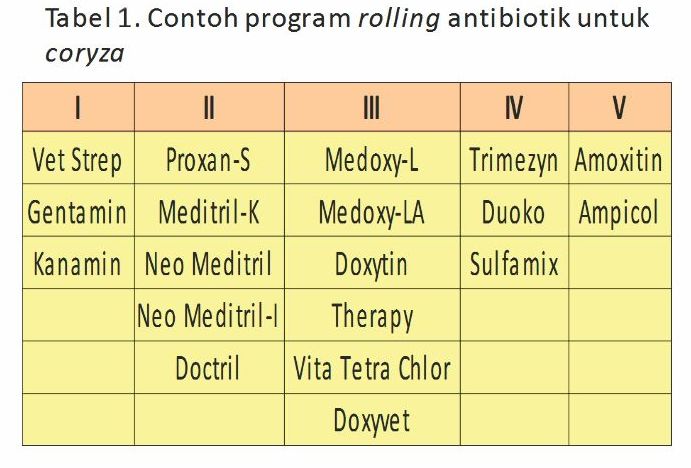
Treatment for chickens whose attack condition is severe, the face looks swollen use injection antibiotics such as Gentamin, Vet Strep or Medoxy-LA. Chicken with swollen face, drinking water consumption decreased dramatically so that the administration of drugs through drinking water less give satisfactory results.
- Therapy supportTake multivitamins, such as Injection Vitamin B Complex or Fortevit to help restore stamina, repair nasal sinus membranes that are inflamed, and stimulate the appetite of chickens. When chickens are attacked coryza, appetite decreases, causing impaired productivity.
- Improvement of maintenance managementadjust the cage structure to environmental conditions. Re-check the smooth circulation of air and setting open and close the curtains more routinely done. If litter wet and damp can add litter new and dry.
- Sanitation to reduce the source of disease contagion to prevent wider transmission, do the sanitation of drinking water every 3-4 days and spray the cage every day with disinfectant quats class (Medisep/Zaldes) in order for the population of causative agents coryza reduced. Please note that contamination of water, feed, cages, and equipment by dilution of the patient's chicken nasal fluid coryza very potential to be a source of disease transmission.
If not perform optimal control and handling of all aspects of the coryza it will always be repetitive and difficult to eradicate. Given this, farmers must always apply the slogan that prevention is better than treatment coryza no coming back. Greetings.