E-mail : jaka.djendral@gmail.com
My chicken started DOC until now entered the age of 8 weeks often attacked cekrek. How to prevent chickens from being attacked again and how to treat those who have been attacked?
Answer :
Cekrek or snoring can be caused by several disease agents, such as disease-causing bacteria coryza and Cronic Respiratory Disease (CRD), a disease-causing viral agent Infectious Bronchitis (IB) and Infectious Laryngotracheitis (ILT), as well as disease-causing fungal agents Aspergillosis. Where is the disease Coryza and CRD is a big stage 2 disease that often attacks chickens layer.
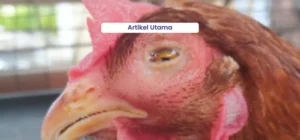
Coryza caused by bacteria Avibacterium paragallinarum causes a disease characterized by inflammation of the upper respiratory tract, including the nasal cavity followed by a runny to thick, purulent and characteristic odor (foul/fishy). Because of this upper respiratory system disorder, chickens become difficult to breathe, sneeze, and snore. Coryza characterized also by swelling of the infraorbital sinuses (under the eyes), excessive tear discharge, decreased appetite, and sometimes diarrhea. While CRD is caused by Mycoplasma gallisepticum who has a favorite spot in the airbag. CRD disease is characterized by mucus discharge from the nose, chicken cekrek, difficulty breathing, inflammation of the conjunctiva of the eye, decreased appetite, impaired growth, and impaired egg production in chickens layer. Both of these diseases affect chickens at various ages with the rapid spread of the disease but the mortality rate is relatively low.
As a form of prevention of chicken we avoid cekrek since DOC is to create an area brooding period, suitable and convenient for DOC. When cekrek appears while still in Phase brooding period,, we need to reevaluate whether management brooding period, what we create has been done right or not. Management evaluation brooding period, which we can see, for example:
- Smooth air circulation with the arrangement of curtains on the cage open house. On the 1st to the 3rd day always use the inner curtain. Then at the age of 4 days the inner curtain began to open and at the age of 7 days it was removed. Its function is replaced by outer curtains and the regulation of chicken density.
- The level of DOC. Density adjustment can be done by widening the bulkhead/chick guard every 3-4 days. This widening of the cage must also be followed by the addition of a ration place, a place to drink and the addition of litter (especially if it is wet or lumpy).
- Area optimum temperature brooding period, (sufficient heating). At the age of 1 day the optimal temperature of the area brooding period, the recommended is 32-33oC at air humidity 30-50%.
- Availability of sufficient and quality feed and drinking water.
To prevent repeated occurrence of cekrek in the next maintenance phase of course we do by applying biosecurity a tight cage. Namely by restricting the traffic of people or vehicles entering and leaving the farm, providing a place for sanitation and disinfection of cage personnel, spraying vehicles entering the cage environment, and performing routine cleaning and disinfection of cage equipment such as eating or drinking places. In addition, regularly disinfect the cage by spraying using disinfectants such as Neo Antisep New Formula at least twice a week to reduce the number of disease agents in the cage.
Control ammonia in the cage by using Ammotrol, because ammonia predisposes to various problems of respiratory system diseases such as CRD and coryza. Herbal Ammotrol able to reduce the smell of ammonia in the farm area and increase livestock productivity. Usage Ammotrol it can be applied in two ways, that is, sprayed into feces or dissolved in drinking water. Both applications are equally effective in reducing the smell of chicken manure in the cage. If the ammonia level in the cage is very high (characterized by a very pungent smell of the chicken coop), then you should Ammotrol administered with two applications at once, namely through a spray and drinking water.
If our chickens are already affected by cekrek then the right diagnosis is needed, in order to determine the next step of treatment. This diagnosis should be based on the Anamnesis, clinical symptoms that appear, as well as the findings of anatomical pathological changes observed when performing necropsy (chicken surgery). If necessary, samples are taken for isolation and identification of the cause of the disease or serum samples are taken for serological tests. Isolate sick chickens to prevent transmission to other healthy chickens. Then take the treatment according to the diagnosis.
Treatment due to bacterial disease agents may use antibiotics. For the treatment of coryza antibiotics that can be used include Erydoxcy, Proxan-S,or Neo Meditril. As for the CRD can use Neo Meditril, Therapy, or Doxytin. Then also given multivitamins to increase the endurance of the chicken, for example, given Fortevit or Vita Stress. Can also use herbal products Fithera. Fithera being the choice of natural remedies to help accelerate the healing of diseases due to bacterial infections such as coryza and CRD.