Bapak Ahmad Anjar
Subang-West Java
How to get around heat stress in chickens broiler in the current dry season?
Answer:
Dear. Mr. Ahmad, thank you for the question. In the dry season, especially the occurrence of heat stress or so-called heat stress it's inevitable. Based on information from the Meteorology, Climatology and Geophysics agency (BMKG), the dry season this year has begun in early May and the peak is predicted to occur in August – September 2018. Although it is predicted that it will not be as severe as the dry season in 2015, but our attention to hot conditions like this must always be increased.
Heat stress it is a stress caused by air temperature that exceeds the comfort zone (>28°C). This stress is due to the chicken can not balance between the production and disposal of body heat. The body temperature of the chicken will be normal (optimal) when the chicken is kept in the comfort zone (comfort zone), dengan suhu kandang 21-28°C dan kelembapan 60-70% (COBB Brooding-Temperature Management, 2015).
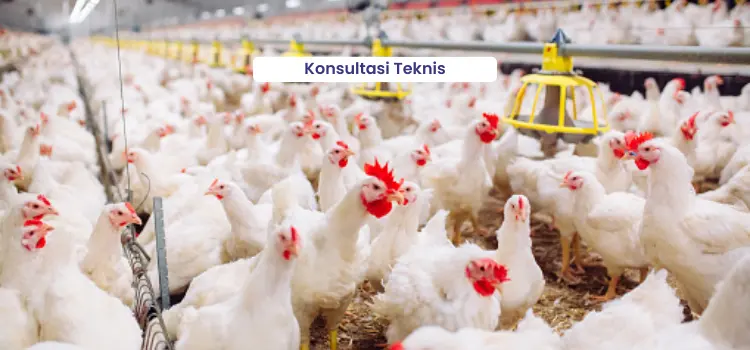
The clinical symptoms of the acute form are that the chicken has difficulty breathing (dyspnea), the neck is extended upwards, the frequency of breaths increases and the appetite decreases. This results in the growth of chickens will be hampered. While in the chronic form, which is commonly found in adult chickens, the above symptoms can continue blueness, emaciation and lead to death.
Heat stress it often occurs in adult chickens. Usually the chicken will do panting (gasping), namely breathing through the throat or evaporating (evaporation). When hot, ration consumption also decreases so that the nutritional intake is not met, the FCR value swells and weight growth is inhibited. In addition, the immune system will also be weakened (immunosuppressive) and the most severe impact caused is sudden death.
Some steps that can be taken to get around heat stress due to drought, including:
- Make database temperature and humiditybapak can make notes about the conditions of temperature and humidity fluctuations that occur in the cage, both morning, afternoon, evening and early morning. Including also when recording, we can assess the response of chickens to panting. From here it will be seen a summary of the ideal temperature and humidity ranges in which it does not occur panting. So when the temperature or humidity exceeds the ideal range, you can act immediately.
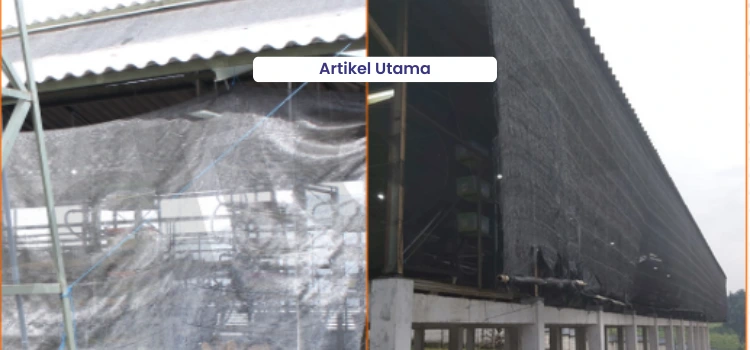
- Good air circulation system is very effective for lowering or raising the temperature of the cage. Open the cage curtain during the day when the temperature rises.
- Artificial rain system artificial rain system is carried out outside the cage to form water droplets similar to rain. Its function is to wet the roof to reduce high temperatures to cool so that the chicken remains comfortable even though the weather is hot, the growth of chickens is not disturbed and prevents death.
- Fan additionthe addition of a fan into a popular solution to overcome heat stress. Fans can be installed in the middle, end or side of the cage depending on the type of cage used. For adult chickens the fan speed is recommended to be no more than 2.5 m/sec while for the brooding period it is no more than 0.3-0.5 m/sec. The fan is installed at a height of at least 20-30 cm from the floor.
- Density settingdo a density setting so that the chickens are more comfortable, and the air circulation in the cage is better. The ideal chicken density standard is 15 kg/m2 or the equivalent of 6-8 broilers.
- Providing vitamins and electrolytes stress conditions due to the influence of temperature changes play a major role in causing cases of vitamin and mineral deficiencies (electrolytes). The supply of vitamins and electrolytes can be provided through drinking water or rations. Vitamin yang diperlukan antara lain vitamin C, E, K, B9, B2 and D. While electrolytes are needed to maintain the stability of blood pH which is disturbed due to decreased CO levels2 in the chicken body as a result of doing a lot panting. Medion products that can be administered when heat stress namely Vita Stress and Kumavit. Both contain complete vitamins and electrolytes to prevent stress, increase appetite and keep the chicken's metabolic process optimal.
- Regulate drinking water consumption
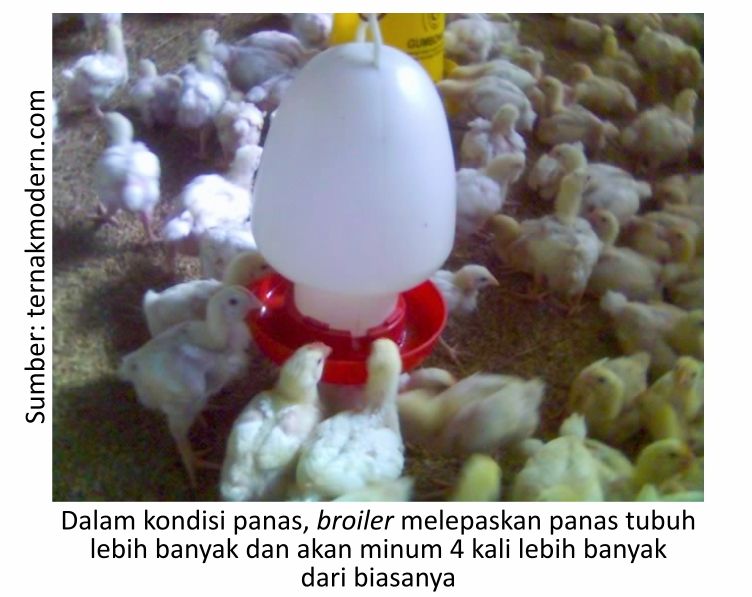
- When the temperature is high appetite increases dramatically, even if the temperature reaches 32°C drinking water consumption can increase 4-fold (Broiler Signals, 2016). A good drinking water temperature is 20-24°C or ad libitum. If you need to add more water (TMA) and its distribution is regulated so that it does not make it difficult for chickens to access it.
- Pay attention to the quality and quantity of ration high temperature conditions will reduce ration consumption and increase drinking water consumption. Make sure the rations we provide are of quality. If necessary, give rations with nutrient-dense content so that the nutritional needs of chickens are still met even though the amount of consumption is reduced. Set the frequency and time of ration. Switch the ration schedule when the temperature is comfortable, namely in the morning and evening. If necessary, the ration can be given at night by providing additional light. Strive too torn/ drinking water reservoir reservoir roofed so as not to be exposed to direct sunlight.
- Add also Mix Plus to complement the essential micronutrients (nutrients that are very important) so that chicken productivity is more optimal. For drinking water do sanitation with Desinsep to minimize contamination of seedlings.
During the dry season, events heat stress need to watch out because it will further threaten the condition of chickens on the farm. This has a real effect on the decline in chicken growth broiler. For this reason, immediately take anticipatory action so that a decrease in productivity can be avoided.