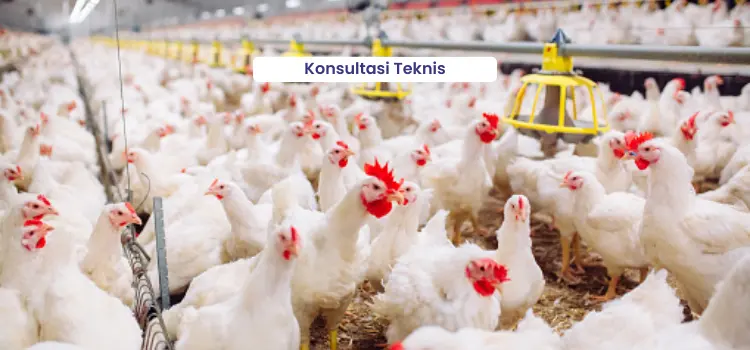
Mr. Jaya – By Email
At the chicken farm layer I seem to be experiencing water quality issues, and colibacillosis cases are frequent. As a result, pullet rearing is already problematic. It's exacerbated during the rainy season. How can I resolve this? Thank you.
Answer:
Thank you, Mr. Jaya, for your question. Colibacillosis is closely related to drinking water quality. In 2025, colibacillosis cases ranked fourth among laying hen diseases. pullet and enter the production phase. Colibacillosis can occur in the form of primary infection (single infection) E. Coli infection only) or as a secondary infection following other diseases such as CRD, coryza, IB, ILT, SHS, or other diseases.
Bacteria E. Coli infection are bacteria that normally live in the digestive tract of chickens (normal flora). However, they can cause disease if their populations increase. Under abnormal conditions, such as a decreased immune system or excessively high levels of contamination, E. Coli infection in the body, these bacteria will turn into pathogens. Incidence of infection E. Coli infection in chickens generally caused by strains Avian Pathogenic E. bra (APEC). If chickens are already infected with colibacillosis, it can cause growth disorders, low harvest weight, decreased egg production, increased culling rates, and decreased egg hatchability and chick quality, resulting in significant business losses.
Colibacillosis can be transmitted through contamination of chicken drinking water, litter, air, and feces. Bacteria E. Bra high concentration in feces, namely around 10⁶ per gram of feces, this bacteria then has the potential to spread and contaminate dust, litter, and drinking water. The spread E. Coli infection through drinking water is more dominant and is in the spotlight because drinking water is a medium that easily carries E. Coli infection enter the chicken's body. This is especially true when algae and microbial growth, including E. coli, accumulates in water pipes, which can then rupture and spread even more bacteria.
Bacteria E. Bra It thrives very easily in high concentrations on the surface of stagnant water. Therefore, if the water is too shallow and close to a source of fecal contamination, such as a contaminated well, swamp, river, or septic tank, there is a high risk of contamination. E. Bra Both during the rainy and dry seasons. During the rainy season, groundwater and surface water often experience increased microbial contamination. Rainwater can carry various organic materials, mud, and dirt that enter the farm's water source. Unstable temperature changes during the rainy season can also cause stress in chickens. Environmental stress can weaken the immune system, making chickens more susceptible to bacterial infections.
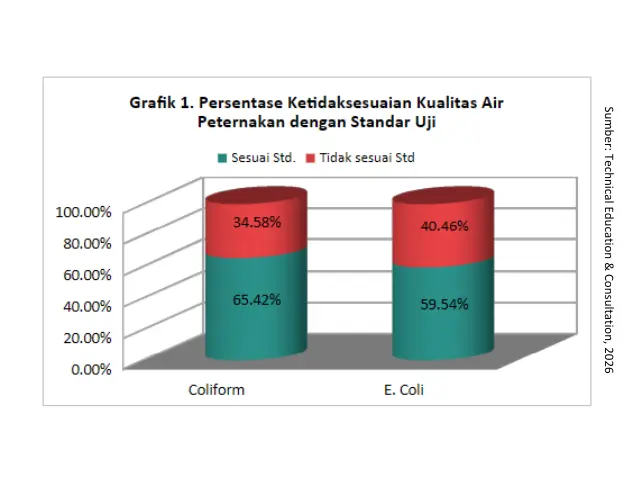
Observations of water bacterial quality at the Medion Laboratory include parameters for E. coli and coliform contamination. Based on the data presented in Graphic 1, the percentage of non-conformity of water bacteria test results throughout 2025 is still quite high at 34-40%.
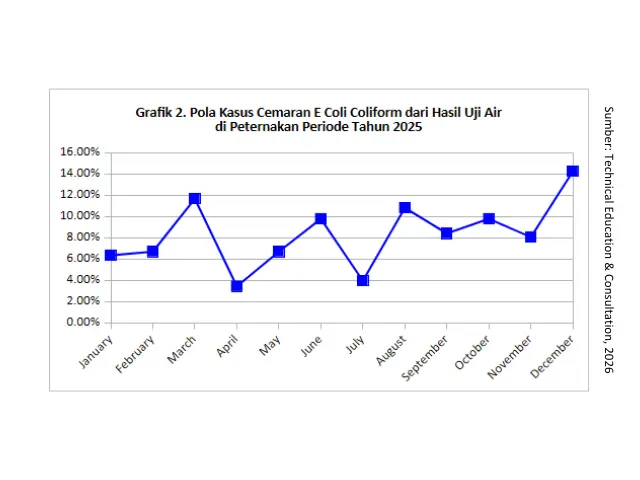
Based on the data on the pattern of E. Coli and Coliform contamination cases that Medion found from the results of water quality tests (Graphic 2), it can be seen that the highest number of findings occurs in certain months, such as March, June, August, and December. These months are the peak seasons, the transition between the rainy and dry seasons. Therefore, close attention is needed to ensure water quality on farms during these seasons.
Treatment for Chickens Affected by Colibacillosis
Drugs that can be used to treat colibacillosis infections include: Neo Meditril, Tinolin, or Proxan-S (choose one). However, if the chicken's condition is so severe that its water consumption decreases, treatment can be considered using antibiotics via injection, such as Neo Meditrile-I or Tinolin Injection. In the treatment of colibacillosis, there are several things that need to be considered, in addition to the appropriate dosage and duration of administration, it is necessary to rotate antibiotics from different groups to avoid antibiotic resistance.
Improving Management and Maintaining Health During the Rainy Season
It would be better, apart from giving medicine/antibiotics to sick chickens, to also improve management and provide supplements to maintain the health of the chickens, including:
- Reducing stress during seasonal changes and sudden weather changes is essential to maintaining a healthy immune system. Avoid and minimize stress-inducing factors such as moving cages, vaccinations, or uncomfortable cage environments. If these measures must be taken, they should be done carefully to minimize stress.
- Regulate air circulation in the cage properly and clean the dust around the cage because it has the potential to be contaminated. E. Col. Ensure good air circulation, easy air exchange, and a comfortable environment for the chickens. Implementing a closed house system will significantly contribute to creating a comfortable atmosphere within the coop.
- Maintenance management improvements such as density regulation, management litter so that it is not wet and damp, adequate nutrition in the feed, and control of ammonia levels.
- Implementation biosecurity Good practices include routinely sanitizing the coop, both when it's empty and when it's filled with chickens. Implementing 3-zone biosecurity, restricting access to guests and other animals within the coop. Disinfecting equipment (feeding containers, drinking troughs, etc.) using Medisep. Disinfect the cage and environment with Medisep or Neo Antisep every day to reduce the seeds of disease in the environment.
- Also control insects such as flies and mosquitoes which tend to increase during the rainy season.
- Providing probiotics by adding beneficial microbes like Lactobacillus and Bacillus to chicken feed or drinking water can help maintain the balance of the gut microbiota, especially after antibiotic treatment or when the chicken is under stress. Probiomix maintain digestive health and optimize productivity.
- Administration of organic acids such as Asortin, to maintain the balance of intestinal microflora by maintaining the optimum pH of the gastrointestinal tract, thereby improving the performance of chickens.
- Administration of vitamins to increase appetite and endurance, for example Vita Stress, Imustim, or Fortevit.
Handling Water Quality Problems
One way to control water problems is to regularly conduct water quality tests. We can determine the parameters of drinking water quality in our country. farm Chicken that does not meet standards. We can also determine whether there is bacterial contamination. E. Bra and coliform in the drinking water. Water quality testing is conducted periodically, especially during the rainy and dry seasons, and seasonal changes. Samples that can be tested include water taken from water sources, reservoirs/torns, and nipples/gutters. Observations of biological or bacterial quality in water can be measured qualitatively and quantitatively. Qualitative measurements are made by observing the presence or absence of bacterial contamination. Quantitative measurements are made by calculating the total number of bacterial contaminations, such as Coliform, Escherichia coli and Salmonella sp of 100 mL of water sample.
In addition, do the following drinking water treatment:
- Disinfection of drinking water can use Desinsep with a dose of 30ml per 1000L of water. Before using it to dissolve drugs and vitamins, the drinking water that has been mixed Desinsep need to be left to settle for 6-8 hours.
- Usage Water Treatment Plant (WTP) to process raw water into water that is suitable for consumption for livestock. Water Treatment Plant (WTP) is also able to maintain the quality of livestock drinking water according to standards.
- Flushing by cleaning drinking water pipes using high pressure water (about 1.5-3 bar) or with a water spraying rate of 1 minute every 30 meters of paralon pipe. Flushing can be done routinely, especially after giving antibiotics, vitamins, and vaccines through drinking water. Rinsing with clean water will loosen substances that contribute to biofilm and clean the remnants that can clog the equipment. At least 1-2 months do flushing (spraying pressurized water) on paralon to minimize the formation of biofilm. We also have to clean and disinfect the water reservoir. Drain the torn at least once every 1 month or when the cage is empty. Before it is done flushing we recommend that the water pipe be emptied first until there is no remaining water. Action flushing it would be better to help with Bioflush. Bioflush it is a disinfectant containing hydrogen peroxide which has a broad spectrum and is effective in fighting various microorganisms, such as bacteria, viruses, fungi and spores. Hydrogen peroxide works by producing hydroxyl free radicals that attack membrane lipids, proteins, DNA, and other important cell components, causing damage to these components resulting in death in microorganism cells. So that Bioflush effective in eradicating causative microbes biofilm in tanks and water lines in poultry farms. Bioflush is 2.22x more effective at killing E. coli bacteria than phenol. Bioflush also safe can be used for disinfection of cage contents and has a low level of irritation to livestock as well as the skin of human hands. Bioflush does not affect the smell, taste and color of livestock drinking water so as not to cause stains on torn/drinking water pipes.