Mr. Wildan
Palembang-South Sumatra
How does chlorinated water affect the health of chickens?
Answer :
Dear. Mr. Wildan, thank you for the question. Giving chlorine does have an effect on drinking water such as will increase the pH of the water because chlorine is alkaline. The taste and smell of drinking water will also change so as to reduce the appetite of drinking chicken. In order to show maximum results should be given according to the right dosage. The recommended dose of chlorine is 3-5 ppm. If chlorine / chlorine is used continuously, then chickens can experience irritation of the digestive tract and beneficial microbes in the digestive tract can die. Therefore, the water containing chlorine / chlorine must be allowed to stand for at least 20 minutes before being given to the chicken. However, if vaccination is to be carried out, the calcareous water must be allowed to stand for 48 hours before being used to dissolve the vaccine. After that it can be added Medimilk 10 grams per 5 liters of water. Leave for 15-30 minutes, only then mix the vaccine into it. Giving water can be done from DOC to adult chickens to minimize the seeds of disease that enter the chicken's body. In addition to chlorine, antiseptics can also be given Desinsep at a dose of 30 ml per 1000 liters of water, leave for 15-30 minutes for the active substances to act.
So that the working power of water disinfection is more optimal can also be supported by :
- Make sure the drinking water pipes are clean of organic materials such as biofilms and drug and vitamin residues. The goal is that the active substance of chlorine can come into contact with bacteria E. Bra.
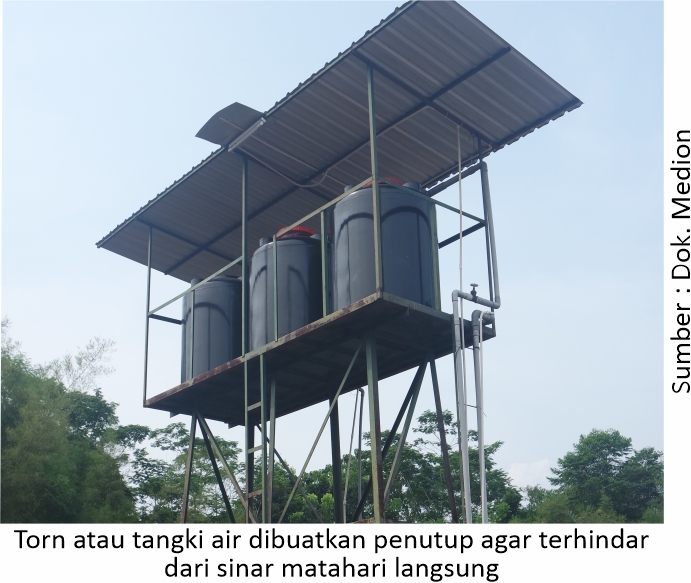
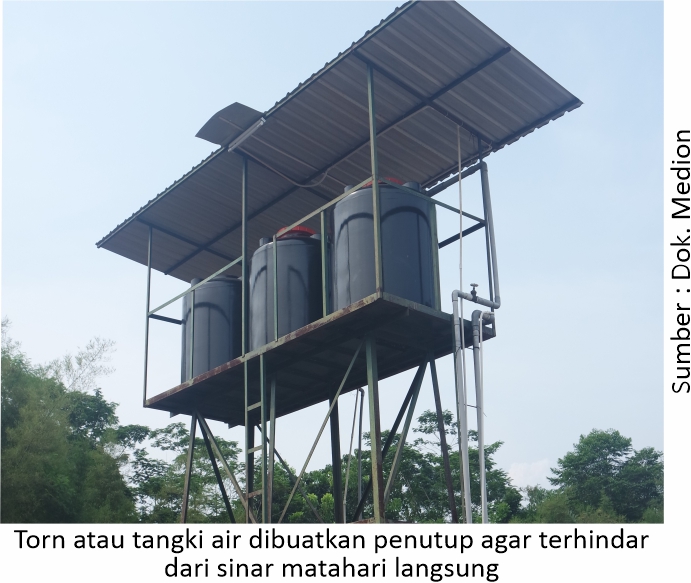
- The tub/torn water (chlorine mixing place) must be tightly closed and not exposed to direct sunlight so that the effectiveness of chlorine/antiseptic does not fall.
- Make sure the temperature of the cage during the period brooding period, not too hot (excessive heat), because hot temperatures can reduce the work of chlorine dissolved in chicken drinking water. Too hot temperatures can also cause chicks in the future brooding period, not breathing properly and eventually experiencing hidrops ascites.
- When it happens outbreak disease, antiseptic administration can be done at night after treatment is complete. What needs to be considered also during the Water Sanitation program is the contact time of antiseptics in the water, especially if using chlorine or chloramine T at least allowed to stand for 15-30 minutes and then given to the chicken.
- Clean drinker with disinfectants Medisep routinely 2 times a day to minimize the seeds of disease attached. For drinking places nipple drinker, preferably flushing routine immediately after administration of vitamins, vaccines and drugs whose application is through drinking water, using hydrogen peroxide (H₂O₂) at a dose of 15-20 mg/liter of water or 10-15 ml/100 liters of water or can use citric acid at a dose of 1.5-2 grams/liter.
- Check the temperature of the water in the microwave (MediLab) at least once every 3 months or when the weather changes.