Gumboro or Infectious Bursal Disease (IBD) is a viral disease in chickens that for decades has caused serious damage to the poultry industry. Prevent it, means trying to maintain the success of poultry farming.
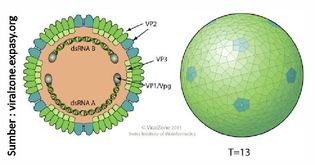
Gumboro disease, also known as Infectious Bursal Disease (IBD), caused by a group of double-chain RNA viruses of family Birnaviridae. Gumboro comes from the name of the area where the disease was first discovered in the village of Gumboro, Delaware, United States reported by Cosgrove in 1962.
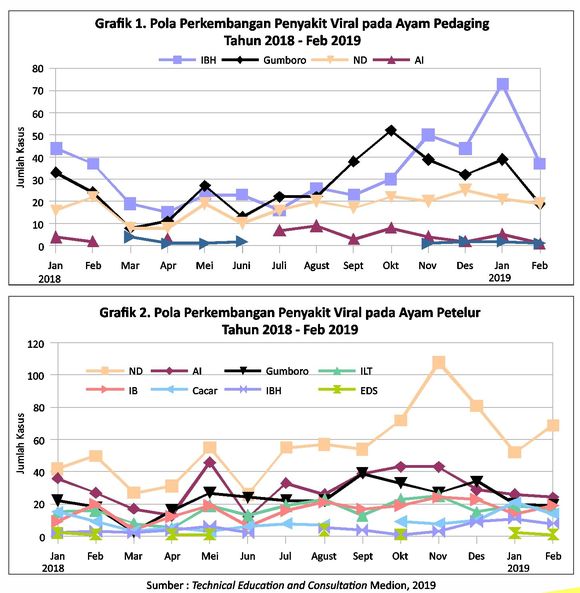
Gumboro development in Indonesia
If you look at Graph 1, there are data on viral diseases that infect broilers during 2018 to early 2019. Of some viral diseases such as Newcastle Disease (ND), Avian Influenza (AI), and Inclusion Body Hepatitis (IBH), Gumboro ranks second in broilers. In contrast to previous years, the usual Gumboro disease became the first rank ranking shifted by the disease Inclusion Body Hepatitis (IBH). We know that the emergence of IBH attacks can also be triggered due to Gumboro infection which is immunosuppressed for chickens. This certainly makes Gumboro can not be underestimated. While the case in laying hens Gumboro is still a threat that should need to be aware of because it is classified as a troubling disease. From Graph 2. it can be seen that Gumboro ranks third after ND and AI in laying hens.
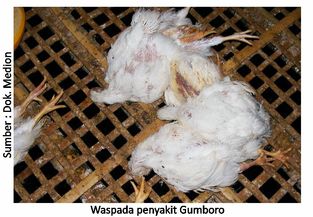
Causes Gumboro Still Eyeing
Some of the factors that cause Gumboro still often eyeing on the farm include:
Non-optimal sanitation and disinfection of the cage
The spread of Gumboro disease generally occurs horizontally. Therefore, management that includes sanitation and biosecurity is very influential. The emergence of Gumboro cases was triggered by improper sanitation measures, which still found the remains of feces/piles of sacks containing feces around the location of the cage when DOC arrived. As we all know, feces are the main medium of Gumboro transmission. The IBD Virus in the stool remains infective for up to 122 days after being excreted (excreted). Another thing that sometimes still happens is spraying disinfectant without cleaning the cage first or cleaning is not optimal (there are still leftovers litter/ feces on the sidelines of the cage). This condition will certainly result in the work of disinfectants will not be optimal, especially in the use of Antisep (oxidizing agent). This type of disinfectant works influenced by organic matter (feces, blood and mucus).
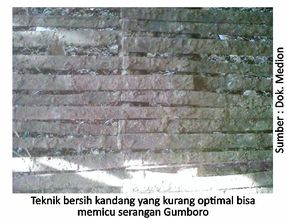
IBD is a very stable virus. The Virus is relatively resistant to heat (56°C for 5 hours, 60°C for 30 minutes) and some disinfectants. The right type of disinfectant to eliminate the IBD virus is the group oxidizing agent (iodine complex) and aldehyde (formalin). Products that can be used are Antisep, Neo Antisep or Formades.
Management brooding period, which is not optimal
Period brooding period, this is a list of DOC (chick in) until the age of 14-21 days (until the release of the heater). This maintenance period also determines whether or not the performance of chickens in the future. If mismanagement occurs during this period, it is often irreversible and has a negative impact on the performance of chickens in the next phase. The thing that is closely related to the success of vaccination is that at this time there is a rapid development of the immune organs of chickens.
At the age of one week the development of lymphoid organs already reaches 70%. The optimal development of these lymphoid organs is closely related to the blunting of active immunity that will replace the role of passive immunity passed from mother to Chick. Therefore, it should be borne in mind that if the chicken's weight does not reach the standard, the development of lymphoid organs is disrupted, which will affect the success of vaccinations carried out in this period.
Minimum monitor level dan keseragaman antibodi maternal
The Gumboro vaccination Program (active vaccine) is strongly influenced by maternal antibody status. The active Gumboro vaccine given when maternal antibodies are still high can result in the vaccine virus being neutralized by maternal antibodies. As a result, the vaccine given is not able to provide optimal protection (De Wit. J.J et all.,).
Knowing the maternal antibody status can be used to help determine the exact schedule of the first vaccination. In addition, it can be used as a consideration to determine the type of vaccine to be used, the type intermediate or intermediate plus. The accuracy of the vaccination schedule and the accuracy of choosing the type of vaccine are critical points that affect the success of vaccination. Serum sampling for screening for maternal antibodies is carried out at the age of 1-3 days.
In fact monitor maternal antibodies have not been routinely performed and may not have been performed at all. This constraint can be due to the availability of testing laboratories. MediLab (Medion Laboratory) provides maternal Gumboro antibody titer testing services by ELISA method, the test results will be equipped with an analysis to estimate the age of the first Gumboro vaccination and as a consideration for vaccine selection.
Presence of immunosuppressant factors affecting the success of vaccination
Another factor that needs to be considered in the success of vaccination is to make sure there are no immunosuppressive factors. Gumboro vaccination is generally done at the age of the end of the first week or enter the second week. At this age sometimes begin to occur maintenance management errors such as delays in widening the cage, opening the cage curtain or the addition of materials litter. Improper management practices will cause the air quality in the cage is not fresh, the smell of ammonia began to appear. This condition is a trigger factor for the emergence of cases of disease, especially respiratory diseases such as CRD or digestive diseases (coccidiosis). Both of these diseases are immunosuppressed so that it will affect the success of the vaccination carried out.
In the age period of one to two weeks is a solid period of vaccination, in addition to vaccination Gumboro chicks also receive other vaccinations such as ND (4 days), IB (4 days) and AI (10 days). This overcrowding of the vaccination schedule if not balanced with good rearing management will risk causing stress to the chicks. We all know that stress is a factor that can also suppress the success of vaccination. Therefore, it is important to prepare chicks in optimal conditions when receiving vaccinations.
Incorrect timing and application of vaccinations
Too close to the time of occurrence of the disease to the time of vaccination (±7 days) can cause vaccination failure because the antibodies produced by the active vaccine only reach the protective titer at the earliest 14 days post vaccination. In addition, the active Gumboro vaccine given when maternal antibodies are still high may result in the vaccine virus being neutralized by maternal antibodies. So that the vaccine given is not able to provide optimal protection.
The application of active Gumboro vaccine is done orally either by mouth drops / chews or drinking water. Application by mouth drops / bite will further ensure each chicken get 1 full dose. This method of application is related to how Gumboro virus naturally infects chickens i.e. orally.
The number of viruses in 1 dose of active Gumboro vaccine is only 102 or equal to 100, compare with the ND vaccine that 1 dose of vaccine contains at least 107 or 10 million. When handling and Gumboro vaccination application is not right then the amount of virus that reaches the target organ is no longer in accordance with the minimum dose and takes longer. As a result, the formation of antibodies is not optimal and cannot be protective. The practice in the field of Gumboro vaccination application is still predominantly done through drinking water. Although practical, the application via drinking water has shortcomings that are likely to cause the results of vaccination are not optimal because of the inconsistency of vaccine doses received by chickens. The dose of vaccine received by chickens depends on the amount of drinking water consumption and is constrained by the vaccination time limit where 2 hours must be consumed. Some other things that are also obstacles when vaccinating drinking water, namely :
- Water quality is not suitable (contains heavy metals, hard, pH is not neutral, contaminated with chemicals such as disinfectants/chlorine)
- The drinking place containing the vaccine is exposed to ultraviolet rays from sunlight, too close to the brooder, causing damage to the vaccine virus.
There is no vertical or parent-to-child transmission of Gumboro disease. The disease is transmitted from sick chickens through the melting of the body or feces of infected chickens either directly or indirectly. Indirect transmission can be through media such as litter, drinking water and rations, livestock equipment, transportation equipment or workers contaminated with feces containing Gumboro virus. These media are where various vectors of Gumboro disease multiply. One of the main vectors is the black beetle (Alphitobius diaperinus).
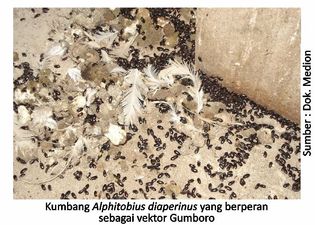
Even according to Tabbu (2000), worms, flies, mosquitoes and mice can play a role as Gumboro vectors. The vector is generally accustomed to perch on feces and a moment later move to the ration or drinking water. So it can then spread the Gumboro virus.
Gumboro Virus is more stable and durable
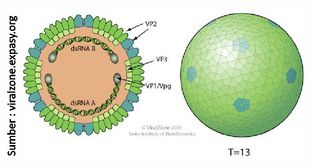
Gumboro Virus is not amplified, making it more stable and long-lasting in the environment. The Virus can survive more than 3 months in the environment. Gumboro attacks in chickens under 3 weeks of age are usually subclinical (with no signs or no clinical symptoms) and have immunosuppressive effects so great that they can derail the vaccination program. However, at that age, gumboro attacks can also be clinical with visible symptoms.
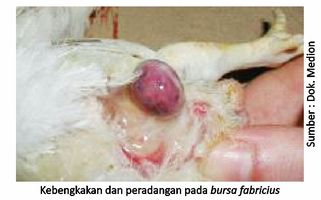
Immunosuppressive is the most feared characteristic of Gumboro infection, in addition to causing mortality and morbidity, it also causes a decrease in ration efficiency and growth disorders. This is because the virus attacks the immune system of chickens, especially organs bursa Fabricius which is located at the top of the anal hole (cloaca) chicken. Under normal conditions, bursa Fabricius regresses in early genital adulthood. Bursa Fabricius it can be found up to 6 months, however at a younger age (4-5 months) this organ may not be found because the process of disappearance of this organ is also influenced by reproductive hormones.
Bursa Fabricius it is the most common form of B-cell carcinoma (immature). These cells will undergo maturation in bursa Fabricius. In addition to bursa Fabricius B lymphocytes are also found in thymus and spleen in much less quantity. B Lymphocytes mature when met with antigens (seeds of disease or vaccine) will be activated and form antibodies as an immune response. Gumboro Virus attacks immature B lymphocyte cells, causing a decrease in the number of mature B lymphocytes. This condition affects the decrease in the number of antibodies formed (immunosuppressive).
Control the environment and control Gumboro
The purpose of the prevention program is to reduce the challenge of Gumboro virus field in terms of the number and variety of viruses in farm. Given that the gumboro virus is very resistant, it is very difficult to eliminate 100% of the virus through a mere disinfection process. The best way to prevent Gumboro is a combination of optimal management and vaccination. Therefore, some measures that can be applied so that Gumboro does not target again in farm we are among others:
Optimal cage blank process
The virus that causes Gumboro has very stable properties in the environment. Therefore, the process of emptying the cage should be carried out optimally. Starting with removing the feed and drink to be washed and the husk (postal cage) then the cage is washed using detergent so that all Gumboro viruses are gone. Pay attention to the sidelines of the cage, if this section is missed and still contains feces contaminated with Gumboro virus, it will be a medium for transmission in the next period.
When finished, the cage is rinsed with clean water and if necessary the floor and walls of the cage are limed. The feed and drinking place is put back and then sprayed with disinfectant.
The structure of the Gumboro virus is very characteristic because it does not have an envelope, so in the selection of disinfectants must be appropriate. The Virus is highly sensitive to disinfectants containing formalin (Formades and Sporades) and iodine (Neo Antisep and Antisep). Place the feed and drink washed thoroughly and then disinfected with Neo Antisep or Sporades. While the empty cage can use Formades after the cage is washed. The recommended cage empty time is 14 days from the moment the cage is clean.
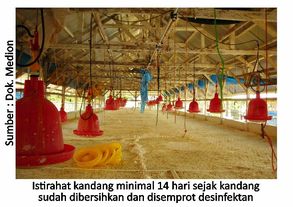
During the empty cage process, do not forget to pay attention to the environment around the cage, bushes and grass should be cleaned so as not to become a place to live for Gumboro disease vectors. If you see fleas in the cage Franky at certain locations, can be sprayed Delatrin which is a liquid insecticide to kill black beetles, ticks Franky, and other ectoparasites (ticks, mites, ticks) that attack the body of livestock.
Apply biosecurity
One of the measures to prevent the entry and spread of Gumboro disease into chicken farms can be done by applying biosecurity the right one. Some farms have used a 3-zone system, namely red for dirty areas, yellow zones for transitions and green zones for clean areas.
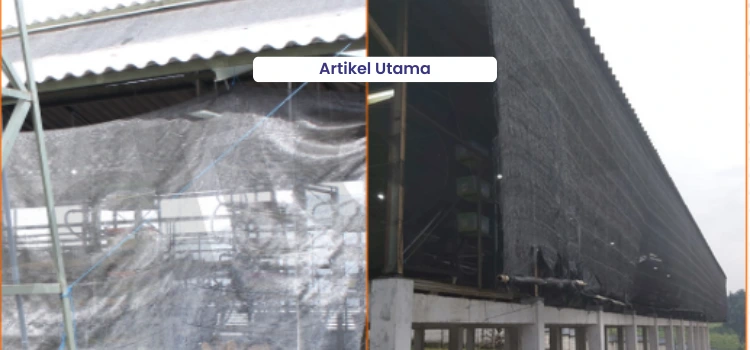
Biosecurity has an important role as the main protective fence before a disease enters the farm. We know 3 basic concepts in biosecurity. The first concept is biosecurity conceptual includes the selection of appropriate farm locations such as away from settlements and do not mix with other types of livestock. Next is biosecurity structural includes the appropriate form of cage building such as a good Cage direction that is longitudinal from West to East. The last concept is biosecurity operational includes routine activities carried out in livestock rearing management such as routine cage spray, management litter, disinfection of transportation before entering the cage area, and disinfection of operators or visitors who will enter the cage. These things can be done to prevent the entry and development of Gumboro virus into the farm.
About Gumboro Vaccination
In addition to good management of cage preparation, proper vaccination is the next important point that determines the success of controlling Gumboro cases. Some things to consider when vaccinating Gumboro include:
- The exact schedule of the Gumboro vaccination Program is generally applied once to broilers and twice to laying hens using the active vaccine. Determination of the age of the first Gumboro vaccination can be done by several methods, namely the first by using the formula Deventer to calculate maternal antibodies in chickens aged 0-4 days. The next way is to adjust the history of Gumboro disease in the previous period. For example, in the past maintenance occurs outbreak Gumboro in chickens at the age of 21 days, then vaccination is carried out at the age of 7 days. Generally, Gumboro vaccination in broilers is at the age of 7 days. While in laying hens at the age of 7 or 14 days and repeated at the age of 28 days.
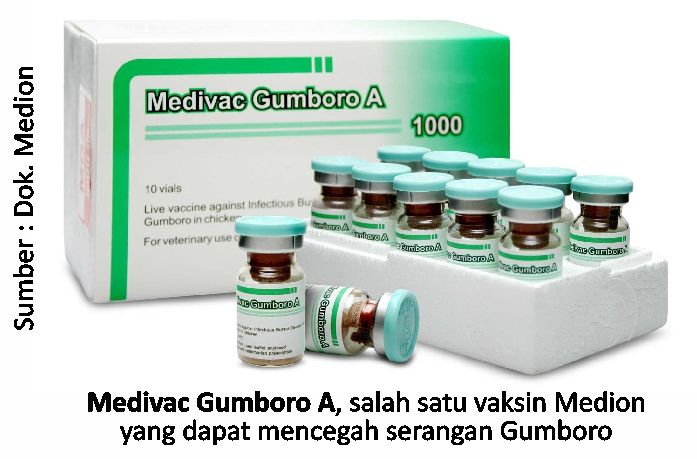
- Proper vaccine selection Gumboro vaccine should be tailored to the case that occurs in the field. Use Medivac Gumboro A jika kasus Gumboro muncul pada ayam umur <21 hari atau >21 hari dengan tingkat kematian tinggi (>5%). Sedangkan jika kasus Gumboro muncul pada ayam umur >21 hari dengan tingkat kematian rendah (<5%), gunakan Medivac Gumboro B. Give also Imustim 3 days before and after vaccination to help the formation of antibodies is more optimal.
- Proper application to get optimal results, make sure the Gumboro vaccination is given by oral method, namely through cekok/mouth drops or drinking water. Application through the method of cekok or mouth drops can be given at the age of 10 days, while if through drinking water can be given at the age of > 10 days. Why vaccination application by mouth drops or drinking water? The reason is because the vaccine virus must go to the duodenum, jejunum, and cecum to replicate first, before finally getting into the blood circulation and heading to bursa Fabricius to bully the formation of Gumboro antibodies. Before giving drinking water containing the vaccine, chickens should first drink fasting for 2-3 hours, depending on the weather. If the conditions of the cage environment is very hot, fasting drink enough for 1 hour. In order for the results of vaccination through drinking water to be optimal, vaccination should be carried out in the morning, because it is the peak time for chickens to move and consume drinking water and environmental weather conditions are still relatively comfortable.
Hopefully the information that has been submitted becomes a strategy that can be applied in preventing Gumboro early. Greetings success.