Bapak Agus Maulana
North Klaten-Central Java
I am a chicken farmer broiler. I would like to ask about what factors affect the development gizzard? How much does feed particle size affect chicken performance and digestibility especially for chickens broiler? For the answer I thank you.
Answer:
Gizzard it is the digestive organ of chickens that easily responds to changes in the size of feed particles. Gizzard serves as a mechanical digestive organ in the chicken's body, which reduces the size of the feed before it enters the small intestine. The size of the feed in the small intestine ranges from 50-200 ° m. The higher the feed size in gizzard, then it will take longer to reach the size of the feed that can enter the small intestine. pH Gizzard ranges from 2.5-3.5. Broiler Management those who consume feed with a hard structure or in the form of granules, will lower the pH gizzard so that its pH will remain acidic than feed in the form of flour or mash.
Factors affecting development gizzard chicken among them feed intake or the amount of chicken consumption and satisfaction that is usually done when feed intake it does not enter the standard so that this satisfaction will spur chickens to consume large amounts of feed. In addition, the fiber content in the feed is a factor that is quite influential on the development gizzard. That's because the function of coarse fiber is to increase the digestibility of feed by stimulating the digestive tract to develop optimally, including gizzard. Developments gizzard first stimulated by feeding when chick in and time brooding. Safter that, it Development WA influenced by the U E of whole wheat or whole grain and particle size of feed consumed. Weight gizzard will be positively correlated with the size of feed particles in the form crumble or details. When DOC, feed with medium shape and coarse corn particles can increase the weight gizzard 26-41%. Weight gizzard it indicates gizzard which is growing.
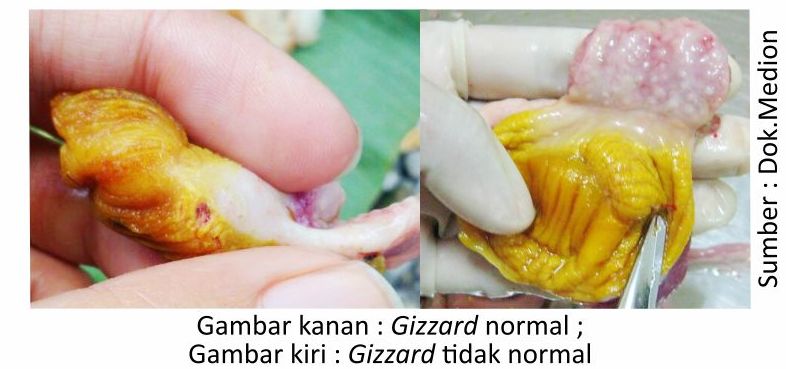
Feed particle size is one of the non-nutritional factors that affect the physical quality of feed and the growth performance of chickens. Too small feed particle size can have a negative impact on development gizzard, microbial profiles of the digestive tract and nutrient utilization. The increase in feed particle size is indirectly related to the improvement of health status, because it stimulates the development of the gastrointestinal tract, inhibits the growth of pathogenic bacteria in the digestive tract, increases the digestibility of nutrients and feed residence time.
The effect of feed particle size on gut microbes can be explained by 2 mechanisms:
- Development gizzard increased secretion of HCl
Developments gizzard considered as the main gate in preventing pathogenic bacteria from entering the lower digestive tract such as the intestine. Gizzard the one that has developed perfectly will maximize the feed retention time. It is related to the secretion of digestive enzymes so that the level of digestibility will be more optimal. Increased secretion of HCl will kill pathogenic microbes that can not survive in an acidic environment.
- Competition of beneficial and pathogenic bacteria in the gut to maintain the balance of microbial populations
The height of the intestinal villi of the duodenum is directly proportional to the increased particle size of the feed consumed. Shaped particle size crumble or pellet it will increase the population Lactobacillus spp. Increasing population Lactobacillus spp. it usually becomes an advantage for the host (Chicken) because they can prevent the colonization of pathogenic bacteria such as E. Coli infection and Salmonella spp. The presence of beneficial bacteria in the intestine can help the absorption of feed nutrients and reduce the population of pathogenic bacteria. In addition, the intestinal atmosphere is required to be necessarily acidic. If the pH in the intestine increases, then the population of pathogenic bacteria will also increase.
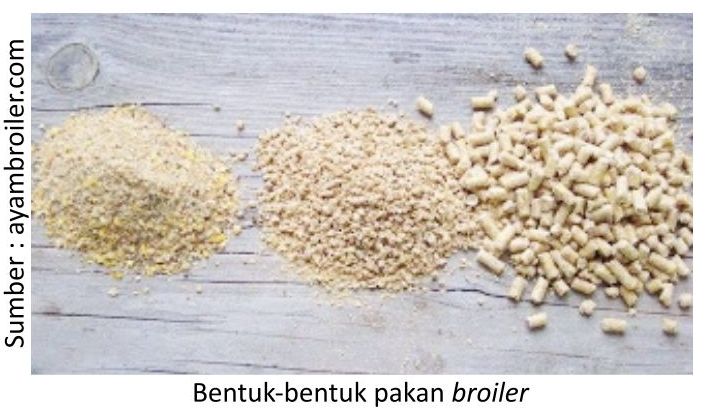
Gizzard those that do not develop other than due to lack of stimulation and the factors described above, can also be caused by the presence of infections from mycotoxins or fungal toxins in the feed. When chickens are exposed to mycotoxins, typical anatomical pathological changes are in gizzard. Presence of scabs or deep wounds gizzard will affect the development gizzard so it can not digest and reduce the size of the feed that will enter the small intestine. As a result, if the particle size is less small or even still in the form of Granules, the intestine will have difficulty digesting and absorbing nutrients so that the performance of the chicken will be disrupted.
To solve this problem, compounds can be added feed additive which can bind fungal toxins in the body of chickens for example Freetox. Freetox is a product that contains Hidrated Sodium Calcium Aluminosilicate (HSCAS) which functions in binding fungal toxins or mycotoxins, especially aflatoxins in the body of chickens. For preventive doses, the use of 1-2 kg/ton ration, while for treatment doses of 3-5 kg / ton ration.