Diarrhea in livestock is a condition in which animals excrete feces that are more watery than normal and with increased frequency. Diarrhea itself is not a disease, but rather a symptom of an underlying illness or digestive disorder.
Diarrhea, or scouring, frequently occurs in ruminant livestock. This condition causes excessive loss of body fluids, leading to dehydration in the animals. Before treatment can be carried out, it is important to identify the underlying cause of the diarrhea. The condition can be triggered by both infectious and non-infectious factors.
Infectious Causes:
- Bacteria: E. coli, Salmonella spp., Clostridium perfringens
- Virus : Rotavirus and Bovine viral diarrhea
- Parasites: Eimeria sp., Cryptosporidium sp., worms
Infectious diarrhea is a condition that requires special attention, especially in calves. Identifying the source and cause of the diarrhea is essential to determine key steps in developing an effective diarrhea prevention program.
Non-Infectious Causes:
- Acidosis (low rumen pH caused by excessive concentrate feeding)
- Sudden feed changes in the feeding program. This can occur when calves that previously consumed only milk as their sole source of nutrition grow older and begin consuming roughage or forage.
- Feeding grass that is too young or covered with dew.
- Toxin
- Improper administration of artificial milk (CMR – Calf Milk Replacement), such as incorrect dosage, milk that is too cold, or spoiled milk.
Although often not life-threatening, non-infectious diarrhea (especially in young cattle or calves) can rapidly weaken the animal’s physical condition, making it more susceptible to infectious diarrhea or other, more severe diseases.
The occurrence of diarrhea cases can be triggered by several factors, such as:
- Poor colostrum feeding (inadequate quantity or quality)
- Poor hygiene in the housing area (during rearing or calving)
- Improper feed management (in terms of quality or quantity)
- Poor drinking water hygiene
- Stress
Clinical symptoms observed in livestock suffering from diarrhea include:
- Increased defecation frequency
- Changes in fecal consistency and color, possibly accompanied by blood
- Dehydration, weakness, and frequent lying down
- Decreased appetite
- Death
- In calves up to three months of age, diarrhea can occur acutely, characterized by signs such as lethargy, refusal to nurse, elevated body temperature, and the passage of watery feces that are yellowish-white in color and have a foul odor.
Treatment and Prevention of Diarrhea
Diarrhea in livestock can have serious consequences if treatment is delayed. Immediate actions that should be taken include:
- Separate the sick animals from the healthy ones. Clean and disinfect the housing environment. Isolation is crucial to prevent the spread of diarrhea to other animals, especially calves.
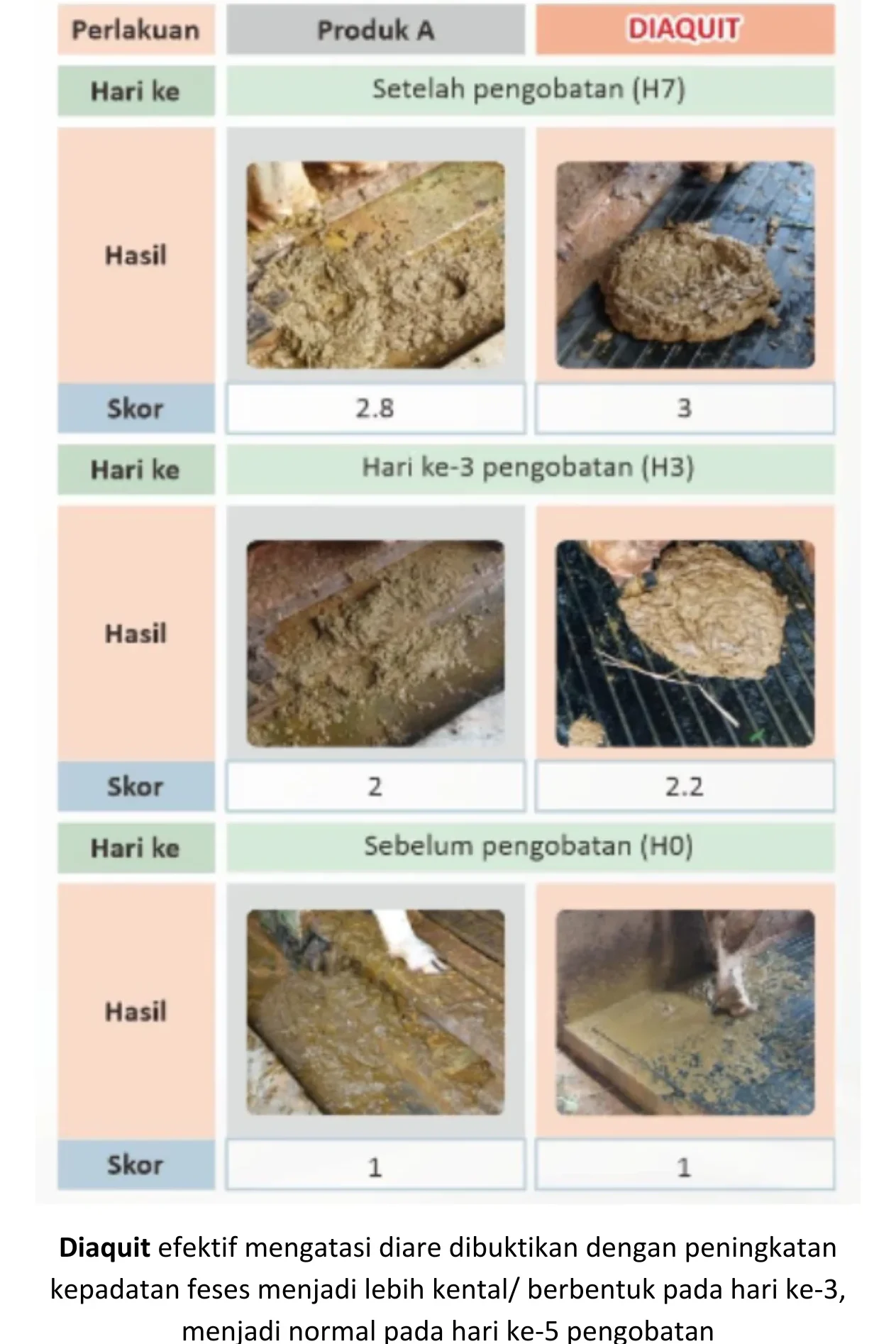
- As first aid, administer an anti-diarrheal medication such as Diaquit to help relieve symptoms. Diaquit contains a combination of prebiotics, minerals, and anti-diarrheal agents. The prebiotics in Diaquit help reduce diarrhea by modifying the gastrointestinal ecosystem and inhibiting the colonization of harmful bacteria in the intestines. Minerals function to maintain and regulate the body’s fluid balance, while the anti-diarrheal components work by binding toxic substances that cause diarrhea.
- Electrolytes can also be added to help restore body fluids by administering Transolit.
- A thorough examination should be conducted to determine the diagnostic direction. It is essential to consult with a veterinary health professional for accurate diagnosis and appropriate treatment.
- Treatment should be carried out based on the underlying cause of the disease by veterinary professionals. For example, antibiotics can be administered to treat bacterial infections using Medoxy LA, G-Mox 15% LA Inj, or Trimezyn Bolus. Anti-protozoal medication such as Toltradex can be used to control Eimeria sp., while dewormers like Wormzol Suspension or Wormzol Bolus are given to treat worm infestations.If the diarrhea is caused by non-infectious factors, Digesfit and management improvements can be applied. Additionally, supportive therapy can be provided by administering multivitamins such as Injekvit B-Plex and ADE-Plex Inj.
- Provide high-quality feed in quantities that meet the nutritional needs of the livestock.
- Regularly clean and disinfect the livestock housing.
Farmers must take preventive measures to protect their livestock from diarrhea in order to optimize productivity and avoid potential economic losses. The necessary prevention efforts include:
- Quarantine and conduct health examinations for newly arrived livestock.
- Provide colostrum to calves immediately after birth. Also, ensure proper sanitation in the calf-rearing area, as diarrhea in calves most often occurs due to contamination of feed or drinking water with infected feces.
- Implement a health program by administering deworming treatments such as Wormzol Suspension or Wormzol Bolus every 3–4 months.
- Maintain cleanliness and regularly disinfect the barn using Medisep or Zaldes. Regularly clean feeding and drinking equipment, and ensure good air circulation in the housing area.
- Terapkan personal hygiene yang baik untuk semua petugas kandang.
- Provide nutritious and high-quality feed that meets the livestock’s needs, supplemented with Mix Plus Cattle Pro premix. When changing feed, make the transition gradually—in both type and volume.
- Enhance the immunity of calves by vaccinating the mother or the newborn calves.
Diarrhea is a symptom that can be caused by various factors. Prompt treatment is necessary to prevent further losses. Administering the anti-diarrheal medication Diaquit can serve as an initial first aid measure. Further examination is needed to determine the underlying cause and appropriate treatment.