What are the symptoms of watery and itchy eyes in laying hens?
Questions from Mr. Nurakhmad
Email : nurakhmad125@gmail.com
I have a laying hen (layer) 2 weeks of age showing symptoms of watery and itchy eyes, what is this caused by and how is it treated?
Answer
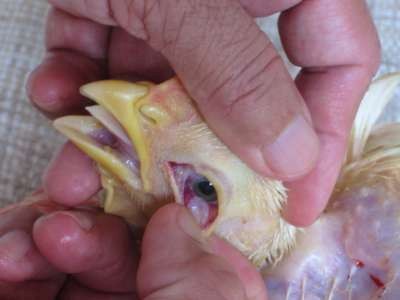
Dear. Joseph, thank you for the question. The cause of watery and itchy eye symptoms can be caused by infectious and non-infectious agents. There are several infectious agents, especially respiratory diseases, that can cause symptoms such as watery and itchy eyes, including :
1. Bacterial infection Avibacterium paragalinarum
Infection from bacteria Avibacterium paragalinarum causes of coryza disease. This disease mainly attacks the upper respiratory tract, namely the sinus infraorbitalis so that it will appear swelling in the face area (under the eyes) due to the watery yellow exudate then turns into a thick purulent, and has a characteristic odor (foul/fishy smell)
2. Bacterial infection Mycoplasma gallisepticum
Infection from bacteria Mycoplasma gallisepticum causes chronic respiratory disease (CRD) which is chronic because it lasts continuously for a long period of time and is immunosuppressive or suppresses the immune system of chickens. Chicken CRD disease looks out of the nose mucus, snoring symptoms appear and when the carcass surgery will occur changes in the form of turbid air sacs or so-called airsacculitis.
3. Infection Herpesvirus
Infection Herpesvirus causes of the disease infectious laryngotracheitis (ILT) which shows the presence of watery eyes and foaming and the presence of viscous discharge mixed with blood from the nose or mouth, and when the carcass surgery will be found material such as cheese on the surface of the trachea and larynx.
In addition to being caused by disease agents such as bacteria and viruses, the appearance of watery and itchy eye symptoms can also be caused by non-infectious factors, such as the high impact of ammonia. Ammonia is high in the cage will irritate the area around the eyes so that it can cause watery eyes and conjunctiva redness (conjunctivitis), as well as irritate the entire upper respiratory tract, causing other diseases easily infect.
From some of the possible causes above, it is necessary to have more complete additional information either from Anamnesis or data collection related to the history or life history of chickens, the incidence rate in the farm area and other clinical symptoms that arise. Can also be supported by surgical examination of the carcass.
Handling strategies that can be done when attacked by bacterial cases are:
4. Administration of antibiotics
Administration of antibiotics that can be used for infections korisa and CRD for example Neo Meditril can be given through drinking water at a dose of 0.1 ml per kg / BB or 0.5 ml per liter of drinking water. If the infection occurs with high severity, the chicken should be separated and placed in the farthest cage or a separate cage.
When severe conditions of appetite and drinking chickens decreased dramatically, then under these conditions the administration of drugs is recommended by injection or injection. The drugs to choose from are Vet Strep dose of 0.5 ml per kg / BB intramuscularly (penetrating meat / muscle). In cases caused by viruses such as ILT, broad-spectrum antibiotics can be given to prevent secondary infection by bacteria.
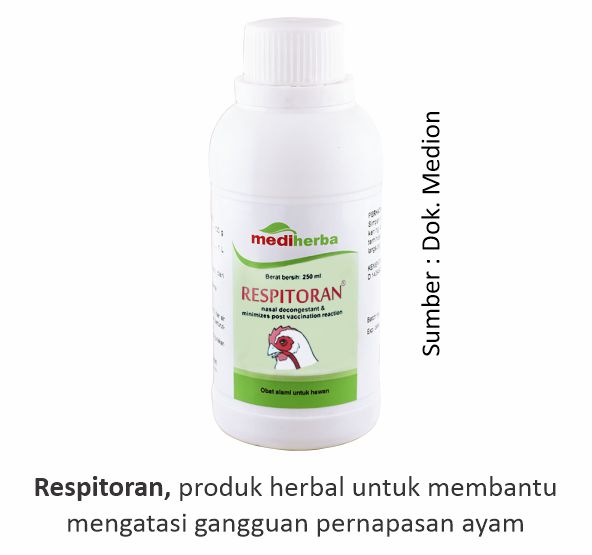
- Multivitamins such as Fortevit with a dose of 0.13 grams per kg / BB and supplementation of herbal products such as Imustim with a dose of 1 ml per 2 liters of drinking water to overcome stress and increase endurance chicken. In addition, to help cope with respiratory distress during bacterial infections (CRD and Coryza) and viral (ILT) can also be given herbal products Respitoran.
- Administration of Ammotrol to control ammonia in a cage at a dose of 0.5 - 1 g per 2 liters of drinking water
- Spraying the cage and the environment around the cage with Neo Antisep, Medisep, or Zaldes
- Regulate air circulation by paying attention to curtain opening and closing management, cage density, and manure handling management so that chicken manure is not damp and ammonia formation is inhibited.