Disease of Newcastle Disease (ND) or often known as tetelo is one that makes a considerable loss on the farm. The disease regularly approaches the barn almost in every season. The losses caused by this infection are quite large, judging by the mortality due to ND reaching 100% for velogenic nd attacks.
The quality and quantity of egg production decreased with variations between 9-60%. This also leads to high levels culling chickens in cages. In addition, ND includes immunosuppressant diseases so that other diseases will easily enter.
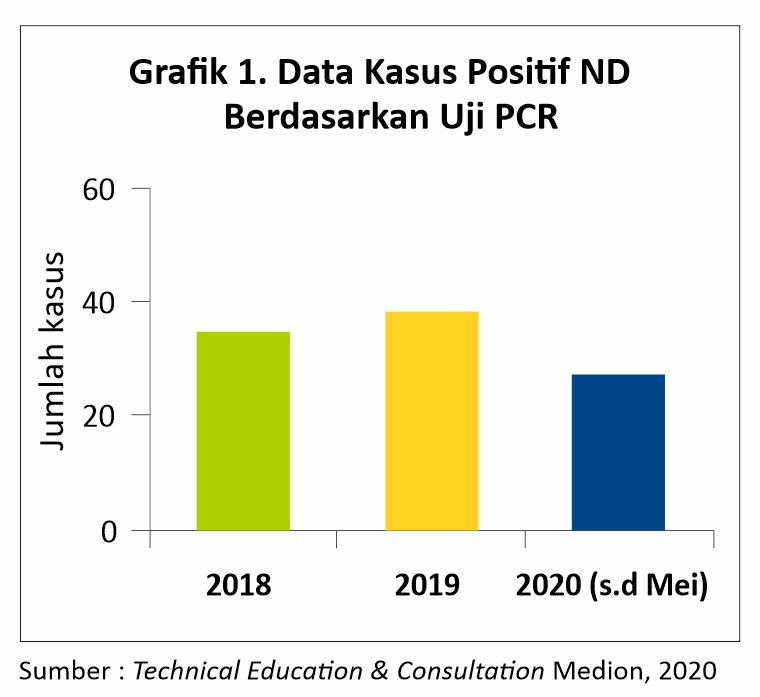
The incidence of ND disease is still quite high until the middle of 2020. Based on data collected by the team Technical Education and Consultation Medion, proved the incidence of ND is still quite high over the past 2.5 years. In 2019, there was an increase in cases of 19.74% compared to 2018, while in 2020 the incidence rate was quite high even though it was only until May.
Causes of ND
Disease of Newcastle Disease virus caused by viruses Avian paramyxovirus-1 (APMV - 1) belongs to the genus Avulavirus in the family Paramyxoviridae. Nd viruses have genomes single stranded (ss) RNA with amplified structure.
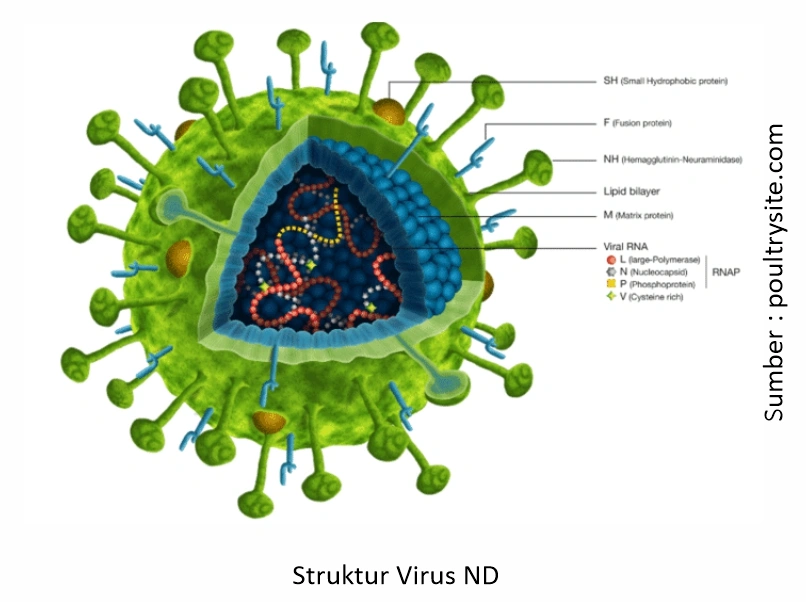
The classification of ND viruses is based on 3 things, the first is based on the serotype. This classification is based on antigenic similarity in the hemagglutination inhibition (HI) test, known as 9 serotypes Avian paramyxovirus, type 1 (APMV-1) to type 9 (APMV-9).
The ND Virus that commonly affects poultry is included in APMV-1. The second classification is based on its pathotype. This classification is done by looking at the virulence / malignancy of the disease, divided into 4 namely :
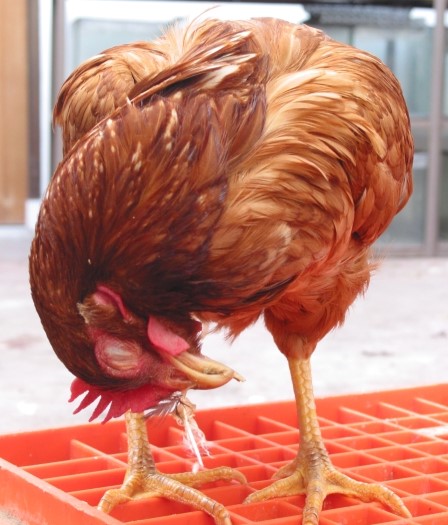
- Velogenic (malignant) this group has the highest malignancy and is divided into two forms, the first of which is Viscerotropic velogenic. Attacks of ND of this group are acute with high mortality. Typical changes that are often found in chickens infected with this virus are wounds and hemorrhages in the intestine. Chickens will show symptoms of lethargy, decreased appetite, egg production drastically, diarrhea and death rate >90%. The second form is Neurotropic velogenic which is characterized by the appearance of respiratory disorders and neglect of the nerves commonly called torticollis or three. Affected chickens become weak due to difficulty eating and drinking.
- Mesogenic (medium) the death rate is relatively low (±10%), seen acute respiratory distress and nerve disorders in some chickens. Strain Kumarov, Roakin dan Mukteswar are several strains of the ND virus included in the pathotype mesogenyc. A decrease in egg production due to infection with this virus can last for 1-3 weeks.
- Lentogenic (mild) this group causes respiratory disorders that are mild, do not show nerve symptoms and sometimes are subclinical (do not show specific symptoms). The decline in production was insignificant and deaths were almost non-existent. Strains belonging to this group include B1, F, V4 and La Sota. It is the ND strains of this group that are often used as an active vaccine.
- Asymptomatic enteritic Includes less lethal viruses with sites replicating mainly in the digestive tract (intestines). This group does not cause a specific disease symptoms.
The third nd classification is based on its enotype. This classification by genotype appeared due to the latest technological developments. Classification is carried out based on the core material of the virus through DNA sequencing. In this classification, nd viruses are divided into 10 genotypes.
The genotypes that are predominant in circulation in the world and are virulent are : V, VI, VII and VIII.Genotype in ASIA is VI (1960 s / d 1985) then later found genotype VII.
Nd disease Update in Indonesia
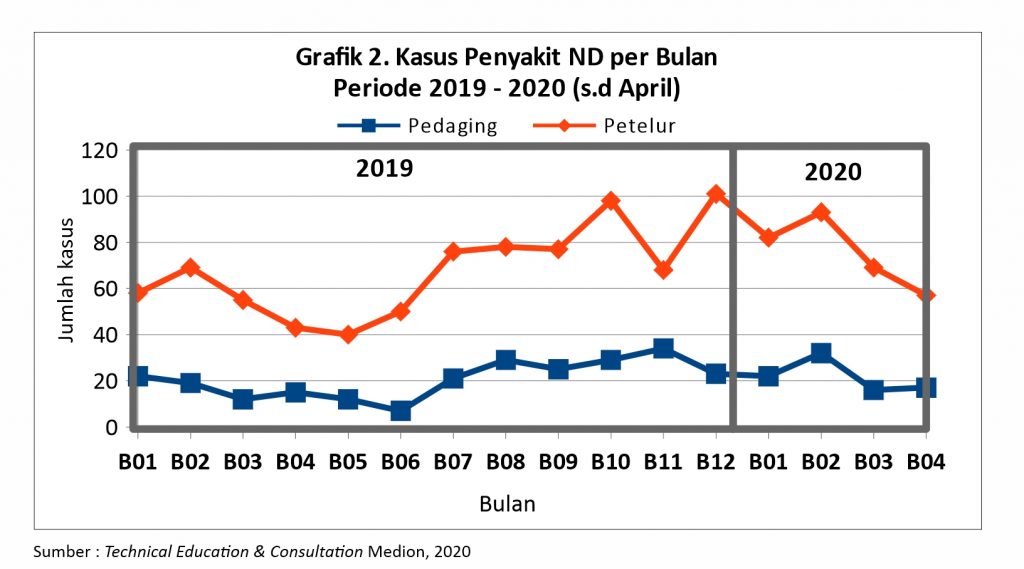
Based on data collected by the team Technical Education and Consultation PT. Medion nd cases from 2019 to 2020 both in chickens broiler or layer still being discovered. Also seen at the end of 2019 to 2020 during the rainy season and the change of season, ND cases increased. This is a question because the current ND vaccination program on farms has been classified as tight, and when serological tests are carried out, the test results show a protective titer, but ND cases continue to appear.
Medion mapping/nd virus mapping by collecting samples from chickens suspected of being infected with ND from the field. Organ samples are then tested by the method Polymerase Chain Reaction (PCR) followed by DNA testing sequencing. DNA process sequencing performed to see the genetic makeup of the ND virus.
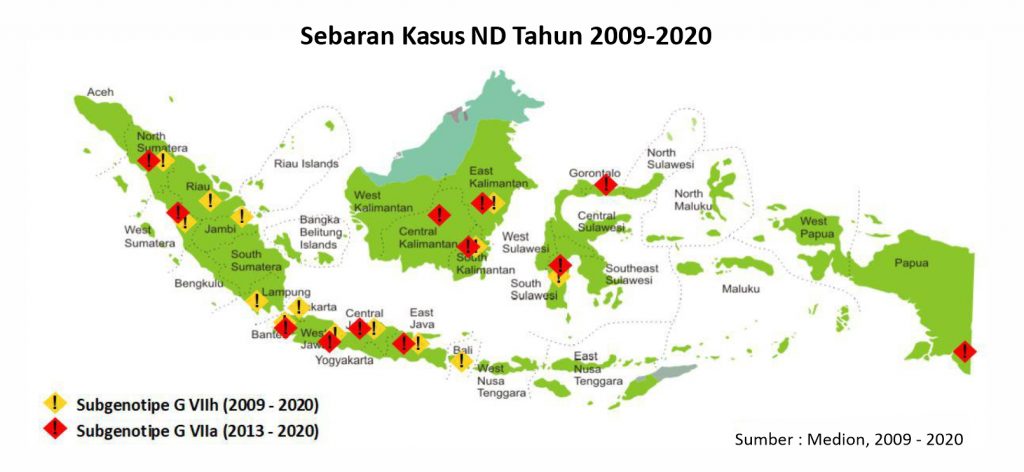
The results of the mapping found that the dominant nd virus circulating in Indonesia today is genotype 7 nd virus (velogenic) where the virus is far separated from the old nd virus genotype 2 (La Sota). There are 2 subgenotypes of G7 circulating in Indonesia, namely G7h and G7a/G7i (Shohaimi et al, 2015 & Dimitrov et al, 2016) with a distribution of such cases attached to the map below.Based on the map, almost in all regions of Indonesia found cases of ND both genotype 7h and genotype 7a.
Nd diagnostics in the field
Naturally, the ND virus will infect chickens by inhalation (inhaled/through the respiratory tract) and ingestion (inedible/through the digestive tract). During the infection process, sick chickens will secrete nd viruses in large quantities, especially in feces.
As a result, transmission of ND can occur orally due to ingestion of faeces containing the virus, through contaminated feed or drinking water or per inhalation due to inhalation of faecal particles that have dried up. In addition to feces, mucus (mucus) from chickens infected with ND will also contaminate the air so that ND transmission can take place more quickly.
After infecting chickens, the ND virus will cause clinical symptoms after 2-15 days (on average 5-6 days). The speed of the incubation period as well as clinical symptoms and pathological changes caused, influenced by the type of ND virus that infects, the dose or concentration of the virus that infects, the type and age of infected chickens, immunity status, complications with other diseases and environmental conditions.
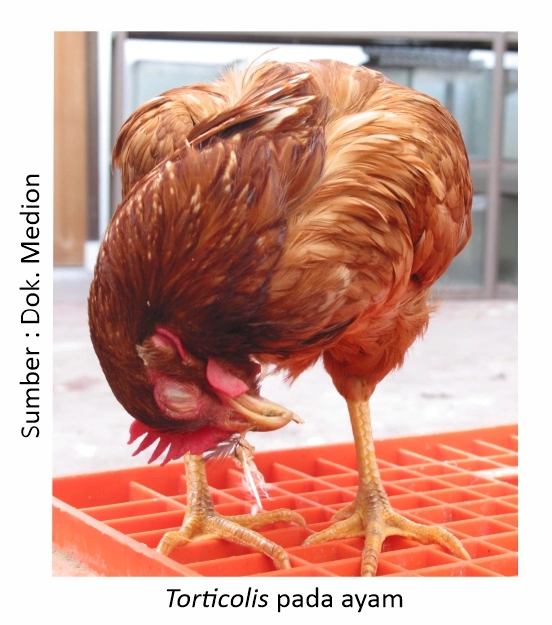
Clinical symptoms that can be seen if the chicken is infected with ND include loss of appetite, feces are moss green and sometimes accompanied by white lumps, chickens become shaky, and appear abnormalities in the nerves (paralysis of the legs and or wings, twisted neck/torticollis and chickens circling). In addition, mortality from ND can reach 100%.
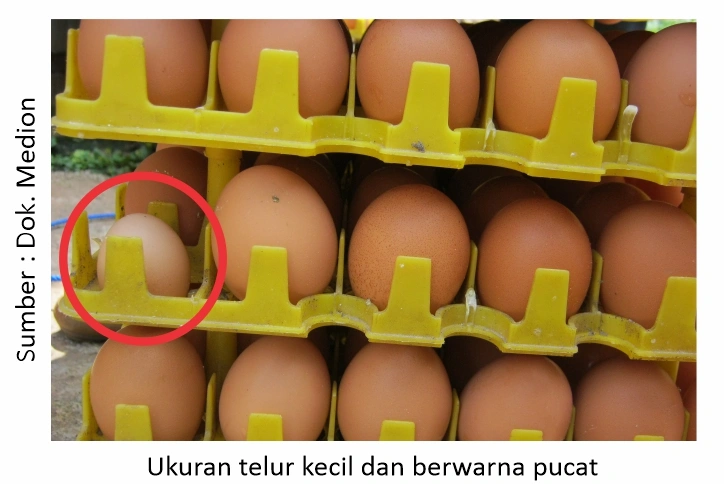
In addition to the clinical symptoms that appear in chickens, in the production phase of laying hens, abnormalities are also found from chicken eggs produced, in quantity, egg production decreases vary from 9 to 60%, while in terms of quality, eggs from ND-infected chickens are usually pale in color with a small egg size.
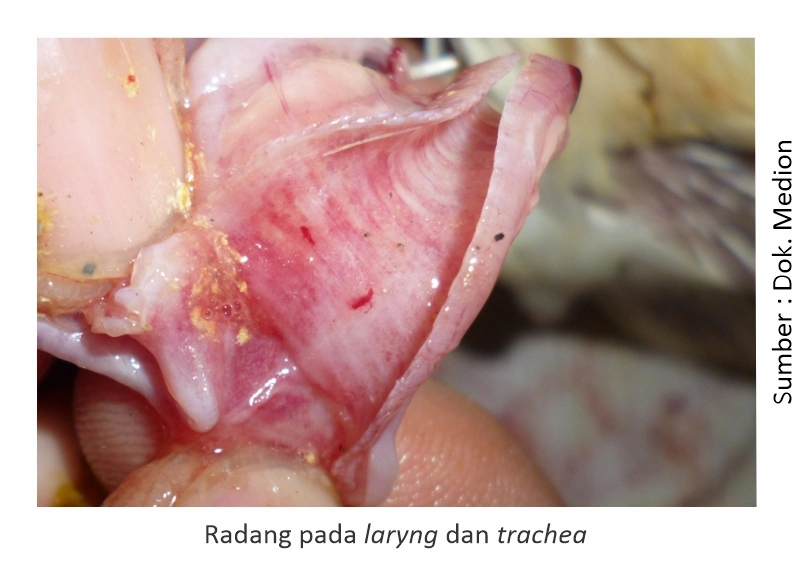
Anatomical pathologies that are seen when surgery is performed on chickens with clinical symptoms leading to ND include the presence of inflammation in the respiratory tract, including laryng and trachea.
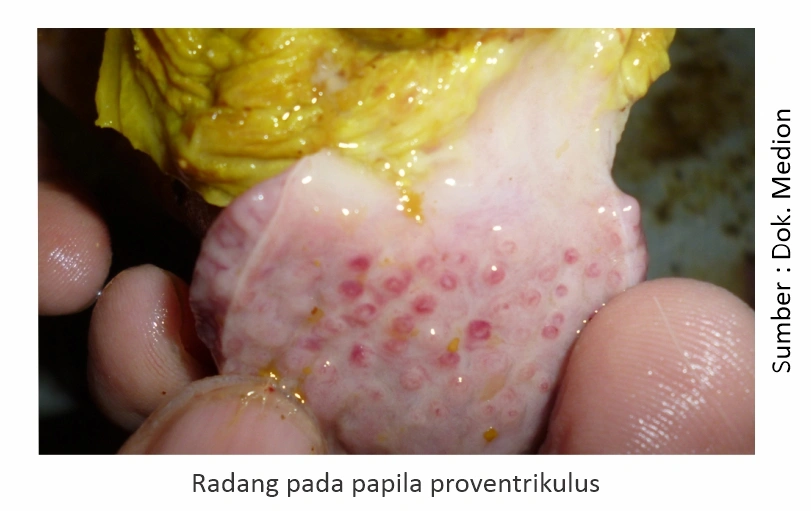
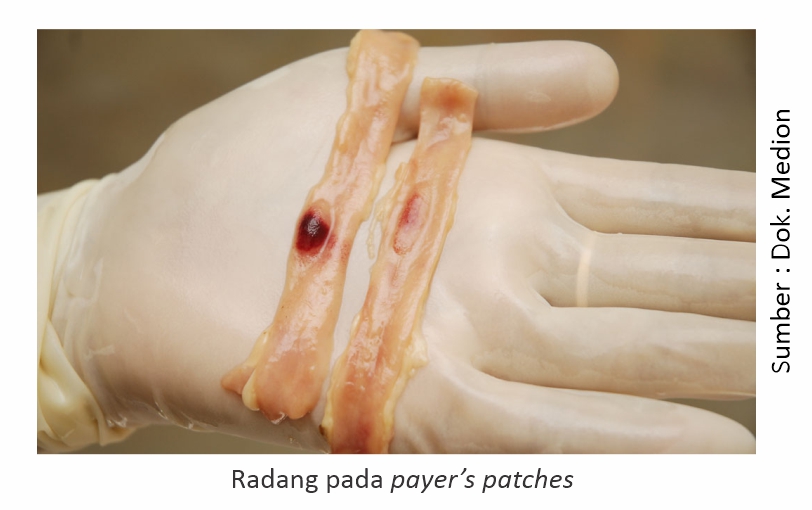
In addition to the respiratory system, a pathognomonic change due to ND infection in the gastrointestinal tract is the presence of inflammation of the papillae of the proventriculus. In the digestive system there are also limphoid organs that also undergo changes due to infection nd namely, inflammation of the tonsils and caeca peyer patches. These two organs are local limphoid organs that will undergo changes when there is an infection in the intestinal region due to both bacteria and viruses such as ND.
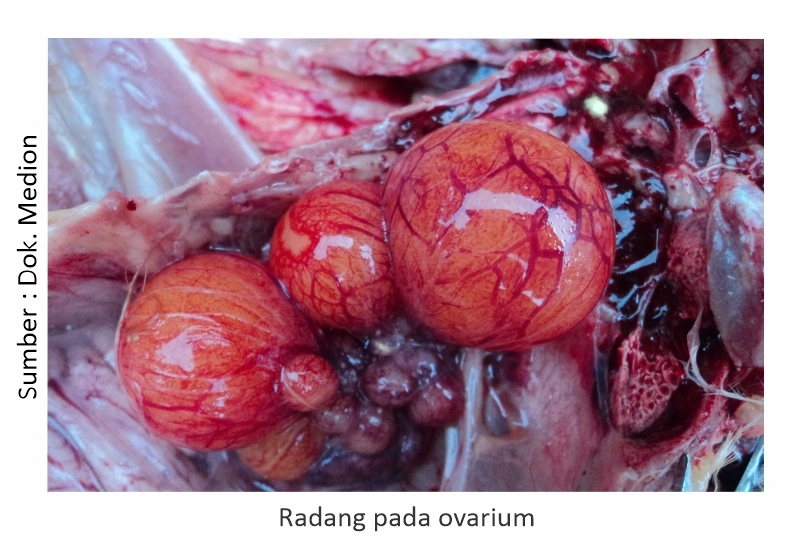
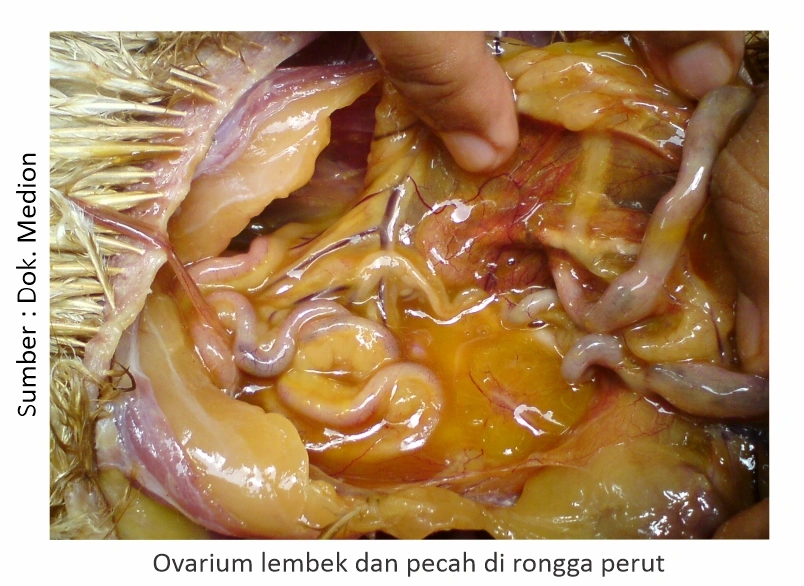
In the reproductive system, inflammation of the ovary area is found and sometimes abnormalities are seen from The Shape of the ovary to become flabby or slurry and even rupture in the peritoneal cavity.
In diagnosing, sometimes we find changes in both clinical symptoms and anatomical pathologies that are almost similar to ND disease (as differential diagnose). Here we show some of these diseases (Table 1.).
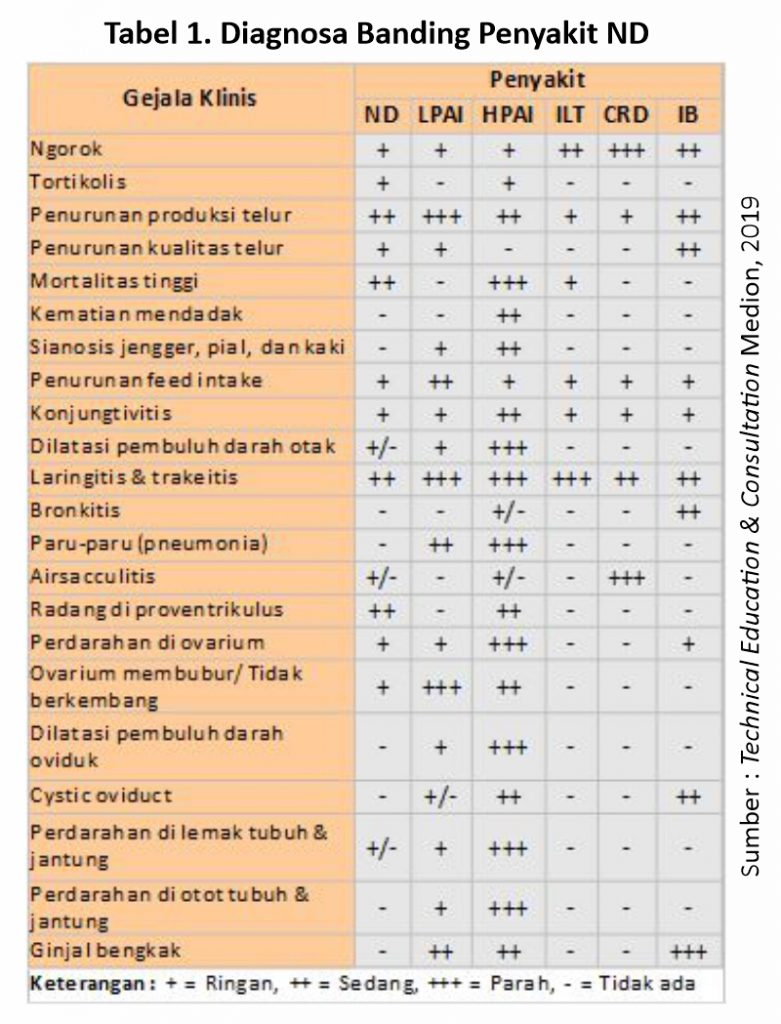
Because there are many types of diseases that are almost similar to ND, in the field of diagnosis is often confused with these diseases. Therefore, it is necessary to confirm the diagnosis using laboratory tests, can be with serological tests, to isolate and identify the causative agent of the disease through the method polymerase chain reaction (PCR) dan DNA sequencing.
ND control efforts
In controlling nd disease requires a combination of several factors such as vaccination, application biosecurity strict and supported by an optimal maintenance management system.
We often forget that the health condition of chickens is also closely related to the environmental conditions in which the chickens live. Comfort factors such as good air quality, management litter, clean drinking water, as well as good quality feed.
Create comfortable conditions for the cage by paying attention to the number of chickens in the cage is not too dense, ventilate the cage enough and as much as possible do the maintenance system “all in all out” as well as the implementation of cage rest for at least 2 weeks.
Tighten biosecurity by limiting the traffic of people / vehicles in and out of the cage. It is possible that the ND virus is carried through the wheels of vehicles that enter and exit the cage. Disinfect both vehicles and personnel, especially if they come from other infected farms.
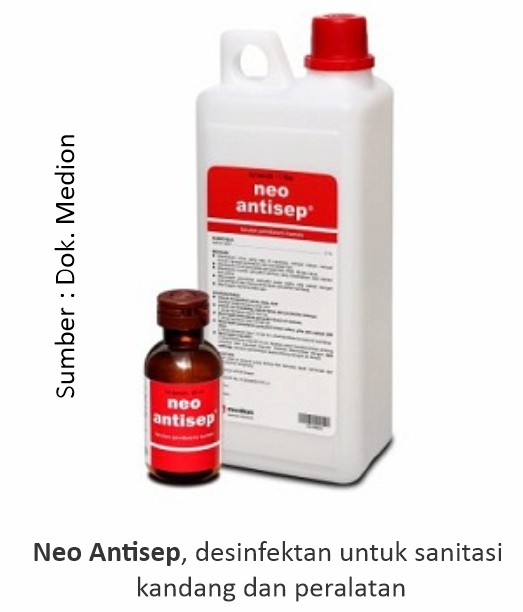
Footwear should be brushed because the infiltration / spraying of disinfectants alone is not able to penetrate the virus found on the sidelines of footwear. To suppress disease transmission through drinking water, sanitize by providing antiseptics such as Desinsep or Neo Antisep.
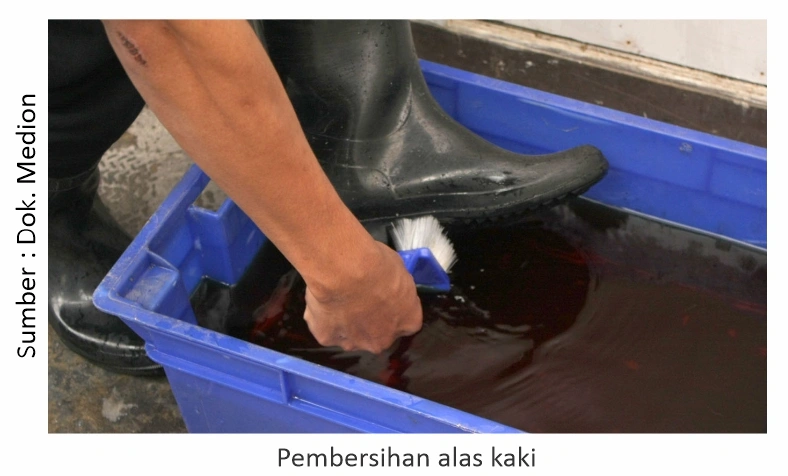
Perform cage and equipment sanitation (cage cleaned, washed and sprayed) with Neo Antisep or Medisep, then prevent wild animals and other pets from entering the cage environment. When it is happening outbreak then disinfection is carried out daily to reduce the number of infectious agents in the environment of the cage. Sanitation of drinking places and feeding places is carried out with regular washing and disinfection (Medisep) every 2 times a day.
Vaccination can prevent the harm caused by this disease. To support the effectiveness of vaccination, it is necessary to pay attention to the following points:
1. Healthy chickens before vaccination
Make sure the chicken is healthy when it will be vaccinated ND so that the antibody titer formed is more optimal.
2. The vaccines used
Use nd vaccine whose quality is still good, the vaccine seal is intact, the shape has not changed, the vaccine has not expired, and the label is still well installed. Apart from the physical aspect, it is also important to consider the use of ND vaccines that are homologous to the field nd virus. Failure of the vaccination result can also be caused by inaccuracy in the selection of the vaccine.
The vaccine that will be given for chickens must be adjusted to the type and violence of the disease that often attacks. Medion produces vaccines to prevent nd diseases that are homologous to the field nd G7 virus, namely vaccines Medivac ND G7 Emulsion, Medivac ND G7-EDS Emulsion, Medivac ND G7-EDS-IB Emulsion, and Medivac ND G7-IB Emulsion.
The use of active vaccines such as Medivac ND La Sota, Medivac ND Hitchner B1, Medivac Clone 45, or Medivac ND-IB it still needs to be given to bully the rapid and protective formation of ND immunity.
3. Proper vaccination program
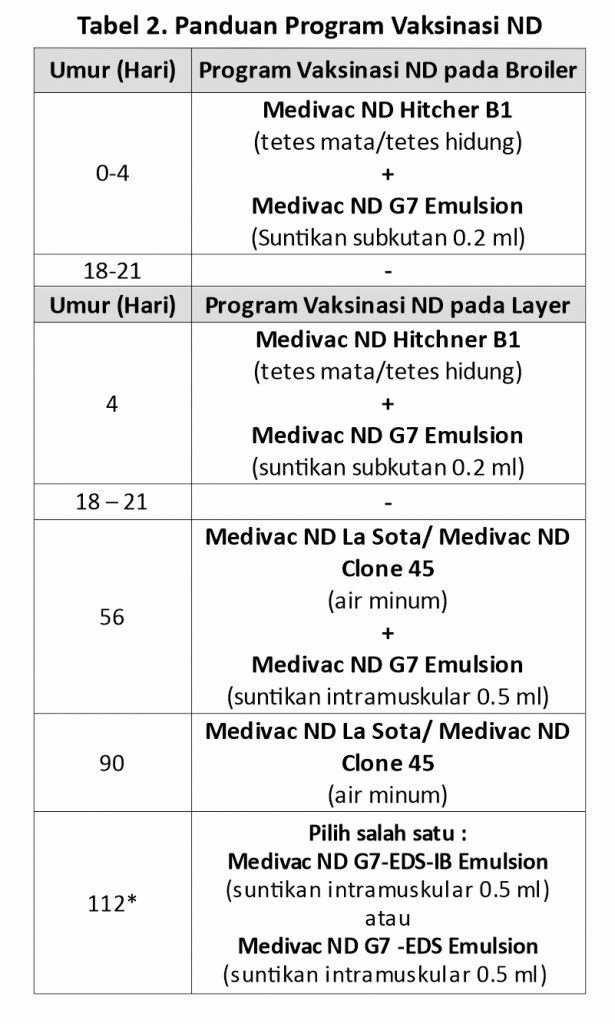
The following is an example of a vaccination program for broilers and layers that can be adapted to local farm conditions (Table 2). Repetition of ND vaccination in the production period if using an active vaccine can be done once every 1-2 months, while if using an inactivated vaccine can be done once every 2-3 months. The exact revaccination schedule can also be based on the results monitor titer of antibodies to ND.
4. Watch how handling/ handling of ND vaccine from purchase to administration to chickens
- When distribution and temporary storage, the temperature of ND vaccine should always be conditioned at 2-8°C.
- Before giving to chickens, process thawing should be noted. Thawing aim to raise the temperature of the vaccine gradually which was previously 2-8°C close to the body temperature of the chicken (α 41°C) or until the vaccine does not feel cold anymore, ie with a temperature of about 25-27°C. Once in-thawing, nd vaccine should not be put in the refrigerator again/marina cooler the temperature is 2-8°C because it can lower the potency of the vaccine.
- Make sure the time period for administering the ND vaccine is right, where the active nd vaccine must be used up for a maximum of 2 hours, while the inactive nd vaccine must be used up within 24 hours. If the ND vaccine does not run out, then the rest cannot be stored for later use again. The rest of the vaccine and the package must first be soaked in disinfectant, and only then removed/buried.
5. Proper application method of vaccination
In order to obtain optimal antibodies, make sure that the first nd vaccination is given via eye/nose drops in order to activate the harderian glands (immune organs) in the eye area. Thus, local immunity is formed in the area of the upper respiratory tract, which is the entrance gate for infection with the ND virus.
In addition, so that each chick gets 1 full dose. While the injected inactivated vaccine is given according to the age of the chicken, for example 0.5 ml for adult chickens through subcutan or intramuscular injections, and 0.2 ml for chicks through subcutaneous injections.
Thus related updates nd virus and the phenomenon of ND disease in the field. We need to consider the control of ND is a combination of several factors including vaccination, biosecurity strict and combined with good maintenance management. Medion will always follow the development of ND cases by always monitoring changes in virus isolates in the field in order to always be able to provide homologous vaccines and in accordance with conditions in the field. Greetings success always.