The formulation of chicken rations is experiencing rapid development. Initially, formulators focused on the fulfillment of energy metabolism and protein. Currently, formulators have focused on the availability of amino acids that are constituent components of proteins. By knowing the needs of essential amino acids are precisely the needs of chicken protein can be minimized (Baker, 2009).
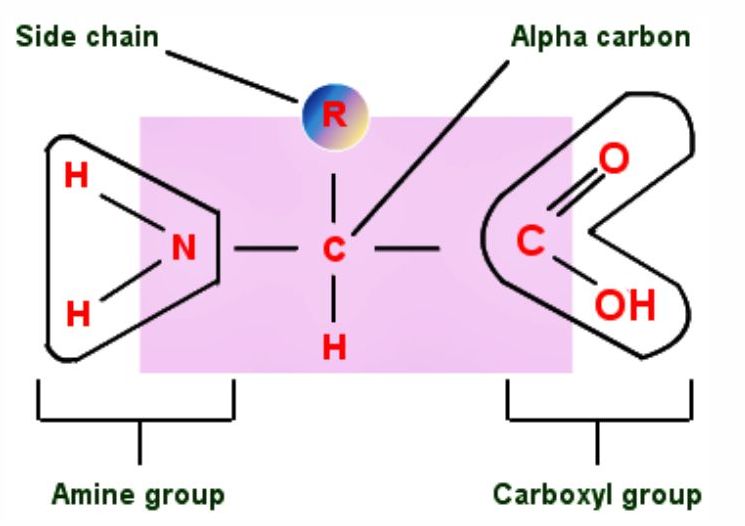
Amino acids are the basic units of a protein structure consisting of an amine group (-NH₂) and a carboxyl group (-COOH). There are more than 100 types of amino acids that have been isolated from biological materials. However, only 25 types are often found in proteins.
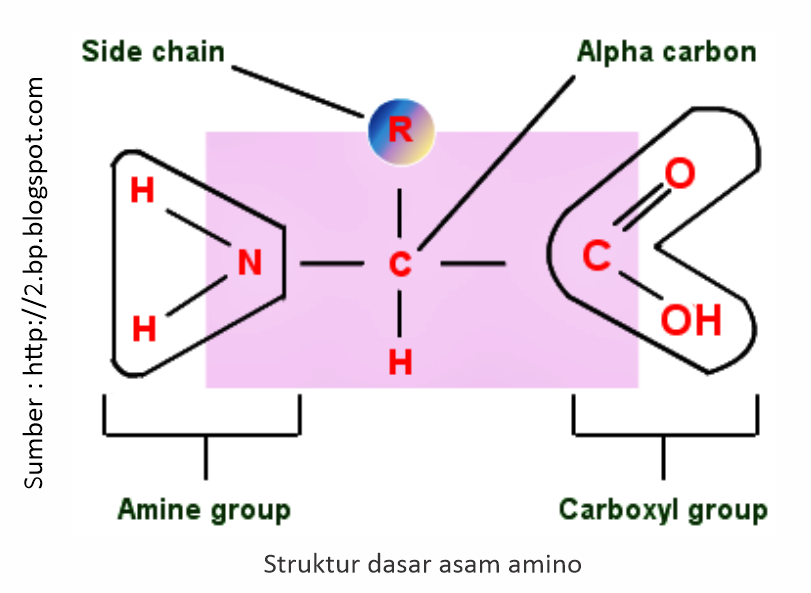
The availability of amino acids in the body of livestock has a very important function, including :
- Monomer units for building protein polypeptide chains
- Occupies an important position in Cell Metabolism. Almost all biochemical reactions are catalyzed by enzymes consisting of amino acid residues. Amino acids are essential for carbohydrate and lipid metabolism, for the synthesis of protein tissues
- Penyusun senyawa penting seperti adrenalin, tirosin, melanin, histamin, porfirin, hemoglobin, pirimidin, purin, asam nukleat, choline, asam folat, asam nikotin, vitamin, taurin, garam empedu.
Classification Of Amino Acids
Nutritional science classifies amino acids into 2 groups, namely essential amino acids (AAE) and non-essential amino acids (AANE).
1. Essential Amino acids (AAE)
Essential amino acids are amino acids that are very important for livestock but the livestock's body cannot produce them so it needs intake from outside the body. Essential amino acids are indispensable for the productivity of chickens. Actually, some essential amino acids such as arginine can be made by the body, but the process is very slow and insufficient for all needs. So it must be supplied from the ration.
The amino acids that belong to this group are:
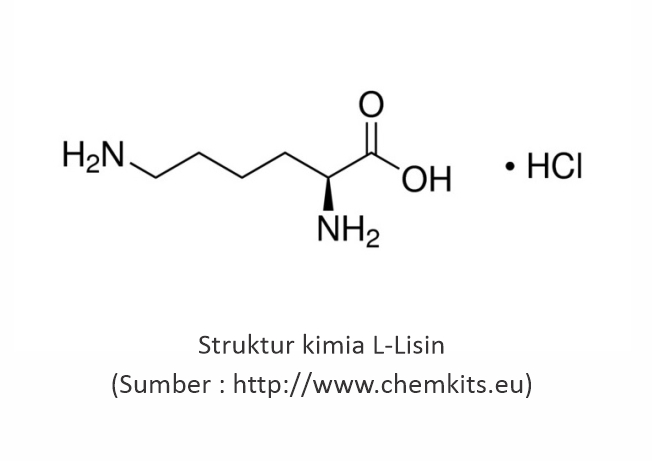
- Lysine, its deficiency can result in impaired growth. The rate of lysine use is influenced by the levels of arginine, urea and ammonia. When arginine degradation occurs, the use of lysine will increase.
- Methionine, required in nucleic acid formation and tissue and protein synthesis. It is also a constituent of other amino acids (cysteine) and vitamins (choline).
- Threonine, functions to metabolize fats stored in certain organs such as the liver.
- Tryptophan, is a precursor for the biosynthesis of serotonin.
- Arginine, along with centroline is involved in the synthesis of urea in the liver.
- Leucine, plays an important role in the body's energy production process, especially in controlling protein synthesis.
- Isoleucine, needed in the production and storage of proteins by the body and the formation of hemoglobin, also plays a role in metabolism.
- Valine, works in growth, especially in the digestive and nervous systems.
- Phenylalanine, serves as a precursor to tyrosine and together forms the hormones Thyroxine and epinephrine.
- Histidine, necessary to maintain nitrogen balance in the body.
2. Non essential Amino acids (AANE)
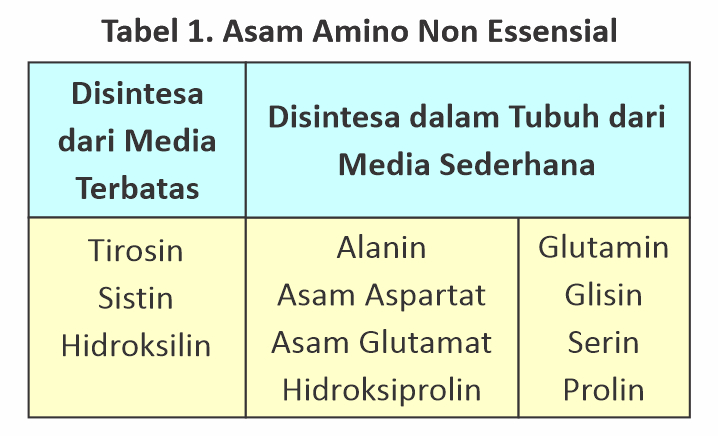
Non-essential amino acids are amino acids that can be produced in the body of livestock. Derived from available carbon sources and from amino groups of other amino acids or from simple compounds such as diammonium citrate. This amino acid does not need to be provided in the ration. Table 1 shows some non-essential amino acids.
Although AANE is not an essential nutrient, it does have an essential function on cells or metabolism. It is called non-essential only because the tissues of the body can produce it to meet the needs of livestock. In fact aane is physiologically important, where the body determines the levels of synthesized supplies. Therefore, the need for nutrients for essential amino acids depends on the concentration of non-essential amino acids in the feed.
The Ideal Protein Concept
In determining the needs of amino acids in chickens is not only considered the need for production but also maintenance (maintenance). Several studies prove that the ideal needs of amino acids differ based on age and body weight where the need for maintenance increases with increasing age (Leeson and Summers, 2001). One of the ways used to calculate the need for asa, amino is to use the concept of ideal protein.
Ration formulations need to pay attention to the balance of amino acids, especially essential amino acids. Improper formulation of essential amino acids either excess or deficiency will result in an imbalance of amino acids, antagonists and also be toxic to tenak. Ultimately resulting in disruption of livestock growth and productivity.
Antagonists between amino acids, for example, found in branched-chain amino acid (BCAA) such as leucine, isoleucine and valine are antagonists as well as lysine and arginine (d'mello, 2003). Excess methionine in animal feed can result in an increased need for B vitamins6 (Scherer and Baker, 2000).
The balance of amino acids in the ration is in line with Liebig's minimum law, which states that a deficiency of one essential amino acid will inhibit the use of other amino acids, even if sufficient amino acids are available.
Amino acid requirements will differ according to sex, age, weight and genetics, but the ratio between essential amino acids is always the same (Cole, 1978). In determining the ideal protein concept, the amino acid lysine is used as a reference of other amino acids. There are several reasons why lysine is used as a reference, namely:
- Data on lysine requirements in various types of feed, environmental conditions and body composition of livestock have been provided complete. So it is easy to use as a basis for calculating the needs of other essential amino acids.
- Lysine is used directly for the production and maintenance (not used as a precursor)
- Lysine can be analyzed directly
- Lysine is the limiting factor second only to the amino acids sulfur (methionine) and threonine
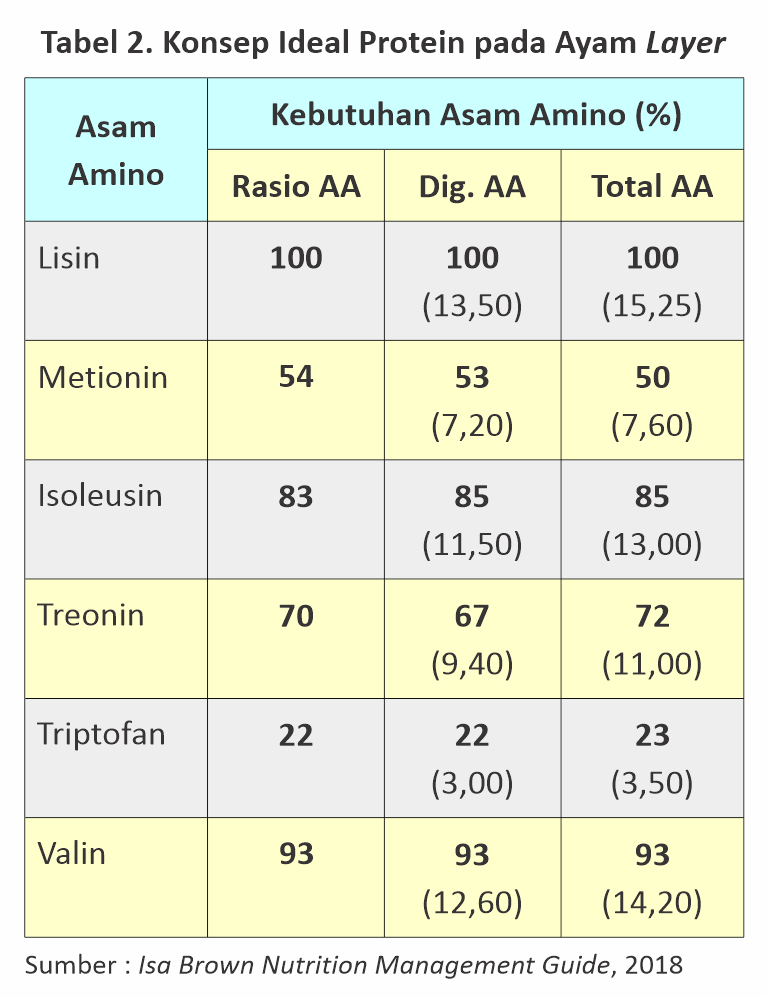
With the ideal protein concept method is expected to reduce pollution due to excess essential amino acids in the feed. All amino acid ideals are based on the digestibility of amino acids. The ability of livestock to digest the amino acids contained in the feed will differ depending on the feed ingredients. Table 2 shows the table of amino acid requirements in laying hens using the ideal protein concept.
Factors causing a decrease in the use and digestibility of Amino acids
A decrease in the use and digestibility of amino acids will lead to disruption of growth and egg production. Some factors that can cause this to happen include :
1. Formulation of the ration does not observe the balance of amino acids
Imbalance in the composition of essential amino acids, either excess or deficiency will result in the unusability of certain amino acids, even if they are present in the ration. This is due to the antagonistic effect between amino acids, including :
- Antagonistic effect between leucine and isoleucine
- Antagonistic effect between cystine and methionine
- Lack of arginine or lysine
This antagonistic effect means that when the amount of one amino acid in the ration is high, then the other antagonistic amino acids will be deficient. Therefore, it is necessary to pay attention to the availability of amino acids in the amount that is needed (ideal).
2. Excessive heat treatment
The production process of the finished ration in the form of pellet and crumble there is a heating process. This process can cause a decrease in protein and amino acid levels. This is because heating will cause proteins and amino acids to denature so that their availability decreases. This should be taken into account by the formulator.
3. Chemical treatment
The addition of acid and alkali treatment to the ration can cause a decrease in tryptophan, lysine and cystine levels in the ration.
4. Inhomogeneous mixing
The mixing process determines whether the ration that has been formulated with the ideal protein concept can be realized in reality. Rations are mixed evenly (homogeneous, redthen every chicken will get the nutrients it needs (not in excess or less).
Therefore, it is necessary to check the homogeneity of the ration by performing a homogeneity test, such as testing the salt content at several points in the mixer. Also note the type of mixer used, the capacity of the mixer and the length of mixing time.
5. Condition of the gastrointestinal tract
The current challenge, due to the Prohibition of the use of antibiotics growth promoter (AGP) and antikoksidia in the ration is the disruption of the gastrointestinal tract due to negative bacteria. This condition can cause rations with ideal nutrient content can not be digested and absorbed optimally.
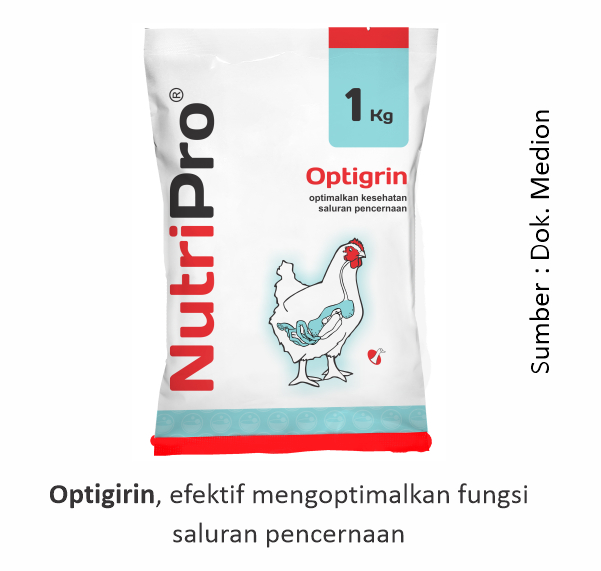
Optigrin is one of the Medion products with herbal content that can be used to replace the AGP function. And Optigrin it has been shown to suppress cases of coccidiosis.
So at a glance information about amino acids. We need to apply the ideal concept of protein so that the ration becomes more effective and efficient. Hopefully it can add insight to all of us. Success always.