The increase in demand for local chicken products has not been accompanied by optimal production. Efforts to develop local chicken continues. According to the statistical records of Animal Husbandry and Animal Health, there is an increase in the population, although in a not very significant amount. Meanwhile, demand for local chicken jumped by about 10% in 2018.
Various Types Of Local Chicken
The local chicken has several clumps with distinctive morphological characteristics and is the flagship of the area where the local chicken develops. Local chickens are known to generally have a slender body shape, long legs, and a variety of feather colors.
The advantages of local chickens include:
- To chicken village commercially, the meat is tasty and chewy provide special pleasure for consumers
- The fat content of meat is lower in comparison with purebred chickens.
- Maintenance is relatively easy because local or village chickens are more adaptive.
- Higher endurance than chicken breeds
In addition to the needs for meat and egg consumption, local chickens can be raised for the beauty of feathers, the beauty of the voice, and the ability to fight. In many places, the local chicken is one of the complements in traditional and religious ceremonies. Currently, improvements are still being made to the properties of local chickens by researchers so that they can make commodities produce more optimally.
Until now, 31 clumps have been identified and some of them are quite existing, namely ayam kampung, sentul, pelung, bekisar, gaok, cemani, kedu hitam, kedu putih, kate, serama, arab, sumatera, bangkok and ciparage. The chickens continue to strive for their development to be sustainable and not just extinct.
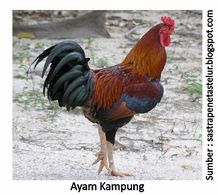
1. Chicken Village
Free-range chicken is a chicken with a dual-purpose type, indicating that the chicken has a dual function as a producer of meat and also as a producer of eggs. Most people in rural areas still keep chickens with umbaran pattern. Chicken is liked by people because the meat is chewy and “contains”, not mushy and not fatty as chicken breeds.
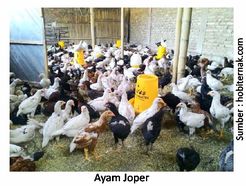
2. Chicken Joper (Java Super)
Joper Chicken is the result of crossbreeding between male chickens and female laying hens. Other names for ayam joper are ayam jawa super, ayam kampung super, ayam camphor and various other names. Joper chicken aged 45-75 days is ready for consumption, this is what distinguishes the original chicken that generally can only be harvested after 3-6 months.
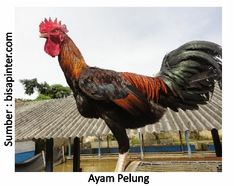
3. Chicken Pelung
This type of chicken is widely found in Cianjur, West Java and surrounding areas. Unlike other local chicken, chicken pelung is popular because of its long and melodious kokokannya voice. The size of these chickens is relatively large with shiny feathers.
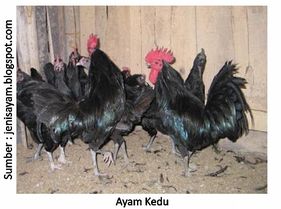
4. Chicken Kedu
Kedu chicken is a native chicken Kedu Village, Temanggung regency, Central Java. This chicken is nicknamed the black java breed. Indeed, the most popular type is black kedu chicken. However, there are also chicken kedu white and mixed (color blorok striated). Kedu chickens initially served as ritual animals and were not venerated as broilers or layers.
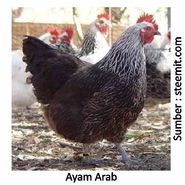
5. Arab Chicken
Most people use Arab chickens because of their high egg production. Arab chickens are easily recognizable by their plumage. Along the neck are shiny white, white back feathers with black spots, Black wing feathers with white stripes and black dominant tail feathers mixed with white.
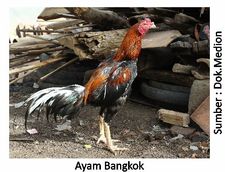
6. Bangkok Chicken
These Bangkok chickens are most commonly kept as fighting chickens. Tuban City, East Java is believed to be a city that plays a role in the development of fighting chickens. It was in this coastal city that Bangkok chickens were first introduced in our country.
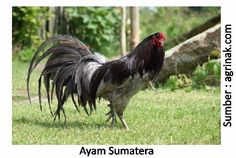
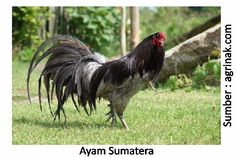
7. Sumatran Chicken
Sumatran chicken is known as fighting chicken originating from the Sumatran hutam. This type of chicken has a dominant Feather Black like chicken cemani but has a fighting style that is agile and agile.
How to keep local chickens healthy and produce Oprimal
Things we need to pay attention to so that local chickens grow healthy and produce optimally include:
1. Comfortable cage environment conditions
Comfortable environmental conditions include sufficient air, water and rations both in quality and quantity. Drinking water should always be available or ad libitum. Also note the quality of drinking water both physical, chemical and microorganism content. The quantity and quality of rations provided is decisive for productivity. The fulfillment of the need for these nutrients will improve the performance of the chicken.
2. Health Management
To maintain the health of local chickens as well as chicken breeds that do:
(a) the vaccination Program
In preparing the local broiler chicken vaccination program, there are several vaccines that must be given related to fairly high disease attacks, such as ND and Gumboro vaccines. But it is also necessary to consider the vulnerability and history of the area, for example against AI and korisa disease attacks. The vaccination Program for local chickens that produce consumption eggs and seeds is certainly different from broilers regarding the longer maintenance period of local laying and breeding chickens. There are several vaccines that must be given before entering production, such as ND, Gumboro, AI, IB, and korisa vaccines. But that does not mean other vaccines do not need to be given, such as ILT or fowl pox. Depending on the history or level of vulnerability of the farm.
B) supplementation
In addition to vaccination, farmers can also provide supportive therapy or supplements to maintain stamina or help the growth of chickens by providing vitamins such as Vita Stress (before and after vaccination or in hot weather), Imustim (immunostimulant), Neobro/ Solvit/Strong N Fit (to help accelerate the growth of chickens).
3. Regular sanitation and disinfection
Implementation biosecurity the most common and simple thing a breeder can do is sanitize the cage by spraying disinfectants. Cage equipment such as rations and drinking places are disinfected using Medisep, Antisep or Neo Antisep. Regular sanitation and disinfection of the cage with Antisep or Neo Antisep for Cage contents and Formades or Sporades for an empty cage.