Ration nutrition plays an important role in determining poultry productivity. Giving rations with nutritional content as needed is very necessary because it affects weight gain and egg production. The nutrients needed by poultry are very diverse, ranging from energy, fat, protein, amino acids and multivitamins. Of these various nutrients, one type of essential amino acid that is important for poultry, Tryptophan, will be discussed.
Getting To Know Tryptophan
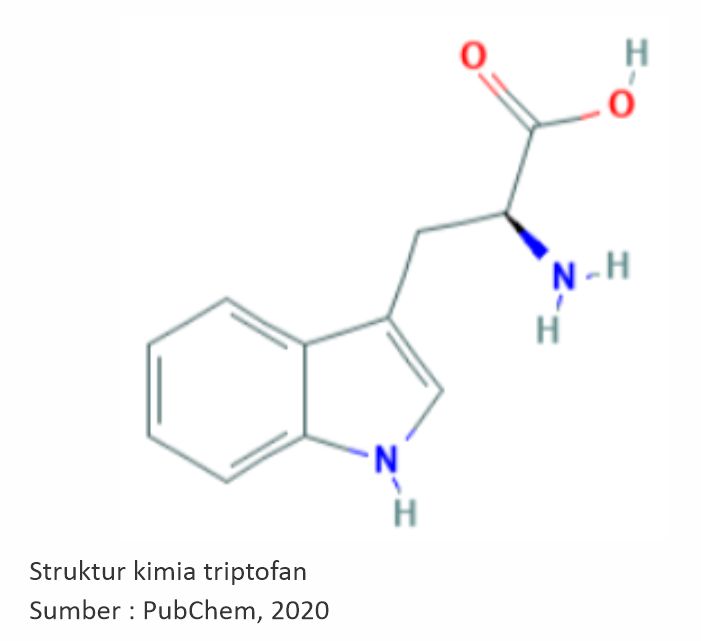
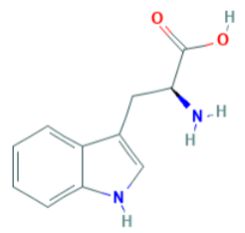
Tryptophan (Surname11H12N2O2) is an essential amino acid for poultry with the main function for protein synthesis as well as melatonin and serotonin forming compounds. Melatonin is a hormone produced by the pineal gland in the brain with the function of regulating sleep and waking activities. This is a chemical compound in the brain that acts as a messenger (neurotransmitter).
In the poultry body, both hormones work for the mode “check and balance“. Serotonin works predominantly when poultry is active during the day, while melatonin works predominantly during the rest period at night. In addition, the two hormones also play a role in the regulation of blood pressure, body temperature, ration consumption, growth and repair of damaged body tissue in poultry (Corzo et al., 2013). Since it is not synthesized in the body, this amino acid tryptophan must be provided through rations mainly derived from whole grains.
Percentage of tryptophan in poultry ration
As the fourth limiting amino acid after lysine, methionine and threonine, the tryptophan content in the poultry ration is inseparable from its balance with lysine. Here is the optimal ratio of tryptophan and lysine based on the recommendations National Research Council (1994), and the National Register of Historic Places (breedercommercial chicken.
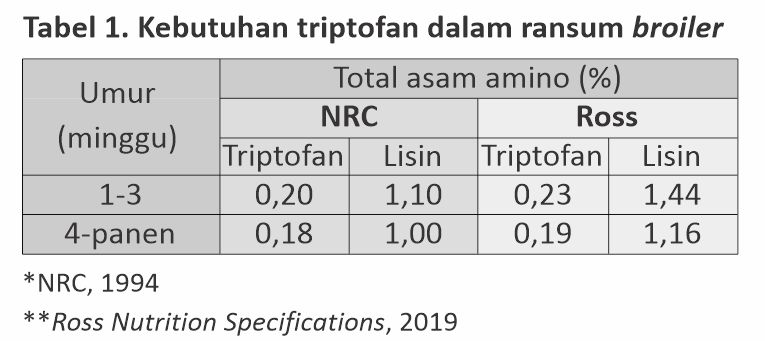
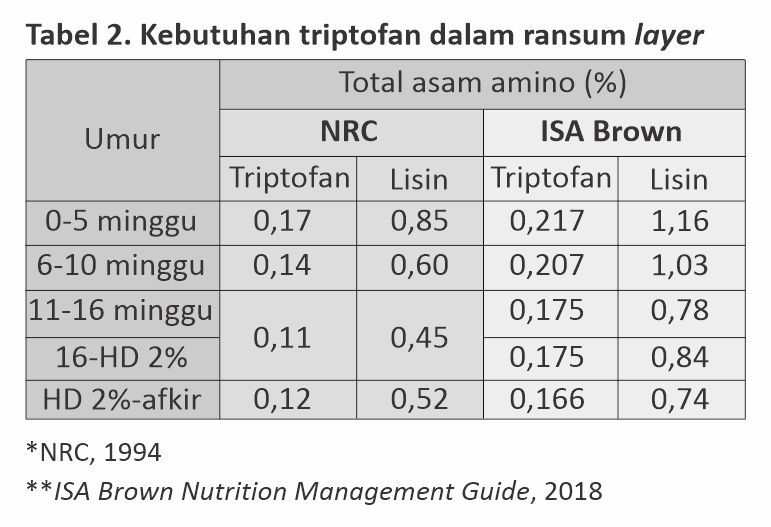
Tryptophan recommendations from breeder higher than the NRC, because it is adjusted to the potential of modern poultry production that continues to grow until now.
Role Of Tryptophan
In general, tryptophan plays a role to optimize the body's metabolic processes, so that poultry performance becomes optimal.
- Improve chicken performance broiler
Tryptophan can improve performance broiler by increasing the consumption of its ration. According To Emadi et al. (2015), ration consumption increased by 6% in broiler who were given high rations of tryptophan. This can happen because tryptophan serves as a forming compound neurotransmitter serotonin. An increase in the amount of serotonin formed will increase the appetite of chickens, so in the end, the consumption of the ration will increase.
Corzo et al. (2013) in his research proved that increasing the content of tryptophan in the ration further improves performance broiler age 1-20 days as seen from the consumption of rations (Graph 1), weight gain (graph 2) and feed conversion ratio (FCR)-her (graph 3).
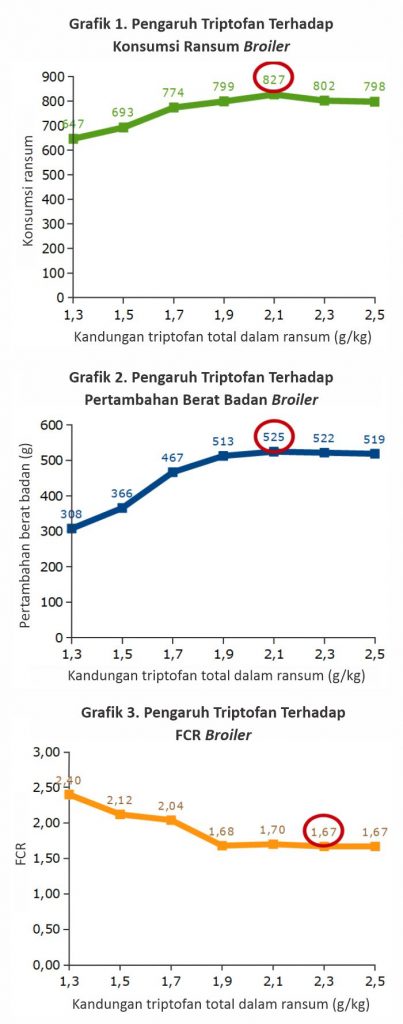
From the three data above can be seen that tryptophan can optimize performance broiler on the provision of rations with a total tryptophan content of 2.1-2.3 g/kg.
2. Optimizing egg production
Tryptophan can also improve performance layer. According To Five et al., (2012), egg production, egg weight and egg mass increases with increasing tryptophan content in the ration. The best results were obtained on the ration with the content of undigested tryptophan at 1.99 g / kg or the ratio of undigested tryptophan : lysine at 25%.
Tryptophan is able to increase egg production by increasing the activeness of magnum when producing albumen or egg white. As a result, the process of egg formation is achieved in a faster time. In addition, Tryptophan will increase production mucus (mucus) from the epithelium of the magnum, thus allowing the egg to pass through the oviduct in a quick time. Related to egg weight, tryptophan can increase albumen production, so the weight of the egg will increase as well.
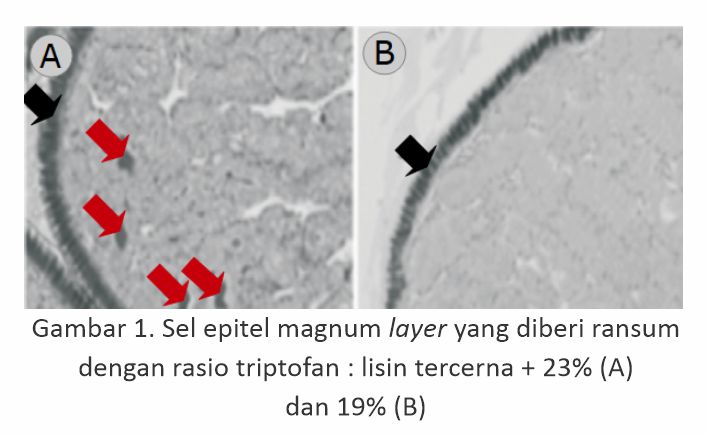
From Figure 1 it can be seen that magnum epithelial cells produce more mucus (red arrow) with increased levels of tryptophan in the ration which will accelerate the rate at which eggs pass through the oviduct. The activity of magnum in producing albumen also appears to be higher (Black Arrow), so the weight of the egg will increase.
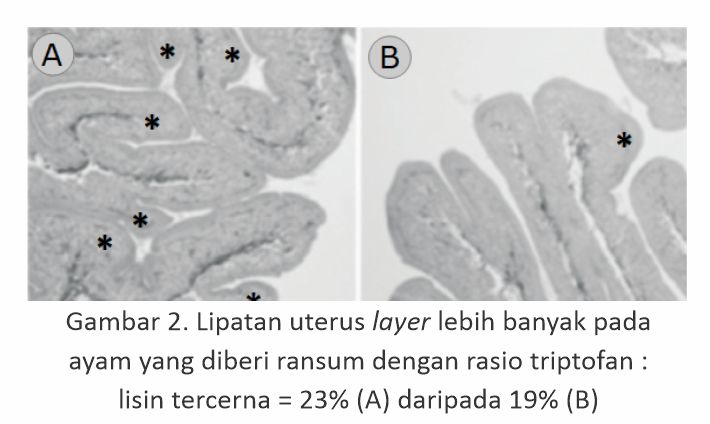
An increase was seen in the chicken uterus. In Figure 2 it is seen that with an increase in the content of tryptophan in the ration, the folds on the uterus appear more (asterisks). This indicates hyperplasia or higher cell multiplication in the uterus.
3. Optimize digestion
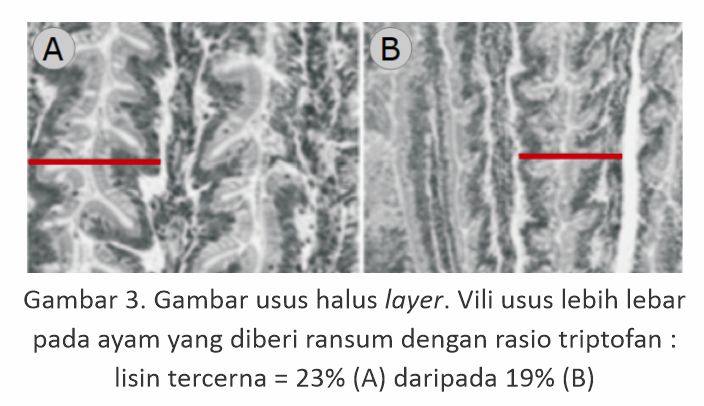
Tryptophan can optimize the digestion of nutrients ration by widening the size of the villi-villi of the small intestine. In Figure 3 it can be seen that increasing the ratio of undigested tryptophan : lysine is able to increase the width of the intestinal villi (red line), so that the surface area for absorbing ration nutrients increases. The more nutrients the ration is absorbed, the performance of the chicken will increase as well.
4. Reduced feather pecking behavior
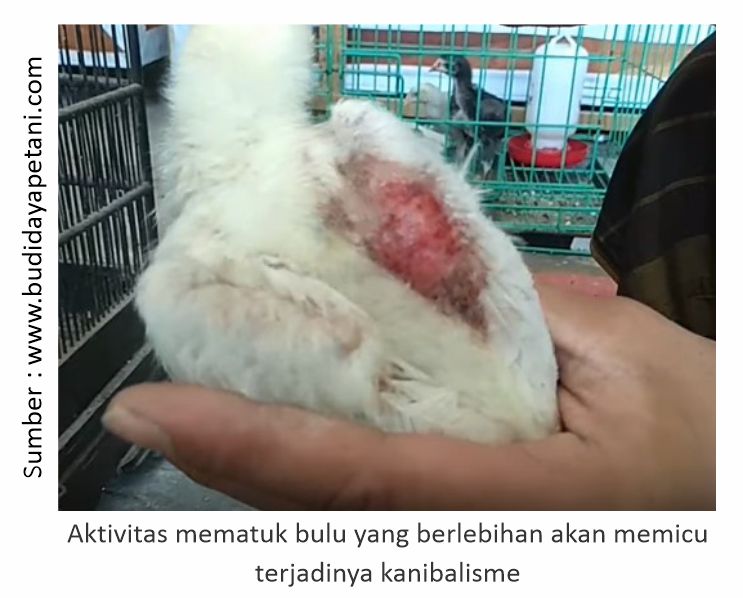
One of the animal welfare issues that is quite serious on the maintenance layer is the presence of feather pecking behavior. This behavior is characterized by the activity of chickens pecking feathers covering the body of other chickens repeatedly. Pecking feathers result in damage to some feathers even uprooted and eaten by chickens that Peck.
Besides due to environmental stress factors and treatment, it turns out that pecking feathers can also be caused by a deficiency of the amino acid tryptophan. According to Hidayat (2019), serotonin formed from the amino acid tryptophan is a compound that triggers calmness related to aggressive behavior in livestock. Meanwhile, poultry feathers are composed of keratin, which is a protein with the amino acid tryptophan. When birds experience tryptophan deficiency, they will consume feathers in order to meet the lack of the amino acid. The addition of tryptophan from the feathers will be used by chickens to produce serotonin which ultimately has a calming effect on their bodies.
5. Boost the immune system
Tryptophan plays an important role in the regulation of humoral immunity. Spleen, thymus and bursa fabricius are immune organs in which lymphocyte cells undergo proliferation and differentiation that play a role in the immune response. Tryptophan will optimize the development of these immune organs, so that the immune response of the poultry body will increase (Bai et al., 2016).
In addition, according to Emadi et al. (2015), catabolism or breakdown of tryptophan can maintain the homeostatic condition of T cells and increase the response of these T cells when the body experiences inflammation. Tryptophan regulates the functioning of the body's immune system under different physiological conditions. When poultry is under stressful conditions and the presence of inflammation in the body, the decomposition of tryptophan will increase to support the differentiation of lymphocyte cells and the production of immunoglobulins to enhance the immune response of poultry.
Thus at a glance information about tryptophan, an essential amino acid for poultry. Hopefully useful and add to our insight. Be healthy and successful Always.