Pertanyaan dari Bapak Sudin – by email
I would like to ask if it can be explained what is gout in chickens? If it's a disease, does it prevent my chickens from having it?
Answer
Thank you Mr. Sudin for the question. Poultry excrete nitrogenous metabolite products in the form of urates (in the form of Colloids with mucus) in their urine. Avian urolithiasis or known as gout, occurs due to kidney damage that causes a decrease in the process of cleansing uric acid from the blood so that it arises hyperuricemia with a high degree of acidity (urolithiasis) in the body of domestic poultry.
This condition can be triggered by several factors such as high protein nutritional content, vitamin A deficiency that causes inhibition of kidney excretion so that urate accumulates in the blood, high salt feed, fungal toxins, and diseases that cause kidney damage such as IB, mycotoxicosis, IBH, Gumboro, etc.
In general, gout divided into two namely:
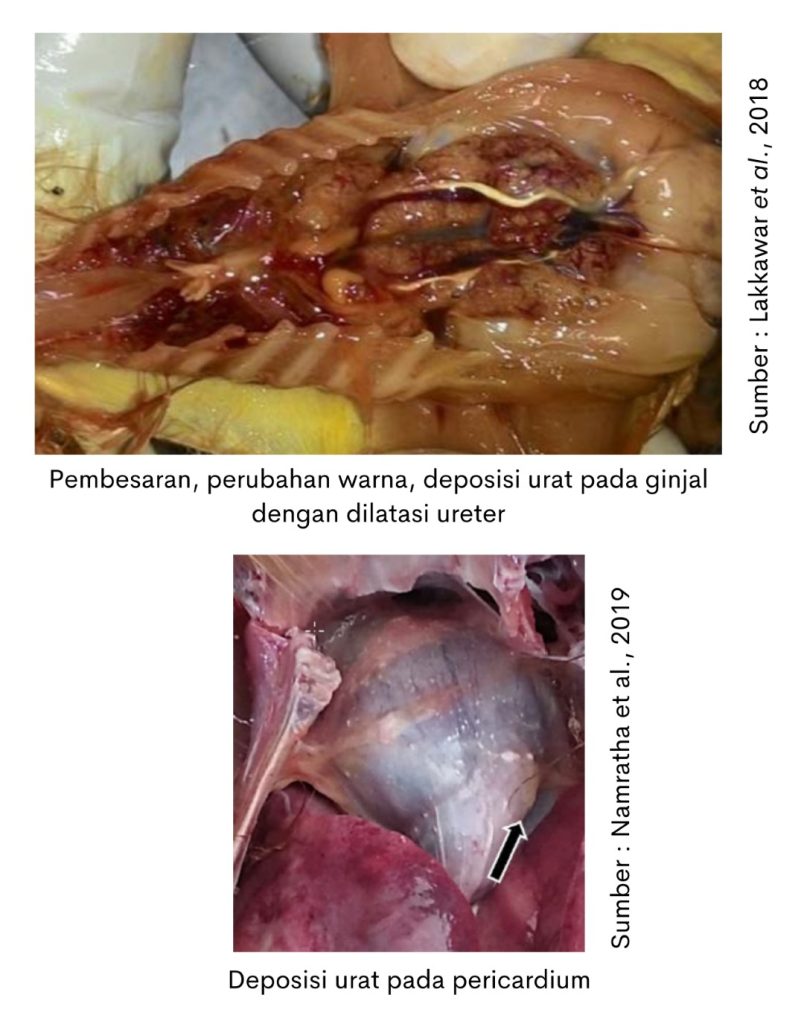
Visceral Gout
Characterized by the deposition of urates over the surface of the internal organs (organs visceral). Both females and males aged one day or above are susceptible to this disease. Changes in lesions that can be observed is the presence of abnormalities and deposition of urate in the kidneys, internal organs such as the liver, heart, spleen, heart wrapping membranes, air pockets, mesentery (hanging intestine), or on the muscles, tendons, and joints when severe cases.
In general, it is caused by failure of urate excretion (due to kidney failure) which can be triggered by dehydration, nephrotoxicity (kidney toxicity due to calcium, certain antibiotics that are not recommended (aggravate the work of the kidneys when there are kidney disorders), heavy metals, chemicals), infectious diseases such as IB, mycotoxicosis, IBH, Gumboro, vitamin A deficiency, urolithiasis, neoplasia, or kidney abnormalities.
Articular Gout
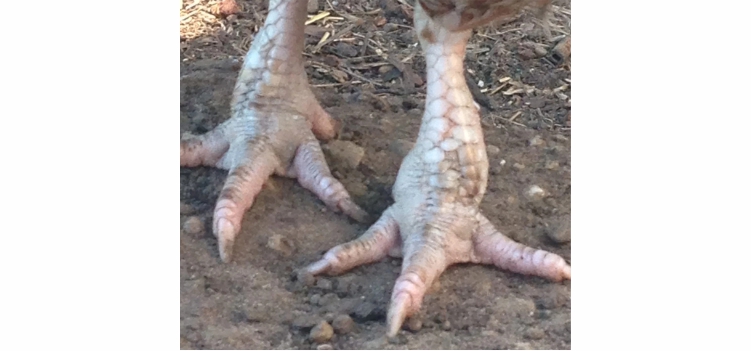
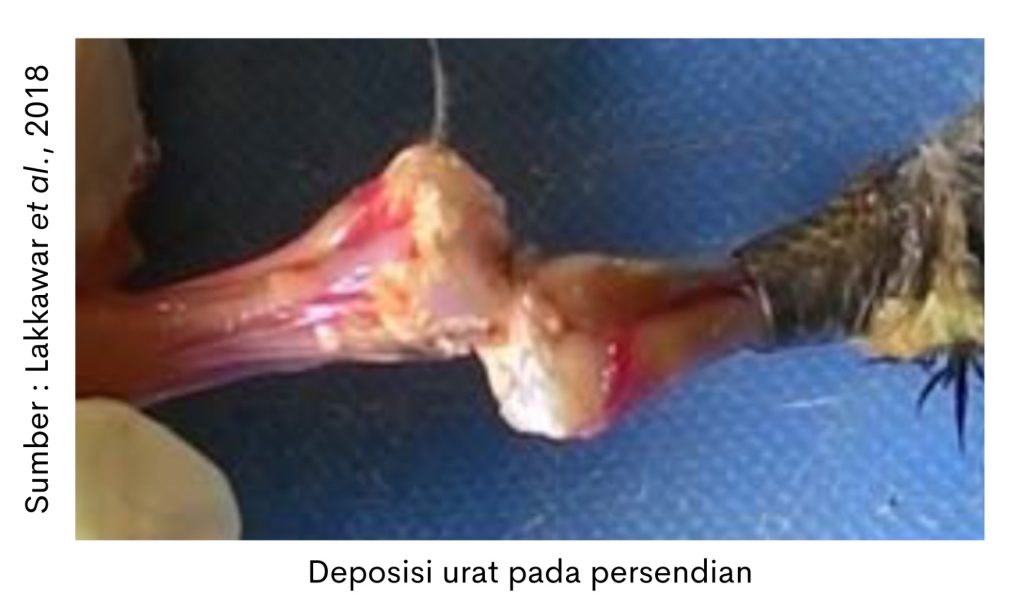
Characterized by the presence of urate deposition on ligaments, tendons, but most often it is found on the joints of the legs or wings. Often found in male birds with a lifespan of 4-5 months or above.
Changes in lesions found that look very normal kidney but can also be abnormal with the deposition of urate if dehydrated poultry. Changes in internal organs are rare except for the comb, wattle, and trachea where changes can occur.
In addition, inflammation can be found in the joints (legs, wings, beak, spine, and beak) and surrounding tissues. Possibly caused by metabolic disturbances in urate secretion in the renal tubules. It can be triggered by genetics or a high-protein diet.
Symptoms shown by birds affected by gout include the following can be observed, namely polydipsi (increased excessive thirst), which can result in increased water intake, swollen joints, stiffness, pain, alternating footstools, decreased movement activity and often lying on the floor of the cage.
If it affects the internal organs, then it will show a decrease in appetite, weakness, weight loss, wet feces with the deposition of uric acid. Gout has a low cure rate. Treatment of gout infection is selection and culling, there is no cure.
Preventive recommendations against gout are:
- Notice water intake, avoid the occurrence of dehydration
- Pay attention to the formulation of feed, do not let there be vitamin deficiencies and nutrients that are too high in protein and salt.
- Pay attention to the accuracy of vaccination programs, management, and biosecurity to prevent from infectious diseases.
- Avoid the use of antibiotics / drugs that can aggravate the work of the kidneys if indicated kidney disorders.
- Administration of Gumbonal with a dose of 1 gram/liter of drinking water or 0.2 grams/kg bw, given for 3-5 consecutive days when there is a swollen kidney condition.
- Use toxin like Freetox dengandosis 1-2 kg/ton ration or Freetox G with a dose of 0.5-1.5 kg/ton ration to minimize the accumulation of fungal toxins contained in the feed.