Questions from Mr. Priyono
Magelang-Central Java
My chicken is 22 days old, there are indications of Gumboro, is the disease inherited from the mother and how is the right treatment?
Answer
Thank you Mr. Priyono for the question. Gumboro Virus is only transmitted horizontally from sick chickens to healthy chickens with the main infectious medium, feces. The Gumboro Virus in feces is still infective (capable of infecting other chickens) for up to 122 days after being expelled by a sick chicken. While the virus in drinking water and chicken feed is still infective up to 52 days after removal. Where drinking water, feed, cages and other objects can also act as an infectious medium if contaminated with feces containing Gumboro virus.
This is due to the presence of vectors such as beetles, worms, flies, mosquitoes, and mice that perch on feces and then move to water or drinking rations. One of the main vectors of Gumboro is the beetle franky/darkling beetle. Vertical transmission of the virus (from mother to child or via eggs) does not occur. As well as the chicken carrier or chickens that carry the virus but are not sick Gumboro, also not found so that the chicken recovered from Gumboro not potentially transmit the virus to the environment. When Gumboro cases occur, it is necessary to pay attention to how the condition is. If there are complications with other diseases, generally handling Gumboro cases is more priority than other cases for reasons of nature immunosuppressive (suppresses the immune system).
Here are the actions that can be done if there is a Gumboro case:
1. Isolation, disinfection and discharge of feces
Gumboro disease is very contagious with a morbidity rate (pain) reaches 100%. The high level of morbidity is supported by the presence of sick chickens that continue to secrete virus particles and the presence of the virus in feces.
Therefore, carry out the separation of sick chickens. If possible remove feces (and litter/ husk) when it occurs outbreak Gumboro to eliminate the source of transmission of the virus (which hides in the feces). Drinking place, chicken ration place, automatic drinking place (TMAO), and cage area need to be disinfected with Medisep every day. Disinfection of drinking water also needs to be carried out using Neo Antisep or it could be with Desinsep.
2. Supportive therapy
Give 2-5% sugar water to restore chicken stamina. Add vitamins (Vita Stress or Fortevit) and if the air temperature is cold, can turn on the heater as Medion gas (IGM)inductor to relieve the symptoms of the disease and reduce the stress level of chickens. In the case of Gumboro kidney swelling, give Gumbonal to help relieve the symptoms of the disease. Revaccination measures are not recommended considering that the immune response of chickens is not optimal.
Prevention of subsequent Gumboro cases:
3. Optimizing the cage preparation period
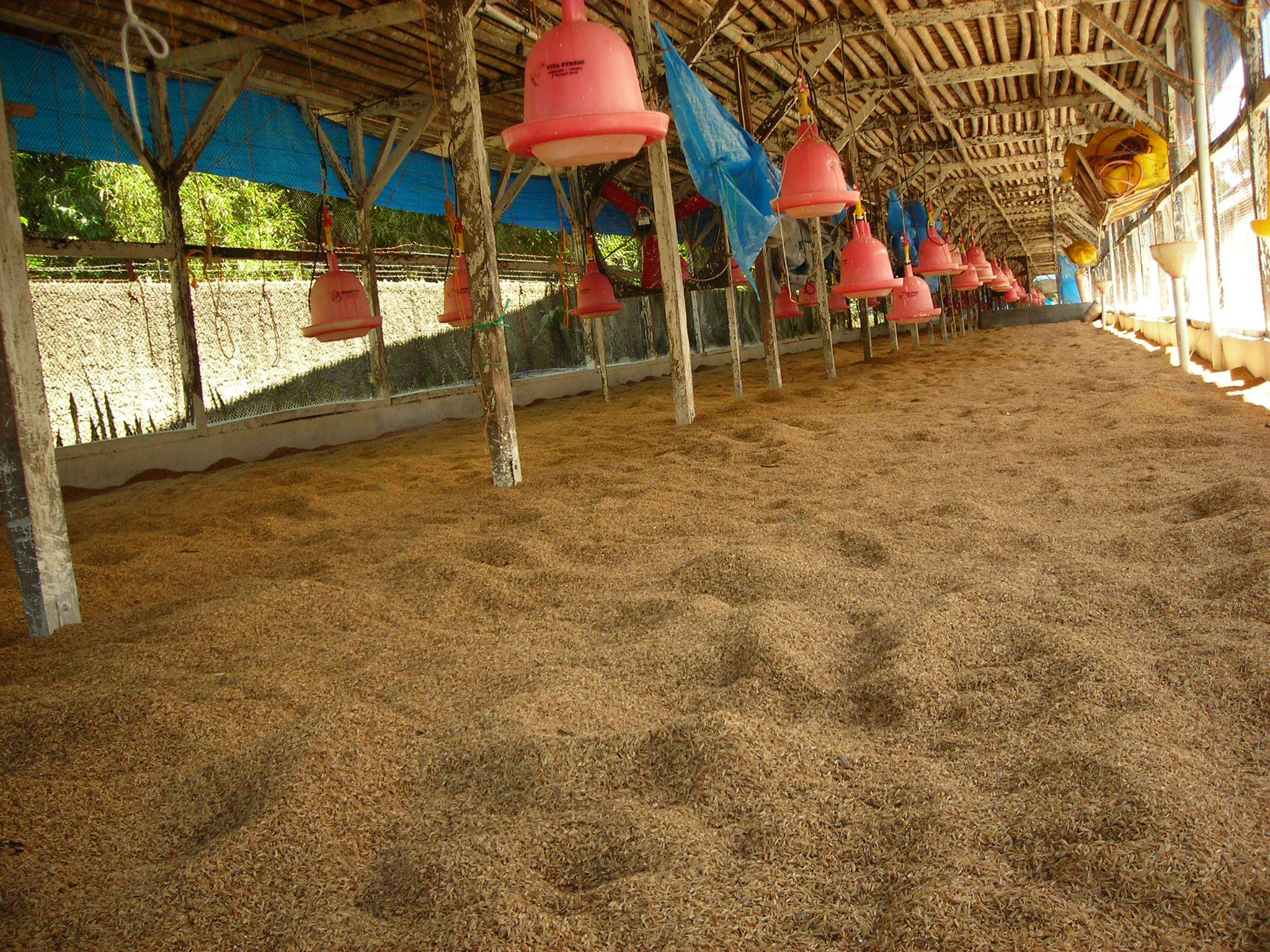
Optimization of the cage preparation period can help eliminate Gumboro virus. Disinfect the cage well and correctly starting from the drop litter and the removal of feces from the farm. Then the cage is brushed and soaped and left to dry. Then disinfected with Formades or Sporades. Sanitary also equipment enclosure with Neo Antisep for example, a drinking place, a chicken ration place and an automatic drinking place (TMAO).
Then dried in an aerated manner. Avoid drying in the sun so as not to damage the equipment. Finally, put the sanitized cage equipment in a disinfected cage.
Close the cage curtain and rest for at least 14 days before chick in. Do not forget to spray insecticide to eliminate beetles franky which plays a role in spreading the Gumboro virus (vector) for example by Delatrin as well as disinfection litter before use.
2. Evaluation of the vaccination program
There are three things that need to be considered when evaluating the vaccination program, namely when the vaccination is carried out, the type of vaccine used, and the method/method of vaccination. For that, it is necessary recording its good to know the history beforehand. For high mortality rates (>5%), Medivac Gumboro A more appropriate to use.
If Gumboro occurs at the age of 22 days vaccination can be done at the age of 8-10 days using Medivac Gumboro A through mouth drops. On chicken layer vaccination can be 2 times at the age of 8 and repeated at the age of 18-22 days. Determining the age of the first Gumboro vaccination can also use a formula based on maternal antibody titer data.