Bapak Galih
West Sumatra
What Gumboro vaccination can be done on chickens 3 weeks old? and how to evaluate the right Gumboro vaccination program?
Answer:
Thank you Mr. Galih for the question asked, the right Gumboro vaccination program is one of the efforts to prevent Gumboro disease which is quite stubborn. Things that need to be considered in the evaluation of the Gumboro vaccination program are:
- Types of poultry
The type of poultry will affect the length of maintenance. On chicken broiler with a fairly short maintenance period, Gumboro vaccination is enough to do 1 time, while in chickens layer the Gumboro vaccination program is carried out at least 2 times during the maintenance period.
2. Gumboro case history
In determining the age of Gumboro vaccination other than based on maternal antibodies, it is also necessary to consider Gumboro's case history in the previous maintenance period. For example, Gumboro cases occur at the age of 25 days, so Gumboro vaccination can be done no later than 2 weeks before the age of the disease case, that is, at the age of 11 days.
Pada kasus Gumboro yang muncul pada ayam umur <21 hari atau >21 hari dengan tingkat kematian tinggi (>5%), vaksin jenis intermediate plus or Medivac Gumboro A menjadi solusi yang tepat. Namun jika kasus Gumboro muncul pada ayam umur >21 hari dengan tingkat kematian rendah (<5%), maka dapat menggunakan vaksin jenis intermediate or Medivac Gumboro B.
3. Level maternal antibodi
To determine the value of maternal antibodies can be done by taking blood samples (serum) from chicks aged 1-4 days, then tested by ELISA method. With this data, the age of the first Gumboro vaccination can be calculated using the active Gumboro vaccine. Related to maternal antibody levels, the Gumboro vaccination program carried out when maternal antibody levels are still high will cause the vaccine given to not work as it should because the vaccine virus will be neutralized by maternal antibodies. Therefore, the timing of administering the Gumboro vaccine needs to be well calculated. Do not get the vaccine given prematurely or precisely after the chicken has lost protection from maternal antibodies.
4. Vaccination application
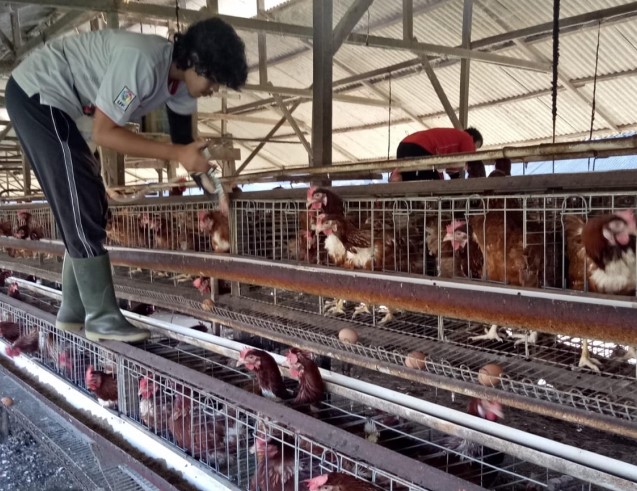
The accuracy of the Gumboro vaccination application is also a supporter of successful vaccination. Gumboro vaccination is given by using an oral method, namely cekok or mouth drops and drinking water. Vaccination application through the cekok method or oral drops can be given at the first vaccination or at the age of 7 days, while if through drinking water can be given at the age of >10 days.
If the application is given through drinking water, make sure the water quality is good. But if the quality of drinking water is not good, add Medimilk 10g / 5L or Netrabil 5g / L drinking water to improve water quality, so as to extend the life of the vaccine virus to produce high immunity. In addition, pay attention to the ratio of drinking water given so that the chickens get a uniform dose of vaccine.
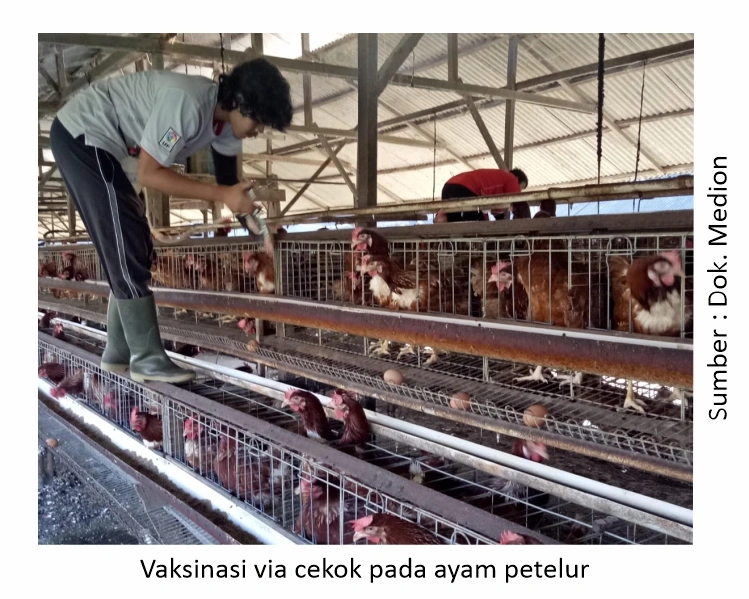
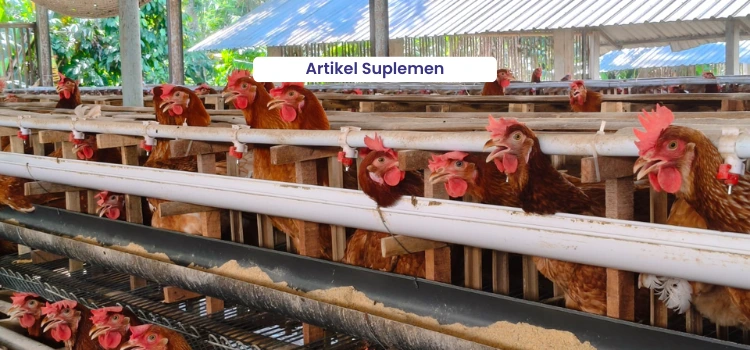
Gumboro vaccination in chickens layer may be given to chickens older than 3 weeks for repeat vaccination. Especially if the age of the attack in the previous period occurred above the age of 3 weeks. Data Technical Education and Consultation Medion shows Gumboro disease in chickens layer can attack until the age of 6-7 weeks, but when viewed from the pattern of attack, it is known that chicks aged 22-28 days turned out to be the most vulnerable to Gumboro attack because at that age the organ bursa Fabrisius as a target Gumboro disease is developing rapidly. Therefore, if the vaccination is done at 3 weeks of age, it can be said that it is a bit late so that the vaccine is given in the first week (7 days of age) or the second week it is necessary to give it.
In addition to the vaccination program, the best efforts to prevent Gumboro cases need to be combined with good maintenance management, especially during the phase brooding period,, this is due to the maintenance period brooding period, determine the performance of chickens in the next phase, if there is a management error in the phase brooding period, then it cannot be restored and has a negative impact for the next phase, in addition, it is in this phase that the lymphoid organs develop rapidly by 70%. The optimal development of the lymphoid organs is closely related to the formation of active immunity that will replace the role of passive immunity passed from mother to Chick.