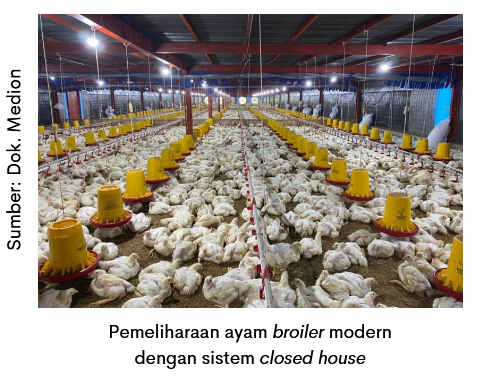
The development of increasingly modern, making the human mindset to develop the poultry industry, especially chicken into modern good broiler or layer. To achieve the success of modern chicken rearing targets, of course management is the key. Chicken modern broiler have the advantage of being able to achieve weight loss in a short time and target FCR (FeedConversion Ratio).
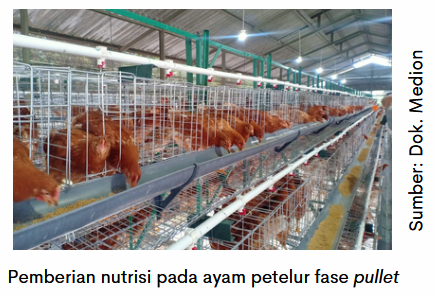
While chicken modern layer has the advantage of being able to reach peak production and persistence of peak production can last a long time. But on the other hand, there are consequences that must be faced by chicken farmers modern such. Among the chickens modern more sensitive to environmental conditions such as changes in weather or season and easily subject to stress. This of course can cause a decrease in performance or productivity.
To achieve the target performance of chicken rearing modern, then management must be supported by adequate nutrition, application biosecurity and good vaccination and supportive provision to increase productivity. The amount of nutrition must be adjusted to the needs of each chicken age. This aims to be able to produce body weight according to target and good uniformity in a population. To achieve this, it must be supported by good organ function, including the liver. So that in the end it can achieve the desired performance target.
Anatomy and function of the liver
Nutrients received by chicken, will be distributed in the body properly if the condition of the digestive system is also good. One of these organs is the liver. The liver or liver is the largest organ in the body. This Organ has a very vital function in supporting the process of absorption and metabolism of nutrients from the digestive organs. Almost all nutrients, chemicals, including toxin components in feed and chemical compounds in drugs absorbed by the intestinal tract will subsequently be processed in the liver. The liver has an important and complex role in metabolic processes. According to Widianingsih (2000), the liver plays a role in the metabolism of carbohydrates, fats, proteins, iron, bile secretion that can help absorb fat, detoxification function, red blood cell formation and metabolism and storage of vitamins.
The liver is located in the upper abdominal cavity which will be clearly visible at the time of carcass surgery. The liver consists of two large lobes, located on the arch of the duodenum and gizzard (gizzard). Normally chicken liver is reddish brown, has a soft consistency and the edges or sides look sharp or not swollen.
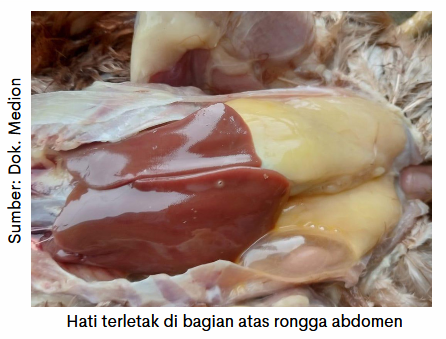
According to Simamora (2001), chicken liver has a relatively large size, the weight of chicken liver ranges from 30-50 grams. The liver of newly hatched chickens is yellowish brown. Healthy heart on DOC (day old chick) are yellowish brown until 10 days of age due to the absorption of the yolk content. The color of this liver will turn reddish brown after about two weeks of age. The liver of an adult chicken is normally reddish brown to bright brown in color with a soft consistency.
Causes Of Liver Damage
Changes in color, shape and consistency may indicate a liver disorder. Some factors that can cause liver disorders are infectious and non-infectious diseases. Diseases that can cause damage to the liver include the following :
Infectious Diseases
- Inclusion Body Hepatitis (IBH)
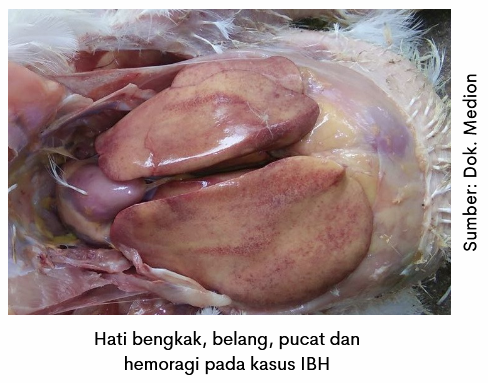
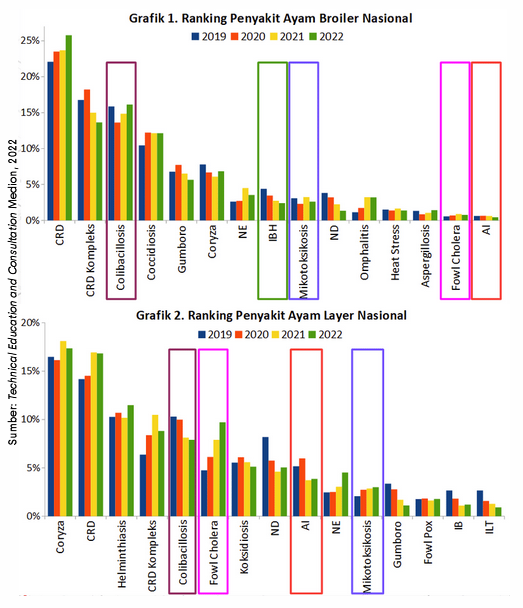
This disease is caused by Fowl Adenovirus Group 1 has characteristics double stranded DNA, icosahedral, non-amplified, stable and durable in the environment, sensitive to disinfectants iodine and formalin. IBH disease can be transmitted vertically or horizontally. In addition, this disease can cause direct damage to the working system of the liver and is immunosuppressed. Liver changes that are often found in cases of IBH include liver looks swollen, pale, striped with hemorrhoids. Changes in other organs can also be found such as gizzard erosion, hydropericardium and swollen kidneys. According to the field data collected by the Medion team, the incidence rate of IBH disease is still very high both in chickens broiler (Graphic 1) nor layer since last 3 years.
- Avian Influenza (AI)
The disease is caused by viruses Avian Influenza from family Orthomyxoviridae which has the characteristics single stranded RNA, amplified, does not have proof reading in addition, it is important to note that it is highly sensitive to all types of contaminants and has an important protein as a determinant of viral subtypes, namely protein H (hemagglutinin) and protein N (neuraminidase). In Indonesia, the circulating AI virus subtypes are AI H5N1 and H9N2. The disease can cause damage to various organs such as the respiratory, immune organs, reproductive system, kidneys, heart, and digestive system including the liver, but the most commonly found or typical change of AI disease is the presence of cerebral vascular dilatation in dissected chickens. According to the field data collected by the Medion team, the incidence rate of AI disease is still very high both in chickens layer (Graphic 2) nor broiler since last 3 years.
- Chicken Anemia Virus (CAV)
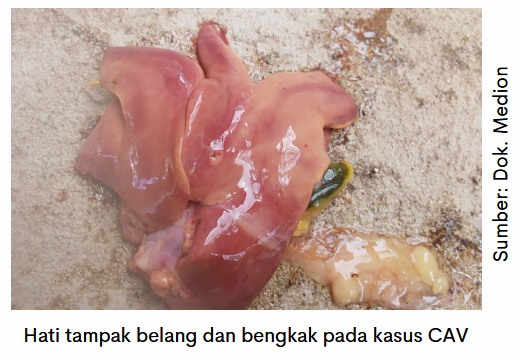
The disease is caused by viruses from the family Circoviridae which has the characteristics single stranded DNA, icosahedral, non-amplified, relatively stable in the environment and sensitive to class disinfectants iodine and formalin. This disease can cause liver damage that appears swollen and striped, but changes that are often found in cases of CAV include Combs and wattles appear pale, bone marrow is pale yellowish and atrophy of the lymphoid organs.
- Limfoid Leucosis (LL)
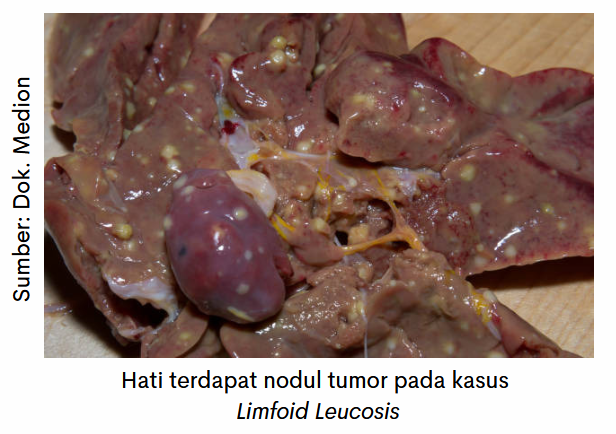
The disease is caused by viruses from the family Retroviridae which include RNA viruses, amplified and sensitive to all classes of disinfectants. The disease can be transmitted vertically or horizontally. Limfoid leucosis including the type of tumor disease, because the changes found in the case of LL are tumors in various organs such as the spleen, heart, Bursa fabrisius, digestive system including the liver. If the carcass surgery is often found typical changes that the liver becomes so large that the entire abdominal cavity is filled by the liver.
- Mareks Disease (MD)
This disease is caused by Herpesvirus grup B yang merupakan virus DNA rantai ganda dan beramplop. The Virus can be resistant outside the chicken's body and cause transmission to healthy chickens because the virus is in the feather follicles replicate and occur shedding the virus passes through the skin and fur.
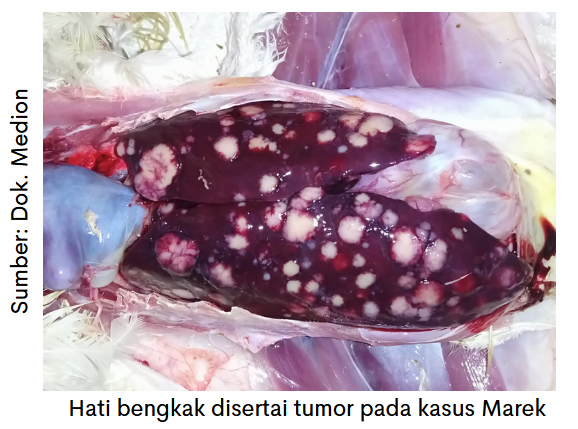
This disease can cause damage to various organs including the liver. Changes in the liver appear enlarged or swollen and accompanied by lumps in the form of tumors. Preventive measures can be taken by purchasing DOC who has been vaccinated Marek by the nursery company, the application of management and biosecurity that's good.
- Colibacillosis (dyspnea, heart and liver covered by fibrin)
The disease is caused by bacteria Escherichia colibacteria, including Gram ( - ) bacteria, are not acid-resistant, rod-shaped and do not form spores. Regarding their habitat, these bacteria live normally inside the chicken's digestive tract and can survive outside the chicken's body for several weeks but are not resistant to dryness and disinfectants.
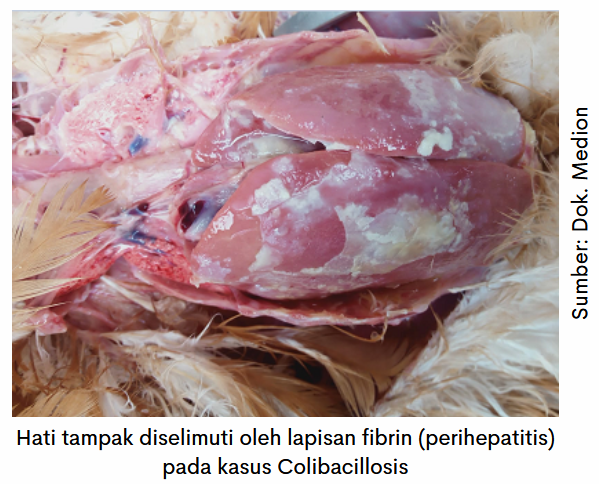
The incidence of Colibacillosis in the field is still very high both in chickens broiler or layer (Graphic 1 and Graphic 2). This disease can cause changes in several organs that are characterized by the presence of perkejuan in organs including the liver. Changes in the liver appear to be coated by a cheesy mass or enveloped by a fibrin membrane on the surface layer of the liver (perihepatitis).
- Fowl Cholera
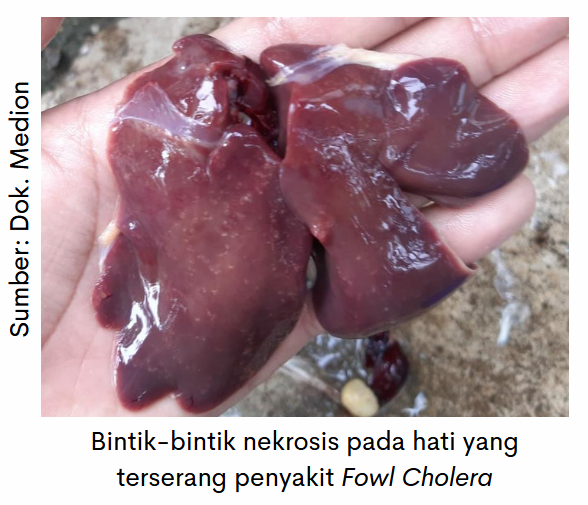
The disease is caused by bacteria Pasteurella multocida, which is a Gram ( - ) bacterium, rod-shaped, non-motile and does not form spores. These bacteria can survive in the soil, litter or materials that rot for several months. However, these bacteria are easily damaged by various disinfectants both groups iodine, oxidizing agent or formalin, in addition, bacteria are also easily damaged by direct sunlight, as well as heat treatment. Disease occurrence Fowl Cholera in the field is still very high, especially in chicken layer (Graphic 2). This disease can cause changes in some organs such as swelling in the combs and wattles, bleeding in the heart fat and liver damage. Changes in the liver are characterized by the presence of yellowish-white necrotic spots (tissue death) and the liver appears enlarged or swollen.
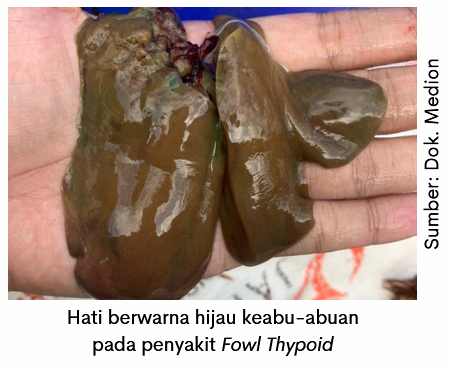
- Fowl Typhoid
The disease is caused by bacteria Salmonella gallinarum which is in the form of a short rod, does not form spores, is not encapsulated and is Gram (-). These bacteria will survive for 20 days in water or a dark place, but will die within 24 hours if in contact with sunlight. Transmission can occur vertically or horizontally. Disease Fowl Typhoid it can cause damage to several organs such as the digestive tract including the liver. Changes in the liver appear enlarged, colored bronze (grayish green) and found the presence of necrosis.
- Pullorum
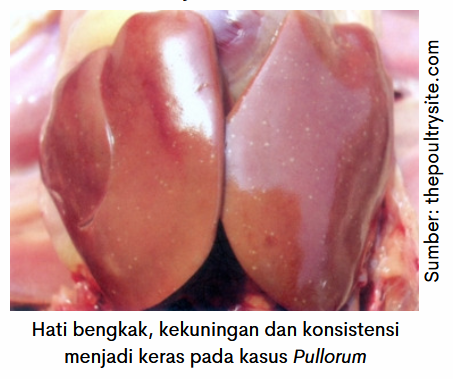
The disease is caused by bacteria Salmonella pullorum, which is a Gram ( - ) bacterium, rod-shaped with slightly rounded ends, is non-motile, and does not form spores. This disease is also called Lime diarrhea because the symptoms caused are white diarrhea like lime. Clinical symptoms in young chickens will be clearly visible, namely the presence of feces that stick to the cloaca and cause high mortality. Salmonella pullorum it can live along the digestive tract including the liver, spleen, heart and other organs. Changes in the liver of chickens affected by the disease pullorum characterized by swelling, yellow in color and firm in consistency.
Non-Infectious Diseases
- Fatty Liver Syndrome
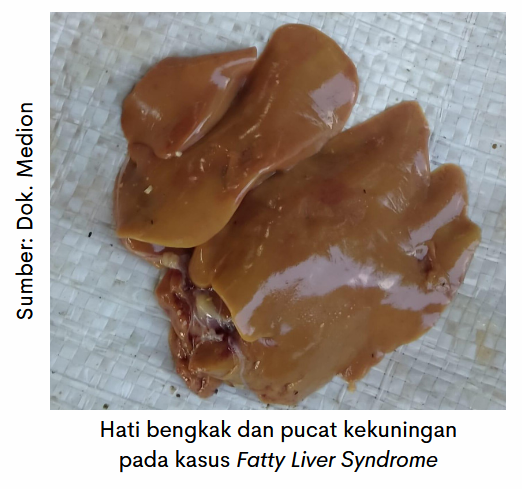
This disease is caused by the condition of excess fat levels in the liver in productive chickens. Excessive intake of energy in the ration and not as needed is the main causative factor of fatty liver in chickens. The high ratio of energy to protein causes high fat formation. Calcium deficiency also causes high energy and protein intake and stimulates fat accumulation. In this case, there is an increase in body weight and liver weight, which is accompanied by a decrease in egg production. Excessive consumption of feed also results in excessive nutrient intake and will be stored into fat. The body weight of laying hens should be considered because often the weight does not correspond to the age and phase of production, this is mainly due to the excess accumulation of fat in the abdominal cavity. When viewed during surgery, the carcass shows a swollen liver and pale yellowish color. In the abdominal cavity there will be a large accumulation of fat.
- Mycotoxicosis
The disease is caused by fungal toxins (mycotoxins). Mycotoxins are secondary metabolites of metabolism
mushrooms growing on rations. The types of mycotoxins that often affect poultry and are dangerous are aflatoxins, fusariotoxins and ochratoxins. Various mycotoxins can be found in agricultural products (corn, bran, soybeans) with varying amounts/concentrations. Ration raw materials with a moisture content of more than 14%, which is stored at a temperature of 10-42°C and humidity of more than 70% will be very easily contaminated with mold. And as the fungus grows, mycotoxins will immediately be produced (generated). Mycotoxicosis attacks in chickens are influenced by several factors, namely gender, age, physical condition, nutritional status, levels and types of mycotoxins, ration consumption, duration of attack, maintenance management and other infectious diseases. Mycotoxicosis is immunosuppressive, so it can provoke the appearance of other diseases. The reaction of mycotoxins with DNA / RNA will inhibit protein synthesis. Whereas if it reacts with the cell membrane it will inhibit the transport of nutrients in the cell. Mycotoxins can reduce the availability of digestive enzymes in chickens so that it can affect the digestive process and absorption of nutrients.
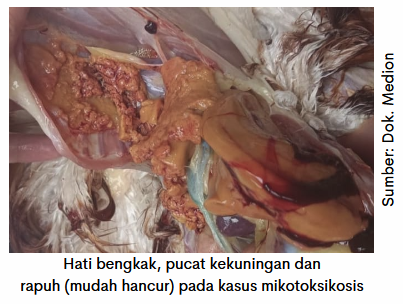
The incidence of mycotoxicosis in the field is still very high both in chickens broiler or layer (Graphic 1 and Graphic 2). This disease can cause changes in some organs such as gizzard erosion, swollen kidneys and other organs include the presence of damage to the liver. Changes in the liver are characterized by a pale yellowish tint, swelling and the consistency becomes crumbly.
Prevention of disorders and liver damage
Preventive measures in disorders and damage to chicken liver can be carried out as follows :
- Application of good ration management such as the use of pedestal/pallet at the time of ration storage, control the temperature, humidity and air circulation in the feed warehouse, apply the principle first in first out (FIFO) or first expired first out (FEFO), perform routine quality checks ration, giving toxin like Freetox/Fungitox to prevent mycotoxicosis and give the amount of ration according to the portion and age of the chicken to prevent cases Fatty Liver Syndrome.
- Implementation biosecurity strict such as isolation on sick chickens, traffic restrictions both personal, goods or vehicles, vector control, sanitation drinking water chickens use Desinsep and spray the cage regularly using disinfectants such as Neo Antisep on the cage contents and Sporades in an empty cage.
- Vaccinate chickens using Medivac IBH Emulsion to prevent cases of IBH, Medivac AI to prevent AI diseases, Cav and Marek vaccinations, vaccinations to prevent Fowl Cholera , conducted via Medivac Fowl Cholera.
- Give multivitamins such as Fortevit or immunostimulants such as Imustim to increase the body's resistance.
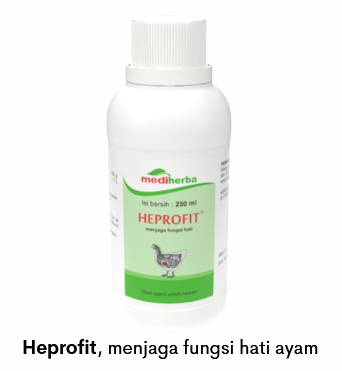
- Give Heprofit routinely to protect liver function remains optimal.
- Choosing a DOC that is free from infectious diseases, especially diseases that can cause neoplasia (tumors) such as LL and Mareks.
Treatment of disorders and liver damage
Treatment measures for disorders and damage to chicken liver can be done as follows :
- Give antibiotics in case of bacterial disease (Colibacillosis, Fowl Typhoid, Fowl Cholera, Pullorum) using Neo Meditril/Tinolin.
- Give toxin (Freetox) to treat cases of mycotoxicosis.
- Add supportive for liver to help improve liver function using Heprofit which is herbal hepatoprotectors.
Based on the above, many factors can cause liver disorders and damage that can result in decreased liver function. Various efforts can be made to maintain optimal liver function, one of which is by routinely giving supportive herbs for the liver. If the liver function is good, then the performance of the chicken will be optimal.