Since last year it has been banned Antibiotic Growth Promoter (AGP) in chicken feed, various efforts are made by farmers to start looking for materials or other substances that can be used in chicken health programs. Materials that do not cause negative effects, especially do not trigger resistance, do not cause residue in chickens but are able to maintain chicken health and increase productivity.
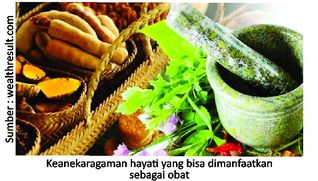
One option is herbal breeders. The use of herbs as well as feed additive or as treatment tends to increase. Moreover, people have known the use of plants as medicine for a long time, but only limited to hereditary knowledge as a form of interaction between society and its environment. Each region in Indonesia has a diversity of plants that are distinctive and different from one another. Utilization of plant resources can be an effort to preserve biodiversity and domestication of medicinal plants (Kandari et al., 2012).
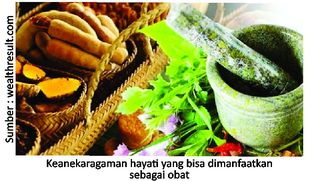
Getting To Know Herbs
Herbs are additives of plant origin, sarian (Galenic) preparations, or mixtures of these materials containing secondary metabolites. Herbs in general can be interpreted also all types of plants that contain natural chemical compounds that have pharmacological effects (healing effects) against acute to chronic diseases (Suryanto and Setiawan, 2013). The next development of phytobiotics in the form of a mixture of herbal plants are divided into three classifications, namely :
- Herbal medicine herbs are traditionally provided, for example in the form of steeping powder or liquid that contains all the ingredients of plants that make up the herbal medicine. Usually herbal medicine is made with reference to ancestral or hereditary recipes. Herbal medicine is made by not doing scientific to clinical proof, but enough with empirical evidence (experience) and physical observation.
- Standardized Herbal medicine (OHT) standardized herbal medicine is made from plant extracts by pre-clinical trials for scientific proof of the standard content of efficacious ingredients, the standard of manufacture of medicinal plant extracts, hygienic drug manufacturing standards and acute and chronic toxicity tests. In the manufacturing process, OHT already uses complex equipment.
- Standardized Herbal phytopharmaceuticals undergo further development into phytopharmaceuticals when in the process of making clinical trials in humans.
Different types of herbs for chickens
As mentioned earlier, Indonesia has a rich biodiversity. There are 30,000 species of plants in Indonesia. Where about 7,500 species of which include plants that are efficacious to be used as medicine. The number of medicinal plants that have been used is only about 1,000-1,200 types, which are routinely used by the traditional medicine industry is only about 300 types (BPOM RI, 2016).
In general, the active ingredients of herbal plants are found in the form of secondary metabolites whose role is important for the survival of the plant species. One plant usually produces more than one type of secondary metabolite (organic acids, essential oils, etc.) so it is possible in one plant to have more than one pharmacological effect. Most herbs have antibacterial, coccidiostatic, anthelmintic, antioxidant, anti-inflammatory or even antiviral properties. Herbal medicine has been used for hundreds of years and shows its properties to prevent disease, improve health, and accelerate recovery from disease.
The composition in herbal chicken products varies from various combinations of types of herbs. Among poultry farming, some examples of plants commonly used to make herbs include :
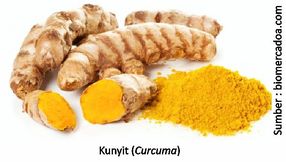
- KunyitCurcuma extract(A) the main component of the central nervous system (Curcuma extractthey are yellow and yellow in color. The active substances in turmeric extract can accelerate the process of metabolism (digestion) of nutrients through stimulation of the work of digestive enzymes, as well as increased secretion of bile glands to accelerate the breakdown of nutrients (especially fats, red). The effect is, the stomach empties faster and the appetite of chickens increases (Handayani and Maryani, 2002). The content of active substances in the extract Curcuma extract able to inhibit the growth of harmful bacteria (pathogens) by disrupting the permeability of cell membranes (Oomah, 2000). According to Kusuma Wardhani (1988) in Agustiana (1996), giving turmeric in rations can increase body weight, optimize feed conversion, and reduce fat.
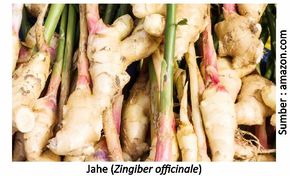
- GingerZingiber officinale) Ginger contains essential oils that are anti-inflammatory (anti-inflammatory), increase appetite, improve digestive health, and are antioxidants.
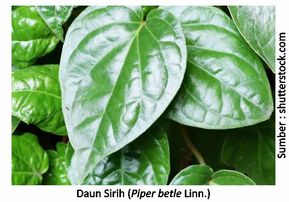
- Betel LeafPiper betle Linn.) Betel leaf flour (Piper betle Linn.) contains antibacterial substances and can lower cholesterol levels of meat. Water fraction of betel leaf contains compounds flavonoids which can help reduce the accumulation of body fat and lower blood cholesterol levels by increasing the excretion of bile acids and reducing blood viscosity. Thus reducing the occurrence of fat deposition in blood vessels (Carvajall-Zarrabak et al., 2005).
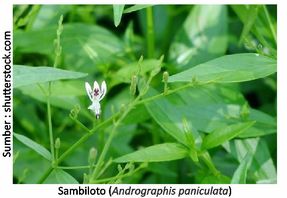
- SambilotoAndrographis paniculata) In general sambiloto used as a drug of gastrointestinal infections (Sindermsuk, 1993), diarrhea (Duke and Ayensu, 1985), respiratory infections, inhibit the growth of fungi (Cahyadi, 1996). In addition, the use of sambiloto is effective as an immunomodulator, increases the immune response and helps to increase the antibody titer to the results of vaccination.
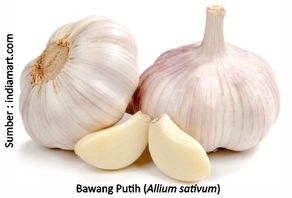
- Garlic (Allium sativum) Garlic is one of the antioxidant ingredients that can minimize the occurrence of oxidative stress (a condition in which the number of free radicals in the body exceeds capacity). Oxidative stress can be prevented and reduced by adequate and optimal intake of antioxidants into the body. Giving garlic extract in chicken ration can also accelerate growth, maintain endurance, improve the work of the digestive system so that the absorption of food is more optimal (Siti Dharmawati, 2013).
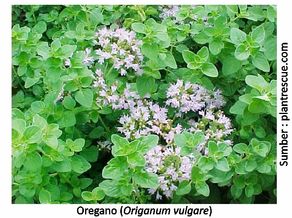
- OreganoOriganum vulgare) In animal husbandry, oregano is useful as a treatment for respiratory and digestive infections because it has antimicrobial as well as antioxidant properties.
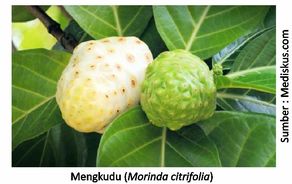
- NoniMorinda citrifolia.) Noni fruit pulp is taken from Noni Juice Juice waste which still contains bioactive compounds polyphenols and saponins. Bioactive Noni pulp can be used as feed additives and can improve the efficiency of the use of rations, especially in laying hens. Polyphenolic compounds in plants associated with the metabolic activity of animals can be anthracinone which is anti-bacterial. The benefits of Noni pulp are as feed additives for chickens and bioactive compounds replace the role of antibiotics.
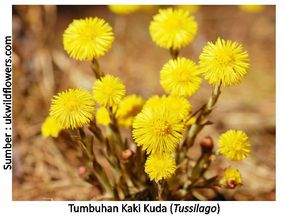
- Horse Foot PlantTussilago) Mucilage (water soluble polysaccharides) and felonic substances (flavonoids, tannins and felonic acid) are the main active compounds in this plant. Some benefits of giving Tussilago that is, it has antibacterial properties (Kokoska et al., 2002), anti-inflammatory and antioxidant (Diana Barragan Ferrer, 2016).
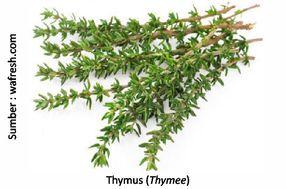
- Thymus (Thymee) Leaves Thymee contains essential oils, organic acids and phytogen compounds that have the benefit of inhibiting the growth of certain microorganisms such as Salmonella sp. and so on.
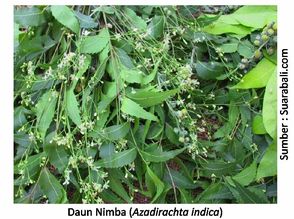
- Neem LeafAzadirachta indica) Neem leaves have been studied to have active ingredients that are beneficial as antibacterial by damaging the role of bacterial cell walls so as to inhibit their growth (Zhang, 2010). In addition, neem leaves also have free radical scavenging properties or antioxidants (Manikandan, 2009). Neem leaf extract can also act as a hepatoprotector in protecting the liver from damage (liver necrosis) (Alzohairy, 2016).
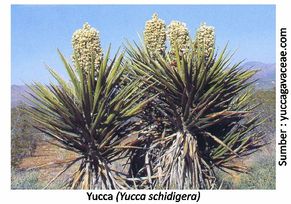
- Yucca (Yucca schidigera) Extract Yucca it has been known for a long time for its ability to reduce ammonia levels from feces in cages. Glycocomponent from Yucca it can bind ammonia and other harmful gases derived from livestock feces so as to prevent the release of toxic gases in the area of the cage and its surroundings.
Standardized Herbal Medicine
The application of traditional herbal medicine such as herbal medicine for poultry health is already prevalent, but still has shortcomings. As previously mentioned, the proof of the efficacy of new herbal medicine is limited to experience and there are no scientific research results and it cannot be ascertained the accuracy of the amount of active substance in each dose. To get the efficacy of herbal medicines that are proven to be safe and have been tested, standardized herbal medicines can be a recommendation in poultry health programs.
To get a good and safe standardized herbal medicine, the entire production process until distribution should not be done carelessly and need to pay attention to several aspects, including:
1. Selection of standardized plant raw materials
In the manufacture of herbal products required the provision of plant raw materials are continuous and continuous so that herbal production is not stopped. So far, there are not many medicinal plants that are widely cultivated, but only planted as needed on small plots or yards whose results are not planned as the main commodity by farmers.
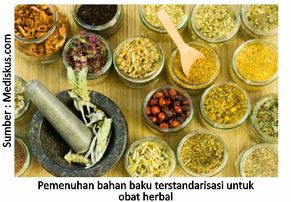
In small-scale herbal production, generally the raw materials used have not been standardized. On the contrary, standardization of raw materials is only carried out at the level of large industries that already produce herbal products. To meet the required standardization of Pharmacognosy science is the science that studies the parts of plants or animals that can be used as natural medicines to pass various tests. Especially in the field of extraction, analysis, and process technology so as to make raw materials that can be accounted for quality and kemempirisan (test data) chemical content. In addition, the quality of raw materials also varies greatly depending on the growing conditions, age and time of harvest, handling during harvest, and storage.
2. Manufacturing process
It is not an easy process to make standardized herbal concoctions. Not infrequently mistakes in the manufacturing process will actually damage the chemicals contained in the herbal plant ingredients. For example, excessive drying or heating can evaporate some essential oils and damage certain enzymes in them so that the chemical potential is reduced.
Although herbal active ingredients are not resistant to excessive heat, it does not mean there is no technology to make them remain stable during the extraction process. There are some drug companies that use special technologies, such as cold extraction technology, to protect the active substances of herbs from being damaged by heating.
According to PP RI No.72 Article 24 (1998), the packaging of pharmaceutical preparations or drugs must use packaging materials that do not harm health and/or may affect the change in quality requirements, safety, and efficacy of drugs. However, it should still guarantee the drug is in good condition during transportation and storage.
According to the Ministry of Agriculture (decree of the Minister of Agriculture No. 453 of 2000 on natural medicines for Animals), Regulations and standards for the manufacture, supply, and circulation of herbal products for animals in Indonesia are the same as synthetic products, among which are:
- Herbal products intended for animals (including poultry) must be safe for animals, humans and the environment. One of the concerns is the contamination of herbal plants by heavy metals and insecticides.
- Herbal products must have efficacy according to the purpose of treatment (for Disease Prevention, disease treatment, or growth promoter) and quality with appropriate quality standards (passed the Test at the Center for quality testing and certification of Veterinary Drugs/BBPMSOH).
- There are restrictions on the number of types of herbal/plant ingredients that may be used in one product. For example, in one product at most 10 types of plants are contained. This is because the testing process is difficult, long, and not cheap.
- There is also the possibility of it happening. “drug interaction” from each type of herbal plant if it contains more than one type of herb. Whether synergistic, addition, or antagonistic.
- It is necessary to standardize the size / dosage used. For example, the size of “handfuls” should be standardized by mentioning the units, for example (weight = grams, volume = ml).
- It is necessary to standardize the dosage for how much / amount, time, and frequency of use in a day. Herbs used for the treatment of certain diseases can have a negative effect when their use is not properly dosed. In order to standardize this dose because the determination of how the application and dosage of traditional herbal products are often still an obstacle for farmers because the consistency of the dose of the first, second, and so on is not optimal (doses sometimes still changing). This is due to dose response data from research/clinical studies is still limited, not all types of herbal plants have gone through standard procedures until clinical trials (Kusumaning, 2012).
So in the manufacturing process it is necessary to go through several stages such as research, standardization until it comes to product development. The development of standardized herbal medicine as a herbal product that is more effective and feasible because it has been standardized on raw materials and pre-clinical trials Simplicia (Ministry of Agriculture, 2000). In addition, the herbal production process is also adapted to the requirements and standards such as how to make good veterinary drugs (CPOHB), How To Make Good Drugs (CPOB), drug and food manufacturing Agency regulations (BPOM), and the Indonesian Veterinary Drug Pharmacopoeia (FOHI).
3. Meet product quality and safety requirements
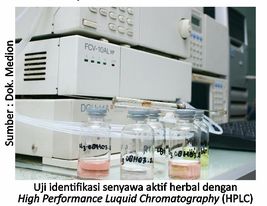
To be able to guarantee the quality and quality of standardized herbal medicines, standardization and identification are carried out in the entire production process. Quality control in herbal production includes all analytical activities carried out in the laboratory including sampling, examination of raw material testing, semi-finished products, to finished products (BPOM, 2006).
Regarding the use of herbal products, there is no prohibition on their use, but you should choose herbal products that are standardized. Several veterinary drug companies, including Medion, have now developed several herbal products that are safe and have been standardized, both the quality of raw materials and finished products.
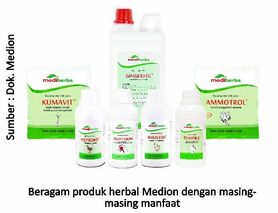
Mediherba umbrella brand for quality herbal products developed by Medion. The herbal products of Medion are classified by indication purpose. As antibacterial and antiprotozoal can be administered Fithera, herbal products to help cure bacterial infections (CRD, Korisa and Colibacillosis) and coccidiosis in poultry. For supplements, breeders can use Gingertol to restore energy in chickens or Kumavit which is able to increase livestock productivity. In addition, there are also Imustim as a supplement that can improve the immune system, appetite, and help in the recovery of livestock health. Heprofit also supplements that can be given to protect liver cells from damage and optimize poultry performance. As support when treatment or repair maintenance management can be given Ammotrol which serves to bind ammonia gas in the cage, as well as Respitoran to help overcome respiratory disorders during bacterial and viral infections and help overcome respiratory disorders due to reactions post the vaccine is active. All of these herbal products will be reviewed more fully later in the rubric.
May be useful.