Garbage in garbage out, the waste used will then produce waste. Thus the meaning of the language. As good as any ration formulation that has been prepared using least cost formulation the program will be useless if the feed raw materials used do not meet quality standards. The quality of feed raw materials must be controlled properly on a regular basis.
Quality control on all production lines
Quality control becomes a part that cannot be released in a process to produce quality feed. This quality control should be carried out on all lines of the production process, starting from the receipt of raw materials, during the production process and the resulting finished feed.
1. Acceptance of raw materials
Feed raw materials become the first vital point that determines the quality of the feed produced. The same raw material, derived from supplier the same is not necessarily the same quality. This is because the quality of raw materials is strongly influenced by the process of making raw materials, season conditions and handling delivery. Therefore, quality control is still carried out at each arrival of raw materials, although derived from supplier the same. Create form specifically for monitoring supplier in sending raw materials. Hope we can find out track record supplier us.
Quality control when receiving raw materials starts from quality control while still in the vehicle until the process of decreasing raw materials. Make a scheme of the location of the control of feed raw materials while in the vehicle. Always change the scheme of checking locations so that the quality of raw materials is always maintained and minimize fraud from supplier.
After passing the acceptance quality control, the raw materials are stored according to the type, date of arrival and supplier. Label the pile of raw materials and apply the system first in first out (FIFO) and first expired first out (FEFO). The application of FIFO and FEFO will ensure that the raw materials used are sequentially used so as to minimize quality loss or damage.
Quality control should also be carried out periodically if the feed raw materials are stored for a certain period of time. Quality control can be done once every 1 month or adjusted to the character of changes in raw materials. This is to see the quality change during storage. The hope is that this raw material still has nutrients that are in accordance with the range that we recommend so that the resulting feed has the appropriate nutritional content. And if we find raw materials that have decreased in quality, we can quickly anticipate it.
2. Production process
During the production process should be carried out quality control in the form of sampling, especially when mixing (mixing) and before packaging. With this quality control can be seen whether the raw material mixing process runs optimally so that the feed is mixed homogeneously. Constraints during the production process can also be detected earlier with this quality control.
3. Finished feed
The quality control of the finished feed is carried out after the feed is packaged and stored in the storage warehouse. This is done to ensure that the feed to be used or marketed has quality in accordance with what has been standardized. Take a sample of finished feed and save it as a live sample that we make control if later there are complaints or complaints from customers, both internal (feed used alone) and external (feed buyers).
Quality Control Techniques
Quality control during this time may be identified with something complicated, requiring special equipment and its own expertise. This assumption is not wrong, quality control is done to determine the component or small part of a raw material or feed that requires special methods and equipment, especially to determine the levels of certain nutrients. Nevertheless, there are methods simple (simple) that we can do to detect the quality or know the presence of foreign material contamination. And this method can be applied quickly and simply.
Here are some quality control methods that can be done, among others :
1. Organoleptic test
Organoleptic quality control methods use the body's organs to detect the quality of feed or feed ingredients, which includes the use of the senses of touch, taste, sight, and smell.
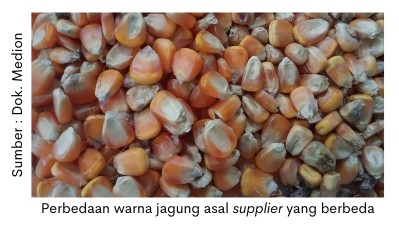
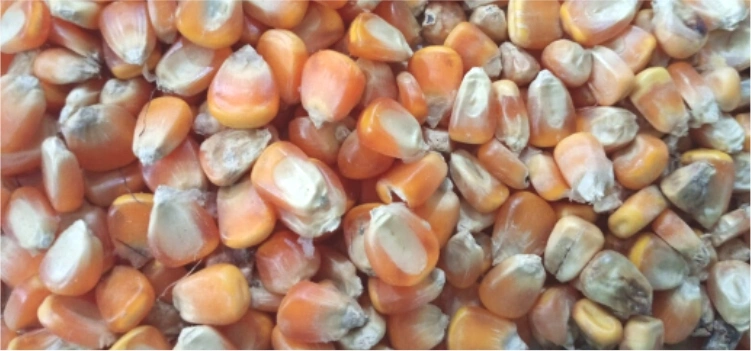
This organoleptic test method is simple and can be applied in the field. This simple way can lead to a simple but effective conclusion. Examples of colors in corn between yellow and Orange will be of different quality.
2. Microscopic test
Microscopic feed quality test method aims to determine the characteristics and particle size of each raw material using a microscope.
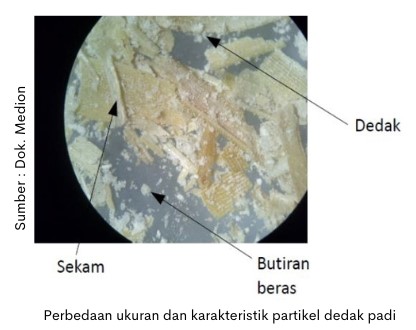
Differences in the characteristics and particle size of raw materials can provide a picture of contamination or counterfeiting in the raw material. Examples of microscopic tests of contamination of rice husks and grains in rice bran raw materials. However, this microscopic test is less practical to apply directly in the field.
3. Chemical test
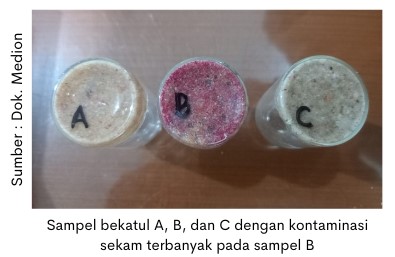
Chemical test can be a follow-up test to determine the quality of feed ingredients. The first two are: ((((((((((())))))))))) (test kits) and complex (proximate). Test kits can use Phlorotest by using a solution of phloroglucinol. When this solution is dripped on a sample of Bran, it is allowed to stand for 1-5 minutes, then there will be a change in color if the bran is contaminated with husks. The color of the Bran will be redder if the level of contamination of the husk is high.
If you encounter Bran with high levels of husk contamination conditions. Then treatment supplements that can be done with the addition of phytase enzymes such as Prozyme to help optimize the digestibility of the bran.
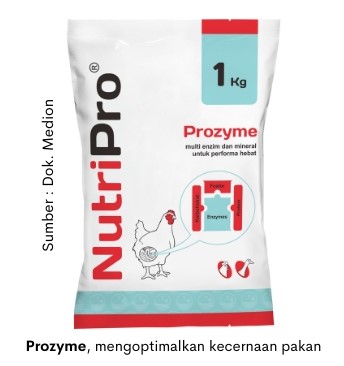
If you encounter Bran with high levels of husk contamination conditions. Then treatment supplements that can be done with the addition of phytase enzymes such as Prozyme to help optimize the digestibility of the bran.
Detecting quality with the Five Senses
Application of organoleptic quality control on some ration raw materials, among others :
- Corn
How to determine the quality of corn kernels by visually first seen how the packaging. Poor packaging is easily contaminated. The second is seen how the physical appearance. Good corn looks fresh, no holes and not a lot of dust and dirt. Dull Corn describes the corn has been stored for a long time, usually insects arise.
How to determine the content of moisture content in corn is by inserting our palms into the sack, if it feels hot indicates the moisture content of corn is still too high. The content of water content is still high is very detrimental because if stored a lot of shrinkage, easily arise fungi that produce aflatoxin and easy to arise insects that cause perforated corn thus reducing the quality.
Determination of the quality of ground corn circulating in the market is more difficult because the particles are powdery and fine. But based on experience can still be distinguished that the milled corn derived from New corn stock, the mill between the grain and flour is very visible, meaning the grain is quite a lot. Usually milled from Old Stock corn (low quality) will be finer and a little grain. Likewise, in milled corn mixed with corn bran, obviously fewer grains and lighter when compared with the results of milled and pure corn.
- Bran
How to determine the quality of Bran by visually no different from corn, the first to see how the packaging, because usually supplier Bran less attention to the quality of sacks used. Due to the use of sacks with makeshift Bran circulating many insects because it is easily contaminated. The second we see the appearance of Bran. Good Bran particles are smooth and flat, not clumping, fresh smell is not rancid and no visible mixture of husks. Good Bran when held in a fist can clump. For low quality bran contains a lot of husk mixture, not fused or lumpy when grasped.
- Soybean meal
Control the condition of the packaging of soybean meal, as this also determines its quality. Looking at the physical soybean meal can describe its quality. Good soybean meal is that the particles are small and flat and the color is yellowish. There are also circulating in the market, soybean meal with grains rather large and slightly brownish color, usually the quality of soybean meal is lower.
What needs to be watched out for in the selection of soybean meal is the presence of a mixture of low-grade materials, such as Caco₂ (limestone). In determining the quality of soybean meal is important to be really thorough and do not believe it. It is necessary to open the packaging (sack) and pay close attention to whether in the soybean meal foreign objects that can harm.
- Fish meal
Fishmeal varies greatly in quality. Imported fishmeal is usually of guaranteed quality. The physical appearance of a good fish meal is smooth, the color is greenish brown and the smell is not so pungent and when tasted it is not too salty. But in the market there are many local fishmeal that is Cheaper Than the price of imported fishmeal. In the local fishmeal there seems to be no standard because the remains of fish such as heads and bones are sold as fishmeal. This describes the quality of fishmeal on the market varies greatly. Fish flour as above is definitely far quality when compared to whole fish flour that is deliberately made as fish flour.
In the selection of fishmeal, the first thing to look at, especially local fishmeal, is how the particles look. If the fish meal is found bones, it means that the quality of the fish meal is not good. If the smell is too pungent this indicates the drying process is not perfect, if it tastes salty and held a little damp this indicates the fish meal contains high levels of salt and obviously low quality.
Rapid organoleptic and microscopic tests are very important for feed mills as well as farmers in the quality control of raw materials. Simple in execution, but effective. This test can save costs and time and is beneficial to farmers and feed mills. This field test is not only important to start buying raw materials, but also to decide whether laboratory tests (chemical tests) are needed or not, and finally to formulate what kind of field tests need to be carried out. A combination that is very practical and effective for farmers and livestock practitioners. Happy applying. Hope this article was useful. Greetings.