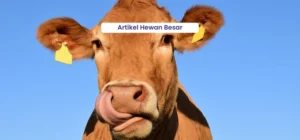
Cattle and goat fattening business in Indonesia continues to increase. Smallholder and industrial farmers strive to improve the quality of livestock production by optimizing its performance. One of these efforts is by increasing attention to handling livestock during transportation which can have a bad effect on livestock if not implemented properly.
Handling during transportation
Delivery of livestock from the location of the farm or market to another farm location required means of transportation, both by land and sea. Livestock transportation is important to note because it is related to the comfort of livestock and the economic value or potential losses that can be borne by farmers. Conditions ranging from the preparation of loading and unloading activities of livestock, hot and cold stress conditions, driver comfort in driving, conditions of hunger or dehydration livestock and the level of density in transport, fatigue, long travel time will be experienced by livestock. If farmers or drivers do not understand the handling it will be at risk of livestock being stressed, paralyzed even to death.
For the safety and comfort of livestock in transporting livestock, it is necessary to consider the following:
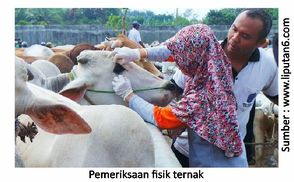
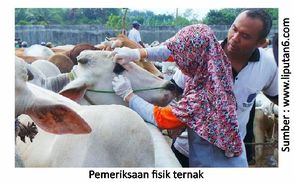
- Examination of the condition of livestock needs to be carried out a thorough physical examination of livestock from the eyes to the anus to determine the condition of the performance of livestock. Equally important is a laboratory examination that aims to prevent transmission of the disease to a new location, for example by examining blood samples. Cattle that are pregnant old, new born, injured, unable to stand or walk to transport should not be transported.
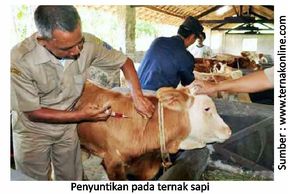
- Supplementation before cattle are transported, supplements need to be given to strengthen muscles, maintain stamina, increase energy and increase endurance. As we know it Bioselvita. Bioselvita given 3-4 times at intervals of 2-5 Days. Repetition can be given after arriving at the destination location.
- Vehicle control the livestock transport vehicle is really capable of transporting livestock, the transportation floor is strong and not slippery/ does not make misses, easy to clean, the area has no sharp edges or can cause injury, and is not too dense. The driver must also understand the responsibility by preparing an itinerary, completing documents and being able to operate the vehicle. If the condition of the vehicle is not good, it can cause livestock discomfort, easy to fall, the risk of broken legs that can cause livestock paralysis and even death.
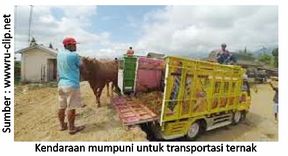
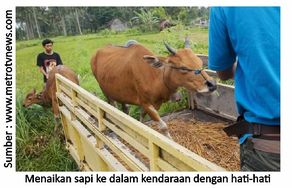
- Handling livestock Handling when raising livestock into the vehicle is done carefully and when in the truck is done well, especially the way of roping. Make sure the rope is not too short, because it can hurt or injure the livestock, and also not too long because it has the potential to widen the space for livestock in the truck so that it is difficult to control. Cattle that travel more than 3 hours, given the opportunity to break eating and drinking between the place of origin and destination.
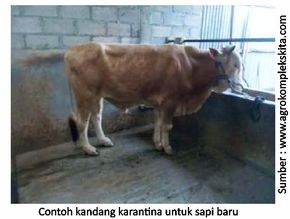
- After arriving at the destination location To avoid the risk of accidents when lowering livestock from the vehicle at the destination location, it is necessary to prepare the place of lowering livestock and done carefully. Do a health check on the livestock and give rest time for the livestock because the livestock is still exhausted and give time for adaptation. Provide fresh forage and enough drinking water. During the journey, cattle experience travel stress and dehydration, these conditions must be treated immediately. Give back bioselvita supplements to restore energy and maintain stamina. The newly arrived livestock needs to be quarantined to avoid the risk of disease transmission. Quarantine can be carried out for 14 days before being put in the main cage.