The health of the digestive tract is very influential on the growth performance and productivity of chickens. As we already know that the digestive tract is the organs that play a role in receiving rations, digesting, absorbing nutrients, and removing the rest of the unabsorbed rations. The nutrient utilization of such rations can only be optimally achieved if the gastrointestinal tract is in good health. Disease challenges in the field will also affect the health condition of chickens and facilitate the entry of digestive infection attacks.
Optimal digestive tract
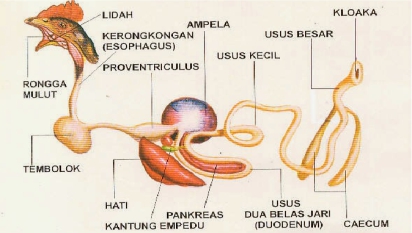
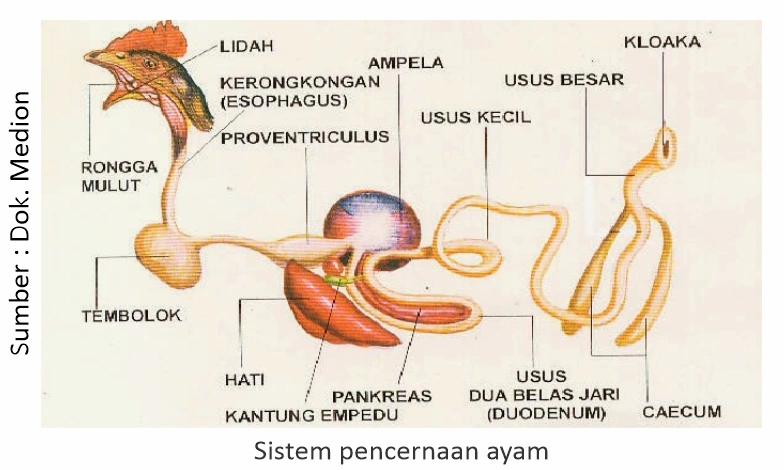
The digestive tract in chickens starts from the beak and ends in the cloaca. Organs associated with the digestive system include the beak, esophagus, cache (crop), proventriculus, Gizzard (gizzard), small intestine, appendix, colon, and cloaca. Other vital organs associated with the functioning of the digestive system are the liver and pancreas.
The intestinal tract is the part that is most populated naturally by several types of microflora made up of bacteria, protozoa nor mushrooms. The most important characteristic for a properly functioning gut is the balance of the bacterial population in it.
Under balanced conditions, the microflora will benefit the host. However, if the balance is disturbed, it will affect the morphology of the digestive tract, the emergence of digestive bacterial infections to damage the immune system of chickens.
The work of the digestive tract system in poultry breaks down the ration consumed into the most basic components (basic components) i.e. mechanically and chemically. Basic components from the next ration is absorbed (absorption) by the villi on the intestinal wall. Some of the criteria for a healthy poultry digestive tract are long intestinal villi and the integrity of the digestive tract. The intestinal villi serve to absorb the juices of food (nutrients) that extend from the base of the intestine towards the lumen (cavity) of the intestine where food is digested and absorbed. In principle, the villi that are getting longer and/or wider will increase the absorption area of nutrients in the intestine so that the absorption of nutrients is more optimal.
Parameters of a good gastrointestinal tract
The optimum condition of the gastrointestinal tract can be described as the intact state of its structure and function or simply the maximum condition of the digestive tract function in digesting and absorbing ration nutrients. Some of the parameters that can be used to assess the proper functioning of the digestive tract of chickens include:
- Good digestibility and absorption of dietary nutrients
- Minimal fecal odor
- Very low incidence of illness or mortality due to digestive disturbances
- Feed Convertion Ratio (FCR) (in line with standards)
Factors affecting the health of the digestive system of poultry
Many factors affect digestive health and performance in poultry including:
- Damage to intestinal mucosal tissue
Damage to the intestinal mucosal tissue will cause the process of digestion and absorption of nutrients is not optimal. As a result, there is a nutritional deficiency so that the formation of antibodies is disturbed. The intestinal mucosa and caeca tonsil is part of the local immune system in the gastrointestinal tract. Damage to these two organs resulted in chickens more susceptible to infection with other diseases. Along the tissues of the intestinal mucosa are antibody-producing lymphoid tissues (IgA). Damage to the intestinal mucosa will result in the release of plasma and red blood cells so that the levels of IgA, as a defense in the surface layer of the intestine also decreased.
- Quality of feed and drinking water
Imbalance of nutrients and non-compliance with the quality of the ration can affect the process of reception in the digestive tract so that it can damage certain organs. The digestive tract is very sensitive to high crude fiber and anti-nutrients or protein content that is too high causes excess uric acid levels followed by ammonia production. Vitamin A deficiency can also interfere with digestion in the chicken body due to a decrease in the work of the esophagus, gizzards and kidneys. In addition, bacterial contamination of the ration and/or drinking water can spread into the chicken's body and cause the chicken to develop gastrointestinal diseases.
- Presence of fungi and mycotoxin levels
What is sometimes not observed is the frequent presence of fungi in the ration. Mushrooms in the ration can reduce nutrients so that the absorption of nutrients by chickens is not optimal. Mycotoxins produced from fungi will also irritate the digestive tract such as irritating gizzard- gizzards on chicken.
- Balance of intestinal microflora
The balance of microflora or bacteria that are naturally present in the intestines is essentially dynamic, depending on the condition of the intestines. In a balanced state, the microflora provides benefits to the host. However, if this balance is disrupted, it can affect the morphology of the digestive tract, lead to the emergence of bacterial infections in the digestive system, and even damage the immune system of chickens. Bacteria that are normally present in the digestive tract of chickens can also cause infections, such as bacteria C. perfringens (causes of NE disease) when chickens are in poor condition and supported by uncomfortable environmental conditions, then outbreak NE may occur. This is triggered by the declining condition of the chicken's body, while the bacteria continue to increase in concentration.
- Stress in chickens
Stress in chickens is a normal physiological reaction in order to adapt to the situation and the treatment received by chickens. Examples such as cages that are too dense, temperatures that are too high, or sudden changes in rations. In stressful conditions, in the chicken's body there will be an increase in the production of corticosteroid hormones that can inhibit the immune organs in producing antibodies. This will trigger immunosuppressive effects that have an impact on chickens susceptible to disease, especially gastrointestinal diseases.
- Weather
Seeing the weather conditions that often change drastically at this time, the condition of the chicken's body tends to decrease due to stress and the body's defenses become not optimal so that the greater the chance of disease. The rainy season that still occurs in a volatile manner also indirectly affect the spread of the seeds of digestive tract diseases. Litter a damp and wet environment is a good medium for the growth of disease-causing microorganisms.
- Livestock health Status
Digestive disorders due to bacterial infections, for example, will cause the digestive tract to not work properly. In addition to being a place of absorption of nutrients, the digestive tract needs to be considered for its health in maintaining the network working system gut-associated lymphoid tissue or GALT. The digestive tract along the small intestine and large intestine contains lymphoid tissue scattered within the epithelium, lamina propria, or in the form of plates peyer’s patches. GALT is part of the lymphoid tissue that functions as a site for mucosal immune responses to produce antibodies and receive mucosal immune response stimuli (Marsetyawan, 1993).
Herbs to maintain the digestive tract of chickens
One of the efforts to maintain the digestive system of poultry is to optimize the health of the digestive tract and maintain the balance of intestinal microflora. There are several alternative products to maintain the health and performance of the digestive system, one of which is herbal products. Herbs are known to have various nutrients and chemical compounds (bioactive substances) are efficacious and able to function as supplements, antibacterial, antiparasitic, and antiprotozoa. Herbs are used to reduce the use of excessive chemical antibiotics in chickens because it is feared that it will lead to resistance if the administration is not according to the rules and cause residues in the resulting product.
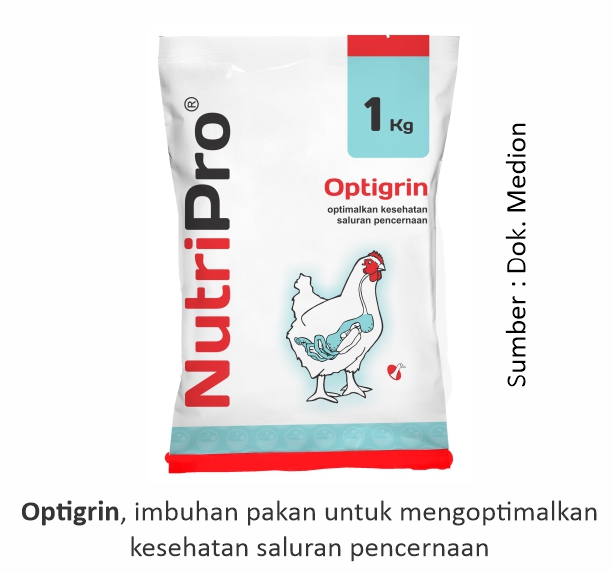
Optigrin is feed additive Medion with herbal content that can help maintain the health of the digestive tract of poultry so that optimal performance. Optigrin also has antibacterial and antiprotozoal properties so that it effectively suppresses the growth of pathogenic microbes (alternative to AGP). Other advantages of the product Optigrin that is able to improve the function of the body's defense system against disease agents.
Health management and maintenance measures are needed to control cases of digestive disorders so that more losses do not arise. Thus the discussion about improving the performance of the gastrointestinal tract with herbs. In addition to providing treatment to chickens, keep in mind other factors such as improved management and biosecurity.
May be useful.