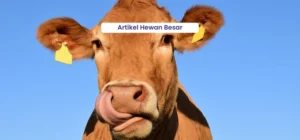
Recently, the topic of Jembrana disease in cows has been discussed again. This is related to information about the emergence of cases of Jembrana disease in cattle in several areas on the island of Sulawesi. This Jembrana disease appears in the provinces of Central Sulawesi, South Sulawesi and West Sulawesi.
Jembrana disease is a viral disease that is contagious in Balinese cattle. The transmission rate reaches 10-70% with a mortality rate of 10-50%. Economic losses caused by Jembrana disease are considerable due to high mortality especially in new areas and can affect inter-island livestock traffic.
Jembrana disease can attack the immune system, so the animal becomes more susceptible to other diseases. Jembrana disease is not transmitted from cattle to humans or is not zoonotic.
Causes Of Disease
Jembrana disease caused by Retroviruses, from group lentivirus and called Jembrana disease virus (JDV). Jembrana Virus is sensitive to chloroform and ether and resistant to sodium deosycholate. Inactivated by formalin and sensitive to extreme pH (3 and 12). Animals susceptible to Jembrana disease are Bali cattle in all age groups especially over 1 Year (6 months-6 years).
Transmission of the disease can occur horizontally, that is, direct contact between sick cows and healthy ones through urine, tears or saliva. Transmission can also be through insect vectors. These vectors include Culicoides sp. mosquitoes and Tabanus rubidus. Jembrana disease is not transmitted vertically or is not passed from mother to child as it is from animals carrier give birth to a normal calf. Cows that recover from Jembrana disease will be carrier. The Jembrana Virus remains detectable in lymphocyte cells for more than 2 years.
Clinical symptoms and Organ changes
The incubation period of Jembrana disease ranges from 4-7 days. It usually begins with the appearance of fever up to 41-42°C. Clinical symptoms that can appear include:
- High fever
- Depression, decreased appetite
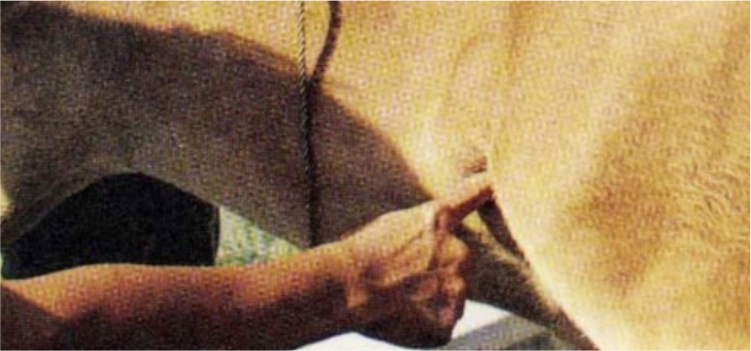
- Swelling of the lymph glands in the shoulder area (prescapularis), front of the knee (prefemoralis) and under the ear (parotid)

- Inflammation of the mucous membrane of the mouth
- Hypersalivation
- Diarrhea (may be mixed with blood)
- Blood sweat

- Miscarriage (at all times of pregnancy)
- Death
Balinese cows infected with Jembrana disease can show the following changes in internal organs:
- Swelling of the spleen
- Swollen lymph nodes
- Kidney swelling
- Intestinal inflammation
- Inflammation of the lungs
- Bleeding of various organs

Jembrana disease is not zoonotic so the meat is safe for consumption. The Virus is also not resistant to the heating process. The Virus will die at 55°C for 15 minutes. To ensure the safety and feasibility of meat consumed, meat should come from an official slaughterhouse (RPH). In the RPH cows are checked for health and examined for meat and offal by a veterinarian.
Prevention and treatment
Measures that can be taken to prevent Jembrana disease include:
- Quarantine at least 14 days for newly arrived livestock
- Avoid the entry of livestock from the outbreak area
- Increase the body's ability to absorb nutrients (Vita B Plex Bolus Extra Flavor)
- Clean the cage every day
- Control vector by eliminating habitat and insect elimination (Delatrin, Flytox)
- Equipment and equipment (Sporades)
- Vaccination of vulnerable animals
If you suspect cattle are showing symptoms, then what can be done:
- Isolation of symptomatic cattle
- Equipment and equipment (Medisep, Zaldes, Sporades)
- Report to the local animal husbandry and health office
- Handling by animal health workers according to livestock conditions:
- Anti-inflammatory, anti-pain, fever-lowering drugs (Medipiron Injection)
- Vitamins (Injekvit B-Plex, ADE-plex Inj)
- Treatment with antibiotics (Medoxy-LA, G-Mox 15% LA Inj, Tysinol)
The existence of information on cases of Jembrana disease, of course, increases the awareness of farmers against transmission. Prevention efforts that can be done are quarantine measures, sanitation, improving livestock immunity and vaccination as recommended by the government.