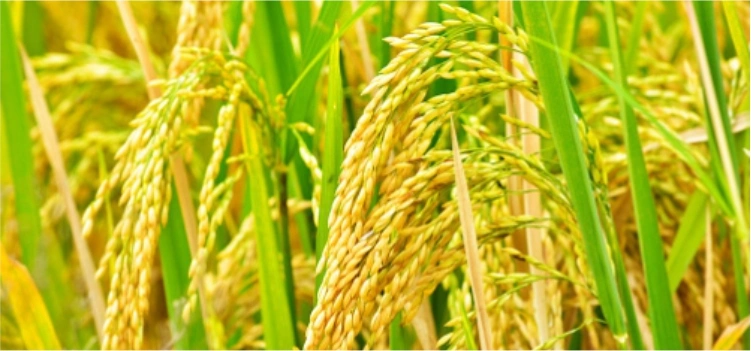
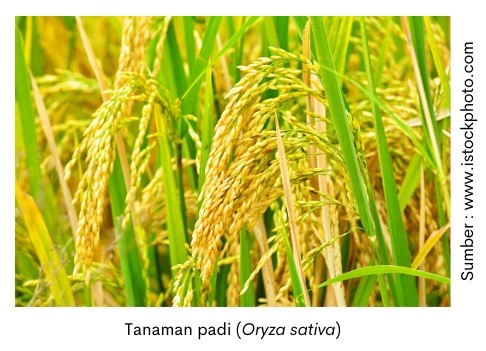
PadiOryza sativa) is an important rice-producing food crop. More than 50% of the world's population depends on rice in meeting carbohydrate needs (Childs, 2004). For most Asian countries, especially Indonesia rice is a staple food consumed every day. Rice is a strategic commodity that can have an impact on the social, economic, and political fields.
Rice production in Indonesia in 2022 is 54.74 million tons of GKG (ground dry grain) or 31.36 million tons of rice. The result was a slight increase compared to the previous year (Graph 1). The provinces of East Java, Central Java and West Java are the three highest rice producing provinces in Indonesia. According to the Central Bureau of Statistics (BPS, 2021) the total consumption of rice in Indonesia is 28.69 million tons. Rice demand is predicted to increase along with population growth in Indonesia.
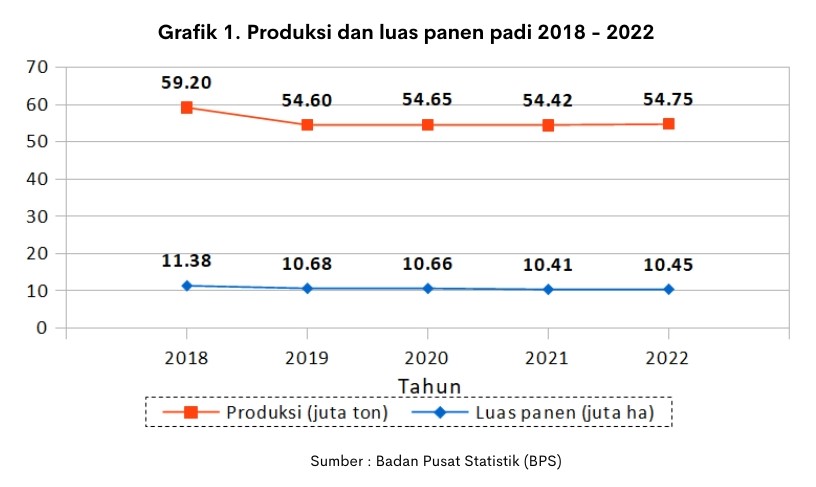
Production growth and rice harvest area did not increase significantly each year. In the period 2018-2022, rice production and harvested area decreased. This can occur due to many factors, including uncertain climate, expensive fertilizer prices, agricultural land conversion, decreased quality of agricultural land and plant disturbance organisms such as pests and diseases.
Various efforts need to be made to increase rice production in Indonesia. Efforts can be made, among others, by increasing the harvest area and optimizing cultivation technology. Cultivation technology that can be used, among others, the use of superior seed varieties, planting techniques, fertilization, irrigation, and control of plant pest organisms (OPT).
Rice Plant Pest Organisms
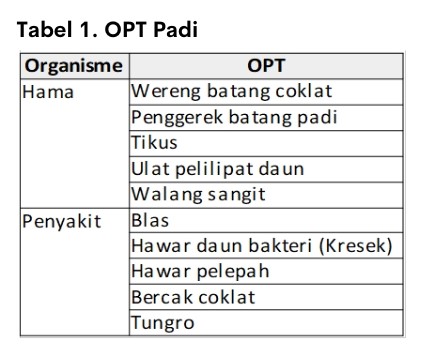
One of the factors that can affect rice production is plant destruction organisms (OPT). There are many types of pests that attack, both pests and diseases (Table 1). Pests that attack crops can cause losses because they can reduce crop yields. Therefore, pest control efforts are needed to prevent crop loss.
1. Planthopper Chocolate Bar
Planthopper Brown Rod/WBCNilaparvata lugens) is one of the pests on rice plants in Indonesia. WBC has been a pest of rice since 1931, but with a limited attack area in the area of Bogor Dramaga. The spread of WBC became more widespread in 1976/1977 and was reported to occur almost throughout Indonesia. Until now, WBC is the main pest in rice crops.
Brown leafhopper is the most dangerous pest compared to other pests. Although severe attacks do not occur every year, these pests are adaptable to new environments and are difficult to detect, so they can pose a threat at any time. The development of WBC attacks in the field fluctuates, from mild to severe attacks and cause crop failure (puso). In addition, WBC is a vector for the transmission of grass dwarf virus and hollow dwarf virus. WBC attack has the potential to disrupt the availability of rice, if there is no control efforts since the beginning.
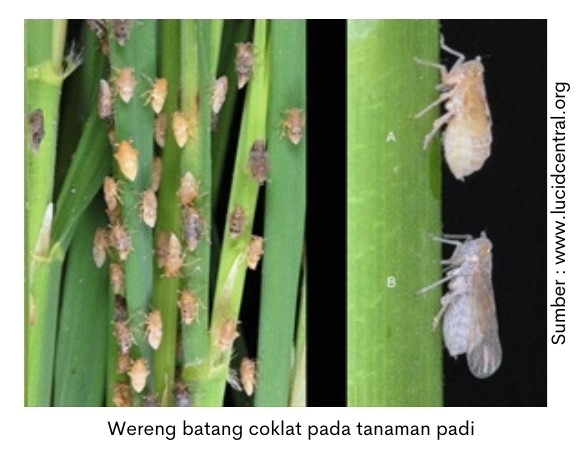
In the tropics WBC can persist throughout the year as long as there is a host plant. In general, WBC occurs in the rainy season with high humidity (70-80%), the optimum temperature of 28-30°C, low light intensity, lush plants, little wind, and high N fertilization. In the dry season WBC can grow quickly if it is still raining, so the environment becomes humid and hot.
Life Cycle Of Brown Bar Planthopper
The brown bar planthopper has a life cycle of 25-30 days, which consists of the egg, nymph and adult planthopper phases.
1. Eggs
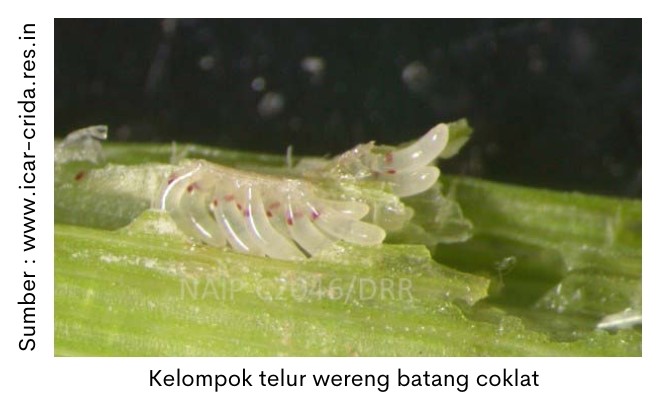
A female WBC can produce 270-900 eggs. Eggs are laid in groups, in a group of 3-21 eggs. WCB eggs are laid in groups at the base of the Leaf midrib, but when the population is high eggs are laid at the tips of the leaves. The eggs will hatch after 7-11 days.
2. Nymph
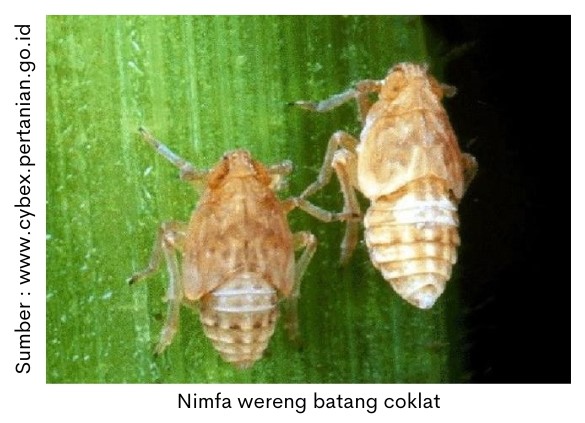
After hatching appear young leafhoppers called nymphs. Nymphs have a life span of 10-15 days. During its development the nymph undergoes 5 instars (molts).
3. Adult Leafhoppers
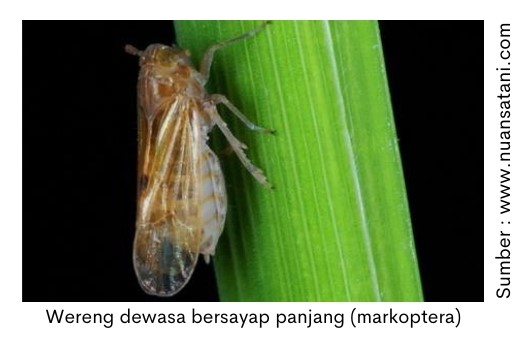
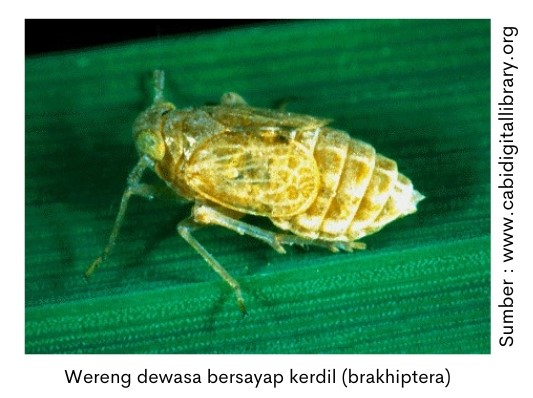
Adult leafhoppers live for 3-8 days. There are two forms of adult leafhoppers, namely long-winged (markoptera) and dwarf-winged (brakhiptera). Long-winged leafhoppers (markoptera) have the ability to migrate from place to place, while brakhiptera will settle.
Symptoms Of Damage
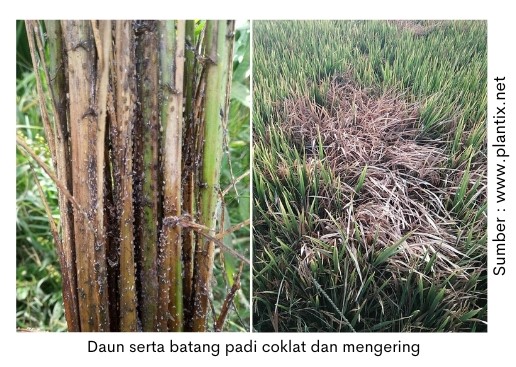
Brown stem leafhoppers from the nymph phase to adulthood damage plants by sucking the liquid on the plant. Symptoms in the form of leaves and stems of the plant turn yellow, then turn brown and dry out (hopperburn).
Control Way
Control of brown stem leafhoppers needs to be done to suppress development and reduce their impact on plants. There are various ways that are done to control pests and carried out in an integrated manner.
1. Technical culture
Conducting plant cultivation with certain techniques so as to make the conditions of the planting area less suitable for the development of pests.
- Clear the land and its surroundings of weeds and plant residues beforehand. Pests can live on other host plants.
- Plant in unison to limit pest food sources.
- Crop rotation to break the life cycle of pests.
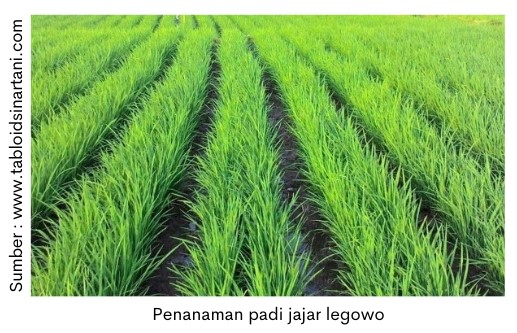
- Setting the planting distance to facilitate the movement of wind, sunlight, and lower humidity. Planting with logowo rows is the recommended way.
2. Trap lamplight trap)
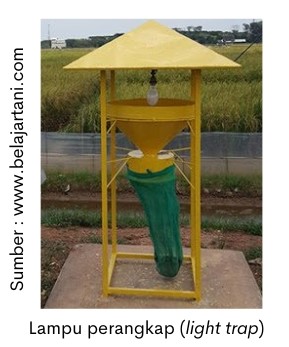
Trap lights become a tool to detect the presence of migrant planthoppers that come and control planthoppers on the land. Lamp traps are essential to prevent immigrant leafhoppers from damaging and laying eggs in rice plantings.
3. Biology
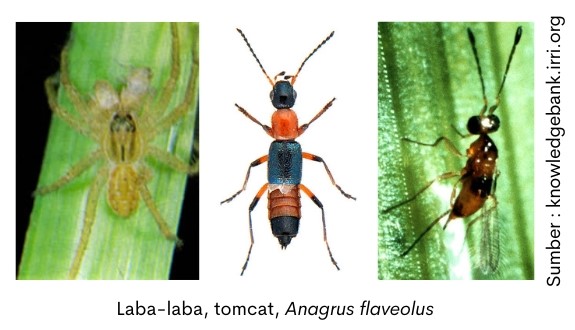
Biological control is the use of natural enemies. Natural enemies that can control the WBC include:
- Laba labaLycosa pseudoannulata)
- TomcatPaedorus fuscipes)
- Parasitoid eggsAnagrus flaveolus)
4. Chemical (Insecticide)
Chemical pest control is the most widely used means. The use of insecticides has advantages, among others, the most effective, efficient, practical, and quick control results. The selection of products used must be appropriate so that the target pests can be controlled effectively.
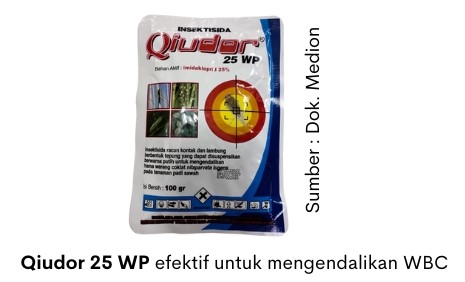
Qiudor 25 WP is an insecticide with the active ingredient imidacloprid that can be used to control planthopper Brown Rod. Qiudor has a contact and gastric way of working, so that pests that are exposed to spray or that eat parts that have been sprayed will die. Other insecticidal active ingredients that can be used for WBC are clotianidine, dinotefuran, and tiametoxam. The use of insecticides can be done from the beginning of the attack.