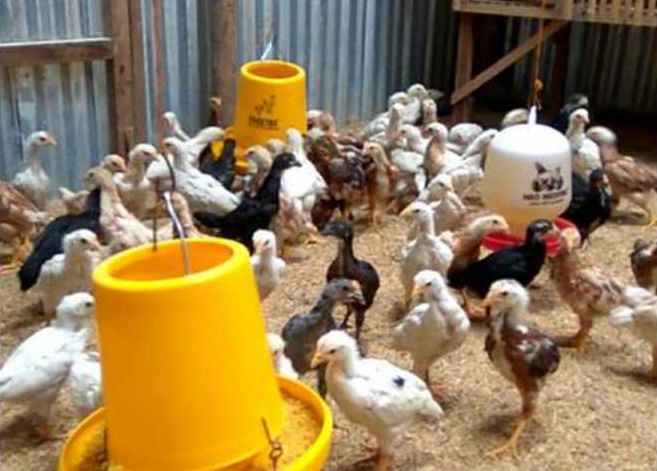
One of the challenges faced in the poultry farming business is the disruption of productivity to disease attacks that can arise at any time. So even with raising joper chickens, these obstacles are challenges that must be watched out for and immediate anticipation efforts. The following discussion is the main topic of this edition.
Productivity disorders and disease attacks
Joper chicken performance can be achieved optimally if the condition of the chicken is healthy and free from infection. In a normal situation or weather, adequate nutritional needs, good maintenance and free from disease-causing microorganisms, there will be no disruption in the continuity of chicken production. Factors causing impaired growth and productivity in chickens Joper grouped into 2 infectious and non-infectious factors.
A. Non-infectious
1. Stress
Stress is a term used to express the body's response, both physiological, chemical, and Behavioral to all forms of physical changes and disorders from outside the body. Stress can cause the productivity level of joper chicken to decrease starting from stunted growth. Stress can be caused by extreme weather changes or due to too hot temperatures above the comfort zone > 28°C.
In addition to stress due to changes in weather and temperature, the cause of stress in joper chickens can be due to other factors such as a noisy or crowded cage environment, less comfortable and less clean cage conditions, and changes in the quality or quantity of feed. Prolonged stress can suppress the formation of antibodies (immunosuppressive) so that the chicken's immune system decreases against disease.
2. Nutritional needs do not match
The adequacy of nutrients in the ration certainly has a big effect on the productivity and health condition of the joper chicken. If joper chickens lack the nutrients needed for growth and production, there will be a deficiency. In addition, excess nutrients such as high levels of protein can increase ammonia levels in feces. Ration with excess crude protein can also aggravate stressful conditions.
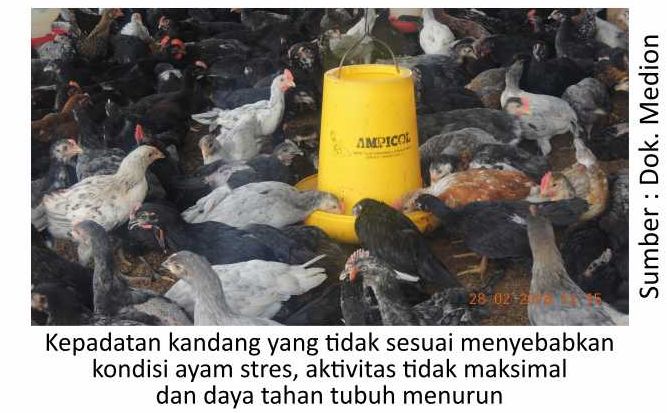
3. The density of the cage is not suitable
The high density level will cause the chicken to move freely, the cage temperature rises, the accumulation of ammonia gas from feces, adding to the heat stress so that the chicken is susceptible to disease.
4. Poor cage management
Poor ventilation and air circulation systems can interfere with the comfort of chickens to make it easier for diseases to infect. On the cage open house, a non-optimal curtain opening and closing system can cause chickens to be cold and exposed to rainwater tampias or airflow that is too tight. The high humidity in the cage also indirectly affect the quality litter.
B. Infectious
We need to note that joper chickens must remain prime and not susceptible to disease in order to produce maximum. Examples of diseases that commonly attack Joper chickens and need to be anticipated include :
1. Newcastle Disease (ND)
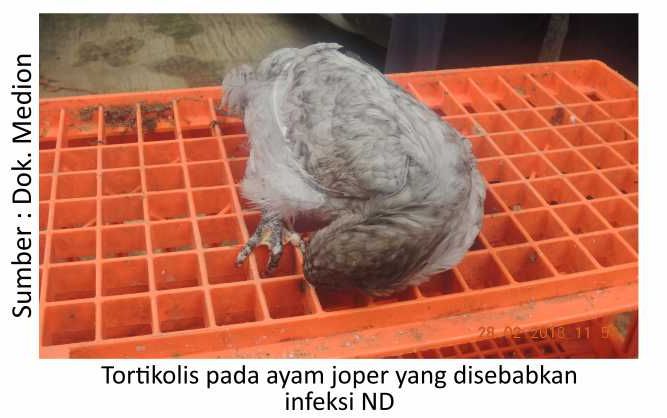
In general, the symptoms of tetelo or ND disease in joper chickens are similar to the symptoms of ND disease in purebred chickens, among which chickens have difficulty breathing, snoring sounds, look lethargic, sneeze, sleepy eyes, no appetite, and greenish watery stools. More specifically, chickens affected by ND are found with drooping or descending wings, as well as twisted necks (torticollis). Its loss causes a high morbidity rate of 80-100% to death with a pattern of increasing day by day.
2. Avian Influenza (AI)
AI disease attacks on joper chickens are almost the same as in purebred chickens. The H5N1 virus (High Pathogenicity Avian Influenza) which there are 2 clade specifically optimal clade 2.1.3 and 2.3.2 and AI H9N2 virus or Low Pathogenicity Avian Influenza (LPAI) that has been identified. HPAI is acute and is characterized by a rapidly progressing disease process. Typical symptoms in HPAI attacks include high mortality, cessation of egg production or decreased production, depression, bluish Combs and wattles (cyanosis), conjunctivitis, green diarrhea, accumulation of mucus in the oral cavity, bleeding in the legs (shank), snoring and sometimes nervous disorders (torticollis) are found. While in LPAI attacks often found symptoms such as respiratory disorders (such as difficulty breathing and snoring), conjunctivitis, decreased feed intake and a very drastic decrease in egg production. However, the mortality rate tends to be low and can still be said to be normal.
3. Marek’s disease
Marek's disease is a lymphoproliferative disease in chickens that is easily transmitted and is characterized by tumors in peripheral nerves and tumors in various internal organs, skin, and muscles. Clinical symptoms in classic cases are generally damage (swelling and paralysis) to the peripheral nerves, namely the nerves ischiadicus what causes paralysis of the legs, nervus brachialis which causes paralysis in the wings (drooping), as well as nervus vagus which causes disturbances in breathing, as well as the neck becomes twisted (torticollis).
4. Infectious Coryza
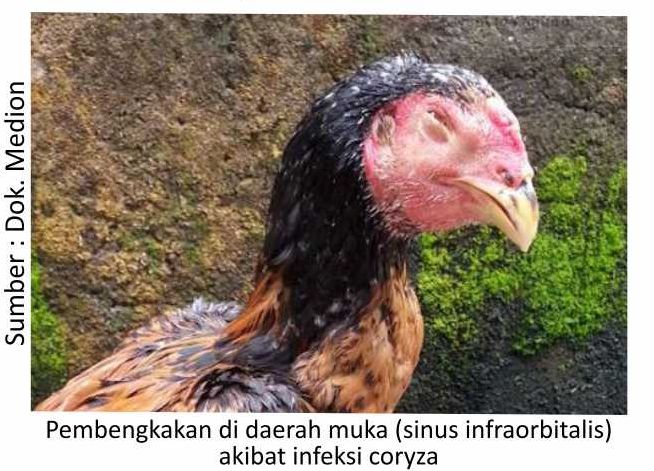
This disease is rather rare in joper chickens, but often attacks when the cage conditions are too humid, especially when the rainy season arrives. Chickens affected by korisa will experience swelling of the face, especially around the infraorbital sinus. In addition, not infrequently found also watery eyes like crying. When a carcass surgery is performed, it will be found around the infraorbital sinus, the presence of mucus or dirt from the nose which is initially thin and then thickens with sneezing.
5. Cholera
Cholera disease is an infectious disease caused by bacteria Pasteurella multocida. In the acute form of cholera, symptoms are often found hours or days before death. Symptoms that appear include decreased appetite, diarrhea that is initially yellowish and eventually greenish with mucus (mucus), increased respiratory rate, swollen face and Wattle area, sometimes cyanosis (bluish-purple discoloration of the skin) appears on the comb and Wattle. In the chronic form of cholera, where the disease lasts a long time (weeks to months), symptoms appear in the form of shortness of breath, dull fur, cloudy green diarrhea, swelling of the head and Wattle filled with liquid or cheesy mass, mucous discharge from the nose and mouth, and sometimes swelling of the legs and paralysis.
6. Chronic Respiratory Diseases (CRD)
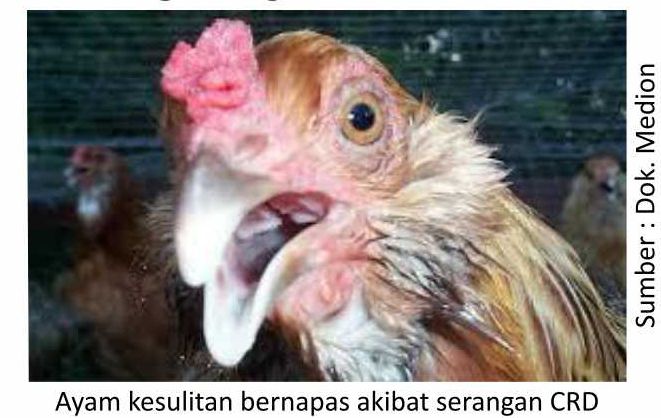
The clinical symptoms of CRD in joper chickens are similar to those of common breeds. Clinical symptoms that are often seen include snoring and difficulty breathing chickens. Other symptoms that appear are inflammation of the conjunctiva of the eye so that it is swollen and watery. Visible anatomical pathological changes include cavities and sinuses of the slimy nose. If these changes occur for a long time, the mucus will be yellow with a cheesy consistency. The air sacs become cloudy or contain mucus.
7. Coccidiosis
The problem of coccidiosis or often called defecation is a problem in all types of poultry. Many cases of coccidiosis occur in chickens kept in postal cages using litter. Condition litter which is damp because of the pile litter which is too much coupled with the spill of rations, drinking water and rainwater will greatly support the breeding Eimeria sp. Chickens attacked by coccidiosis will initially show clinical symptoms such as drowsiness, wings drooping down, feathers rough (not shiny), low appetite (anorexia), and anemia.
8. Lymphoid Leukosis (LL)
Lymphoid Leukosis (LL) more commonly known by the name Big Liver Diseas. This disease is caused by Leukovirus this includes complex forms of leukosis. The disease is easily transmitted by direct contact between sick chickens (horizontally) and vertically. Symptoms that appear in LL disease in the form of decreased appetite, depression, Combs and wattles look pale to bluish, the stomach appears enlarged and when palpated feels hard and has changes in the typical anatomical pathology in the liver. Tumors are found in various organs of the body after 4 months of age chickens on the kidneys, lungs, heart and other organs, but most often found in the liver. The Tumor can be nodular (lump), diffuse (spread) or a combination of these forms.
9. Worms
Like purebred chickens, joper chickens can also be infected with worms. These attacks generally did not cause deaths, but inflicted considerable economic losses. Worms cause chickens to look thin because they absorb nutrients in the intestines of chickens, so that chicken growth is disrupted. Other symptoms of chicken joper terseranga worms that look weak, pale, wings appear down and decreased appetite. Tapeworms and gilig worms are most commonly found in chickens.
10. Histomoniasisblack head)
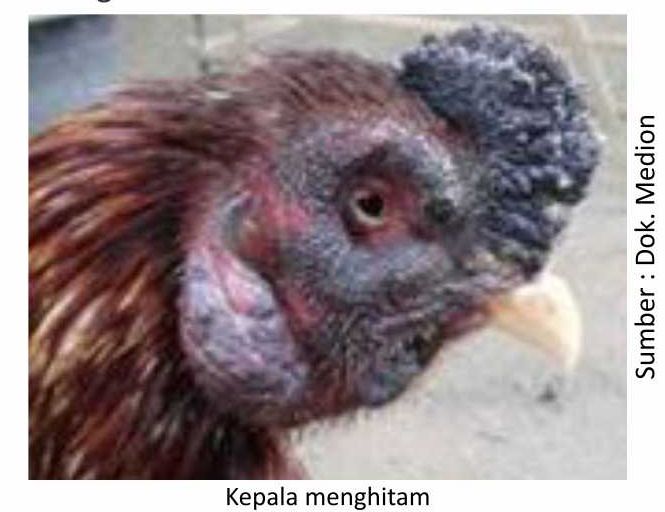
This disease is often called black head. Histomoniasis is a parasitic disease caused by Histomonas meleagridis. Histomonas meleagridis requires mechanical vectors namely worms heterakis gallinarum (live in the cecum of chickens) and some earthworms that live on farms. Chickens are susceptible to infection with this disease at the age of 4-6 weeks. Chicken will experience difficulty eating( anorexia), lethargy, wings hanging, stiff in walking and of course seen on the head looks blackish (black head). Chickens also have yellowish to red diarrhea because the intestines, especially the cecum, are infected. At anatomical pathology changes are found thickened and reddish cecum, intestinal lumen contains masses resembling cheese, necrotic tissue and blood components. As well as the liver is enlarged, green or brownish in color and undergoes necrosis.
11. Smallpoxfowl pox)
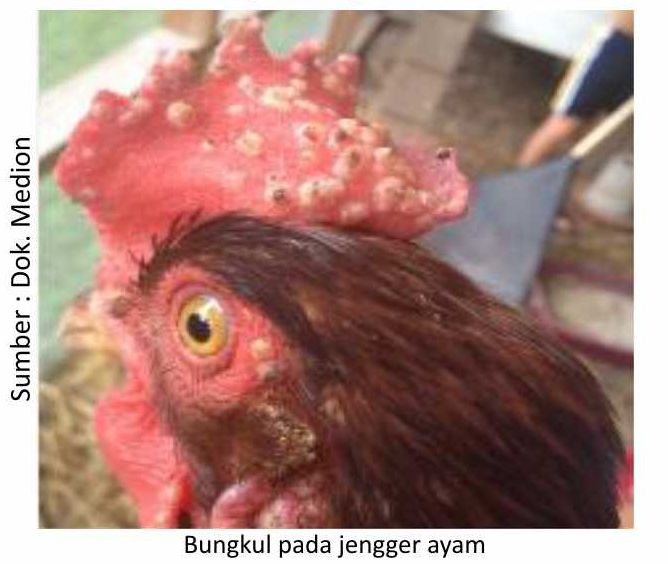
Symptoms seen in chickens that have smallpox are seen in dry and wet forms. The dry form is characterized by small grayish humps. The humpback is clearly visible on the hairless parts of the skin such as wattles, combs, the base of the beak, the skin around the eyeballs, the skin of the feet and toes. Over time, the humpback grows and eventually breaks, giving rise to a scab. Meanwhile, in the wet form, a small white humpback will be found in the area of the respiratory and digestive tract. If observed, then the humpback forms like cheese.
Maintain the health of Joper chicken for maximum production
Several efforts can be made to maintain the health of joper chickens and help maximize productivity, including:
1. Create comfortable conditions for chickens
Comfortable conditions must be felt by chickens starting from the moment DOC arrives at the cage. The sanitation and disinfection of the cage has been carried out and the recommended empty cage time before DOC enters is 14 days from the moment the cage is clean. On time brooding period,, we are required to be able to create a comfortable place and conditions for DOC as a first step to achieve optimal performance.
The existence of ventilation is absolutely necessary to get optimal air circulation so as to prevent disease seeds from mixing with clean air that enters the cage. Strive for the ideal temperature for chicken joper which is about 33-36°C for the period brooding period, and 28-30°C for adult chickens.
Use litter with an initial thickness of about 8-12 cm for postal cages and 5-8 cm for stage cages. Replace litter wet and damp with litter dry ones to reduce ammonia. Give Ammotrol which is dissolved into drinking water or sprayed into feces to reduce ammonia in the cage.
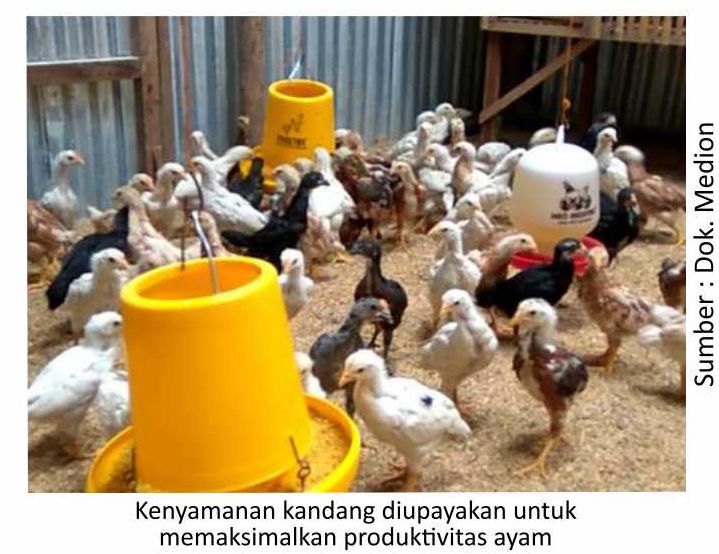
Adjust the density of the cage. If the area of the cage is given more freely, it can ensure that all joper chickens get the same opportunity to get rations, drinking water, movement space and oxygen so that the growth and production of chickens are uniform and prevent disease.
2. Provide rations and drinking water as needed and quality
Adequacy of nutrition and drinking water. Adequate nutrition can also prevent Joper chickens from experiencing deficiencies that cause impaired growth and decreased endurance of Joper chickens. The principle of feeding first in first out as well as the regulation of humidity in cages and storage sheds are able to suppress the growth of fungi. Storage of feed needs to be provided with a board base with a height of about 5-10 cm.
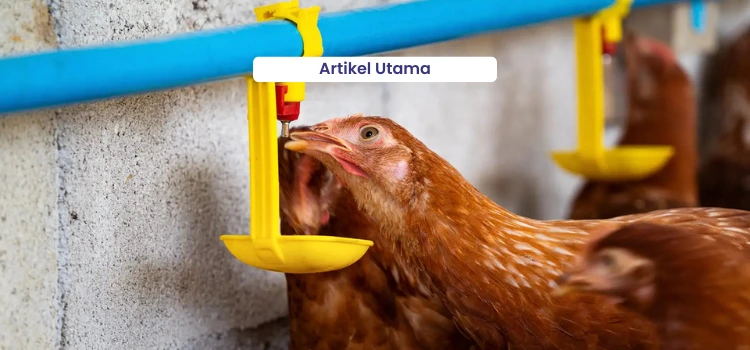
Dari segi kualitas fisik, air tidak boleh berwarna, berasa, dan berbau. Air juga harus terbebas dari partikel-partikel terlarut (tidak keruh). Kondisi fisik air yang kurang baik akan menurunkan tingkat konsumsi air minum ayam. Untuk suhu air minum yang baik bagi ayam adalah 20-24°C dan jika berada di luar rentang suhu tersebut, maka nafsu minum ayam akan hilang. Demikian dengan kualitas kimia seperti pH. Air dengan pH asam (<6,5) bisa menurunkan konsumsi air minum ayam.
3. Boost immunity with vaccination
Ayam joper as a local chicken is one of the birds that have a fairly high resistance to disease, but still have to be vaccinated aimed at bullying the immune system in the body in order to produce a more optimal immune system. Some things that need to be considered in vaccination are vaccination programs adapted to local conditions, the right time and technique for administering vaccines, uniform vaccine doses, and given to healthy chickens. Make sure the syringe is sterile and the needle is sharp if the vaccine application is by injection (injection).
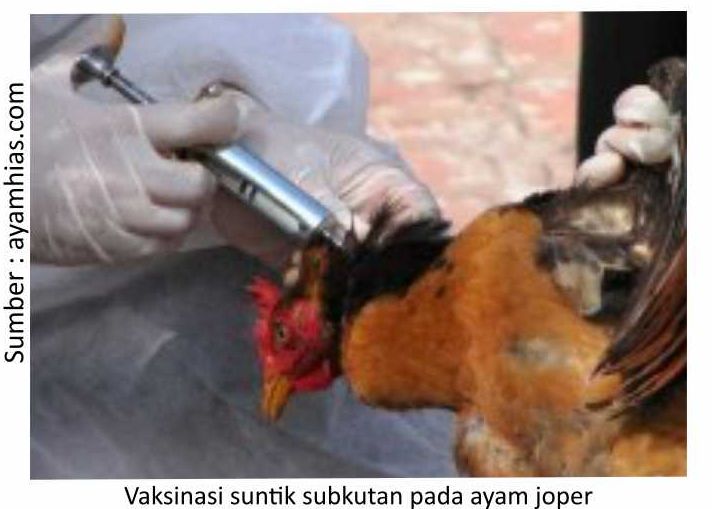
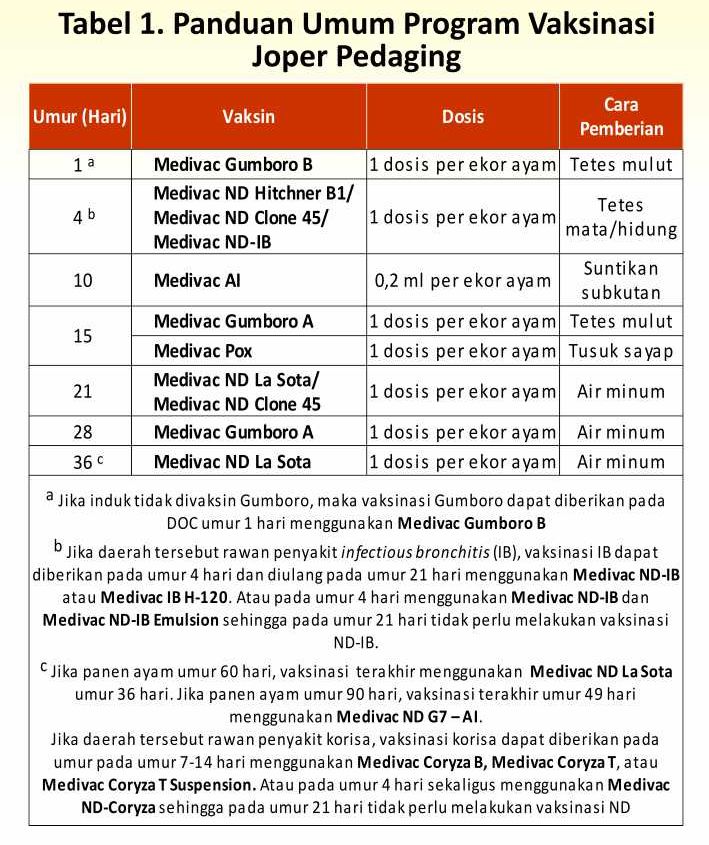
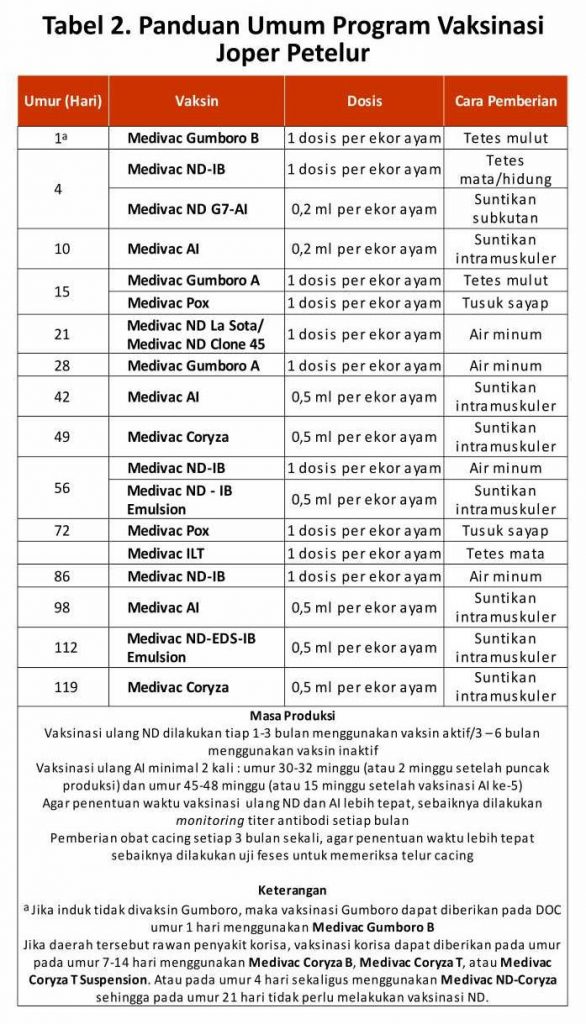
The following is an example of a general guide to vaccination programs (Tables 1 and 2) that can be done on broiler and laying hens. This vaccination Program is not standard, but can vary in one farm with the farm the others. This can be adjusted to the history of disease and conditions in the field.
4. Minimize the seeds of disease in the environment
Minimal effort is to sanitize and disinfect cages and equipment. When empty cage can use Formades after the cage is washed. Feed and drinking places should be washed and disinfected regularly with Medisep. Do it anyway flushing to clean moss or biofilm which is attached to the water pipe. Job descriptions: responsible to ensure the quality of the product and the quality of the product. responsible to ensure the quality of the product. responsible to ensure the quality of the product. responsible to ensure the quality of the product. responsible to ensure the quality of the product Medisep/Antisep/Neo Antisep and drinking water sanitation with Desinsep. At the time of vaccination through drinking water, it can be added Medimilk or Netrabil to help improve the quality of drinking water so that the potential of the vaccine virus in bluffing antibody formation becomes optimal.
Control wild animals and disease vectors such as rats that roam the cage and can spread disease seeds. In the maintenance of broiler chickens and laying hens, it is necessary to pay attention to the handling of feces. Humid conditions result in fly larvae easily develop. In addition to being a vector of disease, flies in large numbers will make the breeder/cage children feel uncomfortable in the cage and affect performance. To get rid of flies, you can use products Larvatox, Flytox and Delatrin.
5. Supplementation and medication
Supplementation aims to reduce stress, increase stamina and body power of chickens, and maintain optimal productivity. Its type of supplement consists of vitamins, minerals, amino acids and immunostimulants. Some products that can be given include Vita Stress and Imustim.
In maintaining the digestive health of chickens against bacterial infections, appropriate medication is needed. To prevent attacks can be given a variety of alternative products instead of AGP. Fithera represents Medion herbs specially developed to help cure and prevent bacterial infections (CRD, Korisa and Colibacillosis) and coccidiosis in poultry. If there have been cases of infection, take appropriate treatment based on diagnosis, drug selection, and dosage and rules of use.
It's good to do a routine stool examination in MediLab (Medion laboratories) to detect helminth eggs in the feces and is the basis for the correctness of the administration of the drug. A parasite test to detect the possible presence of protozoan parasites can also be performed in MediLab. Do regular deworming to cut the worm's life cycle.
After getting to know some of the factors that cause disruption of the health of joper chickens to reduce productivity, it is expected that we can take preventive measures in order to avoid the impact of losses in our poultry management practices. May be useful. Greetings.