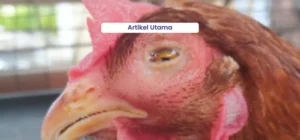
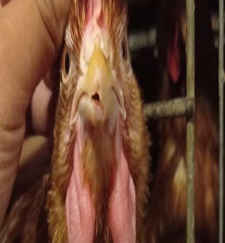
Fowl cholera has other names such as avian pasteurellosis, or avian hemmorrhagic septicemia. This disease is caused by bacteria Pasteurella multocida (P. multocida) which is capable of attacking various types of sensitive poultry. The most susceptible poultry species to this disease are turkeys, chickens, ducks, geese, domestic birds, enterococci and waterfowl.
Disease occurrence fowl cholera it has spread all over the world, including in Indonesia. When viewed from the type of livestock, cases of this disease are still often found in types of livestock such as laying hens, broilers, males, breeders, ducks, and quail based on incidence data or incidence of disease collected by the team Surveillance Analyst Medion.
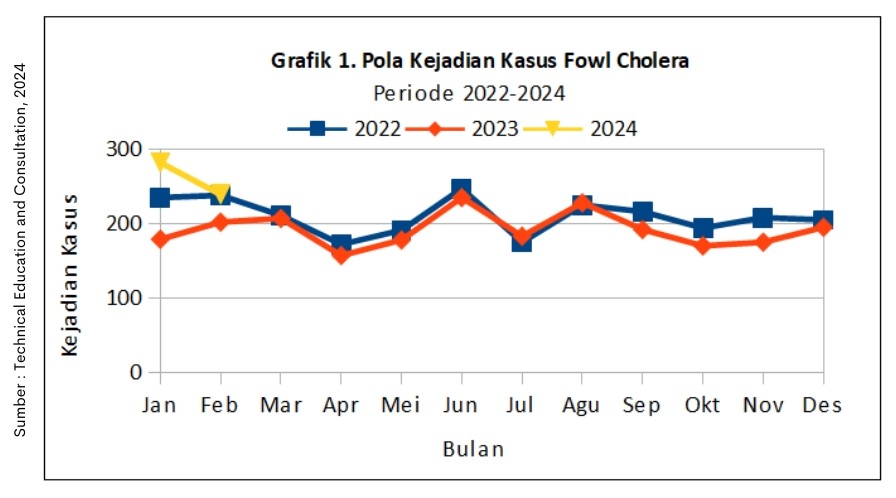
Case incidence pattern fowl cholera in laying hens, males, and ducks can be seen in the following graph 1. If you look at the cases of this disease throughout 2022-2023, the incidence is relatively high and fluctuates every month, but in certain months such as April to June there appears to be a surge in cases.
These months are a period of change of season or better known as the transition season. There is a transition between the rainy season to the dry season, so the weather conditions are unpredictable and predispose to the increase in cases of this disease in poultry, both chickens and ducks.
Properties Of Infectious Agents
Bacteria P. multocida the cause of this disease is classified as Gram-negative bacteria, non-motile, do not form spores, and are in the form of single rods, pairs or sometimes as rings or filaments. This bacterium is able to grow aerobically (there is oxygen) and anaerobically (there is no oxygen).
Bacteria P. multocida it is known to have two important surface elements: capsular and lipoporisaccharides. Ability P. multocida ability to attack and multiply itself on the host's body is enhanced by the presence of Capsular surrounding the organism. Capsular determines the degree of virulence and resistance of bacteria to the drug.
Loss of ability of virulent strains of bacteria P. multocida to produce capsular resulting in loss of virulence (Harper, et al., 2006). Despite this, many bacterial isolates from cases fowl cholera it has capsular but low virulence. Virulence therefore seems to have more to do with certain chemical substances associated with the capsular, rather than with their physical presence (Hieu, et al., 2020).
Serologically, bacteria P. multocida it can be classified into 5 capsular serogroups (A, B, C, D, E, F) and 16 somatic serotypes based on capsular and bacterial lipopolysaccharide antigens (Demerdash, 2023). The classification also affects the level of virulence or pathogenesitas different. The most common form of the disease is Type A (Glisson, et al., 2008) and somatic serotypes 1, 3, and 4 (OIE, 2021).
These bacteria can survive several months on decaying materials, in damp soil, and litter. However, these bacteria have susceptibility to all types of disinfectants both from the group oxidizing agent (Antisep, Neo Antisep), QUATZ (Medisep, Zaldes), or aldehyde (Sporades, Formades). The bacterium does not tolerate drought and direct sunlight, as well as temperature influences or heating. Bacteria will die at 56°C for 15 minutes or 60°C for 10 minutes.
Predisposing factors and transmission of the disease
Case occurrence fowl cholera closely related to various predisposing factors such as sudden changes in weather, significant changes in temperature and humidity, stress experienced by livestock e.g. due to moving cages, cutting beaks, sudden ration changes, and other immunosuppressive factors.
Disease of fowl cholera it can be transmitted horizontally both directly and indirectly. Direct transmission through contact between sick birds and other susceptible birds. Poultry can be contaminated with bacteria P. multocida through inhalation, peroral and wound on the surface of the tissue (skin). However, the most important transmission is peroral through mucus from the nose or mouth.
Transmission in the cage flock is very difficult to know because the birds affected by the disease fowl cholera chronic can be carrier. Bacteria can survive in the nasal cavity or upper respiratory tract which can then transmit directly or indirectly through pollution in drinking water, drinking places, the environment, livestock equipment, vehicles and workers.
Transmission and spread of bacteria P. multocida it can also occur due to vectors such as wild birds, rodents (rats), other animals (dogs, cats, pigs), and insects (flies). After the bacteria enter the chicken's body either through the respiratory tract, conjunctiva, or open wounds. Bacteria will grow and develop with an incubation period ranging from 3-9 days.
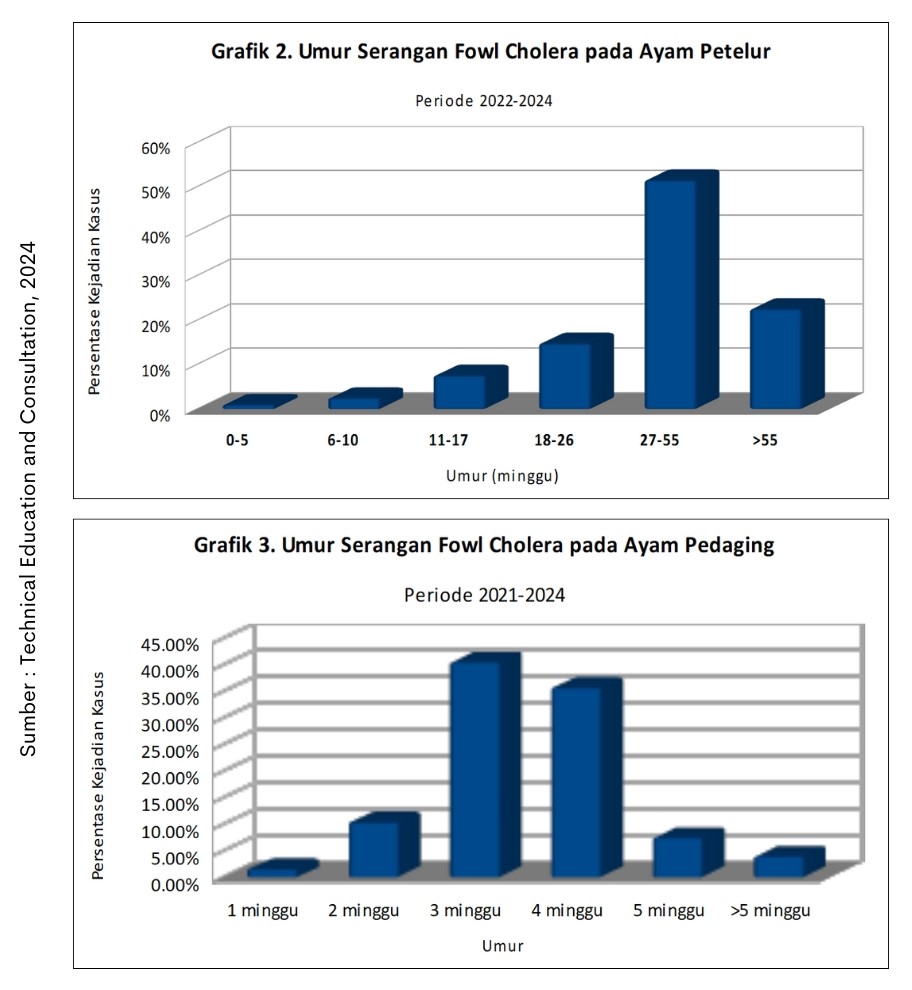
Based on data from the team Surveillance Analyst Medion, case fowl cholera in laying hens the highest occurs at the age of 27-55 weeks (graph 2). Chicken phase pullet and chicken production age is more susceptible to fowl cholera compared to young chickens.
Death from fowl cholera in chickens, it usually occurs in the egg-laying phase, because that age is more vulnerable than younger chickens. Chickens less than 16 weeks old are generally quite resistant (Hieu, et al., 2020).
In broilers incidence of infectious cases of the disease fowl cholera many occur at the age before harvest or 3-4 weeks of age (Chart 3).
Clinical Symptoms and Pathological Changes
A common clinical symptom is respiratory distress. In turkeys, there can be swelling in the head area accompanied by watery eyes in some cases. In chickens and quails can be found sneezing, depression, mucus discharge from the mouth, dull and standing feathers, increased respiratory rate, and diarrhea. In Ducks, mucus can be found in the trachea so that it is found that ducks breathe by extending their necks and melting out of the nose.
Fowl cholera may inflict high losses on poultry. Body weight decreases with the course of infection and varies depending on the severity of the disease. Morbidity rate 42-86%, with moderate to recorded mortality moderate on farms (5-31%) (El-Demerdash, et al., 2023).
Disease occurrence fowl cholera it can appear in acute, acute and chronic forms. In the acute form of sudden death in birds usually appears without the presence of certain clinical symptoms. In the acute form of the case clinical symptoms usually appear a few hours before death.
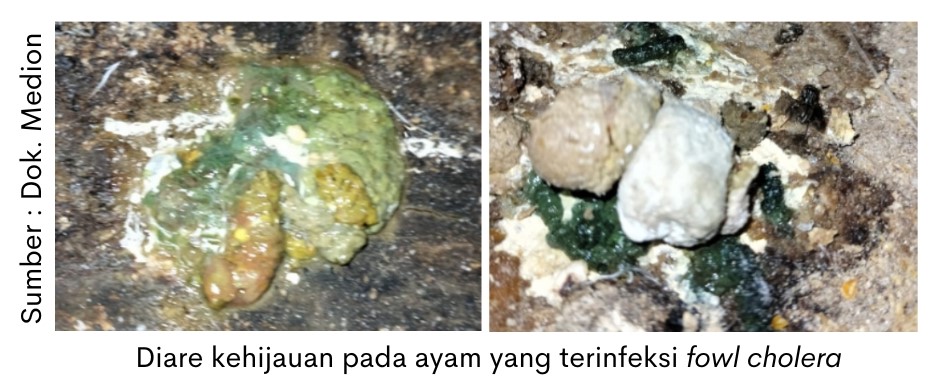
Sometimes bluish or cyanotic spots are found on Combs, Wattles, and areas of the body that are not covered with other feathers shortly before death. Feces that are initially white and watery over time turn greenish and slimy.
The chronic form is a continuation of the acute form. Birds that survive death due to low virulence during initial infection can progress to a chronic form.
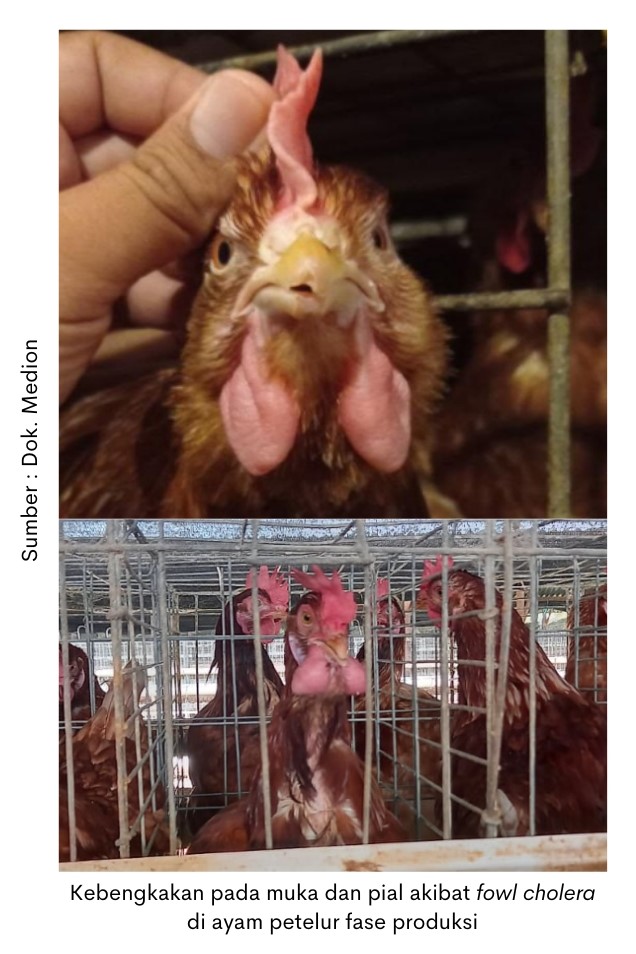
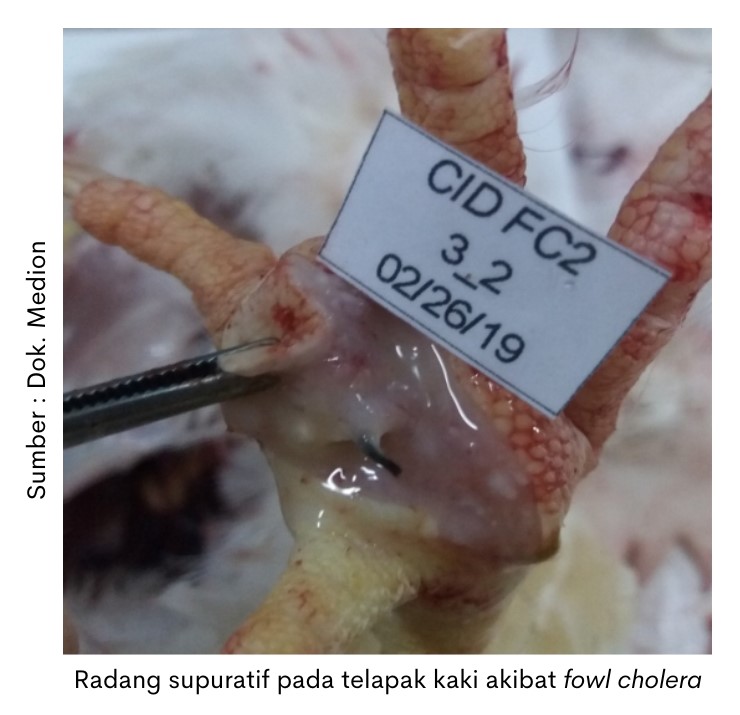
The symptoms observed are generally Local, such as the presence of swelling in the Wattle, joints, pads of the soles of the feet, as well as the infraorbital sinus. Respiratory symptoms such as wet snoring and chicken difficulty breathing due to mucus discharge in the upper respiratory tract are still often found. This chronic form can last up to 3-4 weeks.
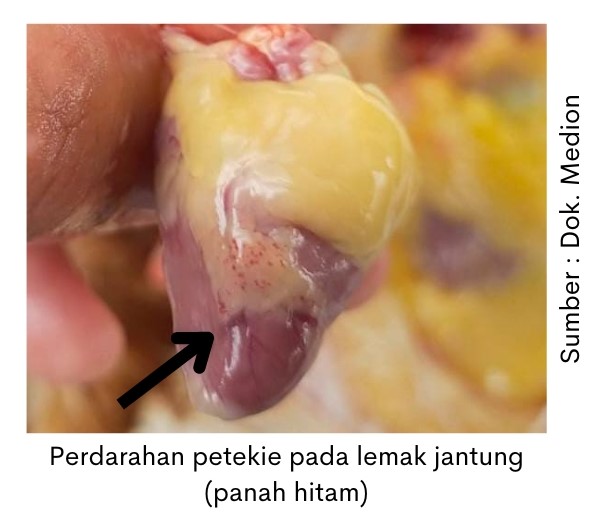
Changes in anatomical pathology when necropsy is performed vary depending on the degree of malignancy or the form of the disease suffered (acute, acute, or chronic). Tissue damage caused also varies in individual chickens depending on the immune status and severity of the disease.Changes in the anatomical pathology of the acute and acute forms are similar.
In general, it is associated with damage to blood vessels, resulting in petechial (dots) or ecchymal (bleeding diameter >1 cm) hemorrhages in various visceral organs, especially the heart, liver, lungs, fatty tissue, peritoneum and mucous membranes of the digestive tract (intestine, proventricle and ventricle).
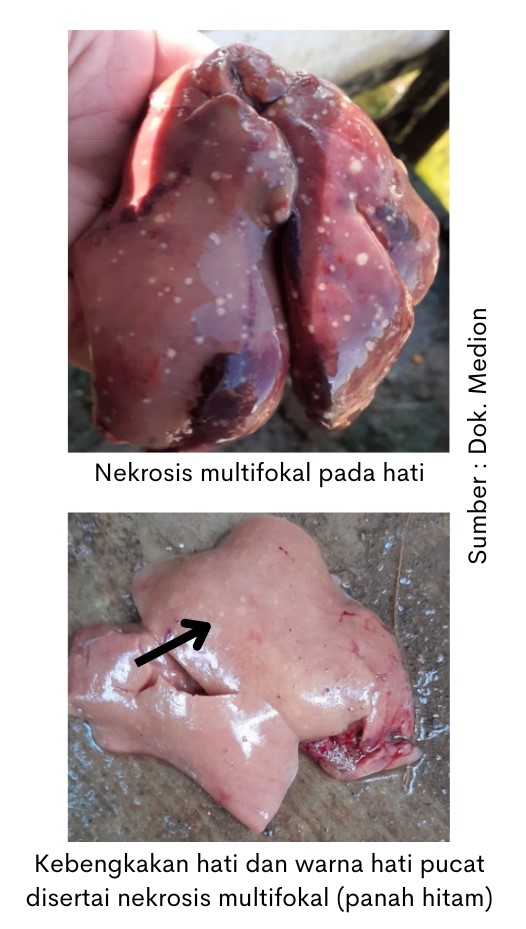
The liver is swollen, pale in color, and necrosis or multifocal necrosis (dot-shaped tissue death) is grayish-yellowish. In some cases, there is also a striped liver color, such as pale yellow lines so that the liver color is not homogeneous. These changes in the liver mainly appear in cases of infection P. multocida with high virulence.
The ovaries are found to be swollen and inflamed. Sometimes ruptured follicles are found so that the yolk breaks in the peritoneal cavity. Mature follicles change color to red-black due to bleeding. The mucosa of the gastrointestinal tract (intestines, proventricles and ventricles) is bleeding.
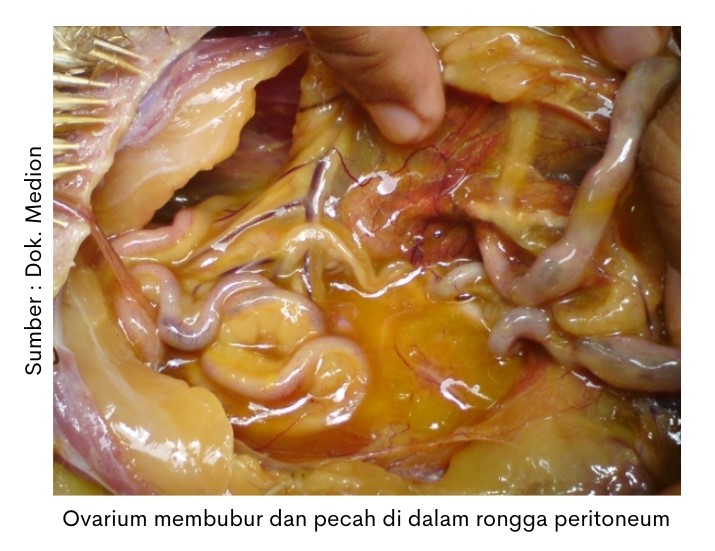
The chronic form is often found to be a continuation of birds that were previously infected with the acute form. Pathological changes are odema to suppurative (purulent or purulent) and occur in various organs. Infections of a local nature can be found in the swelling of the Wattle, joints of the foot (tarsometatarsus joints), sternal bursa, pads of the feet. Suppurative inflammation of the peritoneal cavity, and the presence of abscess deposits in the oviduct.
Diagnosis
Diagnosis can be based on the discovery of clinical symptoms and changes in anatomical pathology. But this will be difficult because the changes that appear can be confused with other diseases of poultry.
Confirmation of the diagnosis by isolation and identification of bacteria becomes one of the methods of definitive diagnosis of the disease fowl cholera. Organ samples for isolation of bacteria can be bone marrow, blood, heart, liver, brain membranes, or lesions in organs that undergo changes, especially lesions of a local nature in the case of a chronic form.
The development of clinical diagnostic tools currently supports accuracy in diagnosing this disease. Today we can diagnose diseases fowl cholera by using the method Polymerase Chain Reaction (PCR). Positive PCR results indicate the presence of genetic material from bacteria P. multocida tissue or organ samples.
Differential diagnosis of the disease fowl cholera is a disease caused by bacteria Galibacterium anatis, Avian Influenza (AI), Newcastle Disease (ND), fowl thypoid, and colibacillosis.
Disease Control and Prevention
Prevention against diseases fowl cholera primarily it is by eliminating the source of bacterial infection P. multocida and the vector. One of the efforts that can be done is by implementing good maintenance management and strict biosecurity.
Separation between cages based on the birds kept is also very important in preventing transmission between species. For example, in the maintenance of laying hens, there should be no other types of poultry, such as ducks, free-range chickens, pigeons, or other birds that are in the same farm location. Because it has the potential to be a source of transmission to laying hens that we keep.
Routine cage cleaning and disinfection is carried out to reduce the challenge of disease seeds in the cage. Due to bacteria P. multicida susceptible to all kinds of disinfectants. So we can use disinfectants with active substances from the group oxidizing agent nor QUATZ. For the environment around the cage can use disinfectant group oxidizing agent, QUATZ, or aldehyde.
Eradication of disease vectors such as flies and rats is also important. Use Flytox to kill an adult or Larvatox to kill the larvae. Apply also pest control to prevent the entry of rats into the cage area. One way is to install rat traps at points that are often encountered as a pathway for rats to come out and look for prey.
Disease of fowl cholera many appear in erratic weather conditions. So we need to increase the endurance of chickens by giving multivitamins such as Vita Stress or immune system-enhancing herbal remedies such as Imustim.
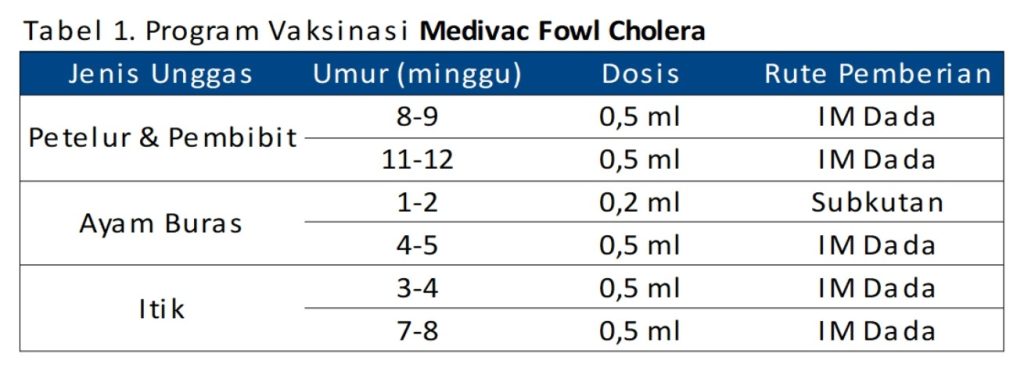
Prevention against diseases fowl cholera in poultry it can also be supported by carrying out vaccinations. Vaccination aims to stimulate the body to form antibodies, so when high airy challenge to bacteria P. multocida, birds that have had antibodies can survive and minimize losses due to illness fowl cholera. Vaccinations to provide protection against disease fowl cholera can use vaccines Medivac Fowl Cholera products containing bacteria P. multocida serotypes 1, 3, and 4 correspond to serotypes that are often isolated from cases fowl cholera derived from somatic serotypes 1, 3, and 4 (OIE, 2021).
Medivac Fowl Cholera comes in the dosage form of an emulsion specially formulated so as to provide optimal protection and long duration of immunity. Recommended to be applied by injection route intramuscular chest making it safer and more comfortable for poultry.
Vaccination Medivac Fowl Cholera it can be carried out following the recommendations of the following table 1. The Program can be adjusted again according to the level of vulnerability of the case and the age of the attack in each farm area.
Handling if poultry is affected by the disease fowl cholera is to make a selection and culling in chickens infected with severe conditions. Disinfect the cage regularly and carry out treatment using antibiotics. Treatment can use antibiotics that are effective against Gram-negative bacteria ( -).
Antibiotics with sulfa content (Collimezyn), amoxicillin (Amoxitin) and tetracyclines (Choleridine, Koleridin Kaplet) may be a treatment option against infection P. multocida. However, because this bacterium has many serotypes that are resistant to different antibiotics, it is likely to show a diverse reaction to treatment using these antibiotics.
The selection of drugs can be based on testing the sensitivity of bacteria to certain classes of antibiotics. However, this is rarely done in the field. So in the use of drugs such as antibiotics should pay attention to the dosage and duration of administration to avoid the emergence of antibiotic resistance.
In addition to treatment with antibiotics, to support the success of treatment should be given supportive therapy such as multivitamins and maintain adequate nutrient intake. It is needed due to diseases fowl cholera cause damage to various tissues or organs. To repair damage to the liver can be given herbal remedies that have efficacy as hepatoprotectors (maintain liver function) such as Heprofit.
Economic impact fowl cholera it is considered quite detrimental and treatment efforts when infected with the disease become less than optimal due to variations in resistance P. multocida resistance to antibiotics, as well as the risk of chickens that have been infected with the disease becomes carrier. So that preventive measures become one of our efforts to reduce losses that can be caused.
Disease prevention fowl cholera with the implementation of strict biosecurity supported by good maintenance management and vaccination with Medivac Fowl Cholera.